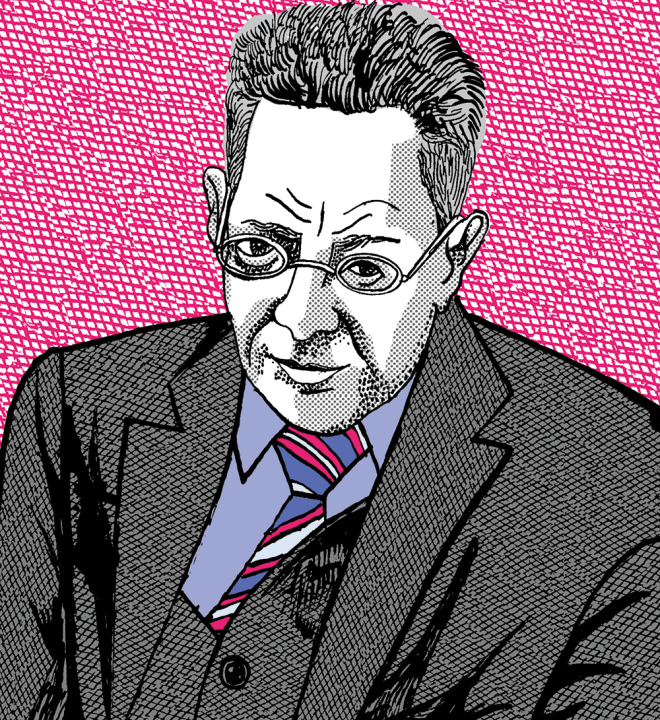
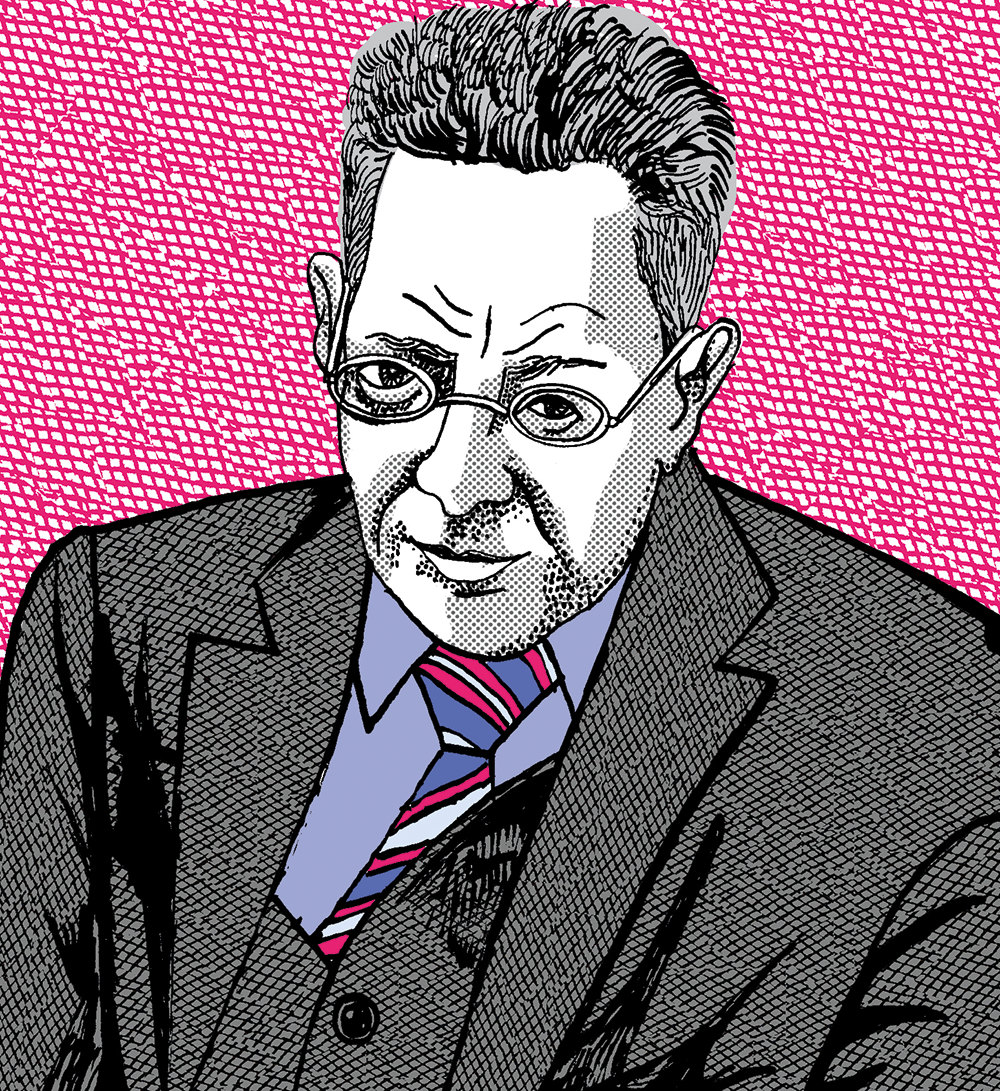
Hans-Georg Maassen is an unlikely dissident. In his trademark three-piece suits and small glasses, he looks more like a law professor. Indeed, that is what he studied, earning a doctorate on the legal status of asylum seekers in international law.
This bourgeois exterior is the perfect cover for a man who was Germany’s top spy, charged with protecting the country from the far-right and Islamists. But now he is no longer under the quiet protection of the German state; he is its victim. He is under investigation from the agency he once led, the Federal Office for the Protection of the Constitution (BfV).
Like George Smiley, Maassen is a remnant of an older and more powerful country, soldiering on in spite of the decline, trying to preserve what he can. That someone who was once at the heart of the Establishment in the 1990s now finds himself an outcast is symbolic of how much Germany has changed. The cracks in the postwar political consensus have become impossible to ignore.
On his website – Die Akte Maassen – he documents his battle with the BfV, publishing in full all the documents that he has forced the government to release about his case. ‘It’s like mail from the madhouse,’ he tells me.
‘The painful decisions have to be made at the beginning. Otherwise you can’t survive politically’
Certainly his case seems Kafkaesque. One piece of evidence against him is that he doubted President Joe Biden’s mental state and asked who was really running the US government. This apparently was proof of a belief in shadowy conspiracies, possibly anti-Semitic. Shortly after this became public, Biden stepped down as the presidential candidate for 2024 in part due to his health.
Another piece of evidence is a fan account of Maassen’s, which reproduces all his posts. When Maassen became aware he had retweeted an anti-Semite, he deleted the post. But the fan account did not. ‘I can’t prevent someone abusing my name,’ says Maassen, but that wasn’t enough for the BfV and this too was cited as evidence of his extremism. ‘We are experiencing the erosion of the rule of law,’ he says. He compares it to the law in communist East Germany, where it was an ‘instrument’ for enacting the will of politicians.
How did it come to this? Maassen was once a well-respected civil servant. He was born in the town of Mönchengladbach, North Rhine-Westphalia, near the Dutch border, to a family who ran a tobacco shop. He was always interested in politics and joined the centre-right CDU party at the age of 16, although he maintains that he had a ‘strict separation’ between work and politics, praising Otto Schily, the centre-left SPD interior minister, as ‘one of my very best bosses’.
Soon after university he joined the Interior Ministry, working on immigration and asylum. In 2012, chancellor Angela Merkel appointed him to run the scandal-hit BfV.
Between 2000 and 2007, a neo-Nazi cell calling itself the National Socialist Underground had murdered ten people, mostly of Turkish descent. The BfV was accused of knowing about the attack in advance but failing to act to protect their informants in the neo-Nazi scene. Maassen’s job was to clean up the agency.
Relations with Merkel became strained after her unilateral 2015 decision to open the borders to Syrian refugees. ‘What Merkel did was not only politically a serious mistake, it was incompatible with the law,’ he says.
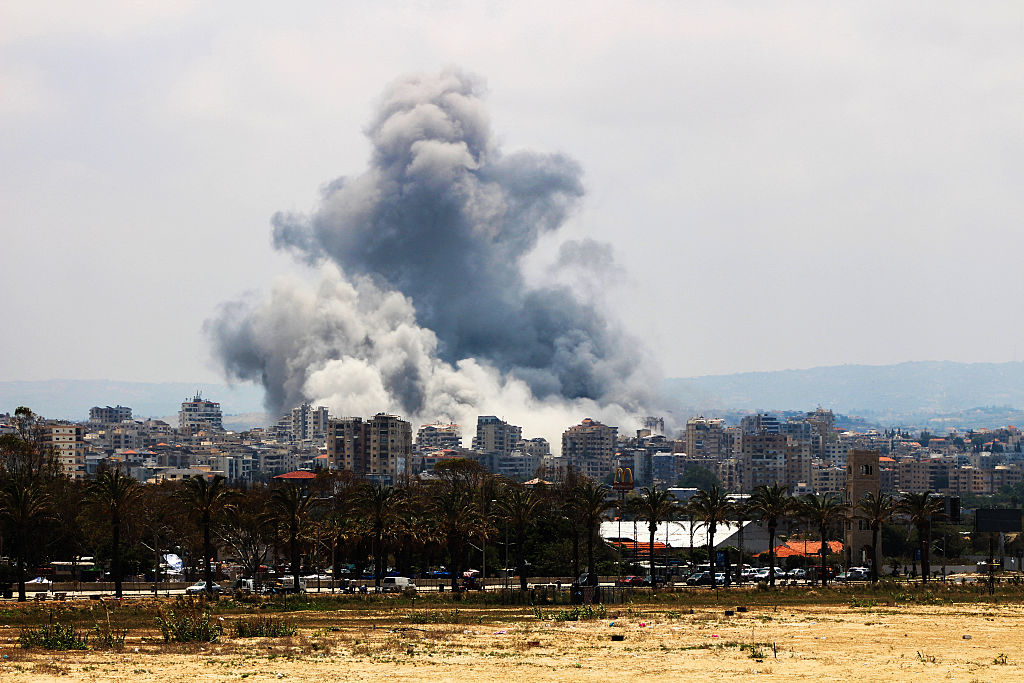
The decisive moment for Maassen came in 2018, after a German man was stabbed to death by Kurds in the eastern city of Chemnitz. Locals protested violently and, in the aftermath, Merkel alleged that there had been ‘migrant hunts’.
When Maassen read about migrant hunts in the press, he asked his staff at the BfV why that information wasn’t in his daily briefing. They told him there was no evidence, and when he asked the local police and state government, they didn’t have any evidence either. But despite telling the Chancellery this, the same staff insisted in the media that migrant hunts had taken place.
So when Maassen provided Bild, Germany’s best-selling newspaper, with a quote saying there had been no such hunts, there was a political firestorm. He was accused of providing support for the far-right and forced into early retirement. Subsequent court cases have seen no one convicted for ‘migrant hunts’ in Chemnitz.
Thrust out of the civil service, Maassen decided that the CDU had moved too close to the centre-left under Merkel. He became a leading figure in the Values Union, a pressure group that wanted to push the party back to the right.
When he stood as a CDU candidate, some senior figures in the party attacked his selection. A taxpayer-funded NGO announced it would campaign against him. Text messages were found between him and a member of a fringe plot to overthrow the government, although the messages were innocuous and entirely unrelated to the event.
Then, after Maassen accused the German media of ‘eliminatory racism against whites and a burning desire for Germany to kick the bucket’, the CDU announced that it was beginning expulsion proceedings. Maassen resigned and the Values Union ran as a party in last year’s federal election, failing to achieve even 1 per cent in any of the seats contested.
‘Immediately after I became chairman of the Values Union, the Federal Prosecutor’s Office announced I would be observed and monitored as a right-wing extremist suspect,’ says Maassen. According to him, the investigation led to many prominent supporters dropping out, hurting the party badly. People tell him that when they come out of his offices, watchers are taking note of who goes in and out.
In a recent speech he attacked what he called ‘totalitarian democracy’, warning about strong pressure against those who don’t share the views of the German political and media elites. ‘I have dealt with asylum and refugee law,’ he says. ‘And I know from this that restrictions on freedom of expression… always go hand in hand with political persecution.’ This pressure is exerted not through formal censorship but by ‘fighting hate and hatred, fighting disinformation, restricting misinformation’. He has drafted a Censorship Prevention Act, which would provide German citizens with more protection.
Maassen is especially critical of the German media. ‘I find it increasingly difficult to speak of the public broadcaster and not of the state media,’ he says, adding that, ‘what the public broadcaster does, in my view, is to shield the government, support it, and agitate against government critics’.
He blames this on the domination in political life of a class of ‘anti-Germans’, such as Nancy Faeser, the left-wing interior minister who put him under investigation. They are ‘of the opinion that Germany has an incredible guilt because of the second world war and the Holocaust and has no right any more to exist as a national state’. Instead, he says, they want to focus on issues like solving climate change, even though Germany is too small to achieve this. He blames some of this on their university education, which made them more ‘inclined to follow authorities… that’s how they basically completed their studies and that’s how they made their careers.’
Controversially, he is not averse to engaging with the AfD, which is to the right of the CDU and is topping the polls. The AfD’s support is from voters who are frustrated with high levels of immigration and poor economic growth.
He wants Germany to look to Donald Trump’s example to change the political weather. That means defunding the activist NGOs that rely on taxpayer funding, producing what Maassen calls a ‘second public sector’. It also means deregulation, repealing bad laws and abolishing parts of government, such as the ministry responsible for international aid.
‘What the public broadcaster does is to shield the government and agitate against government critics’
There is a German precedent, he points out, in the privatisation of the German post service, which now operates successfully as Deutsche Post. (You may well have used DHL, one of its subsidiaries.) Such reforms must be fast: ‘The painful decisions have to be made at the very beginning. Otherwise you can’t survive politically. You have to do all of that in the first year.’ He’d begin with an Abolition Law, reviewing every law passed since the 1990s and removing those which have clogged up the state.
The AfD is not yet up to that, in his opinion. In government it would lack the staff needed to enact the reforms it wants. He also warns that the party’s political opponents will do anything – ‘legal or illegal’ – to stop them succeeding.
The Values Union was supposed to offer a bridge between the CDU and the AfD, to deliver a more ‘moderate party’ and ensure that the AfD doesn’t govern alone. Some CDU conservatives welcomed a coalition government with the liberal FDP in 1982 as providing a moderating influence.
The biggest challenge the AfD will face is on immigration, an area he knows well. He thinks many of the problems are cultural, with migrants who are unused to a tolerant state taking that as a licence to commit crimes. Although overall crime is reducing, migrants are overrepresented as suspects when it comes to certain crimes, such as rape.
When asked what he is particularly proud of, he names the Asylum Compromise of 1993, which amended the German constitution and reduced the number of asylum seekers from 400,000 in 1992 to the tens of thousands by the 2000s. It did that by barring those entering from safe third countries from applying, requiring more evidence for applications, and reducing financial support to asylum seekers.
Unlike those advocating remigration, a policy embraced by the AfD, he is more considered. He thinks that the ‘fish stinks from the head’ and that the image of German openness promoted by Merkel and others in the German political class is to blame for the large number of asylum seekers. He thinks a clear signal from the political class and the enforcement of the existing laws would lead to voluntary departures of those with no right to be in Germany. ‘You don’t even have to change a lot of regulations.’
That would avoid cases such as Anis Amri, the failed Tunisian asylum seeker who drove a truck into a Berlin Christmas market in 2016, killing 12 people and injuring another 56, after the German authorities didn’t deport him.
That he is most proud of a compromise says a lot about this unlikely dissident. Above all, what he wants is for ‘Germany to become a normal country in Europe again’.



Comments