‘I can’t breathe.’ When those chilling words were uttered by George Floyd in 2020, they provoked global outrage. The combination of the horrific manner of Floyd’s choking by the police officer Derek Chauvin, the pressure cooker of lockdown and the historical tensions around American race relations led to worldwide protests; despite Floyd’s death being 4,000 miles away in Minnesota, Keir Starmer felt compelled to take the knee in solidarity.
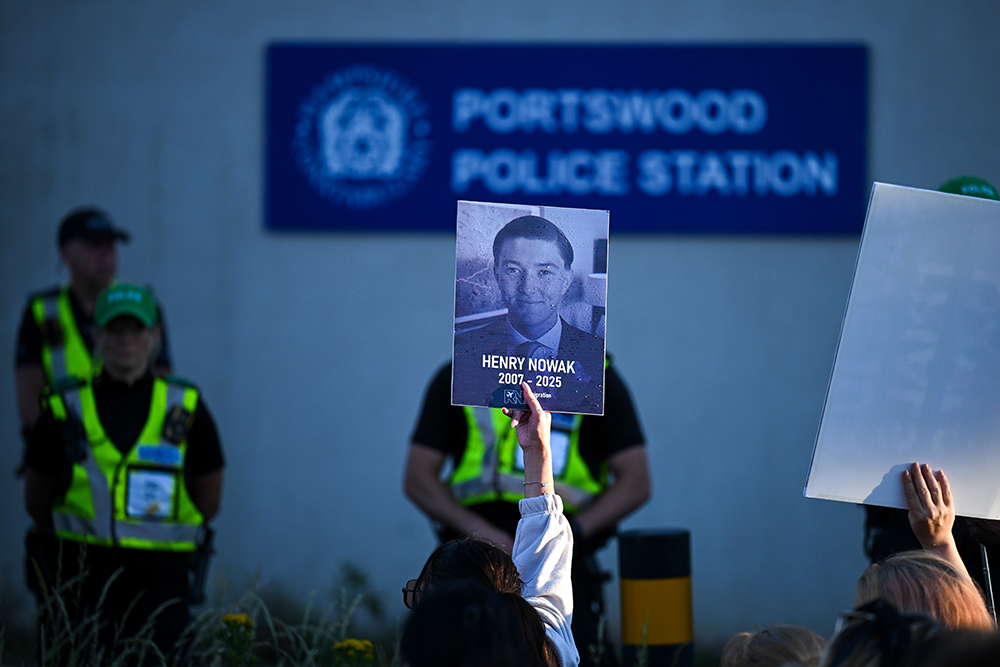
‘I can’t breathe.’ These were also the dying words of Henry Nowak, an 18-year-old student in Southampton murdered by the 23-year-old Vickrum Digwa. Nowak was coming back from a night out when he was stabbed by Digwa five times with a ceremonial knife. When the police were called, Digwa accused Nowak of having been racist. As he was cuffed, Nowak implored the officers that he had been stabbed, only to be told: ‘I don’t think you have been, mate.’ The officers realised their mistake far too late.
Henry Nowak’s death, like George Floyd’s, is above all a tragedy for his family. The loss of a child is the greatest pain any human can bear. But Nowak’s demise has, again, like Floyd’s, been turned into a political conflict.
The first, and perhaps most strident, intervention was Nigel Farage’s, with his call for individuals to respond with ‘pure cold rage’. The most thoughtful and constructive response was Kemi Badenoch’s appeal to transcend division. Badenoch’s considered comments provoked a disingenuous twisting of her words by Reform campaigners.
Regrettable as that might be, it is important also to maintain proportion. The real issue here is not what politicians might have said but what the police have or have not done. One might disagree with the tone of Farage’s statement but it is counter-productive to turn this into a debate about the appropriateness of political responses. The police deserve to be criticised. The political choices that led us to this moment have to be re-examined. Attempting to stifle criticism only prevents us from honestly confronting the need for deep and radical change.
For decades now the police, and indeed the entire public sector, have been bewitched by the idea that British society is inherently racist, that overcoming inbuilt prejudice is a transcendent mission, that any differential ethnic outcomes, especially within institutions, are caused by deep–rooted unconscious bias, so that endlessly expressing guilt about this is a moral requirement for those in positions of power.
The belief that Britain is a rotten country, corrupted by its imperialist past and incapable of overcoming its original racist sin unless the evil is torn out by its roots, became a default condition for many of our institutions. From National Trust properties to publicly funded galleries, the Church of England to Oxbridge colleges, the most important mission became confessing and continually atoning for complicity in empire and slavery.
It was not just Rhodes that had to fall –
so did the operating structures of traditional centres of ‘power’. Influenced by the ideas of the Frankfurt School and French thinkers such as Michel Foucault, radical critics of the ‘established order’ sought to arraign the leadership of every institution they could for privilege, prejudice and racism.
The belief that Britain is deeply racist became a default condition for many of our institutions
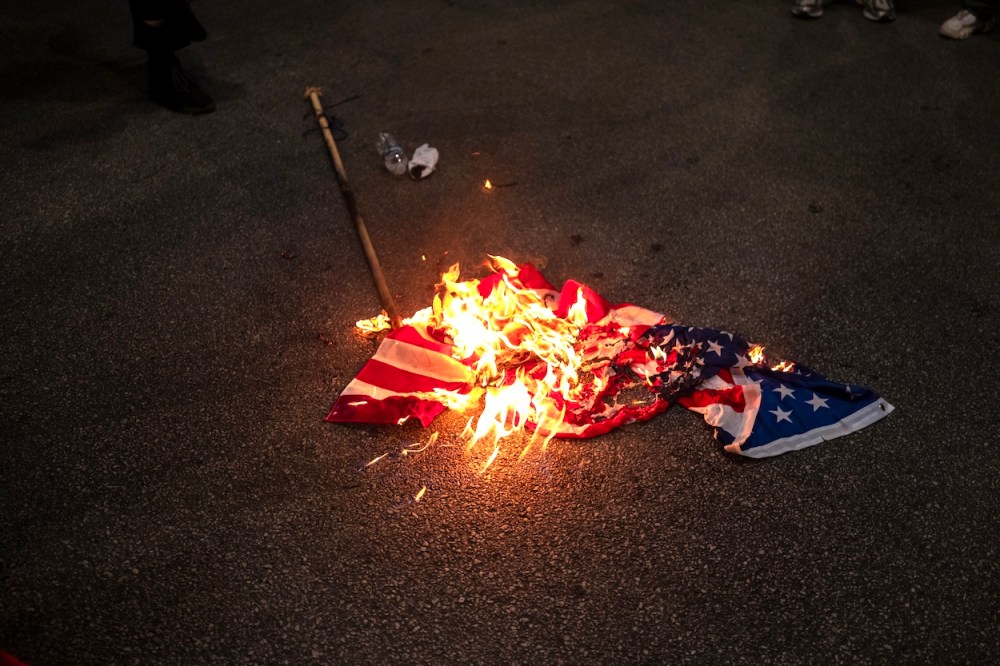
This mania reached its height during the ‘Black Lives Matter’ agitation following Floyd’s death. Even though it was US police brutality that was at issue, UK activists weaponised the moment to demand that the British police abase themselves. Officers were compelled to adhere to ‘anti-racist’
principles. The Hampshire and Isle of Wight Constabulary – the force that arrested Nowak – described Floyd’s death as a ‘pivotal moment for policing in the UK’; last year, the National Police Chiefs’ Council issued an ‘anti-racism commitment’, which is now under review, urging officers to treat ethnic minority suspects differently. Insufficient anti-racist ardour was a barrier to promotion.
By prioritising ‘anti-racism’ above all, the police forgot their basic duty of protecting the public. Affording minority groups special treatment means undermining the principle of equality under the law; by pursuing ‘racial justice’, policing can become unjust and unfathomable.
The disastrous consequences of this have been made clear time and again. The institutional blindness to the grooming gangs which stemmed from fears that pointing out the ethnicity of the largely Pakistani perpetrators would be racist; the failure of institutions to contain Axel Rudakubana partly because of a fear of playing into stereotypes of violent black men; the besmirching of Israeli football fans by a police force to appease Muslim agitators; the murder of three people by Valdo Calocane that was enabled by NHS staff worried about ‘an over-representation of young black males in detention’.
Far from being a charnel house of prejudice, Britain is a model multiracial democracy, the best place in the world for any one to practise their faith, marry whom they choose, reach professional heights or speak their mind. The real danger to civil peace and progress is not, as it was 60 years ago, hostility to minorities but the persistence of failed ‘anti-racist’ dogma. The terrible police response to Henry Nowak’s killing feeds into the perception of ‘two-tier justice’ that underlay the Southport riots two years ago – the idea that white Britons are held to a different standard to minorities. It is to the credit of the Home Secretary, Shabana Mahmood, that she understands that danger and is determined to reform how the police operate. She should be supported in her mission to purge the public sector of these damaging policies.




Comments