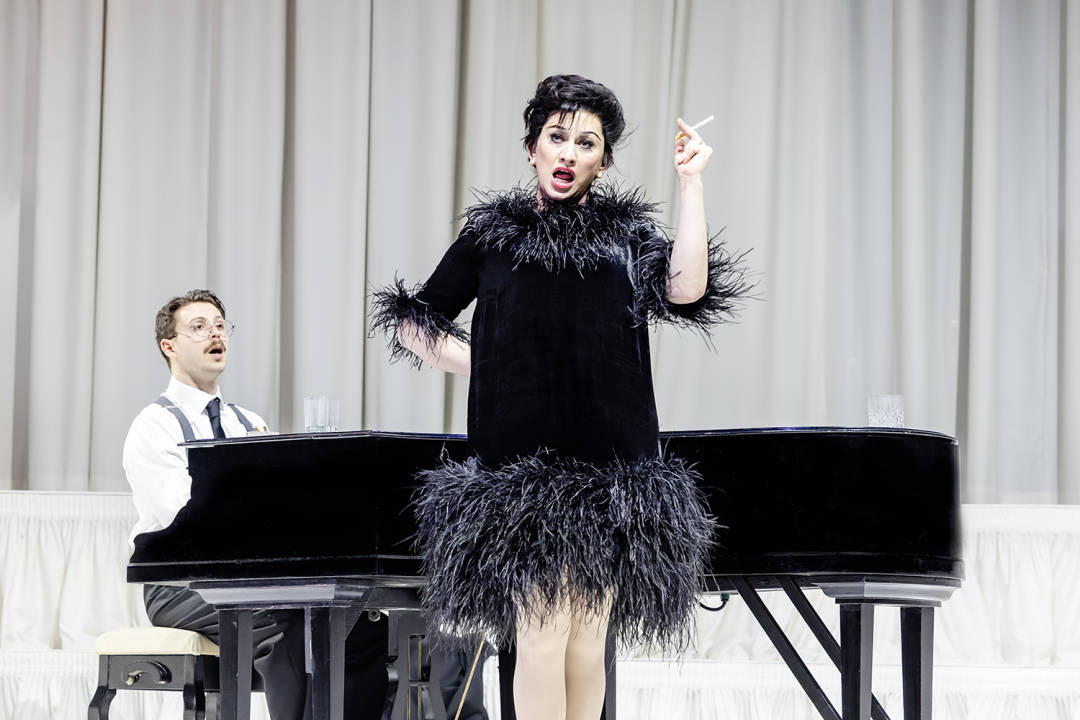


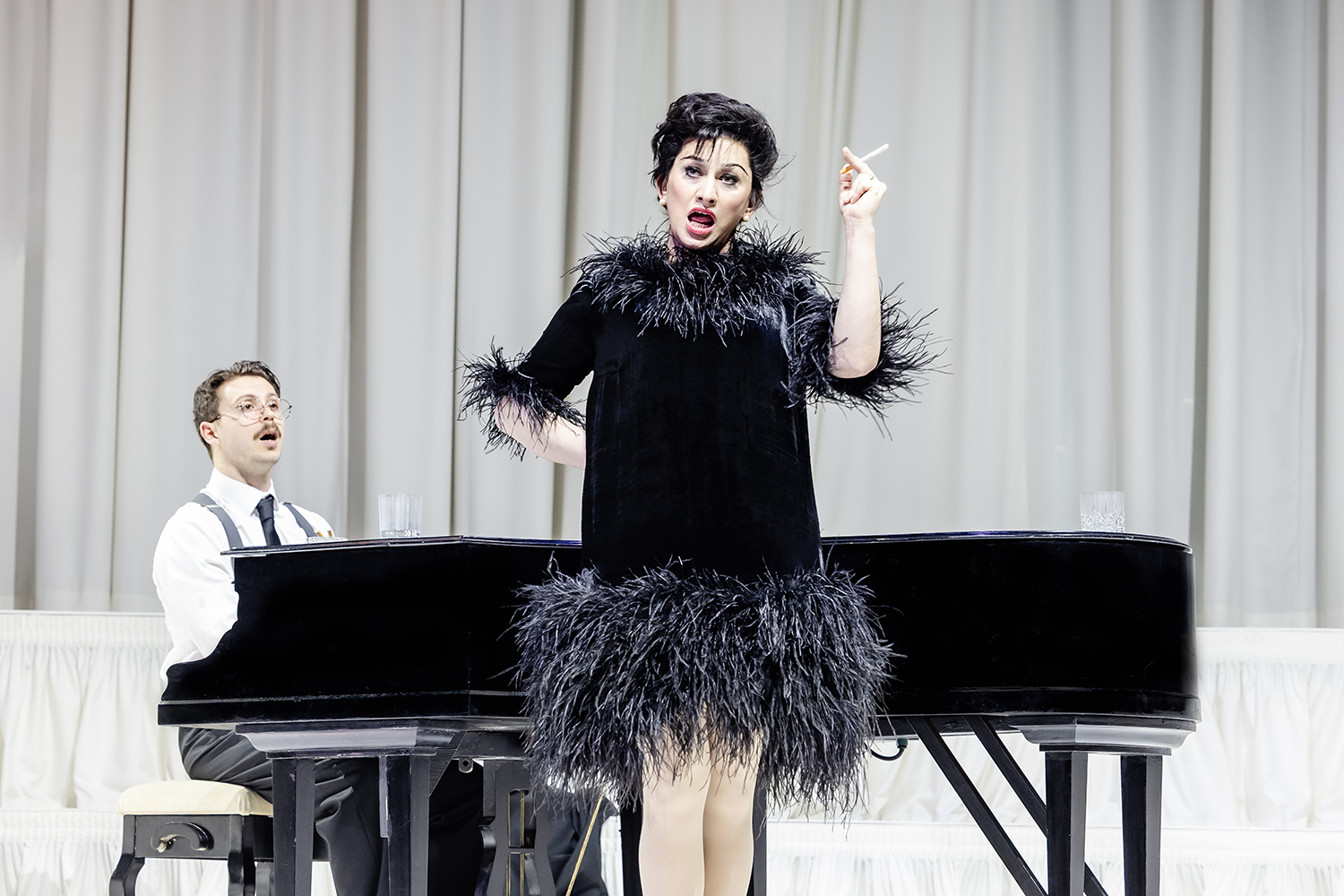
End of the Rainbow feels like a prison drama set in London in 1969. Judy Garland is about to give a string of solo shows in the West End and she’s preparing at the Ritz under the supervision of her cruel boyfriend, Mickey Deans, who doubles as her publicist and drug dealer. Her British pianist, a friendly queen named Anthony, tries to protect her from Mickey’s manipulative bullying.
Judy, the captive, forfeits our sympathy straight away by complaining about everything. Her suite is too poky. She’s desperate for liquor to improve her mood. And she reacts with outrage when the Ritz manager asks for payment in advance so she forces him to back down by threatening to commit suicide. She rehearses the stunt by standing on a balcony and daring herself to dive into the street. An ugly but gripping scene.

Next, she switches from booze to drugs and vows to cancel a BBC interview unless she gets the uppers she craves. Mickey feeds her a handful of pills and packs her off to Broadcasting House where she gives a skittish but bland interview to a fawning BBC inquisitor.
In the third scene, her craving has switched to alcohol again and she raises the stakes by threatening to cancel all her London shows. And so it goes on. Judy is a pathetic, drug-addled wreck whose sweetness and charm have long ago deserted her. She consoles herself with catty remarks about her Hollywood rivals. One forgotten starlet had a single eyebrow that ‘went all around her head’. Liz Taylor, she hisses, was so charming that you wanted to run her over in a car. Her reverence for her fans has curdled into contempt: ‘I could vomit in their laps and they’d still find me glamorous.’
When she appears on stage at the Talk of the Town, she gives a ramshackle performance marred by arrogance, laziness and a habit of repeating the same song numerous times. She blames the musicians for failing to accommodate her blunders. ‘We have to sing something,’ she chides, ‘or these good people will go and see The Mouse Trap – and I wouldn’t wish that on anyone.’
Back at the Ritz, the downward spiral continues as she spars with Mickey and throws luxury garments and bed linen around the place. (The Ritz manager refuses to launder her sheets until she coughs up for her suite.) Not a charming scenario. And the brittle, rancorous dialogue grows tiresome because the author, Peter Quilter, has drawn his characters too broadly. Judy is a washed-up nuisance. Mickey is a secretive, lying thug. Anthony is a saintly but feeble dolt. In the final scene, the drama finds some depth as Anthony pleads with Judy to run away with him to Brighton and pursue a life of contented obscurity.
Drag queen Jinkx Monsoon does excellent work presenting Judy as a screeching, self-destructive ruin. During the musical numbers Monsoon fills the venue with a rich, beefy voice but can’t find Judy’s delicacy, innocence and bird-like vulnerability. It’s a cruise-ship performance – strong but without shades or colorations.
Jacob Dudman smoulders and rants as the horrible Mickey but the script shows no interest in his love affair with Judy, which must have had its lighter moments. Press night was packed with lifelong Judy fans who seemed to adore this unappetising portrait. Neutrals will take more persuading. It’s like discovering that the real Paddington is a hard-drinking, chain-smoking brat who gets his kicks by badmouthing Winnie-the-Pooh and Rupert Bear behind their backs.
It’s like discovering that the real Paddington is a hard-drinking, chain-smoking brat
Dark of the Moon is a little-known play with a weird title and a curious backstory. First produced on Broadway in 1945, it received numerous college and high-school productions. The London première, in 1948, was directed by the young Peter Brook.
The story follows an Appalachian beauty, Barbara Allen, whose village is haunted by a clan of invisible spirits known as the Witch People, who hate and envy humankind. John, one of the witches, crosses into the human realm and challenges Barbara’s boyfriend to a rather unequal duel. Using his magic powers, John flings his rival into the dirt and then proposes to Barbara. She accepts. But John can’t shake off the Witch People, who stalk him from the shadows, cursing him as a deserter and hoping that his marriage will fail. Human customs baffle them. ‘What’s a wedding?’ ‘It’s like a funeral but with two people.’ ‘Why do men go angling?’ ‘They’re waiting for fish to make a mistake.’
The show is accompanied by two separate musical genres: wholesome blue-grass ballads for the boring humans, and heavy rock for the angry, twisted Witch People. If you have sulky, alienated workshy teenagers hanging around the house, they may surprise you by loving this show. The costumes, sets and music are all top-notch. Ditto the actors. Well worth a recce.





Comments