

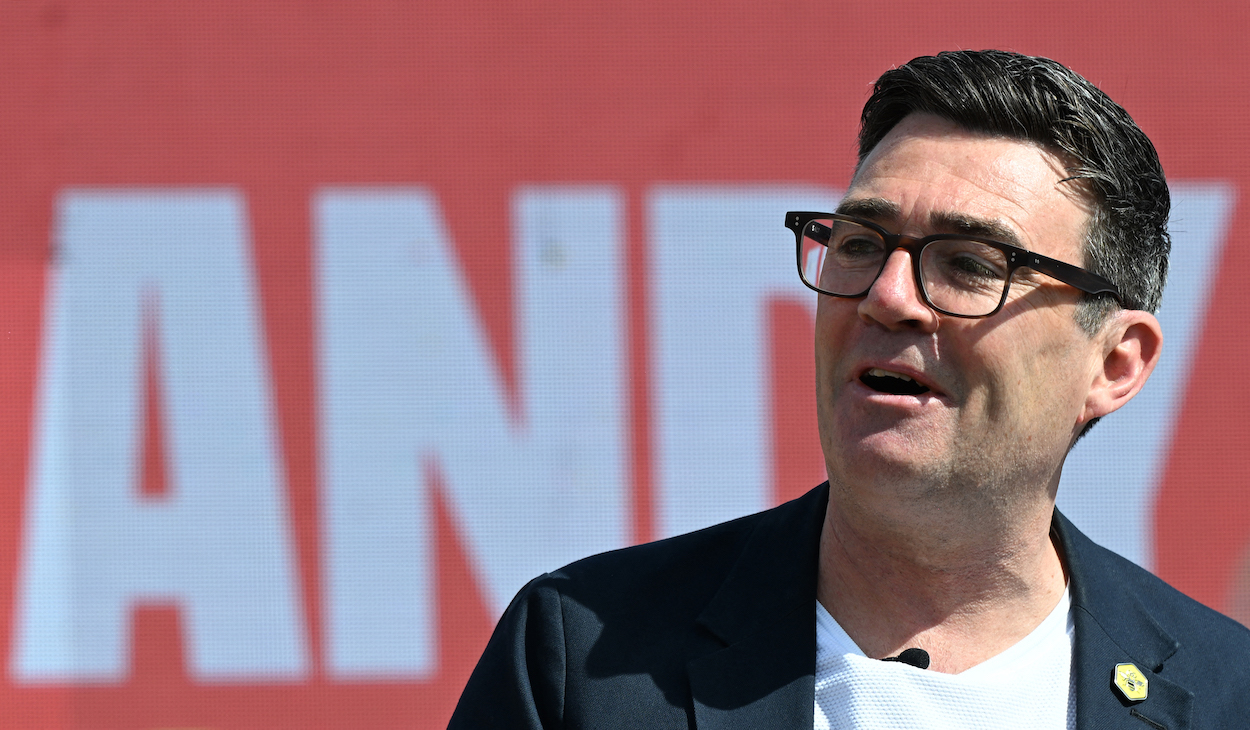
Andy Burnham thinks Tony Blair is missing something, and he is being too polite to say it is a few screws. He thinks that the former prime minister’s essay published on Wednesday morning fails to take account of the declining living standards that many people have experienced since the financial crisis of 2008/09. It is this frustration, he says, which is driving anger on the streets of Makerfield and elsewhere, and you can’t win an election unless you understand that. Burnham asserts that Britain has been on the wrong, neoliberal path for the past 40 years; a period which of course includes Blair’s own time in office.

But Burnham himself appears to be missing something, too. He complains about the past 40 years of economic policy – by which I think he really means 47 years, since Margaret Thatcher won the 1979 general election. Yet the stagnation in living standards he cites began only 17 or 18 years ago. What happened in the first 30 years of Burnham’s miserable era of neoliberalism? There were years of very substantial economic growth and increase in living standards. Burnham surely can’t be serious that UK households were better off in the 1970s than they are now. These were years when housing was cheap but many still lived in near-slum conditions, when inflation was rapidly eating away at earnings and savings, when luxuries such as foreign holidays were a rarity.
Neoliberalism, if that is what you want to call free markets and an enterprise economy, transformed Britain from a country of industrial decline to one of economic dynamism. It is possible to argue that economic growth between 1979 and 2008 was imbalanced, too reliant on the service sector and that governments of both colours were too relaxed about the decline of manufacturing, chemicals and so on. It is also true that Burnham’s beloved EU would have stood in the way of the interventionist industrial policies which he seems to favour. That is why the left were the biggest Eurosceptics in the 1980s; they saw the EU as a neoliberal project.
But what is wrong is Burnham’s assertion that wealth has not ‘trickled down’ to the poor. Wages have grown strongly at the bottom end thanks in part to Blair’s national minimum wage. But increasing the minimum wage only worked so long as productivity was increasing. We can see now the job-destroying power of a minimum wage which runs ahead of what productivity can sustain.
Why did productivity, and with it living standards, stall after the 2008/09 crisis? There is no obvious answer, but there are several possible contributory factors. Mass migration made employers lazy: it was too easy for them to employ cheap labour and fail to invest in labour-saving technology. In 2009, the Equality Act limited the ability of businesses to employ who they really wanted and led to that lamentable feature of modern life, the diversity hire. I don’t see Burnham seeking to put that right.
Burnham cites as an example of how he wants the economy to operate an investment by the Greater Manchester Authority in a business park. I don’t know much about the project he mentions, but there are several other councils, such as Croydon, which have gone broke over investments in commercial property. It seems a dodgy basis on which to build an economy. Blair, who has a far more sceptical view of what the state could and should involve itself in – and honed that view after the embarrassment of the Millennium Dome – has a rather healthier view of what enriches a country.






Comments