
James Delingpole has narrated this article for you to listen to.
Nothing can prepare you for the death of your father because, by definition, it’s a once-in-a-lifetime event. You have these ideas in your head about how it’s going to be: the children gathered at the bedside saying all the moving, important things that hitherto they’d held back; the fond paternal benison. But the reality, in my experience, is unlike the scenes in literature.
My dad couldn’t wait to get rid of us. He was far too preoccupied with the intimate, difficult and very personal business of dying to indulge our let’s-pretend-everything’s-normal chit-chat. His last words to me – perhaps to anyone – were: ‘I’m feeling really buggered. Call me a nurse.’ So we each kissed him on the forehead – ‘Love you, Pa’ – and shuffled out to the hospital car park to find somewhere to smoke. ‘Well, that wasn’t very grateful of him, miserable sod,’ I said to my brother and sister. Pa would have appreciated this because he gave us our sense of humour.
He had the gift of both being very interested in other people’s lives and being peculiarly interesting himself
Then there’s the body: to see or not to see? Two of my siblings (Dick and Mary-Rose) had stayed to keep vigil – murmuring reminiscences, whispering prayers – and were there when he breathed his last at 6.35 a.m. Apparently he turned a funny colour. ‘Up to you, your call. But do you really want that to be your last memory of him?’ said Dick. Except I remembered reading somewhere that you’re supposed to visit the corpse, Victorian-style, to get a sense of closure. I pondered this awhile and a voice came into my head: ‘Oh, I wouldn’t bother if I were you. Go and have a coffee with your brother and sister.’ It was my father and of course he was dead right.
We will all miss him terribly. But one consolation is it was fairly quick. That phrase, ‘Died peacefully in his sleep’, we now realise, is a euphemism which neglects to mention the three nights of vomiting, insomnia and terror that precede the gentle passing.
Still, he went out at 91 with his marbles intact, having outlived all his contemporaries – pity there was no tontine – and living right up to his last weekend in a small rented flat where he spent his days doing jigsaws, walking his 10,000 steps on the Malvern Hills and keeping up with the family WhatsApp group. He never cost us any money – gosh, I feel sorry for those with dementia-home parents – and nor, almost better, did he leave us any. This made the division of the spoils swift, painless and rancour-free. ‘Right, you can have the car, Mary-Rose, because you need it most. Anyone mind if I take the autograph book with Malcolm Campbell’s signature?’
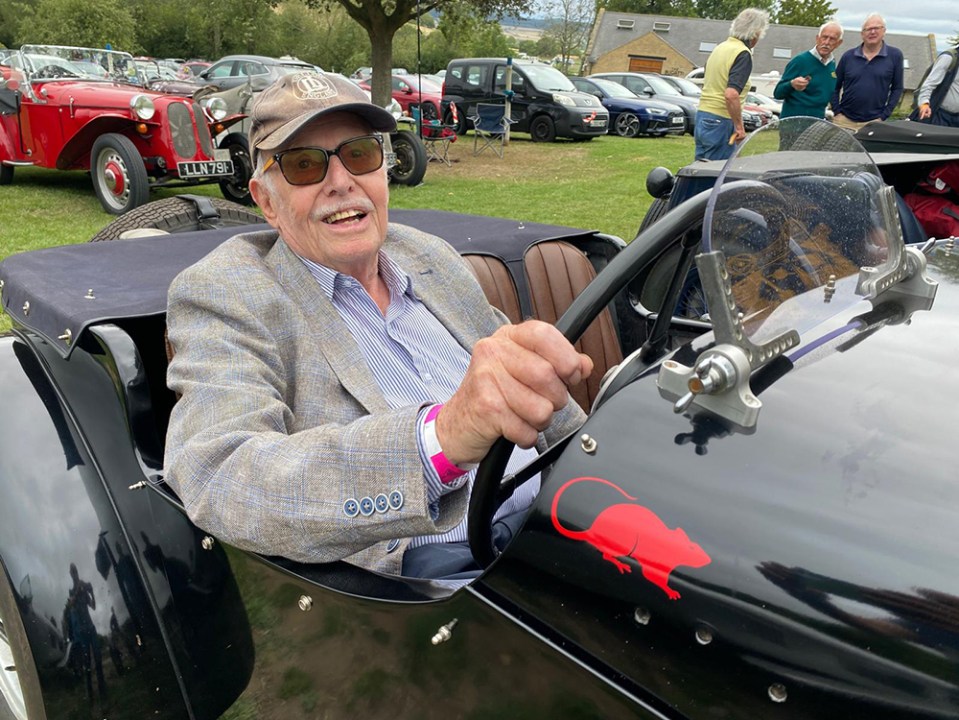
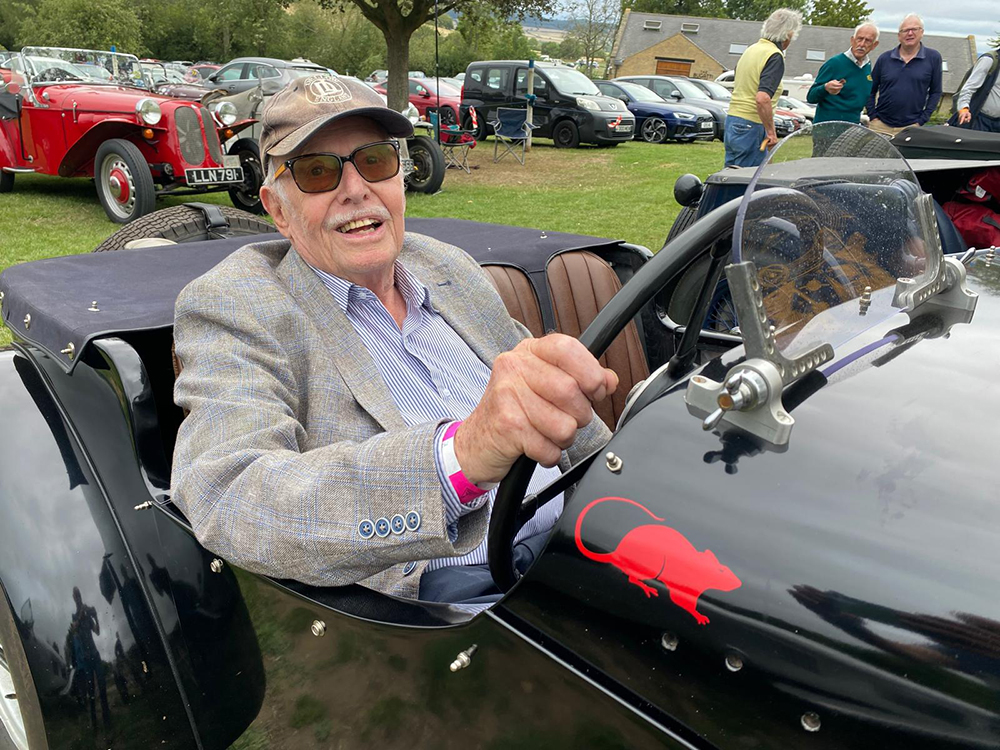
There wasn’t much left to show for such a long, exotic and varied life, which included a stint with the RAF, spent mainly on top of Victoria Peak in Hong Kong monitoring the radio transmissions of Chinese fighter pilots. (He had his car, a Dellow, shipped out so he could race in the Macau Grand Prix.) But then, towards the end, Pa was never much bothered about material possessions.
He’d lacked for nothing at the beginning, including lots of fun toys like the first privately owned E-type Jag – the indigo blue ECD 400, which he bought from Graham Hill – but in latter years his energies were focused on the things that most mattered to him: his children and his grandchildren.
‘I’m so lucky to have such wonderful -kiddies’ was the last thing he said to me while he was still well. The feeling was entirely mutual. I grew almost weary of being told by those who’d met him just how fascinating and entertaining my father was. He had the gift of both being very interested in other people’s lives and being peculiarly interesting himself.
This was thanks in part to his obsessive pursuit, over the years, of a string of sometimes quite niche hobbies. First he was a racing driver (in the days when it was dangerous: lots of his friends were killed); then he was a world champion guppy breeder (using selective breeding to create his own subspecies); then it was reptiles and amphibians (we had a snake house in the garden); after that came birdwatching in Kenya and Trinidad and Tobago; the Lycian Way; China (we’d all switch off when he banged on yet again about the reforming genius of Deng Xiaoping); group organiser for the local U3A; and finally crosswords, Scrabble and social media (he was always on his bloody iPhone).
Malcolm Hugh Delingpole was a man of violent enthusiasms, with no filter, which could make life quite eventful. During Covid, for example, he became a rampant anti-vaxxer and anti-lockdowner, belligerently tramping the Malverns against ‘the rules’, haranguing policemen, earning a lifetime’s ban from a hotel for talking to people on other tables.
His impetuousness and can-do spirit led to some fabulous adventures. Once, when I was eight, he chartered a trimaran in the Seychelles to reach one of the few island habitats of a rare endemic species of skink (Trachylepsis Wrightii). On the flight home, some of the lizards – which obviously we had to carry in hand baggage, in linen bags – escaped. But we did subsequently become the first people ever to breed them in captivity.
Of his myriad strange achievements, though, the one of which Pa remained proudest was creating such an eclectic array of children. He got the full set: the literary one (me); the arty one (Dick); the loving, empathetic one (Helen); the Brighton rave-kid force-of-nature one (Mary-Rose); and the genius tech entrepreneur one (Charlie). His approach to child-rearing was laissez-faire. After one, very brief, failed early attempt at discipline with his firstborn, he realised that his natural bent was to support us wholeheartedly in whatever we did, love us unconditionally and leave us to get on with it.
One more sad thing: he used to love reading about himself in The Spectator. This is the first piece he’ll miss.
Listen to James Delingpole talk to his father Malcolm about his extraordinary life here



Comments