
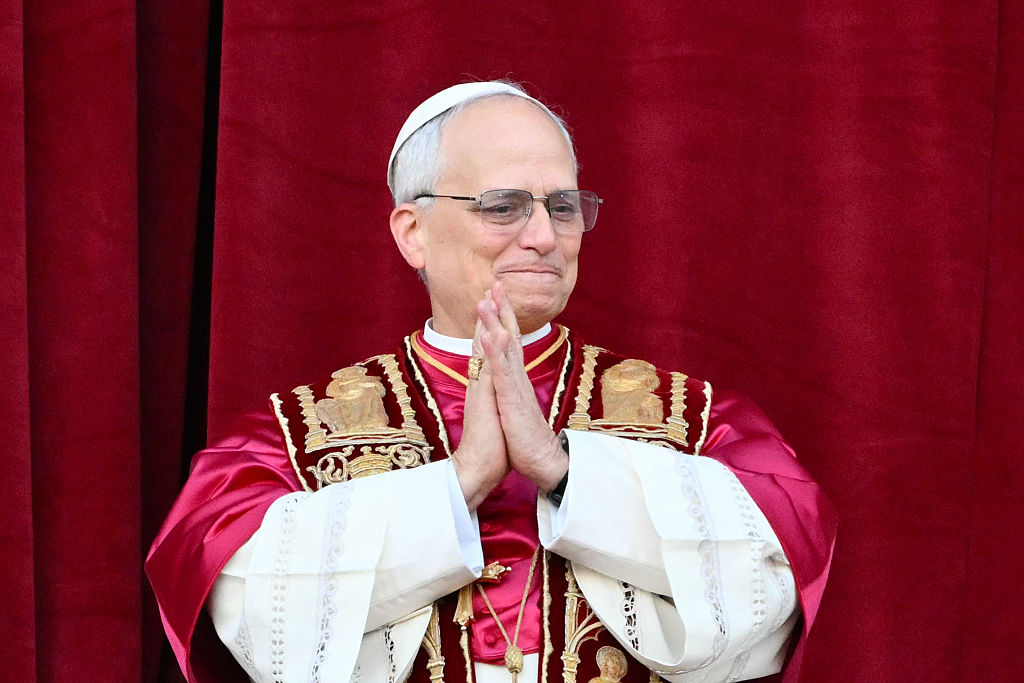
Pope Leo XIV has just passed the first great test of his pontificate. He has published a thoughtful encyclical on a controversial topic that (a) does not contain whole sections obviously farmed out to progressive lobbyists; (b) is not stuffed with semi-literate jargon; (c) does not display myopic hostility to capitalism; and (d) has been broadly welcomed by conservative Catholic commentators.
Or, to put it more simply, it could not have been published in the name of Pope Francis. (I’m wording that carefully: popes rarely write their own encyclicals, and cynics suggested that the Argentinian pontiff did not even bother to read his.)
He is frightened by the possibility of mass unemployment on a previously unimaginable scale, the development of ‘autonomous weapons systems’ and a futuristic vision of an ‘enhanced human being’
Magnifica Humanitas: On Safeguarding the Human Person in the Time of Artificial Intelligence runs to 42,300 words, and if Leo did not write them all there is no doubt that he has scrutinized them carefully. Not since Paul VI’s Ecclesiam Suam in 1964 has a pope waited more than a year before issuing his first teaching document. The delay reflects not only Pope Leo’s natural meticulousness but also the intimidating nature of his central question: how should the Church respond to the disorienting challenge of AI?
When the document appeared yesterday, journalists scanned it frantically looking for “the story.” That always happens with encyclicals. Fortunately, this time round there was technology available to produce instant summaries.
Significantly, the sections of Magnifica Humanitas addressing the subject of AI were less newsworthy than other passages – in particular, the Pope’s assertion that the concept of the “just war” has become “outdated,” a claim he will need to justify more convincingly on another occasion. Leo hates clickbait, and the encyclical’s reflections on artificial intelligence are scrupulously balanced. Papal documents, at least before Francis, made heavy use of the “on the one hand… on the other hand” device, to the point where the eyes glazed over. But if there was ever a subject where premature conclusions were unjustified it is this one.

Leo’s balancing act strikes me as unusually skillful. He is frightened by the possibility of mass unemployment on a previously unimaginable scale, the development of “autonomous weapons systems” and a futuristic vision of an “enhanced human being.” The last threat is perhaps the one that the Catholic Church can counter most effectively, using every weapon in its intellectual armory to fight the crazed eugenics of Silicon Valley sectarians.
It was encouraging, therefore, that the Pope was joined at yesterday’s launch by Chris Olah, co-founder of Anthropic, who asked the Church to discern “the need for moral imagination and ambition regarding human flourishing.” Magnifica Humanitas does, in fact, acknowledge that AI can stimulate as well as stunt that flourishing. Technological progress need not cause “regression of the heart”; it should be possible to create a moral code that recognizes the possibilities of algorithms while also coming to terms with the inescapable pain of the human condition.
And here we come to a passage that I suspect will linger in people’s memories long after they have forgotten the fine print of Magnifica Humanitas. “To eliminate suffering entirely would mean, in the end, extinguishing love and desire as well. Those who love and desire cannot avoid passing through trial and suffering… To renounce this adventure, both tragic and splendid, in the name of a presumed transcendence of all limits, could mean many things, but it would no longer be human.”
There are paragraphs in the encyclical that will annoy conservatives: they display a reverence for corrupt global institutions that has been embedded in the Vatican for decades, irrespective of their assaults on Catholic teaching and human dignity. At the same time, however, the document resists the demonization of capitalism that turned some of his predecessor’s documents into unreadable polemics. That will annoy liberals. But then Leo knew from the moment of his election that his great mission to bring peace to the Church depended on containing unhappiness – not least by forcing Catholics caught up in factional disputes to confront fundamental questions of existence. And that is what he has done in Magnifica Humanitas.






Comments