
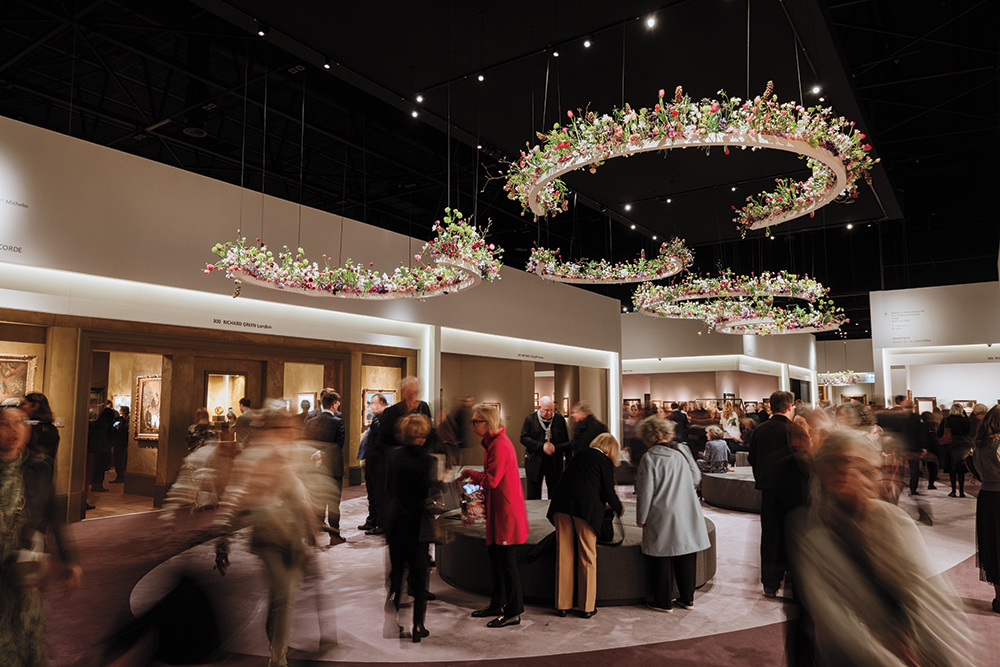
Old Masters has long been yesterday’s story as contemporary art surged away from the dusty legacy market. But just as the interesting times that we live in have investors heading for gold in their droves, the value of certainty is a rising stock in the art market, a tendency on vivid display at TEFAF art fair at Maastricht in the Netherlands this spring.
Certainty of long-term value, certainty of supply and of provenance are some of the qualities that are drawing collectors back to Old Master categories, but add better curation, services and the perception that prices reflect intrinsic worth more than hype and the smiles all round as TEFAF closed are easy to account for.
The pragmatic take is that the very conservatism that’s seen Old Masters fall behind is being seen as a benefit now. “The primary market was always speculative and buying something just-made from a gallery and then putting it in auction a year later is much more risky than it once was. Even blue-chip artists like [Jeff] Koons and [Richard] Serra have slipped in value,” notes TEFAF exhibitor Nicholas Hall, of the Nicholas Hall Gallery in London.
Old Masters are certainly doing better over the recent auction cycles than for many years, recording double-digit growth in sales volumes over recent cycles according to Artlyst (over 60 percent in 2025 according to Knight Frank’s Luxury Report) though the market share for the category is still under 10 percent by most counts. And the perceived price gap of museum-quality Old Masters versus mid-tier contemporary pieces has been noticed. Hall again, “I think people see real intrinsic value in Old Masters, not so much as an investment but as a field which is currently still undervalued.”
Comparative value isn’t the only story though. While the likes of Leonardo’s “Salvator Mundi” grab headlines (it sold for $450m) the unreal sums involved and attendant noise about the authentication do little to attract potential collectors, but it’s in solving these two issues the market has changed. Provenance and authenticity are key: “The level of scrutiny from collectors has noticeably increased. Collectors today tend to ask highly specific and detailed questions [and have] a clear expectation for transparency and depth of scholarship from dealers,” says Paul Smeets, director of Swiss gallery Rob Smeets. And, as he doesn’t say, they will back that demand with lawyers.
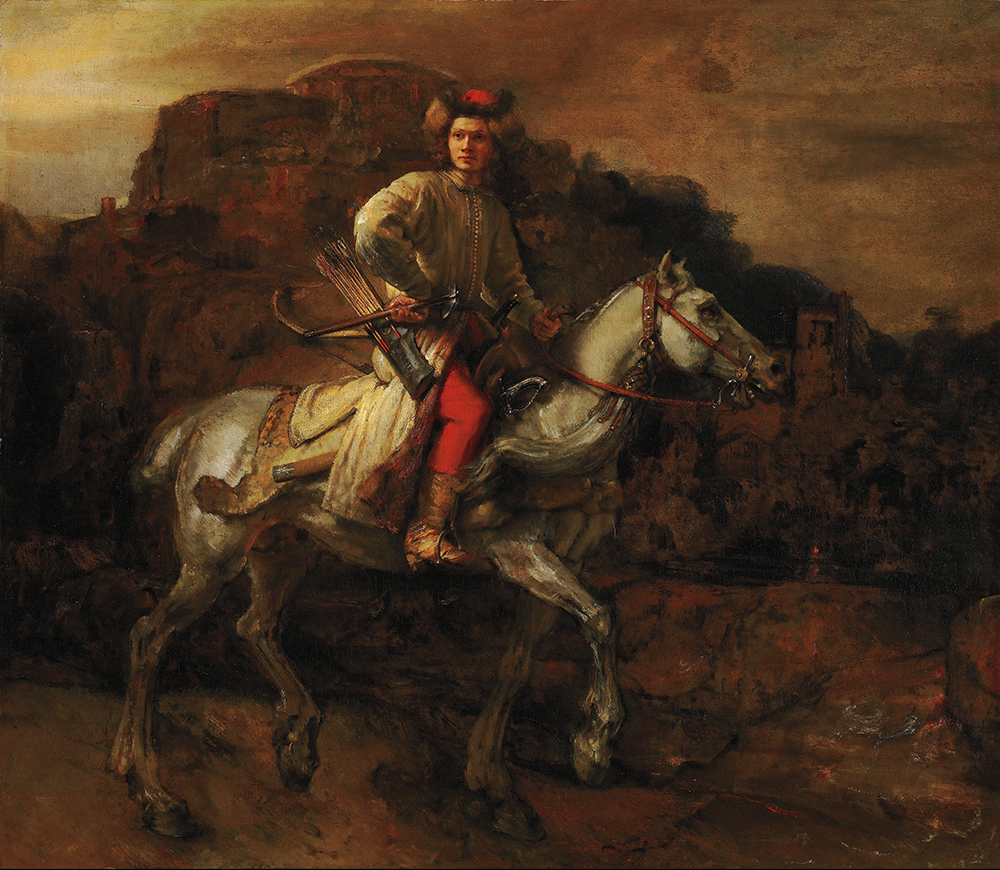
Misattribution is a structural issue according to Hall: “Post-war art is much better documented and many of the artists whose works are extremely valuable, such as Jasper Johns, are still alive.” He adds. “Conversely, the attribution of many Old Masters can be hotly debated. ‘The Polish Rider’ by Rembrandt in the Frick was for a while ‘demoted’ to being by a follower.”
TEFAF, noticeably, has made great efforts to improve and deepen its vetting process. According to Will Korner, the organization’s head of fairs, “It is not an additional layer or a marketing feature; it is built into the structure of the fair itself. The process is multilayered – beginning with the selection of the dealers, who are already among the leading experts in their fields, then the dealers’ own research and use of external specialists, followed by the vetting committees of more than 200 international experts across 30 disciplines. That level of scrutiny is unique in the market.”
The expertise is also being better communicated as dealers and curators look to interpret as well as attribute, a shift that was the subject of a panel discussion in Maastricht on “Contemporary Connoisseurship” which argues that collectors want to know who the artist was, why the piece matters, and how it fits into broader social and cultural histories, just as much as if it’s real. The last question now being more a matter of forensic science and diffused art community expertise than a single dealer’s opinion.
And on price, the fair’s Emerging Collector Program, which provides an important entry point for new buyers, saw 96 galleries present works for under €20,000. “People are amazed that one can buy works by artists such as Reynolds or Boucher, who are represented in the Frick and were the greatest artists of their day, for less than $100,000,” says Nicholas Hall.
The final word has to go to a set of eight Delftware plates from 1720 that Aronson Antiquairs sold to a US museum. The plates satirically depict the South Sea Bubble, the original stock market crash that saw investors from across Europe lose fortunes as promised returns failed to materialize.
tefaf.com
Shapely and on time
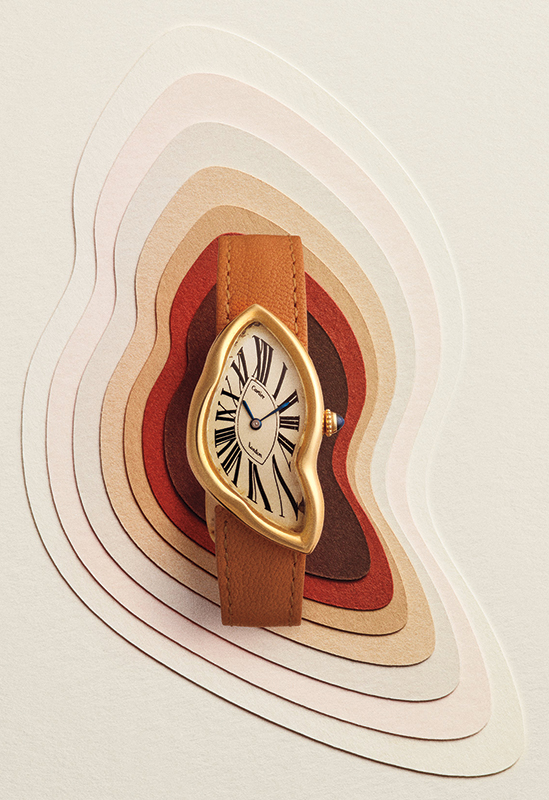
The early years of wristwatches were defined by an experimental freedom in terms of case shape as makers grappled with the new form. Most makers settled early on for round, but Cartier never stopped experimenting with novel shapes and it’s those watches that are the theme of a series of Sotheby’s auctions that conclude this June in New York. The Shapes of Cartier is, according to the house, “the finest vintage grouping ever assembled,” a claim backed up by a selection of watches covering over a century of creativity that range from early Tanks, through the Santos, Baignoire, Pebble, Octagonal, Driver, and Crash watches. While I’m drawn to the Tank Asymétrique, the star lot is undoubtedly the Cartier London Crash. It’s one of three examples made in 1987, and sold in Hong Kong for a record price of HK$15.6m. While tales of its creation having been inspired by a watch mangled in a car crash are too good to be true, that Jean-Jacques Cartier (then head of the London house) and his chief designer, Rupert Emmerson, reimagined the existing Maxi Oval with deliberately surreal intent is actually the better story.






Comments