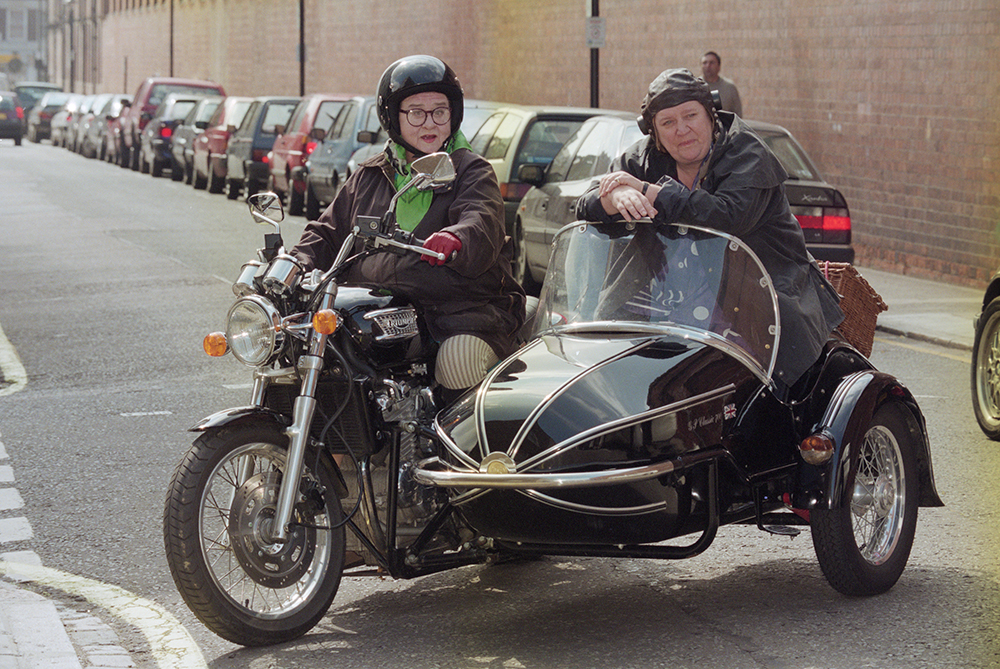


‘Grab that crab, Clarissa!/ Eat that meat, Jennifer!’ It was with these words – the start of their self-sung theme tune – that Two Fat Ladies first burst on to our screens 30 years ago. Jennifer Paterson and Clarissa Dickson Wright were exceptionally unlikely stars. Both heavy drinkers and smokers, they had slightly fallen into cooking careers on the edge of the British Establishment. Jennifer used to be the cook at The Spectator, creating cream-laden dishes for staff while necking wine. Clarissa developed quinine poisoning from consuming around six pints of gin and tonic a day. Jennifer died in 1999; Clarissa in 2014.
Clarissa was sober by the time Two Fat Ladies was filmed, but she had been seriously affected by her love of booze. She only learnt about her greatest culinary triumph – a ten-course meal for ten – after she was congratulated by one of the guests years later. She had been so tanked up while cooking that she had forgotten the menu altogether. My bucket list includes one day recreating this meal, which Clarissa recounts in her autobiography, Spilling the Beans: ‘Prawns in chau-froid and aspic, game consommé with tiny herb dumplings, fillets of wild salmon wrapped round a mousseline of trout and smoked trout with a champagne sauce, English partridge with watercress salad and bread sauce, a medley of tomato, champagne and mint sorbets, hare with wild mushrooms flambéed in brandy, a salad of endive and walnuts, assorted puddings, pot au chocolate, apple jalousie and queen of puddings, cheese beignets with a piquant sauce.’
Just as 1990s Britain was awakening to the possibilities of pesto and sun-dried tomatoes, the BBC contracted the pair to pay a chaotic tribute to old-fashioned British food. As the above menu indicates, they were an unusual choice to present a food programme in an increasingly health-conscious Britain. Clarissa was known for her passionate defence of butter: ‘We have been eating the stuff for at least 2,000 years and if it were killing us in large numbers I think we’d have realised by now or died out.’ Two Fat Ladies swam defiantly against the culinary tide, the pair cheerfully cooking with butter, cream, dripping and lard at the height of the moral panic about fat. At the time they were seen as gloriously eccentric and slightly reckless. Now, they look rather sensible.
They are the opposite of the cult of wellness – ‘mindful eating’, diets which involve cutting out entire food groups, grown men obsessing about their ‘biome’. I wish either could have lived to share their thoughts about the Zoe app, which involves affluent members of the ‘worried well’ paying hundreds of pounds to have their stool samples analysed for insights about their gut health.
Clarissa and Jennifer didn’t only champion cream and lard. They loved offal, kippers, sweetbreads and archaic cuts of meat. Some of their recipes were extremely complex, such as rabbit with anchovies, capers and sorrel. Others were disarmingly simple, such as Jennifer’s ‘sandwich’ which involved hollowing out an entire loaf of bread, stuffing a steak into the cavity, and then crushing it with a large stone. Episodes ring with what Roger Scruton called ‘oikophilia’: a love for one’s home and local habitat. The show delights in British landscapes, regional specialities and high-quality farm produce.
They didn’t only champion cream and lard. They loved offal, kippers, sweetbreads and archaic cuts of meat
The pair were camp and flirtatious, ogling firemen and farmers. They got their hands dirty; episodes are replete with close-ups of Jennifer’s red painted nails clutching at handfuls of mince. They bickered and exchanged stories that are unrepeatable now. All this made for not only a superb programme but also a genuine revival of traditional British food and – crucially – a ratings hit. Two Fat Ladies ended only when Jennifer died from an excess of good living, when the show was at the height of its popularity. The programme proved there was an audience for television that neither hectored nor provoked, but simply celebrated eccentric people enjoying themselves.
In retrospect, 1996 was something of a watershed moment: a time before things changed for ever. But Clarissa and Jennifer gleefully ignored the shifting culture. Their loathing for modernity was constant. In one episode, Jennifer, a devout Catholic, kisses the ring of a nun for whom they’re about to cook a meal. ‘Goodness me, that’s all gone into the past,’ exclaims the Mother Superior. ‘Not with me, it hasn’t!’ replies Jennifer.
They often cook for particular professions and institutions: fishermen, an all-girls’ boarding school, members of the armed forces, a cathedral choir, game hunters and so on. Watching episodes in 2026, I can’t help but notice how many of these groups directly suffered under the governments that followed. A fan-favourite episode is when they make cakes and pastries for an institution that got the measure of Tony Blair early – the WI.
The show, then, is an unashamed celebration not just of unfashionable provincial British food but also of unfashionable provincial British life. All the while Clarissa and Jennifer swap distinctly non-DEI-compliant musings about Scottish nannies and Indian army officers. Ironically, the show endures because it has almost nothing to do with the culture and obsessions of its particular time, but rather stands rigidly against them.
If the world of Two Fat Ladies was counter-cultural then, it is almost unrecognisable now. Not least of all, it is totally unthinkable that the BBC would today make a programme that referred to the weight of its female presenters in its title.
That sense of being recherché was partly deliberate. Clarissa and Jennifer were pushing back against changes in 1990s Britain, from EU regulations to trendy vicars and vegetarianism. Just as progressives were marching through the institutions, Two Fat Ladies was rebelling against the pale, scolding cult of Blair’s Britain. That is what makes the programme such a joy – it’s a last gasp of a country with a genuine sense of humour and a coherent sense of self.




Comments