
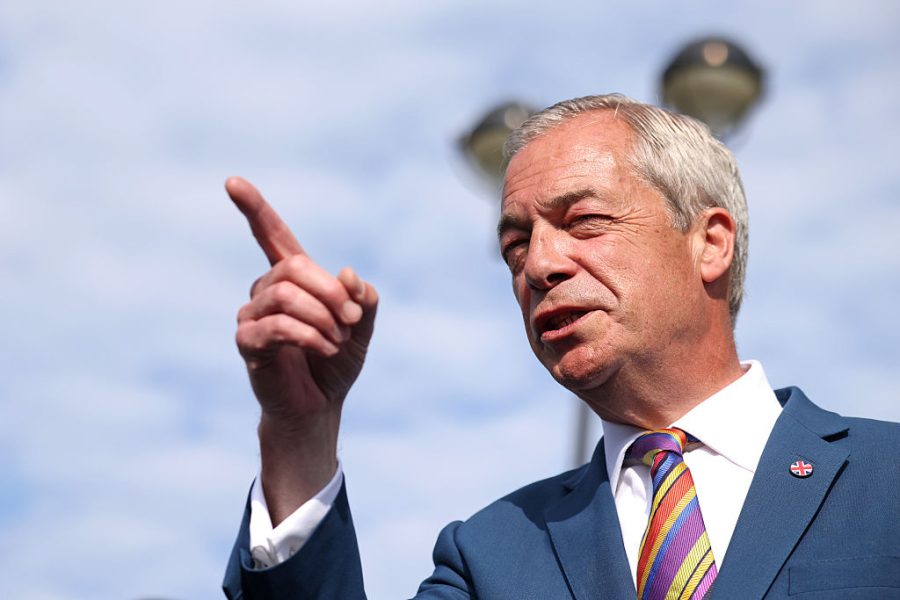
The thing about white working-class voters, as Boris Johnson discovered in 2019 and Nigel Farage is finding out now, is that there are a lot of them. They way outnumber the other voting blocs who often grab more attention, such as students, middle class muesli munchers, Muslims and so on. Tap into the white working class and you enter a fast track to power.
But having won over such voters, Farage now has the same problem as Johnson had in 2019. His voters have an expectation of high public spending, at a time when fiscal reality is demanding a sharp contraction in the size of the state.
On many issues Farage and those surrounding him see absolutely eye to eye with his voters. On migration, patriotism, Brexit, net zero, woke nonsense they will have no trouble in devising policies which hit the button in Tameside, Barnsley and other places where Reform UK has done well. However, there is an issue which is bigger than any of these, and is only going to become more so: the dire state of UK public finances. And on this, the instincts of Farage, Richard Tice, Danny Kruger and others are far less aligned with the people who are voting for their party.
The relationship between Red Wall voters and benefits is an interesting one
If they want to continue to win Red Wall seats, Reform UK can forget about some of the policies their top people have dabbled with in the past, such as replacing the NHS with an insurance system. The late Patrick O’Flynn saved Farage’s former party, Ukip, for going down that line; as a Brexiteer and anti-mass migrationist with leftist leanings, he was personally closer to the political centre of gravity of Ukip voters than Farage ever was. The white working-class voters who have returned Reform UK councillors all over England and Wales want their NHS. They also want bus services, leisure centres – and crucially, a well-funded welfare state.

The relationship between Red Wall voters and benefits is an interesting one. Yes, there is a strong dislike of scroungers and people who make a lifestyle choice out of not working. Yet there is also a lot of sickness and disability in the Red Wall; it is a place with generally poor health, in part due to high levels of smoking, drinking and the legacy of industrial diseases. People who are claiming benefits because their health is generally poor do not feel themselves to be scroungers and will not appreciate it if a future government were to try to shrink their benefit payments. Nor would Red Wall pensioners appreciate it if the state pension were to be trimmed in actual or real terms. Reform UK showed it understood its demographic by recently stating its commitment to the triple lock.
What is good politics for winning votes in former Labour areas, however, is exactly the opposite of what the fiscal situation now demands. You only have to look at the nervousness of government bond markets to realise the peril the country is in. Whenever the talk of Starmer’s departure from No. 10 rises, so too do bond yields. That is because investors fear a new prime minister with an even looser grip on public spending. The blatant fact is that no government – of any colour – has balanced the books in 25 years. We are spending more than £100 billion a year on servicing debt: this is more than we spend on education or defence.
Something has to give. If the UK government does not get on top of its finances we could well end up where Greece was in 2010. That country’s sovereign debt crisis began with much the same movements in bond yields as we see with UK bonds now: a gentle upwards creep followed by a downgrading by the ratings agencies. Then, the real havoc began. The Greek crisis was only resolved after a bailout from the EU and IMF which involved eight years of austerity packages, in which state salaries and pensions were repeatedly cut, along with benefits.
The next election is most likely still three years away. By 2029, a fiscal crisis may already have erupted and an already-deeply unpopular Labour government may be forced to make the required cuts, with the IMF effectively taking over the job of chancellor. Or the crisis might still be to come, to be faced by the new government. Farage, Tice and so on, I think, fully understand the desperate fiscal situation the country is in. But in order to win power they may have to steer their party to the wrong side of the political debate.





Comments