
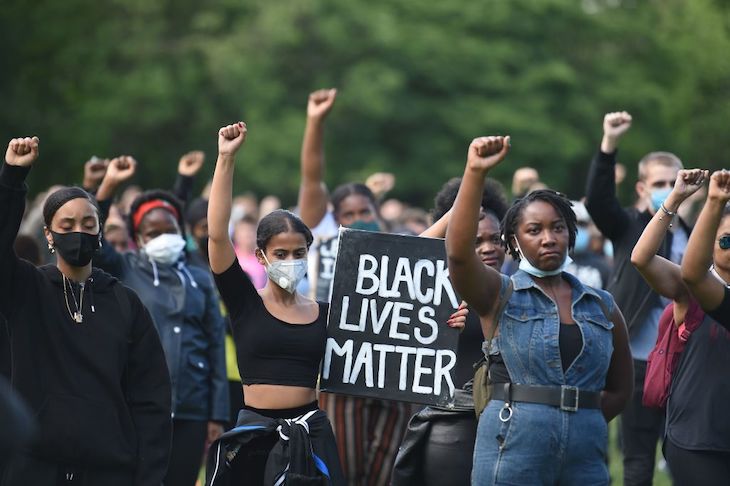
For the past few years, woke has been on life support. Back in 2020, police officers knelt for Black Lives Matter, children were taught that boys could become girls, and the trans-inclusive Pride flag seemed to fly from every building in the country. Since then, there has been something of a retreat. The Diversity, Equity and Inclusion (DEI) industry still has a pulse and is more than capable of reinvention, but it is less confident and more defensive.
Human Resource officers were able to rule the roost
Why the change? Donald Trump’s second term in office is one reason for the vibe shift. The US President punctured all manner of sacred convictions as he signed executive orders to keep DEI out of education and men out of women’s sports. There have been legal challenges in the UK too, such as the Supreme Court ruling that ‘woman’ means a biological female.
The economic downturn is another explanation for the demise of woke. It is one thing to fund white privilege workshops and pay for pronoun badges when times are good; it is more difficult to justify such expenses when times are hard. (Although the NHS has clearly not got the memo on this one yet.)
But something else has happened, too. With less fanfare, but surely more impact, employees have been asking awkward questions and refusing to comply with DEI strictures that have nothing whatsoever to do with the job they signed up for.
This opposition was always there, of course. But while woke reigned supreme, criticism could lead to people being dragged through workplace disciplinary processes, losing their livelihoods, or being publicly shamed and cancelled. With complaints reduced to eye-rolls and whispers between friends, Human Resource officers were able to rule the roost.
Now comes proof that resistance towards DEI is not only on the rise, but that managers are taking note. A YouGov poll has found that more than one in three HR ‘decision-makers’ have faced pushback against equity, diversity and inclusion initiatives over the past year as both bolshy workers and parsimonious CEOs have made their feelings known.
Gone, it seems, are the days when employees could be compelled to attend Maoist-style struggle sessions and be forced to bare their souls, confess to wrong-think, and repeat mantras (trans women are women, black lives matter) until relenting with pleas for their own rainbow lanyard. With workers less willing to comply, and bosses less confident that this is the best use of company time, HR officers have been forced to rethink their game plan.
Unfortunately, not all companies are learning the right lessons. The YouGov poll was carried out for Working Chance, a charity which aims to secure employment for women with convictions. It is concerned that pushback against DEI could lead to companies scaling back inclusive hiring practices and that this will undermine efforts to get people with criminal records back into work. But when we look at those who came a cropper for challenging DEI during the years of peak woke, it is impossible to find anyone who was disciplined for complaining about companies hiring female ex-convicts.
Few people oppose second chances or rehabilitation. But this was never what woke was about. I’m sure I am not the only one who would far rather share a workplace bathroom with a woman with a criminal record than with a man in a dress. I would rather a woman who has struggled be given an opportunity to work than see her being lectured about white privilege. And I would prefer doors to be opened for female ex-offenders rather than Oxbridge graduates well-versed in identity politics and their own victimhood.
DEI initiatives always focused on currently fashionable groups. Often, this meant middle-class black or brown people, rather than those with physical disabilities. Or men convinced they were women rather than ex-convicts. Or expensively-educated transgender women rather than working-class men. To suggest otherwise, now that the tide is beginning to turn, is simply disingenuous.
Some organisations, it seems, are taking a different lesson from the pushback against DEI. Instead of ditching politicised and divisive initiatives, they are rebranding yesterday’s bad ideas. HR managers now discuss “pivoting away from explicitly using ‘EDI’ language and adopting terms such as ‘engagement’, ‘belonging’ or ‘culture’”. In other words, woke business as usual, but dressed up in new language. Thankfully, the bottom-up challenge to workplace hectoring suggests that HR managers can change words all they like, but DEI will still be rejected.
For too long, the workplace has been tyrannised by the cult of diversity, equity and inclusion. This has been to the detriment of free speech, individual rights and solidarity between colleagues. It is great to see that HR managers are now on the defensive, thanks not just to legal changes and economic pressure, but also to staff resistance.


Comments