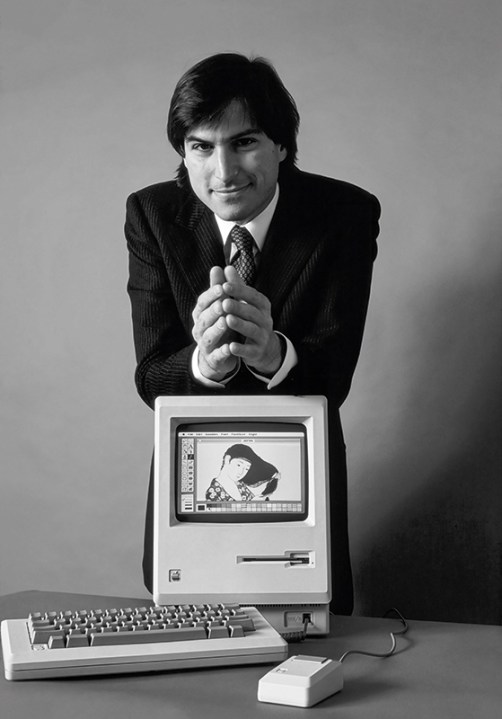
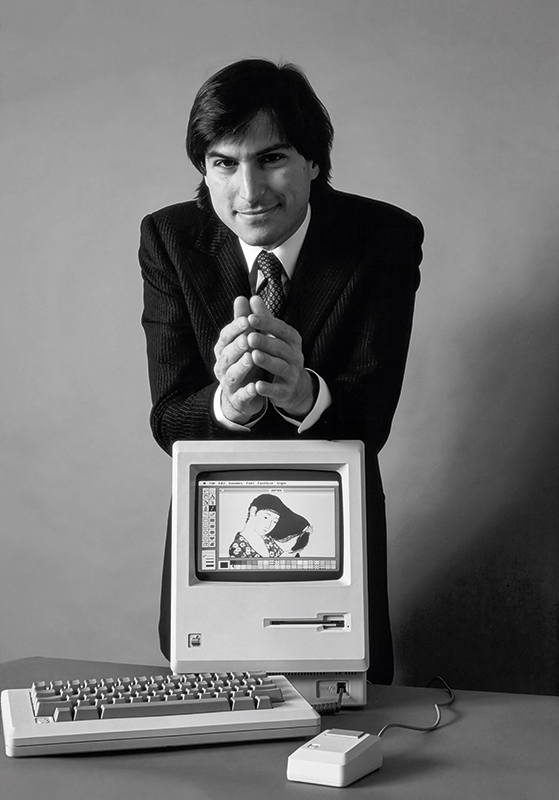
When Apple named its next chief executive last month it did so without ceremony. Tim Cook will become executive chairman on September 1; John Ternus, his senior vice-president of hardware engineering, will succeed him as CEO. The announcement came with a photograph, not a keynote: the two men walking through Apple Park, the circular glass campus in Cupertino that Steve Jobs designed with the British architect Norman Foster and did not live to see completed.
It was the first Apple succession of the post-masterpiece age, and the prose matched. Apple said the transition had been approved unanimously by its board after a “thoughtful, long-term succession planning process.”
Cook had spent 15 years building a company that could change its CEO without spectacle. He took over from Jobs in August 2011, six weeks before Jobs died, and spent the next 15 years embedding Apple into our daily lives. He also grew the company more than tenfold. That is the growth curve of a Silicon Valley start-up, not a company that was already worth $350 billion when he took the job. Today Apple is worth around $4 trillion, more than every other company in the FTSE 100 combined. It has 2.5 billion active devices, roughly one for every three people on earth.
Much commentary has treated the appointment as a test of whether Apple can still produce genius
What Cook erased is the feeling of using Apple. The iPhone is capable of more tasks than ever, but it no longer announces itself as an Apple product. Commuters tap through train gates with Apple Pay, an AirTag in a missing suitcase phones home from Istanbul, and when parents call their children on FaceTime – a service Apple has run since 2010 – they think they are making a regular phone call. None of it registers as Apple. The iPhone is now just part of life.
Ternus is 50, the same age as Cook when he took over. He trained as a mechanical engineer at the University of Pennsylvania, and joined Apple in 2001, four years after graduating. Under his watch as head of hardware engineering, Apple stopped buying the Intel chips that still run most of the world’s PCs and started designing its own.
The transition took three years. The new Macs were faster. Their battery life nearly doubled. After this success, Apple began preparing Ternus to succeed Cook. Much of the early commentary has treated Ternus’s appointment as a test of whether Apple can still produce genius. The question is wrong. The masterpieces were rare even under Jobs. The iPod arrived in October 2001 with the promise of “1,000 songs in your pocket.” The iPhone followed at Macworld in January 2007, where Jobs told the hall Apple was going to “reinvent the phone.”
The MacBook Air came a year later, slid from a manila envelope as though thinness were a moral position. That is the canon, or most of it.

But Apple’s masterpiece age was far shorter than we remember. Even its founder described himself as “a person who builds neat things” to Esquire in 1986. Apple had more ideas than it could land. The original Macintosh, the 1984 machine now treated as gospel, was never quite the hit Apple needed. The people at Apple told me so for my book, Steve Jobs in Exile. Mac sales had stalled within a year, the company had fallen into crisis, and the board removed Jobs from running the Macintosh. At 30, he resigned.
For the decade that followed, Apple drifted. It released the Newton, a handheld computer whose buggy handwriting recognition became a running joke on The Simpsons, and a string of increasingly forgettable Macs. By 1996 the company was close to bankruptcy. Apple bought Jobs’s other computer company, NeXT, and brought him back. He killed 70 percent of the product lines, shut down the Newton, and rebuilt the Mac’s software on NeXT’s foundations.
Apple turned 50 this year. The masterpiece age ran for only seven of them. The commentators want Ternus to conjure another iPhone-scale product. The conditions that produced one are gone.
The iPhone is not going anywhere. Apple shipped roughly 248 million of them in 2025, a record, according to the market-research firm IDC, and they are so well integrated into our lives that the question of replacement has become uninteresting. The age of the smartphone as revelation is finished. The innovations that matter now happen inside the chip that runs the phone, and in the services running in the cloud, on computers in buildings the user will never visit.
That is a different kind of work, and it is not a product that launches from a manila envelope. Take Ternus’s approach to artificial intelligence. At a moment when Microsoft, Google and OpenAI are spending hundreds of billions to make their AI as visible as possible, Ternus told the tech news site Tom’s Guide the opposite. “We never think about shipping technology,” he said. “We always think about, ‘how can we leverage technology to ship amazing products and features and experiences for our users?’”
The day after Apple announced its succession plans, Cook and Ternus held an internal town hall in the Steve Jobs Theater at Apple Park. Ternus was echoing the man the theater is named for: “We’re going to keep focusing on design, because design is core to what we do at Apple,” he told colleagues. In 1989, Jobs was asked about the software running inside his new computer. “Nobody thinks about it,” he told MacWEEK. “We make it usable by mere mortals.”
Jobs’s quiet principle – that the technology is supposed to disappear behind the product – has endured. And the succession, too, is structured for continuity. Cook remains CEO through the summer. As chairman of the board, he said he will continue as Apple’s highest-ranking representative to governments around the world. This is not a retirement. Cook is moving from one hard job to another.
Silicon Valley’s commentators will read this transition as decline. “The main case against Ternus,” according to Bloomberg, “may be that Apple needs someone more willing to shake things up.” They will be wrong. Apple has become so thoroughly embedded in our lives that its success no longer registers as success. That is the condition Ternus has been hired to hold.



Comments