During my career in the energy industry, I have been through seven major supply disruptions. Each time nations vow to learn lessons, revisit strategy and reduce risk. Yet when the war in Iran sent wholesale gas prices surging by more than 65 per cent, the British government scrambled for responses. The harder question, the one nobody in Whitehall wants to answer, is why, after years of climate pledges, net zero targets, and energy security reviews, the United Kingdom found itself just as exposed to expensive gas as it was in 2021.
The answer is uncomfortable: Britain does not have an energy strategy. It has a collection of incoherent policies, and there is a profound difference. A 78 per cent tax rate on North Sea gas production sits alongside a nuclear programme that will not deliver meaningful capacity for a decade. A Clean Power 2030 target exists on paper, while backlogs in grid connections mean completed renewable projects cannot connect. Multiple agencies share overlapping remits with no clear accountability. These are not policy imperfections. They are symptoms of a government that has never forced its own energy ambitions into a single coherent framework.
What Britain needs is not another target or another consultation paper. It needs a National Energy Strategy
The most urgent issue is gas. Nearly three-quarters of British homes are heated by it, far more than most comparable economies. Gas sets the price of electricity. The UK holds just over ten days of gas storage capacity which is not always full; Germany holds ninety. North Sea production is declining at 12 per cent a year. The Energy Profits Levy, now set at a combined 78 per cent marginal tax rate, has choked investment so thoroughly that the capital needed to reverse that decline has gone elsewhere. There is a climate advantage that critics of domestic production consistently ignore. It has around three times less upstream carbon emissions than imported liquefied natural gas from Qatar or the United States. Fixing storage and reviving domestic production is not a retreat from climate ambition. In many respects, it is an expression of it.
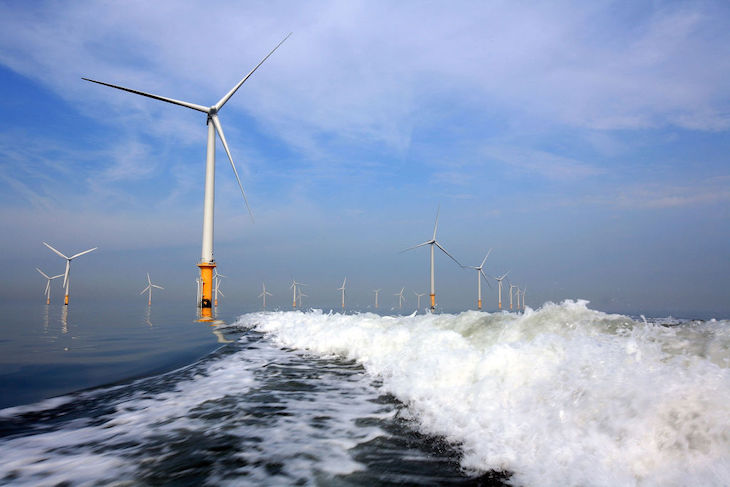
Beyond gas, the medium-term challenge is just as poorly managed. Renewables have delivered real progress, with 7.7 GW of wind and 7.6 GW of solar since 2021, saving approximately £7 million per day in gas costs during the current crisis with gas generation about 40 per cent lower than five years ago. But deployment rates remain insufficient for Clean Power 2030, and the key structural constraint is grid connection delays. The strategic response requires accelerating grid reforms, specifically the NESO “First Ready, First Connected” approach; reforming planning law to prevent local authorities from vetoing nationally significant projects; and funding both the Strategic Spatial Energy Plan and the Centralised Strategic Network Plan. The AR7 auction with 20-year Contract for Difference agreements gave investors long-term certainty.
The electricity market itself is in urgent need of reform. UK industrial electricity prices remain among the highest in Europe, and that gap is destroying internationally competitive manufacturing. Prices are set on the last source needed to make enough electricity to match demand; that is gas, which in the UK is four to six times more expensive than in the US. This system needs changing to pay what it takes for each source according to cost.
The other fundamental question is about who should finance the grid in the first place. Ofgem has approved an initial £28 billion in network investment, potentially rising to £90 billion over five years. These costs are currently loaded onto consumer bills. That is the wrong approach structurally, economically, and politically. Grid infrastructure is a national asset that benefits the whole economy across decades. We do not fund roads and railways through utility bills. Network infrastructure costs should be moved off household and business bills and onto long-term government borrowing, where they belong. The alternative, asking households already struggling with energy costs to finance tomorrow’s grid through today’s bills, is a political choice which is proving unsustainable.
The case for the vital transition to a lower carbon economy will be lost if these fundamental mistakes are not corrected. Public support for the long-term process of change is essential.
Nuclear is the area where policy has made the most coherent recent progress. The Final Investment Decision for Sizewell C was taken last year, Hinkley Point C is nearing completion, and Wylfa has been selected as the first small modular reactor (SMR) site. But the cost overruns at Hinkley must be absorbed as lessons, not precedents. And the commercial case for SMR deployment, the cost trajectory that would make them competitive with other low-carbon sources, still needs to be demonstrated before the government commits at scale. A plan to deliver 24 gigawatts of nuclear capacity by 2050 is achievable; achieving it cheaply is the harder and more important task.

To create the future energy system, Britain needs to decide where to focus its research and development spending; the answer matters more than most politicians are willing to admit. The UK cannot match the absolute R&D firepower of the United States, China, or the European Union. It must therefore make hard choices about where to lead and where to follow. The worst possible outcome is a broad portfolio, inadequately funded, failing to achieve leadership anywhere.
The Iran war is painful. But crises have a way of producing strategic clarity
Britain has genuine world-class advantages in specific areas: perovskite solar cell technology, where we hold global efficiency records; sodium-ion batteries for grid storage, a segment not yet dominated by Chinese manufacturers; green hydrogen and electrolyser technology; and the application of artificial intelligence agents to discovering new materials and new organic catalysts and to energy system optimisation, where the UK’s research base is genuinely competitive. These are the areas where focused, sustained public investment can secure intellectual property, anchor domestic industries, and give British firms a stake in the global energy transition. Spreading the same budget thinly across every fashionable technology will secure none of it.
Nothing will change unless the architecture changes. What Britain needs is not another target or another consultation paper. It needs a National Energy Strategy, governed by a body led from No. 10 and the Cabinet Office with full authority to force trade-offs into the open and to take hard decisions. Security, sovereignty, affordability, and climate are all important. They are also, at the margin, in tension with each other. If markets worked perfectly, volatility was very low and the world was at peace, a government can fudge that tension. But in the world of today it cannot. Sovereignty and security must be the first-order constraints within which everything else is pursued.
The Iran war is painful. But crises of this kind have a way of producing strategic clarity that peacetime incrementalism never achieves. The question is whether the government will use this moment to build the architecture that Britain’s energy future requires or whether, when prices stabilise, it will return to managing contradictions rather than resolving them.




Comments