
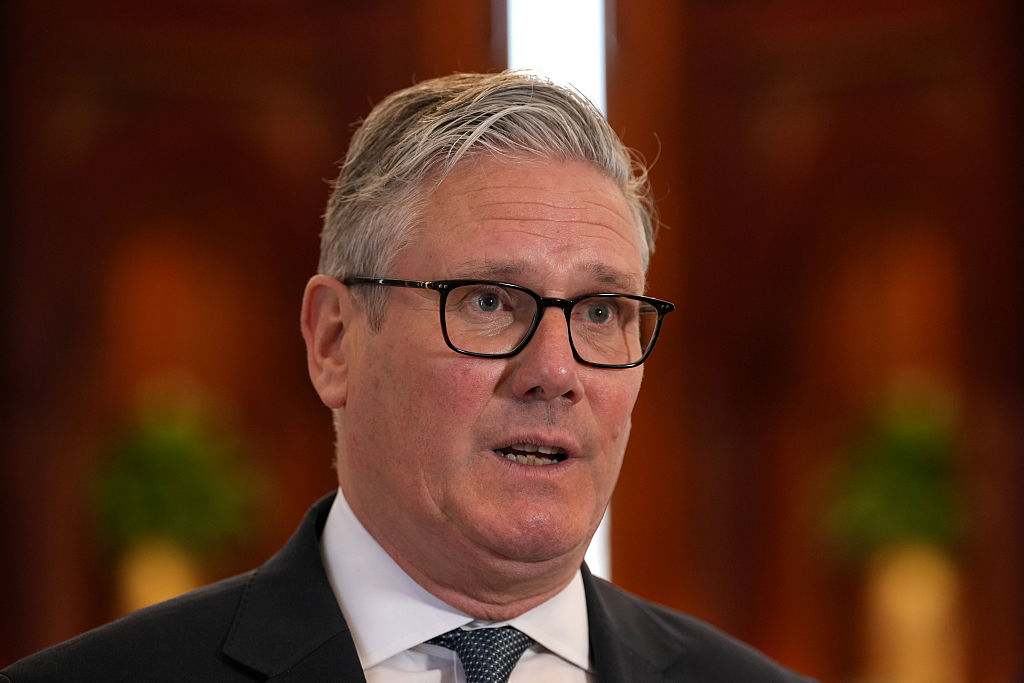
The old joke runs that you can tell when a politician is lying because his lips are moving. It is unfair – our elected leaders rarely indulge in flat-out, unambiguous untruths – but part of politics is certainly about presenting complex issues in a favourable light. The current government has its own strange and maddening approach to this, but I will come back to that.
Robertson’s rebuke is especially important because he was the lead author of last year’s Strategic Defence Review which Sir Keir Starmer hailed as a ‘landmark’ document
Outside the arrogant utopianism of Zack Polanski’s Green party, there is a widespread consensus that the United Kingdom needs to spend more money on defence. It is also accepted that the increase must be substantial, not a tenth of a per cent here and there. On the opposition benches, the Conservative party has pledged to increase defence spending and the Liberal Democrats are singing from a similar hymn sheet.
This is not just a party political view. The administration in Washington has stretched the limits of diplomatic euphemism to encourage higher expenditure, and the UK’s Nato allies in Europe have made the same case in more nuanced tones. In February, Defence on the Brink, the advocacy and analysis group of which I am contributing editor, drafted an open letter to the Prime Minister calling for Britain to move to a figure of 5 per cent of GDP to defence. The dozens of signatories included three former defence secretaries, a former chief of the general staff, a former first sea lord, an ex-chief of the Secret Intelligence Service and three ex-chairs of the House of Commons defence committee.
Today it was the turn of Lord Robertson of Port Ellen, Sir Tony Blair’s first defence secretary and former secretary general of Nato. In stinging terms, he warned that ‘Britain’s national security and safety is in peril’, that we ‘cannot defend Britain with an ever-expanding welfare budget’ and that the Prime Minister is ‘not willing to make the necessary investment’.
Robertson’s rebuke is especially important because he was the lead author of last year’s Strategic Defence Review which Sir Keir Starmer hailed as a ‘landmark’ document in delivering ‘the security of the nation and the prosperity of its people’. The Prime Minister pledged that ‘this government will now drive a national effort to deliver it’.
That is simply not happening at anything more than a marginal rate. In 2024, the UK spent 2.3 per cent of GDP on defence, and in 2025 that rose to 2.4 per cent. The government has promised a further increase to 2.5 per cent by 2027; it has also set a ‘target’ to reach 3 per cent by the end of the next Parliament. Even so, a promise made by a party currently tied for third place in the polls on just 16 per cent is effectively meaningless (and still falls short of the agreed Nato target of 3.5 per cent on core defence from a total of 5 per cent on national security and resilience).
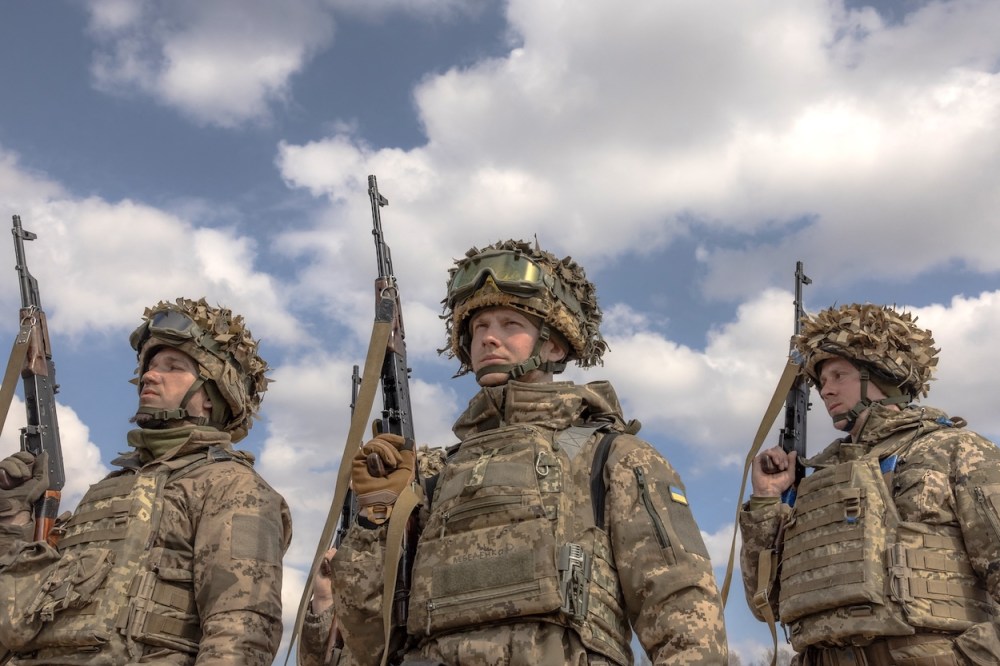
The reason we need to spend more is pressed home every day. The Royal Air Force currently has no medium-lift helicopters because awarding a contract was delayed repeatedly to save money. The Royal Artillery has 14 155 mm self-propelled howitzers because it donated all its ageing AS-90s and will not see its replacement RCH-155 self-propelled artillery in service until 2029 or 2030.
The Royal Navy only has one of its six Type 42 destroyers operationally available and one of its five Astute-class attack submarines because of maintenance and repair backlogs. There will be no proper amphibious assault ship capability until new vessels are delivered starting in 2033, and personnel from the Royal Fleet Auxiliary are engaged in strike action to demand higher pay.
The government has not responded to these glaring inadequacies by lying, although the picture it tries to paint is wholly misleading. Instead ministers simply deny there is a problem and advance ritualistic arguments and statistics which answer different questions. A particular favourite is to fall back on the assertion that the government is providing ‘the largest sustained increase in defence spending since the end of the Cold War’. This may be true but it says nothing about the security challenges of 2026 or how adequately the UK is meeting them.
Lord Robertson calls this attitude one of ‘corrosive complacency’, which exactly sums it up. Ministers and officials tell us again and again what will happen, supported by the most positive-sounding statistics they can find, but can provide no reassurance on today’s dangers and capability gaps.
The best illustration of this blithe and superior indifference is the Defence Investment Plan. This document, which will set out the detailed spending measures to implement the Strategic Defence Review, was promised in the third quarter of 2025. It has yet to be published and rumour has it will not emerge before June.
The response of the armed forces minister, Al Carns, in the House of Commons was a masterpiece of snide complacency:
‘We will publish the defence investment plan as soon as is feasible… we will not be pushed into those decisions by noise or pressure… we will not rush it for the sake of a headline… this is not a moment for point scoring but a time for leadership, and this Government are providing it’.
We must hope that our geostrategic opponents – the likes of Russia, China, Iran and North Korea – can give the government the time and patience it so obviously believes it deserves. History suggests that is usually not the case.






Comments