Men who cook Spanish omelettes look a bit gay. Or at least that is how American film executives reacted to Harry Palmer cooking in The Ipcress File. The cable said: ‘Dump Michael Caine’s spectacles and make the girl cook the meal. He is coming across as a homosexual.’ This was 1964, when London was the cultural centre of the Swinging Sixties. In the final cut, Palmer asks what she will report back about him. She replies simply: ‘That you like girls … you also like books, music, cooking.’ The Americans had misread the moment. This was a modern heterosexual man, self-sufficient, urban, and quietly competent, but one whose lifestyle still had to be explained.

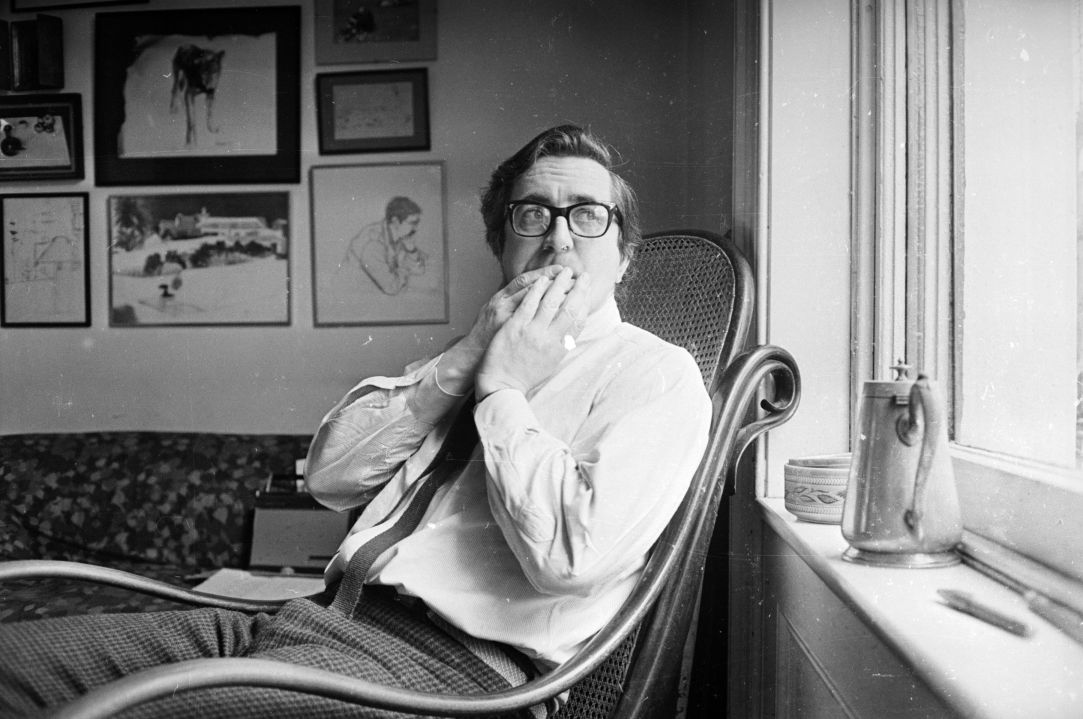
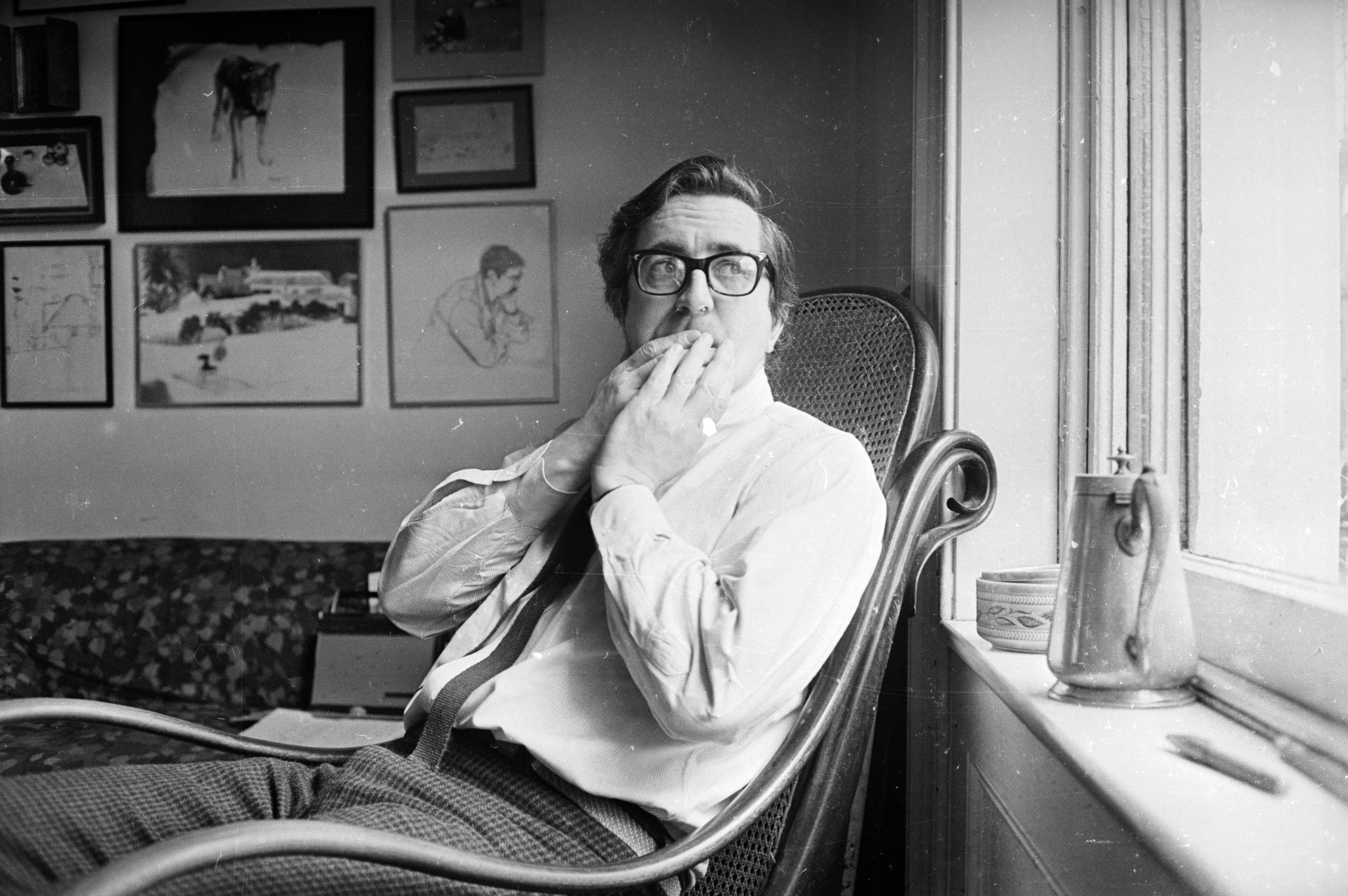
I’ve rewatched this film following the recent passing of Len Deighton, author of the book of the same name, which shot him to fame in 1962. He is remembered for his espionage novels including SS-GB and Funeral in Berlin but that wasn’t where he started. He said: ‘I was earning enough money as an artist to write anything I chose. I chose a spy novel.’ He began as an illustrator, advertiser and, more curiously, as a cooking cartoonist.
The format came from not wanting to dirty his cookbooks, so he copied them into diagrammatic notes, later spotted by a journalist. The Express tried him first but thought his cookstrips ‘too fancy’ and they were instead taken up by the Observer, where they found their audience. They were targeted at bachelors, who hoped that a gâteau St-Honoré would open up sexual opportunities. What they did instead was demystify cooking for a new generation living on their own, far from whoever used to cook their meals.
Seventeen years after the war, British food still had a poor reputation. Bernard Levin described it on the BBC as dirty, complacent, exorbitant and disgusting. Hotelier Charles Forte defended our national reputation by saying that one day people would come to Britain for cooks – the studio audience simply laughed. Yet change was underway as Elizabeth David was telling people to melt tomatoes in olive oil in her 1960 book French Provincial Cooking. She made food cosmopolitan; Deighton made it accessible. They were throwing off Edwardian habits and moving beyond suet and Spam. Deighton was easy to understand and gave confidence where others were intimidating.
Deighton wasn’t the only one to facilitate this change. Terence Conran, with his twin empire of furniture and food, led the way. Habitat opened in 1964 on Fulham Road, with staff in Mary Quant uniforms and Vidal Sassoon haircuts. The items on offer were a mix of rustic French copper pans, Bauhaus metal chairs and flat-pack furniture. Press coverage had to explain this novel shop: ‘You pick your wire basket and take what you like off the shelves.’ With its aspirational yet affordable products, it appealed to a post-war generation seeking independence from their parents, a generation who suddenly had to furnish and feed themselves in the absence of domestic servants.
Deighton was easy to understand and gave confidence where others were intimidating
Conran’s dream was to bring beautiful, useful, and affordable objects into everyone’s homes, that everyone should ‘have the best of everything… and it should be affordable.’ But the old guard didn’t like it; Conran famously said that ‘Cecil Beaton would regularly stalk all around the outside with a look of enormous disdain.’ But Conran wasn’t the man to show you how to use these new tools, Deighton was. The bridge between the two men is captured in the cover of Deighton’s Action Cook Book: a handsome man stares out as a woman caresses his hair. His competence is clearly seductive. Cooking is not domestic drudgery but the mark of a quality man.
Male and female stereotypes were shifting – with more young people living alone and marrying later, they needed to cook for themselves. This is where Deighton’s cookstrips enter: graphic, practical, unpretentious. Words like RINSE, SHAPE, SERVE appear in all caps, with none of David’s ‘voluptuous aubergines’ here. Male competence may have seemed suspect at first, but self-sufficiency quickly trumped convention. Even if reassurance was occasionally required that our male icons did indeed ‘like girls’.
Deighton did not invent the metropolitan man any more than Conran invented the modern flat. But both grasped how the world was changing. British life was being reorganised around a new ideal of private competence. What Deighton offered was not cartoons for bumbling bachelors, but a way of making good food part of a masculine life, and faintly glamorous to boot. Harry Palmer’s omelette belongs to the same Britain as Habitat’s chopping boards. Conran furnished that world; Deighton taught it how to feed itself.





Comments