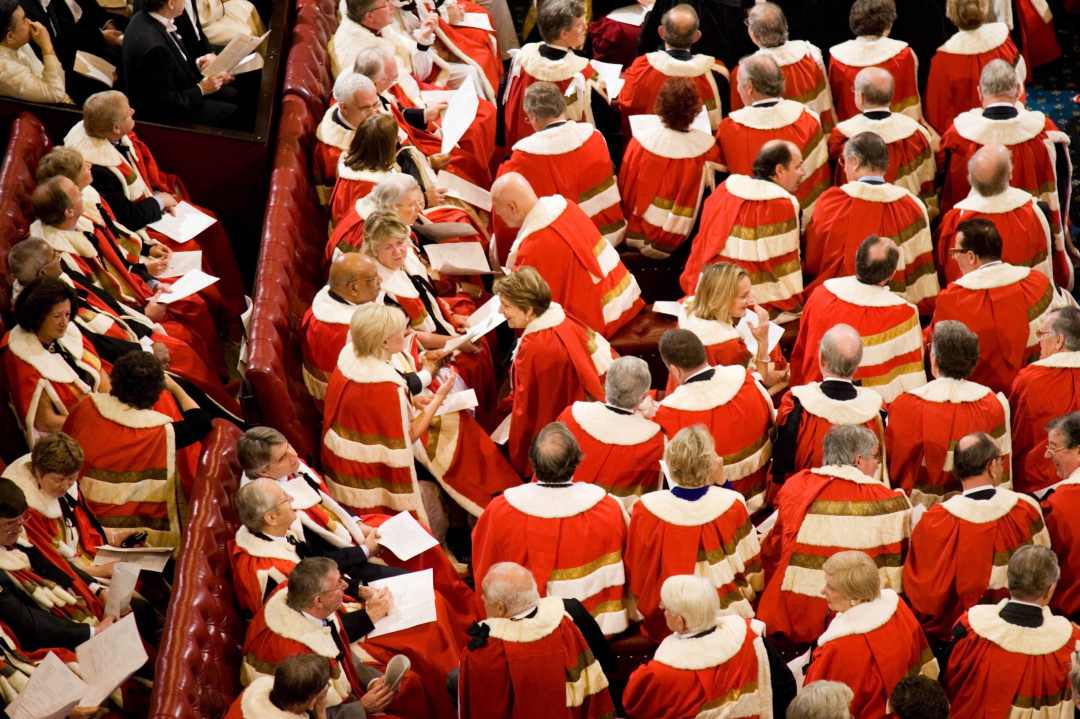
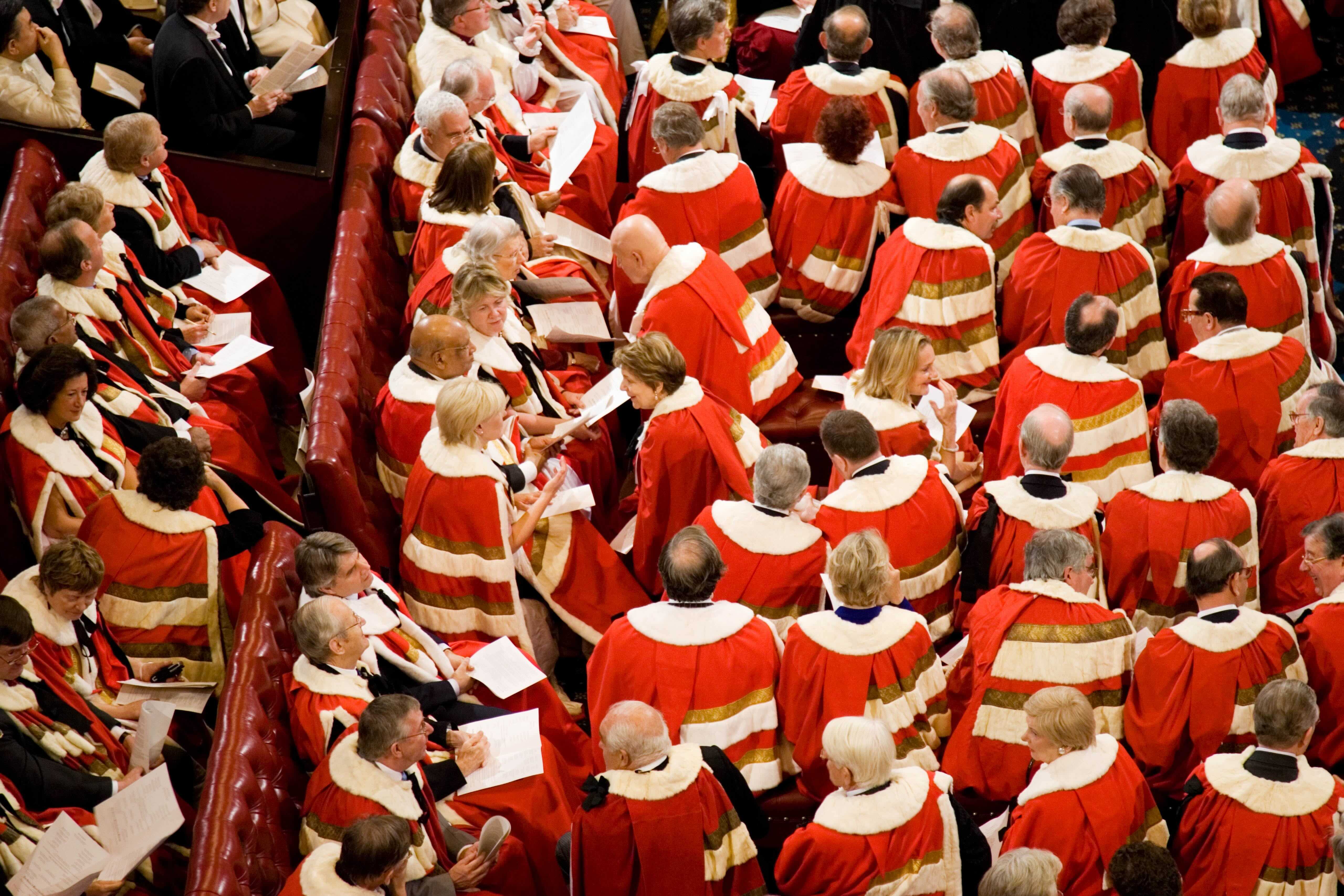
The ermines have been mothballed; the coronets stowed away. The United Kingdom has, at last, thrown out the hereditary peers from Parliament. This levelling process, begun by Tony (not yet Lord) Blair, and stymied for decades, has come to an end. It’s as if the lion and the unicorn had been torn from the royal coat of arms, and ordered to find other work.

No longer will we gawp at the peers processing at the opening of Parliament, arrayed alongside their glittering spouses, their titles and names a reminder of centuries of history. Our parliament – the most ancient in the world – has lost that lustre for ever, and will increasingly resemble the bland, managerial talking-shops of Europe. Farewell, then, to Asquith, Curzon, Astor; to the 9th Duke of Wellington, and the 14th Lord Fairfax, whose ancestor fought under Elizabeth I. Close the panelled doors quietly, and remember them.
There might, however, be consequences that Blair and his cronies hadn’t countenanced. This won’t, I think, be the end for the aristocracy and politics. Those Earls won’t stop reading their Hansards, and those Dukes won’t lay down their lanyards without a fight. Now that the peers have lost their right to sit in the House of Lords automatically, they have become like the rest of us.
Which means, of course, that they can run for Parliament. This would not be at all unusual. In the 19th century, when Prime Ministers could be drawn from either house, you could hardly move for Dukes about the Commons, whilst younger sons filled the plebeian benches.
We have already, in the 21st century, boasted a Viscount in the Commons, and nobody batted an eyelid. The 3rd Viscount Thurso (descended from Archibald Sinclair, leader of the Liberal Party), having been shoved out of the Lords in 1999 after the first clearing out, decided to sit in the lower chamber, and was elected in 2001. He served for 14 years, only losing his seat to the Scottish Nationalists in 2015. Peers have also been active in other areas: the current Duke of Wellington, for example, served as an MEP for many years.
Peers spring from all political spectrums, and you’re just as likely to find a passionately red heir as one who votes Reform. Could Viscount Thurso provide a model for other aristos with an eye on politics? Elder sons (and daughters, since some peerages pass through the female line), kicking about their estates, with energy, time and money on their hands, may be considering their families’ lengthy political histories, and wondering how they can contribute to the commonweal.
They will have longstanding ties to their local areas, sometimes over centuries. They will know the issues facing their constituents, better than some wonk parachuted in from a party’s head office. They will have gained knowledge of campaigning conditions at their parents’ knees, and will have bags of excellent connections across the social spectrum. They might have some political experience already, sitting on the Parish Council or on other committees.
You’re just as likely to find a passionately red heir as one who votes Reform
What, then, could be more natural than for a proto-Marquess, or even a fully fledged Baron, to answer the call of duty, and stand for their local seat? And what could be more natural than that the locals, who’ve known these families all their lives, would want to vote for them?
Will we, indeed, be about to see an explosion of aristocratic activity in the House of Commons? The Lords, with its political appointees, will become the plebeian chamber. The green benches will be littered with languid Earls, fanning themselves with peacock feathers. Prime Minister’s Questions will see a battle between a hoary Tory Viscount and a Mao-worshipping Marquess. There’ll be strawberry leaves at the dispatch box before you know it. Perhaps noblesse will oblige after all.





Comments