
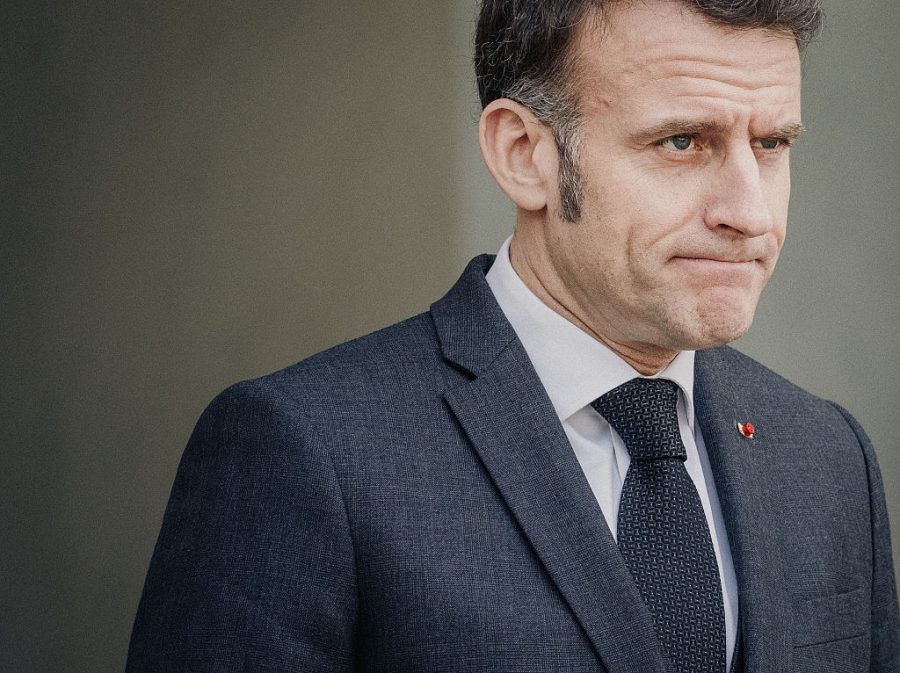
Investigators from the Paris prosecutor’s cyber-crime unit raided the offices of X in the French capital on Tuesday in what Elon Musk described as a “political attack.” The raid was part of an inquiry into whether X, which Musk has owned since 2022, has violated French law. In particular, the prosecutor’s office said it was investigating complicity “in possession or organized distribution of images of children of a pornographic nature… sexual deepfakes and fraudulent data extraction by an organized group.” X has denied any wrongdoing.
Musk and the former chief executive of X, Linda Yaccarino, have been asked to attend hearings in April. Yaccarino, who left the company last year, echoed Musk’s declaration, accusing France of waging “a political vendetta against Americans.”
If there is a “vendetta” against X, it began in February last year when Eric Bothorel, an MP in Emmanuel Macron’s centrist party, accused the platform of manipulating its algorithms “in several elections concerning European countries” – something X also denies. This, he claimed, posed a “real danger and threat to our democracies.”
One suspects Macron’s ultimate goal is to ban X from France
The previous month Musk had leveled a similar charge against one of Macron’s allies, the former EU commissioner Thierry Breton. In a television interview in January, Breton insinuated that the EU had the ways and means to change the course of an election if it felt threatened. “We did it in Romania and we will obviously do it in Germany if necessary,” explained Breton, a reference to the Romanian election canceled in December 2024. Musk called Breton “the tyrant of Europe.”
Ever since, Macron and the Paris elite have been desperate to muzzle Musk, as they are all to silence media outlets which don’t toe their progressive line. In March last year, a popular and irreverent TV station called C8 was closed down, and another, the influential new channel CNews, came under scrutiny for allegedly being too supportive of Marine Le Pen.
CNews is owned by the conservative business tycoon Vincent Bolloré, the bête noire of the Paris elite. He has turned CNews into the most watched news channel in France and his radio station, Europe1, is also riding high in the ratings as more and more French desert the public service broadcasters – which, by their own admission, pump out progressive dogma.
Last November, Macron floated the idea of “labeling” news-producing websites and social networks so people knew which ones could be trusted and which ones peddled fake news. The suggestion was not well received, even by progressive newspapers such as Le Monde. The paper said the president “risks being seen as both judge and interested party.” It also reminded Macron that, from the moment he took office in 2017, “he tried to choose which journalists could cover his events.”
Macron has been more successful in his determination to ban under-15s from using social media, and a bill to that effect was passed in parliament last month. The president welcomed the legislation, declaring that “the emotions of our children and teenagers are not for sale or to be manipulated, either by American platforms or Chinese algorithms.”
One suspects Macron’s ultimate goal is to ban X from France, as was mooted by one of his ministers last year. Not only would it silence “populists” but it would also anger Donald Trump.
There are few EU countries where hatred of Trump runs deeper than France; a poll last month reported that 71 percent of French people dislike him. When the American president mocks Macron, as he frequently does, he mocks France. He is kicking the country when it is down, ruthlessly reminding them of the Republic’s irrelevance.
In Davos last month, Macron offered some resistance to Trump’s claim on Greenland, showing more spirit than most European leaders. His performance was well received in France, where he enjoyed a boost to his approval rating. This will be Macron’s strategy for the rest of his presidency. He has little authority left domestically and internationally, so why not pitch himself as the good progressive standing up to Trump, the bad populist. What has he got to lose?
In 14 months, Macron will be out of a job. He’ll be 49. What will he do with his time? French commentators believe Macron has his eye on replacing Ursula von der Leyen as the president of the European Commission in 2029. By then there will be a new president in the White House – and it won’t be Trump, as the American constitution precludes a third term. Macron’s hope is that it will be a Democrat and that the two of them will repair all the damage done to the transatlantic relationship by Trump and his MAGA administration.
That’s the dream. Then again, when Macron was elected president in 2017 he declared in his victory speech that his dream for France was to “restore our sense of optimism and rediscover a spirit of conquest.” It hasn’t quite worked out that way. A poll last month found that 77 percent of French are pessimistic for the future. That’s not fake news, it’s a fact.

Comments