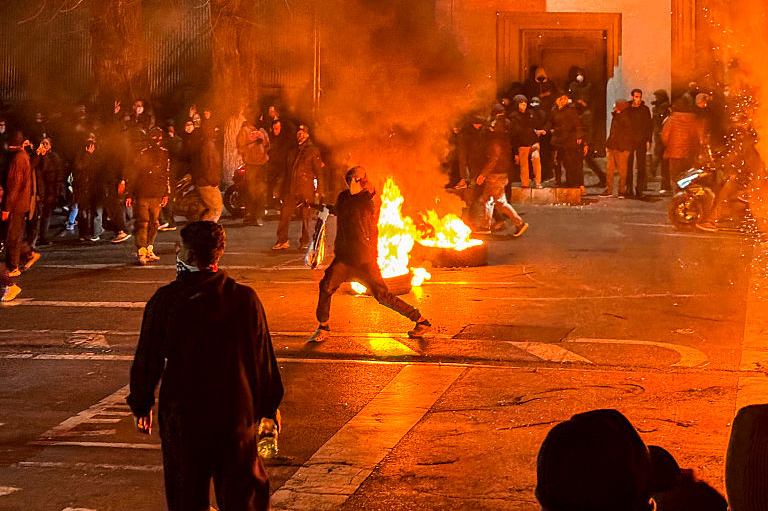
These are tense hours for Ayatollah Ali Khamenei, Iran’s supreme leader and head of state. Thousands of protesters are flocking to the streets to protest the economy. Iran has not seen a wave of unrest like this since the 2022 Mahsa Amini protests, after Amini was killed for allegedly not wearing her veil properly. During a televised speech in Tehran Friday, Khamenei showed little restraint, vowing he “would not back down” in the face of what he described as “saboteurs.”
The protests began in Tehran in late December and quickly spread across the country. They have since turned bloody, with Amnesty International reporting at least 28 people killed. “We have seen these protests before,” said Firas Maksad, managing director for the Middle East and North Africa at Eurasia Group. “In 2009, there was the Green Movement, a popular uprising against the government and the regime over electoral fraud. Then came the ‘Women, Life, Freedom’ movement in 2022 and 2023. This is not the first time these grievances have manifested on the streets of Iranian cities.”
Economic grievances lie at the heart of the current unrest. Iran’s rial has collapsed, losing roughly 60 percent of its value since June 2025. In early January, prices for basic goods spiked overnight following a collapse of confidence in the currency. Shopkeepers – particularly those in import-dependent sectors of Tehran’s Grand Bazaar – were the first to shut their stores and take to the streets. Soon after, everyday Iranians joined the protests, adding fuel to the fire for an already vulnerable regime. In response, authorities shut down the internet nationwide, a move protesters fear could signal further crackdowns.
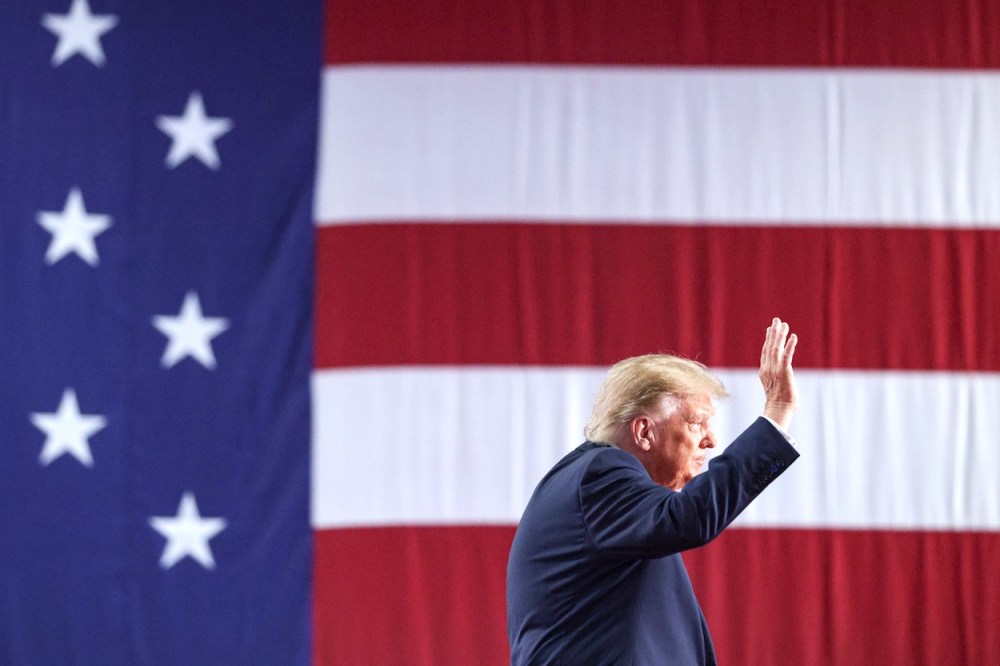
But there is more to these protests than economic woes alone. This time, the regime appears weakened in ways it has not been before, reeling after a stunning setback against Israel and the United States during the 12-day war in June, and from the broader erosion of its proxy forces across the region after sustaining significant blows from Israel over the past two and a half years. “The people of Iran are feeling emboldened against their regime,” Maksad said. Protesting Iranians are hoping to exploit what they see as a rare window of opportunity that could finally lead to its collapse. Adding to Tehran’s sense of vulnerability, Iran has also lost a key ally in Venezuela following President Trump’s intervention to remove Nicolás Maduro a week ago.
Still, a weakened regime alone does not guarantee collapse. “Revolutions are political earthquakes, and it’s difficult to predict their exact timing. We know when the conditions are present and when a system may be overdue for one,” Maksad noted. “In many ways, Iran may be overdue for a political earthquake in 2026 – but we still don’t know if this moment is it.” A weakened regime may instead turn harder against its people, driven by a heightened perception of vulnerability. While the response has already turned violent, “the regime has not yet brought brute force to bear in the way it has in the past,” Maksad said. It still retains significant coercive capacity through the Basij, the Islamic Revolutionary Guard Corps (IRGC) and affiliated militias that remain on the state payroll and capable of quashing unrest.
One man in particular has been vocal in his hopes for the protests’ success: Reza Pahlavi, the son of former Shah Mohammad Reza Pahlavi, who was ousted in the 1979 revolution and now lives in exile in the United States. Pahlavi has been active on social media and in international media appearances issuing calls to action, urging Iranians to chant in unison against the regime and spurring thousands of protesters to join. Viral videos show streets filled with crowds, some chanting “Javid Shah” (“Long live the Shah”), while others burn images of the Supreme Leader.
Despite repeatedly declaring that he is not interested in ruling Iran, Pahlavi’s true intentions remain unclear, as does the extent of his support inside the country. In an apparent effort to appeal to President Trump, Pahlavi is expected to travel to Mar-a-Lago next week and deliver a speech at the Jerusalem Prayer Breakfast. Whether this moment translates into meaningful political change or just another cycle of repression remains an open question.



Comments