The capital vs the Capitol
When the House of Representatives voted to overturn a pair of laws recently passed by the Council of the District of Columbia this week, Eleanor Norton Holmes, the District’s non-voting delegate, delivered an uncompromising and partisan denunciation.
“I can only conclude that that the Republican leadership believes DC residents, the majority of whom are black and brown, are unworthy or incapable of governing themselves,” she said.
But Holmes’s black-and-white account of the House vote to block two controversial pieces of legislation — one a revamped (and relaxed) criminal code, the other allowing non-citizens to vote in local elections — omitted some inconvenient details.
One is that DC’s own mayor, Muriel Bowser, is opposed to the criminal law changes that soften penalties for violent crimes at a time when their rates are rising fast in Washington. She vetoed the measure last month but the Council exercised its right to press on anyway.
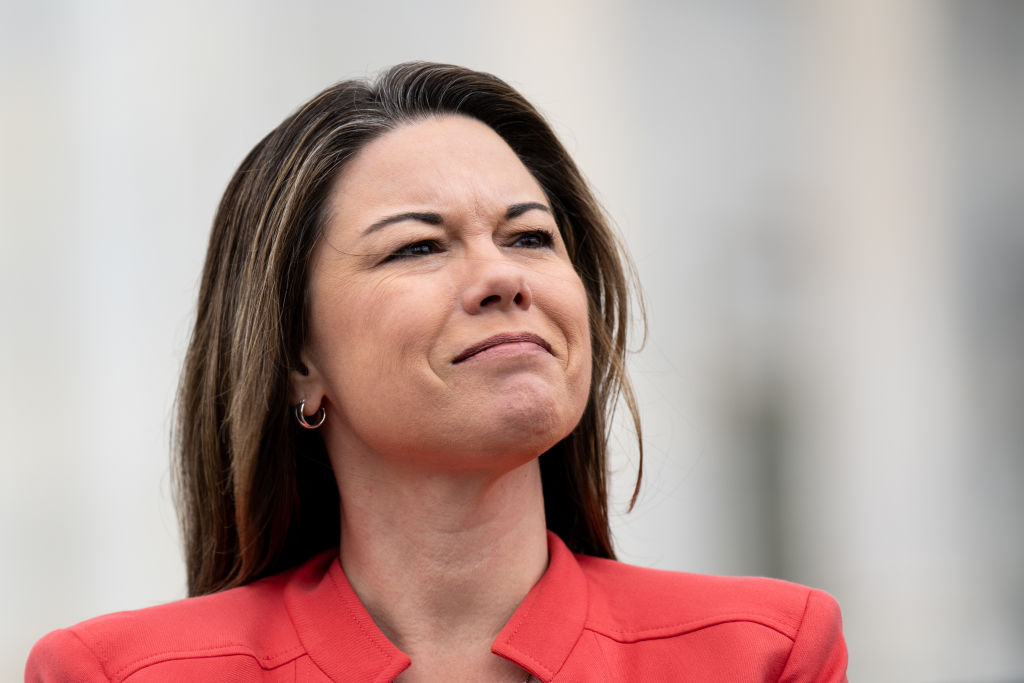
Another is just how many Democrats sided with Republican leadership on the votes. Forty-two Democrats voted to block the voting legislation. Thirty-one voted to overturn the revisions to the criminal code. Among those thirty-one was Minnesota lawmaker Angie Craig, who was, on the same day of the vote, assaulted in the elevator of her Washington apartment building by a homeless man.
Bowser, usually a staunch opponent of any congressional meddling in DC politics, has been notably quiet about the votes on the Hill. Axios reports that her office did not lobby lawmakers to vote against the blocking measure.
And so, with a vote on overturning the bill due in the Senate, the politics of DC’s latest standoff with Congress is a bit more complicated than it has been in the past — or than Holmes would have you believe. With the White House opposed to the blocking measures, which require the president’s signature, the DC council’s new laws are all but certain to remain in tact. But the showdown between DC and Congress could intensify further. Georgia Republican Andrew Clyde is drafting a bill that would repeal the Home Rule Act, the legislation which gives DC residents the ability to elect a mayor and council.
That, too, would be dead on arrival as long as there is a Democrat in the White House. But what Holmes this week called a “new level of hostility to the District of Columbia” is sure to remain for the foreseeable future. Not because of some fresh level of partisan hostility, but because DC’s powers that be seem so complacent about the safety of the city’s residents.
*** Sign up to receive the DC Diary in your inbox here ***
George Santos’s ‘simple-minded’ constitutents
New York congressman and serial fibber George Santos may not be in Washington for long. If he is to have any political future at all, he will have to win back the trust of his Long Island constituents. But his charm offensive evidently has a ways to go. As Cockburn reports, in a Newsmax appearance yesterday, Santos told host Greg Kelly that “Having somebody like me come and represent other people who are just like me — simple-minded folks who come from absolutely nothing and have a voice in Congress.”
Is I’m simple-minded, just like you a winning pitch? The more immediate question is whether Santos will get the opportunity to find out. The freshman congressman is now the subject of a House Ethics Committee probe that could end with his expulsion from Congress.
Fetterman’s long recovery
John Fetterman was hospitalized on Wednesday after feeling light-headed at a day-long Democratic retreat in Washington. Tests revealed that he had not suffered another stroke but stayed in hospital Thursday night. The Pennsylvania senator’s setback is only the latest reminder that the medical challenges he battled on the campaign trail persist now that he is in Washington. Another is Fetterman’s Senate desk, which has been fitted with a closed captioning monitor.
A New York Times story on Fetterman’s health makes clear that he is dealing with far more than just the auditory-processing issues that his campaign acknowledged last year. “He has to come to terms with the fact that he may have set himself back permanently by not taking the recommended amount of rest during the campaign. And he continues to push himself in ways that people close to him worry are detrimental,” reports Annie Karni. As was the case for much of 2022, when his health was among the biggest issues in one of the closest midterm Senate races, plenty of questions remain about Fetterman’s ability to discharge the duties of a US senator now he has made it to Washington.
What you should be reading today
Ben Domenech: How taxpayer money was used to silence speech
John Pietro: China is playing the US for fools over the spy balloon
Joel Kotkin: How America’s ‘big sort’ will upend politics
Dana Goldstein, New York Times: In post-Roe world, these conservatives embrace a new kind of welfare
Sean Durns, Washington Examiner: Manufacturing victory
George F. Will, Washington Post: Quadrillion-dollar national debt? Chew, don’t nibble, on this math
Poll watch
President Biden job approval
Approve: 44.3 percent
Disapprove: 51.5 percent
Net approval: -7.2 (RCP average)
Top issues in the Chicago mayoral race
Crime and public safety: 44 percent
Criminal justice reform: 13 percent
The economy and jobs: 12 percent
Education: 6 percent
Immigration: 6 percent (WBEZ/Chicago Sun-Times)