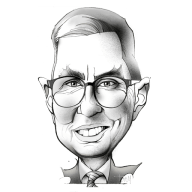
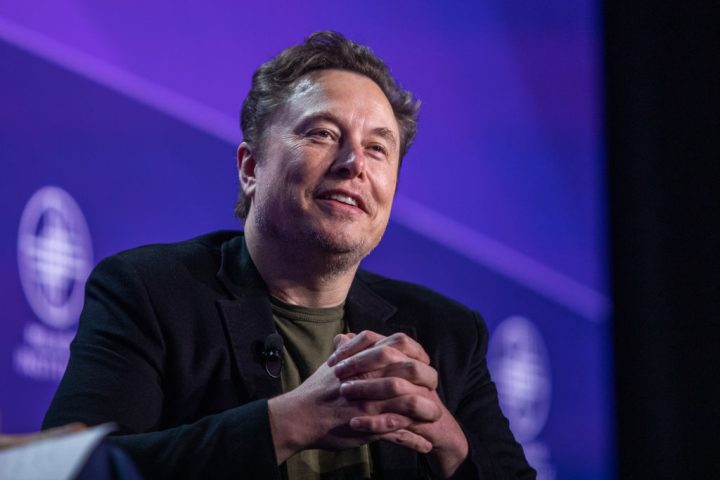
In the unedifying clash of heads between billionaire Twitter/X owner, Elon Musk, and Australia’s e-safety commissioner Julie Inman Grant, there could only be one rightful winner. Elon Musk.
On Monday, Musk’s X succeeded in having a temporary injunction thrown out by Australia’s Federal Court preventing it and Mark Zuckerberg’s Meta from posting images of last month’s Sydney stabbing. An Armenian Orthodox bishop, Mar Mari Emmanuel, was attacked in his church, allegedly by a religiously radicalised youth, in April. The incident was captured by the church’s own livestream of the event and beamed across the internet: the footage is disturbing but already there for the world to see, if anyone chose to see it.
This sorry episode is a reminder that these cherished freedoms cannot be taken for granted
Inman Grant, backed enthusiastically by Australia’s prime minister Anthony Albanese and his Labor government, sought not only to block social media posts of the images from Australia, but wanted the platforms to remove worldwide posts altogether, consistent with Australia’s e-safety legislation. Effectively, the Australian government official claimed worldwide jurisdiction to tell the likes of X and Facebook what they, and their users, could and could not post.
The injunction caused a war of words and tweets between Musk, Albanese and a host of Australian ministers and MPs, with Musk playing free speech’s white knight. A voluble independent senator, Tasmania’s Jacqui Lambie, in particular poured petrol on the fire by labelling Musk a ‘knob’ with no social conscience who should be jailed. Musk retaliated on X, declaring Lambie ‘an enemy of the people of Australia’. All very entertaining, but helping nobody.
The e-safety commissioner’s application to extend the temporary injunction indefinitely was heard on Friday. The senior counsel for X, Bret Walker, told the court it was ‘remarkable’ that the commissioner was arguing ‘the only way to control what is available to end users in Australia…(is) to deny it to everybody on earth’. Walker also noted that Bishop Emmanuel himself supported the images being posted. The bishop said that ‘every human being has the right to freedom of speech and freedom of religion’ and that he didn’t fear for his safety by the images being circulated.
Today, Mr Justice Kennett of the Federal Court ruled for X and threw out the injunction. This also indicates the likely outcome of an upcoming full hearing into the commissioner’s action against the social media giants.
The judge hasn’t yet released the reasons for his findings. But presumably he was satisfied that the freedoms of speech and expression must be upheld, and the e-safety commissioner’s assumptions of worldwide jurisdiction were, to put it mildly, absurd. Musk tweeted again soon after. ‘Not trying to win anything. I just don’t think we should be suppressing Australia’s rights to free speech’, he said.
There is no denying the images and video of the Sydney stabbing incident are violent and disturbing. For some, they may be a form of violence voyeurism, viewed by a sick few simply because of what they are. But that’s no reason for a government or government agency to censor and suppress them.
Musk may be outspoken, eccentric, and not everyone’s cup of tea. But he is right to uphold the freedoms of speech and expression fundamental to a democratic society. He is also right to assume that intelligent people are capable of using their own judgment when deciding whether or not to see posts of those images, or indeed any content that is confronting in its violence and brutality.
If Australia’s e-safety commissioner had her way, we would never see for ourselves visual evidence of Hamas’s atrocities on 7 October, or the consequent destruction in Gaza. We would never have seen the twin towers fall, or witness what the British liberators of the Belsen concentration camp saw with their own eyes. Once the censoring starts, where does it stop?
An irony of this sorry episode is that the central figure, Julie Inman Grant, is American-born and educated. The First Amendment of the United States constitution, decreeing that Congress shall ‘make no law…abridging freedom of speech, or of the press’, is part of Inman Grant’s American heritage. Yet in Australia both she and the government she serves seemingly believe these fundamental freedoms must be reined in and supervised by government, and that their citizens need to be protected from themselves.
In challenging Inman Grant’s rulings, Musk struck a blow for free speech not just in Australia, but in Britain, the United States and the West in general. For the rest of us, however, this sorry episode is a reminder not only that these cherished freedoms cannot be taken for granted, but also that we should treat them as a precious privilege to be used wisely and responsibly. If we don’t, there are many more Julie Inman Grants and Anthony Albaneses ready and willing in these times of cancel culture to curtail those freedoms in what they – not you – choose to define as the public interest.



Comments