Keir starmer

Burnham is already drifting towards defeat

From our UK edition

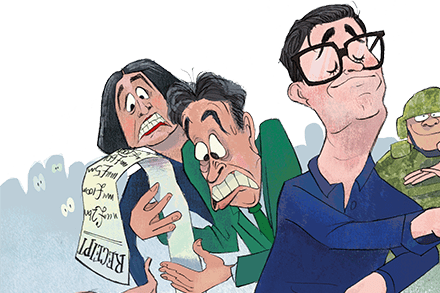
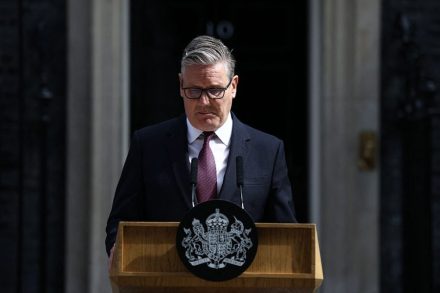
Nothing so became Keir Starmer’s premiership as his leaving of it. Farewell remarks outside Downing Street, unpunctuated by the odious Steve Bray; a brief goodbye in Buckingham Palace, before the King welcomed his fourth new prime minister in four years; then to the pub to drown his sorrows with Rachel Reeves, leaving Andy Burnham and John Healey to pick up the national tab. There is an irony to Healey’s appointment as Chancellor. Burnham blames Margaret Thatcher for so many of the country’s ills but her time in office was devoted to clearing up the dreadful inheritance left by the last Healey at the Treasury: a top rate of income tax at 98 per cent, untamed inflation, union disarray, socialist sclerosis. Rather than take a wrong turn in the 1980s, Britain flourished.

‘I hope Keir Starmer comes for the pints, not the food’: The Pineapple reviewed

From our UK edition

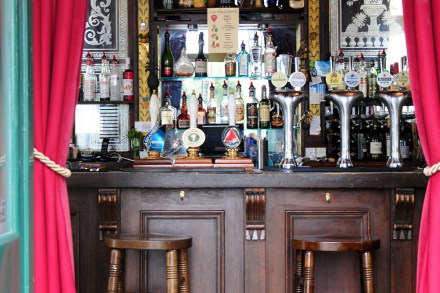
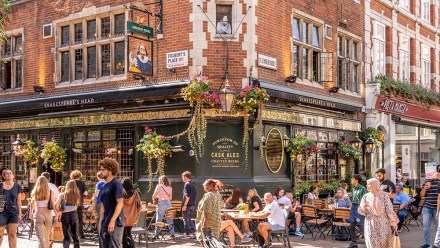
It’s a Saturday afternoon and I’ve just walked into The Pineapple in north London, thus becoming the 4,825th journalist to do so since Keir Starmer became Labour leader. He once described this pub as his ‘church’. What that means is unclear. Does he take his sins here for absolution? Does he feel a sense of obligation to it? Does he come here on Sunday mornings? As the prime-ministerial handover takes place, it’s worth considering the old guy and the new guy’s approach to food and drink (this column thinks so, anyway). Starmer didn’t have a favourite novel and he didn’t have a favourite poem. But what he did like was food. He said he enjoyed going to Rossella, an Italian restaurant in Kentish Town. The tandoori salmon he made on Sunday Brunch actually looked nice.

Andy Burnham can’t afford to please everyone

From our UK edition

Andy Burnham thinks his critics need a new joke about him. The old one about a Blairite, a Brownite and a Corbynite walking into a bar (‘Hello, Mr Burnham,’ says the barman) is about to be eclipsed. On Monday, it won’t be a barman offering good wishes – it will be the Cabinet Secretary, Antonia Romeo, when Burnham walks into No. 10 as Britain’s 59th prime minister. Before that, on Friday, Burnham will accept the leadership of the Labour party, unopposed, at the headquarters of the Trades Union Congress. The speech he will give is still being worked on, but Burnham is ‘holding the pen himself’, aides say.

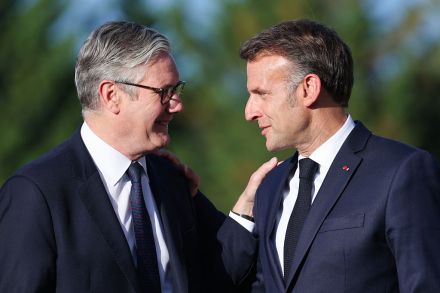
Macron Starmer

Europe’s centrists are falling one by one

Few in France will have been as devastated by their team’s defeat in last night’s World Cup semi-final as Emmanuel Macron. The president put on a brave face, tweeting his congratulations to Spain and thanking the French team "for carrying our colors with commitment." But how Macron must have dreamed of a French World Cup triumph in Sunday’s final. He would have been in New Jersey – as he was in Moscow in 2018 when the Bleus won the World Cup –dancing a jig as his bête noire, Donald Trump, presented the trophy to his boys. Macron's presidency is ending with a whimper In a sense the French football team are a metaphor for Macron’s presidency.

Labour politicians make the pilgrimage to St Andy

From our UK edition

Warm wine, small talk and curling canapés have long defined the Westminster summer scene. But regime change has added a certain frisson to the party circuit this year. As many of Labour’s finest toasted America’s semiquincentennial at the US ambassador’s house last week, the hostility radiating from Keir Starmer’s No. 10 team was unmistakable. ‘I’ve had them shooting daggers at me all night,’ complained one rebel MP, amid toasts to the revolution. ‘It’s over guys, you lost.’ As fireworks exploded overhead, another added: ‘The king is dead, long live the king.’ The Prime Minister’s decision to step down, paving the way for Andy Burnham’s coronation, has spared his party plenty of pyrotechnics.

Letters: Burnham is a master brand-builder

From our UK edition

Telling stories Sir: As a filmmaker by training and a marketer by profession, I couldn’t agree more with your leading article (‘Northern soul’, 27 June) on the absence of narrative in our politics. The appeal of figures such as Burnham and Nigel Farage lies in the storyworld they build around themselves – be it via pints shared down the pub, off-the-cuff honesty, or a Monty Python line landing in the Commons. But the PM who stays the course, as any brand-builder learns the hard way, must know two things: their own story, well enough to tell it plainly; and the people they speak to, well enough for them to make it their own. Aim a dull narrative at everyone and you reach no one; tell a story worth sharing and both left and right will see themselves in it.

Can Burnham resist the siren call of the left?

Power, when it is gained and lost, is transferred in stages: the actual, the visual and the constitutional. The latter took place on June 23 when the prime minister presumptive sent a letter to Antonia Romeo, the Cabinet Secretary, requesting that she commence access talks with his team. Keir Starmer had already given permission for them to proceed, but the propriety and ethics team in the Cabinet Office had told Romeo she could not initiate proceedings. Andy Burnham had to ask first. To all intents and purposes, he is already the vessel from which power flows. At the same time, it became clear that James Purnell, the former Blairite cabinet minister, will lead the transition team and stay on to become chief of staff in 10 Downing Street.

burnham

Andy Burnham’s worryingly vague vision for Britain

Once again the question occurs: “Why do they want it?” Keir Starmer held a very important role in the legal profession before entering parliament, but for some reason he desperately wanted to be even more political. As soon as he became an MP it was plain that he was so keen to get the top job that he was even willing to go through the Jeremy Corbyn period – immiserating his reputation and presumably himself by spending years having to pretend that Corbyn was a suitable candidate for prime minister. Serving in Corbyn’s shadow cabinet was not something that any decent person would do – leading some of us to conclude either that Starmer was not a decent person or that he had such a surfeit of ambition it didn’t matter because it was a means to an end.

How does this week’s heatwave compare with 1976?

From our UK edition

Prime numbers It looks as if Britain will just miss out on having seven prime ministers in the space of a decade as nominations for the Labour leadership election will not open until 9 July (David Cameron left office on 13 July 2016). Have we ever had seven PMs in the space of ten years? – After Lord Liverpool left office on 9 April 1827 Britain saw a further eight premierships within the following decade. Two, however, saw the same person returning to office, so we had seven different prime ministers within the space of ten years.

Portrait of the week: Burnham wins, Starmer resigns and a heatwave hits

From our UK edition

Home Sir Keir Starmer, the Prime Minister, stood outside 10 Downing Street and said that he would resign as leader of the Labour party. Nominations for a successor would open on 9 July (though he still meant to unveil his defence investment plan in time for the Nato summit on 7 July). His decision to depart followed the convincing victory in the Makerfield by-election of Andy Burnham, bringing him back into parliament. An election for mayor of Greater Manchester in his place would take place on 30 July, with Bev Craig, the leader of Manchester City Council, as Labour’s candidate. Mr Burnham packed a suit and tie into which he changed on the train from Manchester Piccadilly to London. He was sworn in as an MP that afternoon. Mr Burnham had received 24,927 votes (54.

Burnham’s worryingly vague vision for Britain

Once again the question occurs: ‘Why do they want it?’ Keir Starmer held a very important role in the legal profession before entering parliament, but for some reason he desperately wanted to be even more political. As soon as he became an MP it was plain that he was so keen to get the top job that he was even willing to go through the Jeremy Corbyn period – immiserating his reputation and presumably himself by spending years having to pretend that Corbyn was a suitable candidate for prime minister. Serving in Corbyn’s shadow cabinet was not something that any decent person would do – leading some of us to conclude either that Starmer was not a decent person or that he had such a surfeit of ambition it didn’t matter because it was a means to an end.

How Burnham can avoid Starmer’s fate

From our UK edition

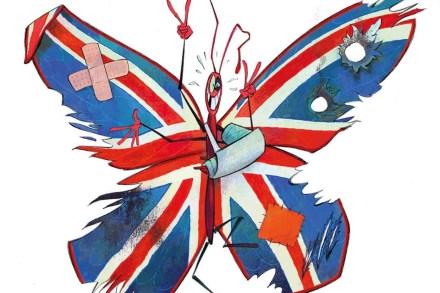
Welcome to the cabaret, Andy Burnham. Last year, the editor of this magazine wrote about ‘Weimar Britain’: the fear that political instability, economic turmoil and rising anti-Semitism was making our country as decadent and dangerous as inter-war Germany. As our sixth prime minister of the post-Brexit decade departs, and our seventh looms into view, we have developed a national addiction to perma-crisis, seemingly trapped in a game of ‘Topple the PM’. We are far from a January 1933 moment. But the joke isn’t funny any more. This turbulence is not inescapable, though. What is needed is a premier able to stay the course, to set out how they want to change Britain and to discover the drive and charisma to bring their party and the country with them.

The truth about Keir Starmer’s legacy

It was when Keir Starmer claimed never to have had a dream that I knew we were dealing with potentially one of the funniest prime ministers Britain had ever seen. Sure, some people would have been amused by the magnetism for calamity exhibited by Theresa May, the almost comedically unbelievable mendacity of Boris Johnson or the downright absurdism of Liz Truss, but a really funny prime minister is the one who demands to be taken seriously, and particularly one who is convinced that he has forced the British people to do so.

keir starmer

Was Brexit worth it – and can Burnham save Britain?

From our UK edition

55 min listen

For this week’s Edition, William Moore is joined by the Spectator’s assistant editor Isabel Hardman and the editor of The New Statesman Tom McTague. Plus, in a special episode this week, the Spectator’s economics editor Michael Simmons joins for the first half of the episode, before political editor Tim Shipman jumps in later on. This week: was Brexit worth it? As we approach the tenth anniversary of the vote to leave the European Union, the Spectator’s editor – and former prominent Vote Leave campaigner – Michael Gove makes the case that not only was Britain right to leave, but it has benefitted from leaving. The past decade however has been marked by domestic political chaos, so to what extent was Brexit a symptom or a cause of Britain’s structural problems?

Was Brexit worth it – and can Burnham save Britain?

Keir Starmer’s delusion is becoming tragic

Keir Starmer has entered what might be described as the peak delusion period of what remains of his time in Downing Street. There was fresh evidence of the Prime Minister’s all-consuming divorce from political reality in his latest comments about his fellow Labour politician and political rival Andy Burnham, who is widely predicted to win the Makerfield by-election today, and then go on to launch a leadership challenge to turf the PM out of office. The British PM just doesn’t get it Anyone and everyone knows all this and more, except Starmer apparently, who called Burnham “a great asset” and said he deserved “a big role in government.” What is Starmer smoking? The only big role in government that Burnham wants is Starmer’s job in Number 10.

Portrait of the week: Belfast riots, Starmer bans TikTok and Trump turns 80

From our UK edition

Home The electors of Makerfield decided who might be prime minister. After John Healey resigned as defence secretary, Al Carns resigned as armed forces minister. Mr Healey had declared that Sir Keir Starmer, the Prime Minister, had ‘been unable, and the Treasury has been unwilling, to commit the resources that the nation needs to defend the country’. Dan Jarvis was appointed Defence Secretary. Air Chief Marshal Sir Richard Knighton, the Chief of the Defence Staff, said the armed forces would have to ‘dial back’ operations without more funding. Belfast had multiple nights of anti-immigrant rioting in response to the terrible knife attack on Stephen Ogilvie. Two Ukrainian men were found guilty of plotting firebomb attacks on properties linked to Sir Keir Starmer.

Will Keir Starmer’s under-16 social media ban actually work?

Today, with much fanfare, the British government is rolling out its new policy to protect young people from online harms. Here is a political/legal move for which I am the target audience. I have three teenagers, and for those not so afflicted, let me tell you that keeping them from spending all day, every day goggling at one piece of tech or another is an infernal game of whack-a-mole. Item: Child One, Instagram. Very, very occasionally, she forgets to delete her browser history and Ctrl-H yields page after page after page, hour after hour, of Instagram hits. If you restrict or remove the phone app, it will be re-downloaded or the site opened instead in a browser window.

social media

Britain imported a problem it refuses to name

I get the sense that the political and media class badly miss Katie Hopkins. Back when the reality TV star was still a regular on Britain's screens and in our newspapers, she could be relied upon to be the focus of attention whenever the people in charge didn’t want the public’s attention to be focused where it ought to be. So when a British soldier was decapitated on the streets of London, or a suicide bomber went off at a pop concert packed with teenage girls, Ms. Hopkins could be found saying something that a lot of people were thinking – only in a more colorful or unwise way.

Revealed: Andy Burnham’s reassuringly bland Cambridge years

From our UK edition

There appears to be a missing chapter in the story of Andy Burnham. Depending on the whims of voters in Makerfield, Britain could soon have its first prime minister with a degree in English literature and its first Cambridge-educated premier since Stanley Baldwin. And while we have been treated to countless long reads on the so-called King of the North – his political philosophy, his years in Manchester and his apprenticeship in New Labour – his undergraduate years have barely been scrutinised. Burnham is tight-lipped about his Cambridge days (1988-1991). His comments over the years have been mostly limited to saying he had ‘imposter syndrome’ as he struggled to fit in at a university that was dominated, he felt, by private school students.