David cameron

The real threat to democracy after Brexit

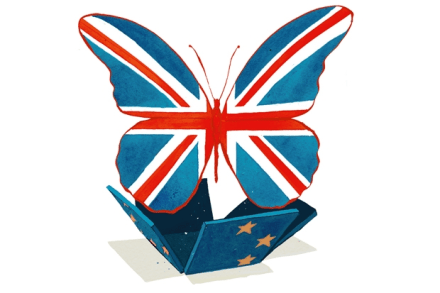
Ten years after the Brexit referendum, its long-term impact on British politics is evident. Not so evident is why this is the case. Every general election sees comparable debates. So too did the 1975 referendum on membership called by Harold Wilson. But none of these other elections has ever produced such an extreme and long-lasting reaction, or a concerted attempt to use both informal and formal methods – constitutional and legal – to block the result.
brexit

Q&A: Boris, Cameron or May? Plus, our most left-wing beliefs revealed

From our UK edition

35 min listen

To submit your urgent questions to Michael and Maddie, go to: spectator.co.uk/quiteright This week on the first ever Quite right! Q&A: What’s your most left-wing belief? Michael & Maddie confess their guilty liberal secrets on the Elgin Marbles, prison reform and private equity – or ‘the unacceptable face of capitalism’. Also this week: who would you trust to save your life on a desert island – Boris Johnson, Theresa May or David Cameron? And finally, a literary turn: from John Donne to Thomas Hardy, Michael and Maddie share their favourite poems, and make the case for learning verse by heart. Produced by Oscar Edmondson.

What this new history of Brexit gets right

From our UK edition

Why did the United Kingdom leave the European Union? Perhaps it might be better to ask why did it ever join. Tom McTague attempts to answer both questions in this panoramic history of British – and continental – politics from 1942 to the present day. It is to the author’s great credit that he approaches a debate which has polarised politics and shattered friendships with disciplined, but never anaemic, detachment. It is hard to think of many books which leave one admiring both Edward Heath and Enoch Powell more. McTague has set himself a formidable task in seeking to explain the two most consequential decisions of British postwar politics. That he does so not just with fair-mindedness but mastery of narrative sweep and fresh perspective makes this a significant achievement.

Being stalked by a murderer was just one of life’s problems – Sarah Vine

From our UK edition

Private Eye asked last week: Which of Michael Gove’s luckless staff at The Spectator will be assigned to review this grisly account of their editor’s marital woes? Reader, it’s me! I’m happy to do this, though, because I have an interest in how to be a political wife (I am married to Alex Burghart MP), and perhaps have something to learn here, though I’m struggling to understand, eek, ‘lesson seven’: Realise... that when you step over the salt circle into the five-pointed star coven of politics, you have ceased to become a person. You are now a c**t. There’s a feeling that the author still has a touch of PTSD. Readers with expectations of schadenfreude will not be disappointed.   Sarah Vine shoots thunderbolts.

Was Graham Brady really the awesome power-broker he imagines?

From our UK edition

The great parliamentary sketchwriter Quentin Letts, the Henry Lucy of our day, has described Sir Graham Brady (now Lord Brady) thus: ‘Were he a yacht, his galley would gleam, the decks would be scrubbed daily and there would be a large brass bell to summon matelots to morning parade. Commodore Brady runs a tight ship.’ After 27 years in the Commons, 14 of them as Chair of the 1922 Committee, the commodore has swapped his deck garb for ermine and written a kiss-and-tell about his political encounters with five Tory prime ministers. The 1922 Committee – the fabled men in grey suits who represent the parliamentary party’s backbenchers – is ‘the closest thing the Conservative party has to its own trade union’.

Assisted dying bill passes second reading – what next?

From our UK edition

14 min listen

The controversial assisted dying bill has passed its second reading in the House of Commons with a majority of 55 after just hours of debate. It now heads to committee stage for further scrutiny. What does the bill's passing at this stage mean for its likelihood of eventually becoming law? And will Labour's front bench unify behind the bill given the deep-seated opposition from figures such as Justice Secretary Shabana Mahmood? James Heale discusses with Katy Balls and Michael Gove. Produced by Patrick Gibbons and Cindy Yu.

History will judge Rishi Sunak kindly

From our UK edition

Memorably sweeping statements tripping easily from the tongue have a habit of worming their way into assumptions we make and ending up as the judgment of history. The word ‘appeasement’ rather than the decisions Neville Chamberlain actually took have consigned the name of a defensible statesman to something approaching a term of abuse. ‘Milk snatcher’ did Margaret Thatcher immense damage. The ‘winter of discontent’ has become too easy a shorthand for the coinciding of deep-seated problems which Thatcher herself approached with great caution.

One damned thing after another: Britain’s crisis-ridden century so far

From our UK edition

Asked about the greatest challenges he faced as prime minister, Harold Macmillan is said to have replied: ‘Events, dear boy, events.’ The first quarter of this century has seen no shortage of events that have blown prime ministers off course. There was Tony Blair by 9/11 and the resulting war in Iraq; Gordon Brown by the financial crisis of 2007-8; David Cameron and Theresa May by Brexit; and Boris Johnson by Covid. With the exception of May, none of these people had any inkling, on taking office, of the bolts from the blue that would ultimately define their premierships.

How the Special Relationship could be renewed after US-UK elections

A record number of countries will hold elections this, including Britain on July 4 and the United States on November 5. These two great powers — each with a veto at the UN — have enjoyed a bond that has survived for so long, is it known on both sides of the Atlantic as “the Special Relationship.” There have been stand-offs: Britain refused to join the war in Vietnam, and when Argentina seized the Falkland Islands in 1982, the US did not intervene. But Ronald Reagan and Margaret Thatcher worked in tandem to bring down the Berlin Wall. And if the view on Ukraine and Gaza is not always the same, there is a shared commitment to the sovereignty of Russia’s neighbors and to a peace in the Middle East that secures the rights of Jews and Palestinians alike.

special relationship

What’s really behind the Tories’ present woes?

From our UK edition

The problem is, we really need a Tory party. Whether we have one at the moment is another question. Political debate requires a significant and trustworthy proponent of personal freedom, of the limits of government, of personal responsibility, of strict limitations of government expenditure, of independent enterprise which may succeed through a lack of intrusive state control or may fail without hope of public rescue. Not everyone will share those values. But I think everyone should accept that it’s proved catastrophic that those values have apparently disappeared from public policy. History rhymes, but does not repeat itself. The lessons of previous periods when major economic policies of an interventionist sort were agreed with no serious dissent ought to have been learnt.

Is Cameron upstaging Sunak?

From our UK edition

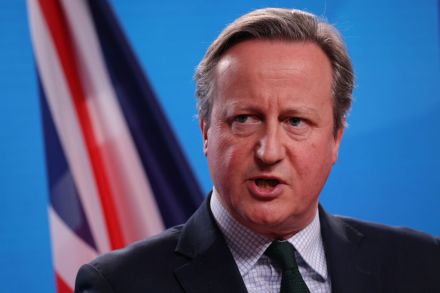
The logic behind Rishi Sunak’s decision to make David Cameron foreign secretary was that he would be a ‘big beast’ on the world stage and wouldn’t need much instruction. Six months on, that plan is going reasonably well, insofar as Cameron appears to be setting his own agenda. It also means he’s making his own mistakes. In February, his foray into US politics misfired when, in an article for the website the Hill, he appeared to lecture Americans about support for Ukraine, telling them not to show the ‘weakness displayed against Hitler’. A key Donald Trump ally, Marjorie Taylor Greene, responded that ‘David Cameron can kiss my ass’. This week, the Foreign Secretary has been on something of an apology tour.

Why did Mike Johnson snub David Cameron?

From our UK edition

24 min listen

Today Freddy is joined by Sarah Elliott, senior advisor for the US-UK special relationship unit at the Legatum Institute. They discuss Lord Cameron's visit to America this week and the news that speaker of the House of Representatives Mike Johnson snubbed a meeting with the foreign secretary. Is the special relationship still special?

Can David Cameron charm the Americans?

From our UK edition

David Cameron is stateside today as the Foreign Secretary tries to muster up support for the US to send aid to Ukraine. While Cameron plans to discuss other urgent issues on the trip, such as the situation in the Middle East, the priority is to make the argument for the US to step up funding to Ukraine; senior Republicans are accused of blocking a £49 billion package for Kyiv. The push comes after Ukrainian President Volodymyr Zelenskyy warned on Sunday that his side would lose to Putin if American aid was withheld and Ukrainian air cover is not improved. Will the charm offensive work?

David Cameron meets Trump at Mar-a-Lago

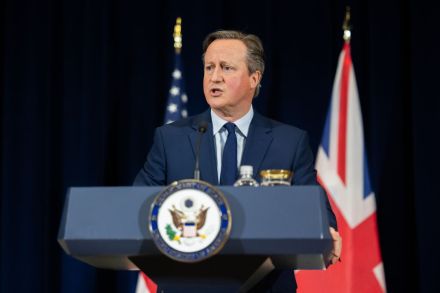
Lord Cameron, the UK foreign secretary, is stopping off at Mar-a-Lago tonight before once again making the rounds in Washington, DC to tub-thump for Ukraine aid. Cameron, who served as Britain's prime minister from 2010 to 2016, is meeting with Republican presidential candidate Donald Trump, who has been skeptical about Ukraine’s prospects of beating back the Russian invaders. A spokesperson for the UK Foreign Office downplayed the significance of Cameron meeting Trump as "standard practice." “The foreign secretary is on his way to Washington DC, where he will hold discussions with US secretary of state Blinken, other Biden administration figures and members of Congress," the spokesperson said.

david cameron

Should Britain end arms sales to Israel?

From our UK edition

13 min listen

The row over arms sales to Israel continues today, as over 600 high profile figures in the legal profession, including former Supreme Court Justice Jonathan Sumption, sign a petition arguing they believe Israel has breached international law, and more Conservative politicians say, on the record, that they believe the UK must respond with an arms sale ban. Cindy Yu talks to James Heale and Isabel Hardman about where this row could go next. Produced by Megan McElroy and Cindy Yu.

Has Israel lost British support?

From our UK edition

13 min listen

The killings of three British aid workers in Gaza has caused fury across the board in Westminster, with Rishi Sunak conducting a candid phone call with Benyamin Netanyahu last night. Today, the question is over whether the UK should ban arms sales to Israel in a bid to influence Jerusalem's hardline approach to Gaza. Has Israel lost the support of the UK, and western countries more widely? James Heale talks to Isabel Hardman and Sophia Gaston, head of foreign policy at the think tank, Policy Exchange. Produced by Cindy Yu.

Why are the photo agencies punishing Kate?

From our UK edition

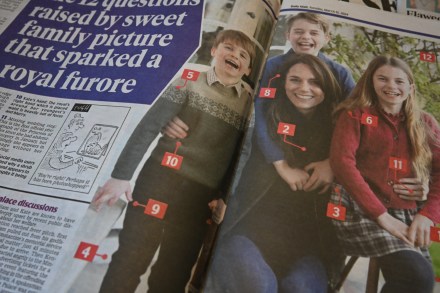
Media scrutiny of the Princess of Wales and her personal photoshopping of her Mothering Sunday photograph has been intense. One important set of players has escaped attention, however: the picture agencies. It was they – AP, Getty Images, AFP, Reuters, Shutterstock and PA – who issued a ‘mandatory photo kill’ of the image. They doubted what PA called its ‘veracity’. I hope it is not unduly cynical to point out that these agencies hate the fact that HRH distributes her own pictures (without charge). Her homemade pics take the bread out of the agencies’ mouths. Suppose other world figures get the DIY habit: what will become of the professionals then? Are the agencies trying to teach the Princess a lesson? Trinity College, Cambridge, houses de Laszlo’s portrait of A.J.

Do accents still matter in politics?

From our UK edition

14 min listen

The new MP for Kingswood has been under fire for apparently changing his accent over the course of his political career. Does this matter? And if so, what does this tell us about British politics today? Cindy Yu talks to James Heale and author and former cabinet minister, Nadine Dorries. Produced by Cindy Yu and Patrick Gibbons.

How is Cameron’s comeback coming along?

From our UK edition

13 min listen

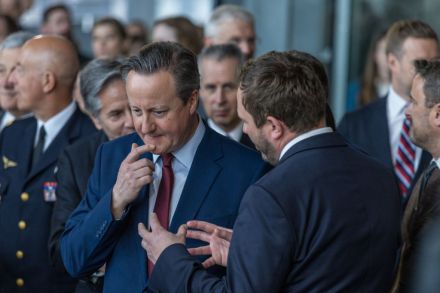
As problems in the Middle East and war on the continent dominate the headlines, David Cameron has been front and centre in his new role as foreign secretary. Is his experience coming in handy? Is he Rishi's 'prime minister abroad'?  Katy Balls speaks to Craig Oliver, director of communications at No. 10 during the Cameron era, and Sophia Gaston, head of foreign policy at Policy Exchange.  Produced by Max Jeffery and Oscar Edmondson.

Cameron says ‘military action was only option’ in Yemen

From our UK edition

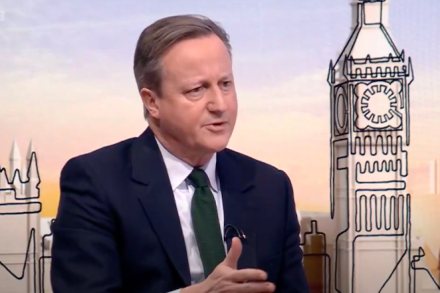
David Cameron: western strikes on Houthi rebels are ‘a very clear message’ This week the US and UK launched military strikes against Houthi targets in Yemen, following repeated Houthi attacks on Red Sea cargo ships. Speaking to Laura Kuenssberg, David Cameron suggested the strikes sent a message that western countries were prepared to ‘follow our words and warnings with actions’. Kuenssberg questioned whether the strikes would have much impact, given the Houthi rebels’ declaration that they will step up their own attacks. Cameron pointed out that Houthi attacks have been escalating since November, and said military action was the only option.