Civil war

The making of America

The story of the United States was determined from the start by the manner of its birth. The original 13 English colonies may seem lost in the distant past. Yet it was their diversity that was the key to their union. The creation of the US reflected the tensions of 17th-century England, pitting the Puritan republicans of Massachusetts against the landed gentry of Virginia, Quaker New Jersey against Catholic Maryland. The Founding Fathers resolved these tensions by instituting the concept of states’ rights. Their Constitution was a tissue of compromise, yet it was robust. What served to unite 13 colonies still holds together the mightiest nation on Earth.
America

What a carve up! The British flair for disastrous partition

From our UK edition

We think of the Raj as controlling only India and Pakistan, and its infamous breakup happening in August 1947. It’s a story told and filmed so often, and whose echoes reverberate today with such nuclear sabre-rattling that surely there is little left to add. And please nobody mention Edwina Mountbatten’s possible affair with Jawaharlal Nehru ever again. How could the British be so capable of running an empire but so hopeless when it came to dividing it? But there is a wider, and fascinating, history which has itself been partitioned off and ignored.

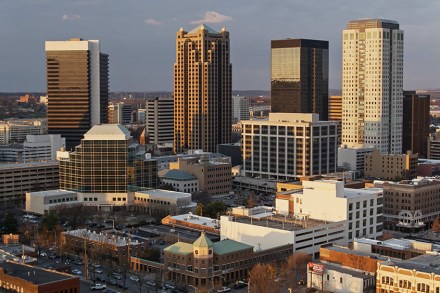
Budapest is nice but it’s no Birmingham, Alabama

I am shocked by how serene I am since moving back to America – to Birmingham, Alabama – from Budapest. Everything I love about life in general is in Europe. But to my surprise and regret, it’s not home. I don’t know why I was wrapped so tight by anxiety in Budapest, but I was. I had a great life there, no complaints – except for no church community, which wasn’t Budapest’s fault, just a matter of my inability in local languages. Being back in the US, in a place where I have access to an Orthodox church in my own language – well, I can literally feel the anxiety uncoiling within me. I can’t explain it, but I’m not going to think about it, just be grateful. I went to church yesterday at St. Symeon, the Orthodox Church in America parish in town.

What hope is there for Syria today?

From our UK edition

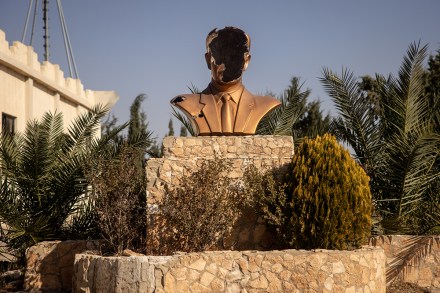
Rime Allaf takes the long view of Syria’s descent into hell. Her story begins with President Hafez al Assad, the architect of the socialist Baathist dictatorship that, from 1970 to 2000, immiserated and impoverished an entire nation before his son and successor Bashar utterly destroyed it. It Started in Damascus is part history, part memoir, the story of a people whose hopes for a better life have been consistently strangled by the Assad dynasty for more than half a century. A Syrian-born writer and analyst who comes from a distinguished diplomatic family, Allaf is unflinching when she trains her sights on regime depravity. It makes for disturbing, compulsive and at times heart-in-the-mouth reading.

Trouble in Tbilisi: The Lack of Light, by Nino Haratischwili, reviewed

From our UK edition

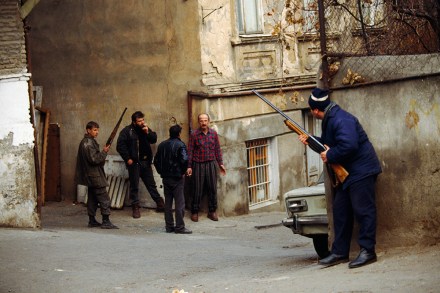
For a newly independent Georgia, the 1990s were a dark time literally and figuratively, as civil war raged, criminality flourished and the power stayed off. The Lack of Light, Nino Haratischwili’s fourth novel to be translated into English, turns that darkness into a gripping story about the power and pitfalls of female friendship that seeks to unpick the horrors of that decade. The narrative opens, briefly, in Tbilisi in 1987. The four protagonists – Keto, Dina, Nene and Ira – are on a schoolgirl mission to hang out in the Botanical Garden after hours. The escapade introduces the girls, who are all neatly – too neatly – ascribed various characteristics.

The Killer Angels still sings

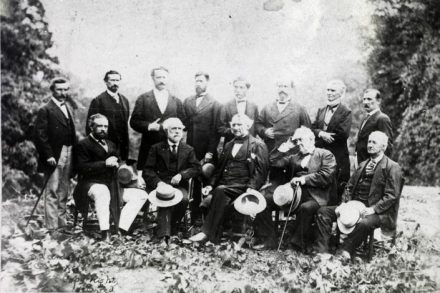
“Very fine people on both sides” was one of the first Trumpisms to enter our national lexicon. In the heady days of 2017, when Donald Trump’s presence in the White House was still a novelty and liberal resistance at its peak, the removal of a statue of Confederate General Robert E. Lee in Charlottesville, Virginia precipitated a full-blown political crisis. Trump, in his inimitable fashion, clumsily suggested that those protesting the statue’s removal had a point, an argument that was widely interpreted as proof of his secret affinity for Confederate sympathizers, white supremacists and other far-right fanatics. In truth, Trump was awkwardly defending a version of the Civil War that has lately been eclipsed in our national consciousness. Is Trump a history buff?

killer angels

A brief glimpse of secretive Myanmar

From our UK edition

Were trains to blame for the travel writing boom of the 1980s? When Paul Theroux’s The Great Railway Bazaar was published in 1975, it sold 1.5 million copies and launched a publishing phenomenon. At first, long-distance train journeys conjured all the romance of the golden age of travel: leather luggage, first-class compartments and the billowing steam from an antique engine. But with each new imitator, the format became increasingly stale, and now train trips suggest the cushioned charm of Michael Portillo’s never-ending BBC series. Nevertheless, as Clare Hammond shows in On the Shadow Tracks, rail journeys can still take the traveller deep inside a country.

Civil War is the first success of A24’s new box-office strategy

If you make the mistake of following journalists on Twitter, you would think that Civil War is the most talked about film of the year. It's not — and the over-coverage it's been receiving isn’t because it's particularly amazing or outrageous or riské or inflammatory. It did reach number one at the weekend box office, but on a quiet weekend, competing with third-week tickets for Godzilla x Kong: The New Empire. No, all the attention has come because Civil War is about journalism and there are few things we like talking about more than ourselves, despite few others being that interested. And so, here I am. But more interesting than the film is the release strategy behind it, because it represents A24 taking a punt on far more expensive films than usual.

civil war

America is too fat for another civil war

Pundits and YouTubers these days love to warn of the inevitable civil war, as they sit in their comfortable, air-conditioned home studios, sowing division and unrest. And it is true: in recent years, America has faced a growing epidemic that threatens not only the health of its citizens but also the stability of society. But it’s not right versus left: it’s Dunkin’ versus Krispy Kreme, battling for the soul of America. Our nation’s obesity crisis has reached alarming levels, with a significant portion of the population struggling with weight-related issues. However, I’d argue the physical limitations of an overweight nation could be the very thing that saves us from ourselves.

war

Did the fight over slavery cause the Civil War?

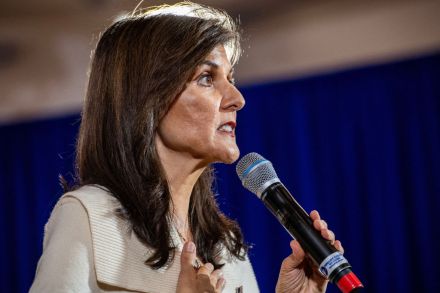
Nikki Haley reignited the battle over the cause of the Civil War. Today’s racial protocol requires a reflexive one-word answer: “slavery.” Haley didn’t give that response, but neither did she give one that reflects our best historical knowledge. Instead, she blamed government for not ensuring “that individuals have the liberties so that they can have freedom of speech, freedom of religion, freedom to do or be anything they want to be without government getting in the way.” The media pummeled Haley. In fact, the primary cause of the American Civil War was different from the pat answer. It was slave-produced cotton. Cotton and race-based slavery cannot be separated here.

There is not going to be a second Civil War

I have important news for everyone: there is not going to be a second American Civil War. That may be hard for some people to grasp, as they seem almost fully committed to the idea that Civil War 2 is a pre-produced done deal just waiting for a wide release. But, as honorary American Gordon Ramsay might say, let me make one thing clear, young lady. The Second Civil War is a fear-based fantasy, mostly based on media-bubble abstractions. And our fantasy-making apparatus is in the midst of exploiting that fear. Exhibit one is Alex Garland’s upcoming A24 movie, subtly titled Civil War, starring Kirsten Dunst as a blue state-looking photojournalist who is chronicling the drama as President Ron Swanson sends fighter jets to attack what used to be his citizens. https://twitter.

civil war

Revisiting Gettysburg

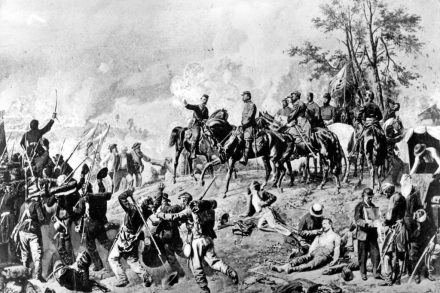
The Civil War, said Gore Vidal, is “the great single tragic event that continues to give resonance to our republic.” Gettysburg was its climacteric battle, and Ron Maxwell’s epic Gettysburg (1993), filmed on and around the battlefield, is the definitive cinematic treatment of the most consequential, written-about and argued-over military engagement in the history of the United States. (I would call it the most stirring as well but then I remember the words of the eminent historian J.G. Randall, best-known for his four-volume Lincoln the President: “That there was heroism in the war is not doubted, but to thousands the war was as romantic as prison rats and as gallant as typhoid or syphilis.

Gettysburg

The president versus the court

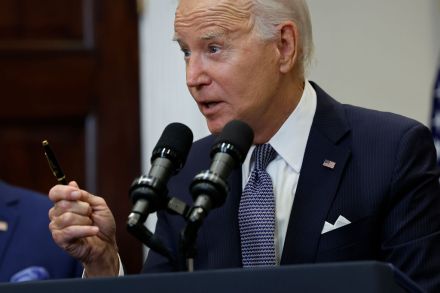
Joe Biden’s best days may be behind him, but the president’s talent for feigning moral outrage is undiminished. That much was clear from the president’s reaction to Supreme Court decisions in the last few days, in particular his remarks in response to the court’s rulings on affirmative action and his administration’s student debt forgiveness program.  This week has served as a reminder that Biden is a president who knows his survival depends on drawing the most demagogic caricature of his opponents he can get away with.

Eighty years later, World War Two is fading from historical memory

With worries about inflation, the war in Ukraine, and tension over Taiwan, it's easy for Americans to forget that we are now deep into the four-year period marking the eightieth anniversary of World War Two. Last December marked eighty years since the day of infamy at Pearl Harbor, while this June passed the date of the critical victory at Midway. In a little less than two years, it will be eight decades since the greatest invasion in history, on D-Day. Soon after will follow commemorations of Hiroshima and Nagasaki and both VE and VJ Days. Each year, living memory of that global struggle continues to fade, with the passage of both time and the Greatest Generation.

world war two

What Americans can learn from the monarchy

September 8, 2022 will go down in history as the date we lost Her Majesty Elizabeth II, Queen of the United Kingdom of Great Britain and Northern Ireland, Canada, Australia, New Zealand, and of her other realms and territories, Head of the Commonwealth, Defender of the Faith. Her son Charles, Prince of Wales, has now succeeded her as King Charles III. For the first time in this writer’s life, the anthem is to be sung as "God Save the King." To write about the accomplishments of the sole public figure remaining from one’s earliest memories is a daunting task. The Queen in her turn inherited an institution that is difficult for Americans — especially of a conservative stripe — to understand.

A ghoulish afterlife: The Seven Moons of Maali Almeida, by Shehan Karunatilaka, reviewed

From our UK edition

Ten years ago Shehan Karunatilaka’s first novel, Chinaman, was published and I raved about it, as did many others. Set in the 1980s, it intertwined the stories of a vanished, forgotten cricketer who was able to bowl unplayable deliveries and the particularly brutal war that was ravaging Sri Lanka. My review ended with the words: ‘Karunatilaka is, I gather, writing another novel, but how it can be as good as this I can hardly imagine.’ We now have that novel, and I was right: it isn’t as good. Which is not to say it’s bad. In fact, there are parts of its design and telling that are very good indeed. But I had problems with it, as you will see. We are in 1990, and Sri Lanka is as dangerous a place is it was in Chinaman, and in reality.

Are the civil war LARPers having a moment?

It was Saturday morning and MSNBC's Tiffany Cross had a bee in her bonnet. With Senator Lindsey Graham predicting riots in the streets, with Donald Trump reacting to the FBI raid on his home like the Archduke Ferdinand had just been offed, Cross told her audience, "These days, it feels like we are not just at the brink of a civil war, but that one has already begun." Six months ago, here's how I would have responded to Cross: of course this is what a hyper-partisan MSNBC host would say. Civil war fears are really just LARPing by Twitter elites who thrive on hatred of the other side and so assume everyone else must too. "WE'RE GOING IN!" screams Elie Mystal as he screeches up in a Power Wheels Jeep while waving around a purple and orange Nerf Kalashnikov.

Of partisan razors and Byzantine bakers

Last week, conservative media company the Daily Wire announced it would begin selling shaving supplies under the brand name Jeremy’s Razors. Why is a media company selling razors? Because Harry’s Razors, a longtime Daily Wire sponsor, recently dropped the partnership due to “misaligned values.” In the launch video for Jeremy’s Razors, Daily Wire co-CEO Jeremy Boreing mocked the woke razor companies with which he plans to compete. “[Michael Knowles] went and said that boys are boys and girls are girls, and that was just too much for Harry's,” Boreing said. “And it's not just Harry's, either. Gillette razors used to be the best a man could get. Then they decided that men are too toxic, unless you're the kind of man who teaches his daughter to shave her beard.

How fears of popery led to a century of turmoil in ‘the land of fallen angels’

From our UK edition

Stuart England did not do its anti-Catholicism by halves. In the late 1670s and early 1680s, a popular feature of London’s civic life were the annual Pope-burning pageants which took place every 17 November to commemorate the accession of Elizabeth I and the nation’s historic deliverance from the forces of international Catholicism. In 1679, one contemporary estimated that 200,000 people watched the spectacle, as a series of floats wound through London’s thronged streets bearing oversized effigies of Roman Catholic clergy, nuns, Jesuits and the Pope to be tipped into a bonfire at Temple Bar or Smithfield with lavish firework accompaniment.

The laziness of blue-state separatists

Dean Obeidallah has an impressive résumé. While he is not a household name, the lawyer-turned-award-winning-comedian hosts a satellite radio program, is a frequent guest on MSNBC and CNN, and has written for all the big publications. But while he has good chops for a progressive pundit, he is no Abraham Lincoln. It shows. Far from emulating the tone taken by the Great Emancipator, Obeidallah prefers to fan the flames of political disunity. In a recent tweet, for example, he wrote that he does not believe that a civil war is coming because 'the Civil War in 1861 happened when Red States said we are leaving and Blue States waged a war to preserve the Union. Today if Red States wanted to leave Blue states would say "Check out time is 1 p.m.”’ That tweet is preposterous!

separatists Obeidallah