Africa

What’s wrong with the West?

It is 25 years since Theodore Dalrymple published Life at the Bottom: The Worldview that Makes the Underclass. In this now famous set of essays, Dalrymple, who worked as a psychiatrist in British prisons, describes the damage done to the poorest in society by the West’s progressive middle-classes, who encourage criminals to see themselves as victims and cheer on the destruction of the traditions and norms that once guided working-class life. On the other side of the Atlantic – and the other side of the middle-class divide – the writer Rob Henderson came to the same conclusions as Dalrymple.

Trump’s peace process pageantry

The US Institute of Peace was taken over by DoGE in January and now appears to have undergone a makeover both inside and out. Its new name is emblazoned on the front: “Donald J. Trump Institute of Peace.” The President loves deals and good branding, perhaps as much as he professes to love peace. On Thursday, in the high-ceilinged atrium of the building, he hosted a celebration of a peace agreement between the Democratic Republic of Congo and Rwanda. The actual peace agreement in question was signed over the summer with shaky results. Nevertheless, leaders from several East African nations, as well as the UAE and Qatar turned up to bear witness to the ceremonial acknowledgement of the agreement.

donald trump peace

The science of marriage

“Those whom God hath joined together, let no man put asunder.” With this stern admonition, the Church has long been a fervent defender of marriage. But as religion has faded as a social force, so too has marriage.  Does it much matter if people choose to shack up together instead of tying the knot? What is lost if some men want to be incels or some women decide a husband is a bothersome surplus to their needs? The problem is that all lifestyles alternative to marriage serve to undermine it. And like other major social institutions, marriage is not some arbitrary cultural construct like a federal holiday. Rather, it rests on genetically shaped behaviors that evolution has written into the human genome because of their survival value.

Marriage

Do black lives still matter?

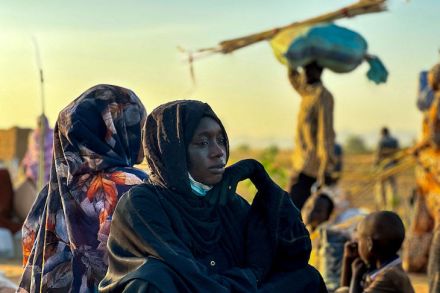
It was an ethnic massacre so bad that it could be seen from space. Satellites picked up bloodied patches of soil in North Darfur’s capital, El Fasher, after Sudan’s Rapid Support Forces (RSF) swept into the besieged city. Pools of blood and piles of bodies were identified. Thousands of people are feared to have died in the appalling violence. Many thousands more have fled for their lives. Others remain trapped in the city. The scenes of slaughter were so blatant that it should have brought marchers out onto the streets in passionate protest. But there wasn’t a peep from the usual suspects. Was this because the killings did not take place in Gaza or the West Bank, but in Sudan, one of Africa’s largest countries?

sudan darfur

The Rockefeller Wing reopens

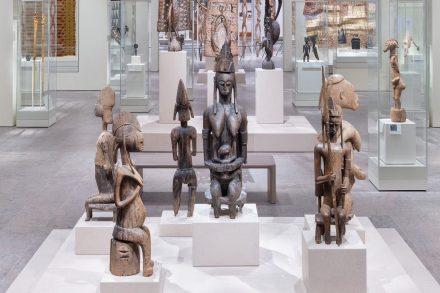
Of the 1,800 objects on display at the newly reopened Michael C. Rockefeller Wing at The Metropolitan Museum of Art, the funerary poles of the Asmat people stick out.  At 15 feet tall, they tower above the swarm of visitors and nearly touch the newly rendered, gorgeously curved ceilings. The poles, decorated with carvings of haunted-looking faces and bodies, were traditionally made to mark a violent death. Once that death was avenged, the poles were removed to the woods, where they were left to decay.  These particular poles have further meaning, though, beyond their eerie beauty and the symbolism they confer of the cycle of life. They were collected by Nelson Rockefeller’s son, Michael, on a trip to spend time with the Asmat in New Guinea in 1961.

I Dream of Lamu

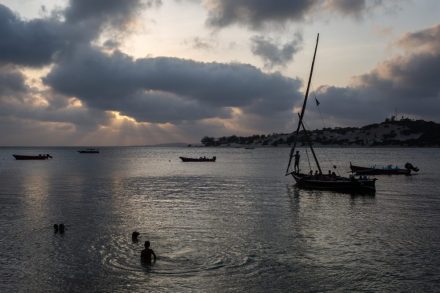
An hour after the propeller plane lifts away from Wilson, Nairobi’s regional airport, it is arching over the blues and greens of the Lamu archipelago; a pattern of islands that extend 130 kms to the Somali border. Views of Lamu, which is also the name of the island and the stone town, have the dreamlike quality of an acid trip; the candy-pink minaret of the main mosque rising over coralline houses in the oldest, continuously inhabited, settlement on Kenya’s Swahili coast. And beyond the hazy shoreline, confetti-scatterings of white are the dhows that powered the fortunes of this former hub and deep-sea port. These criss-crossed the Indian Ocean on seasonal monsoon trade winds swapping ivory and slaves from the African hinterland for silks and spices from India, Yemen and Oman.

The elephants I’ll never forget

"No lions?” “No lions. It’s fast-flowing water, so there shouldn’t be any leeches. We do have slender-snouted crocodiles, but they’re quite shy.” “Hippos?” “One we see every now and again.” Swamp-walking hadn’t been on the year’s bingo card, but I’d found myself wading through clusters of floating dung and algae in the largest tropical rainforest on the African continent. Rubber slip-ons heavy with silt, sulfurous foam collecting in my shirt pockets, I felt strangely calm. As a day, this was turning out to be exceptional. It had been the invitation of a lifetime: to add my name to the list of a few hundred outsiders who have stamped a boot in the Congo Basin, one of the wildest and most remote places on Earth.

elephants

Rwanda to Uganda: a cross-border quest

The shelves of my father’s study-cum-Tottenham Hotspur shrine, stacked with leatherbound match day programs and soccer players’ autobiographies, belie his life’s true obsession: gorillas. The clues are there, though. A small bronze statue of a silverback makes a heavy bookend. A wooden walking stick, its handle carved into the shape of an ape, is propped in the corner. Remove them — and our hazy memories of tracking black, fluffy balls of muscle through lush African forest could be chalked up to a fever dream. But we really did it. After a decade of idle talk, Dad and I devised our mission: we’d research gorillas in Rwanda and realize his life goal of tracking them in Uganda.

A tale of two safaris

To grasp the untamed vastness of Samburu County, it’s necessary to get high. Above the thickets of acacia trees, thorny branches like barbed wire against the cloudless sky. Out of the Rift Valley’s rubbly trenches, dotted with bleached animal skulls and groves of candelabra-like doum palms clustered around some-time watering holes. To the peak of Sundowner Rock, for instance. After scrambling up its boulder-strewn slopes — wishing for the agility of the bug-eyed, Bambi-like dik-diks that prance about this terrain — I flop down on a sun-warmed granite slab and savor an eagle’s eye view of the bushland below. Legions of acacias and wiry shrubs mottle the red earth.

safari

How game ranching protects endangered species

Game ranching in Africa is big business, farming wild animals that unlike regular livestock have evolved there and don’t need much care. What they do need is space. South Africa’s most famous reserve, Kruger National Park, is an 8,000-square-mile chunk of wilderness on the border with Mozambique, but private land stocked with wildlife covers almost ten times that area. Ranchers stock their property at game auctions where animals are sold to ranchers who either want to introduce a species or add a new bloodline. In 2019, American cattle breeders were delighted when an Angus bull sold in North Dakota for a record $1.51 million. But in 2016, the winning bid for a stud buffalo in South Africa was close to $10 million.

game

The African exception to the population bust

Earlier this year, New York Times columnist Ross Douthat wrote a provocative piece making the case that there are two kinds of people in the world: “Those who believe the defining challenge of the twenty-first century will be climate change, and those who know it will be the birth dearth, the population bust, the old age of the world.” Douthat made this bold claim not just because he believes the population bust is the more important of the two challenges, but because, in his view, it is being comparatively neglected due to all the attention paid to irrepressible climate doomsayers.

african population

Listen: Kamala Harris’s Afrobeats playlist

Grab the aux! Vice President Kamala Harris has released a playlist of African artists for her trip to the continent this week, in a move mimicking a trend former president Obama started in 2015. Cockburn wonders if this a sign of Kamala’s well-known ambitions to reach the highest office in the land, by channeling her inner Barack. Joe better watch out! The list consists of songs by musicians from the three countries — Ghana, Tanzania and Zambia — where Harris is stopping during her visit. Harris’s stated intent for her playlist is to “amplify artists and sounds from my travels around Ghana, Tanzania and Zambia.” Included in the twenty-five-song list are Moliy’s “Ghana Bop,” Chile One Mr. Zambia’s “I Love You” and Alikiba’s “Mahaba.

kamala harris spotify playlist

The Woman King is satisfying but it sanitizes African slavery

Every large-scale historical drama is a product of its time. The introduction to Cecil B. DeMille’s beloved The Ten Commandments explicitly outlines the film’s anti-communist agenda: “Are men the property of the state or are they free souls under God? This same battle continues throughout the world today.” Similarly, Gladiator, released in 2000 at the height of neoliberal dominance, anachronistically portrays the arc of Roman history as bending away from despotism towards democracy. 2022’s The Woman King is no exception to this rule. It centers on a fearless female leader who defends a pan-African, antislavery vision while reckoning with her own private traumas. Historically questionable? Yes. A satisfying movie? Also yes.

Putin’s imperialism in Africa

Last week, at roughly the time that photographs and stories began to filter out of liberated Bucha in Ukraine, the NGO Human Rights Watch published a report of similar massacres which took place contemporaneously in rural Mali. What linked the two was the identity of the perpetrators. In Ukraine and across Africa, these atrocities are committed by Russians. In combination with the Malian military junta, foreign soldiers "summarily executed an estimated 300 civilian men," in the town of Moura in late March. These soldiers did not speak French.

The hidden victims of the South African shutdown

I sit in a National Park in South Africa, looking at an empty restaurant in which a robust staff, hired on for the peak international travel season, stand idle and bored. Many will likely be let go next week as the tourism declines yet again. Many were out of work for a year and only just hired back. The ripple effect of the latest travel shutdown is felt immediately here. Many parks in Southern Africa lost 80 percent of funding through the last shutdown, which in South Africa was one of the most severe. We work here with the Rangers, tasked with protecting the last great population of rhino and elephant, and they cannot afford boots, let alone salaries to pay the staff who work without pause.

south africa shutdown

Tough times for tenacious Tigray

Tigray, Ethiopia’s most northerly region, makes its presence felt all the way down in Addis Ababa, about 430 miles to the south. Even before the current fighting, the prettiest beggars in the rambunctious and strangely endearing Ethiopian capital tended to be the Tigrayan single mothers. They made that daunting journey to escape a rural existence that struck me, during my trips around Tigray, as not dissimilar to European life during the Middle Ages. When I lived in Ethiopia, I reported from all over Tigray on humanitarian projects, tensions with Eritrea and the influx of Eritrean refugees, even on a brave British expat who was trying to establish a milk farm.

tigray

Finger pickin’ good

The banjo was present at the creation of jazz but, like the clarinet and the fiddle, it fell from favor, and for similar reasons. The saxophone and the electric guitar were easier to play, more expressive and much, much louder. The banjo was on the way out even as it was on the way in — in the Hot Five recordings of December 1927 that instituted the jazz solo as we know it, Johnny St Cyr played both banjo and guitar — but the banjo had somewhere else to go. The fleet-fingered took their four-and fivestringers to the hills — the Appalachians, for instance. There, the banjo thrived with those other refugees from early jazz, the fiddle and the steel-strung guitar. Metropolitan contempt caught up with it in the Seventies.

banjo

Addicted to Addis

This article is in The Spectator’s March 2020 US edition. Subscribe here. In the Entoto hills high above Addis Ababa, the lights of incoming Ethiopian Airlines planes are evenly spaced in the night sky. Behind me in an abandoned restaurant, the DJ cranks it up and the dance floor goes nuts. EDM (Electronic Dance Music), a style popularized at American festivals and raves, has landed in Ethiopia. I’ve been a dance music devotee since college. But when I first visited Ethiopia in 2000, I lost my heart to a different scene: mesinko-playing troubadours who mask political satire in witty innuendo, the hypnotic melodies of Ethio-jazz bands and the traditional shoulder-shaking of iskista dancers.

addis ababa ethiopia