Zoe Strimpel

Zoe Strimpel

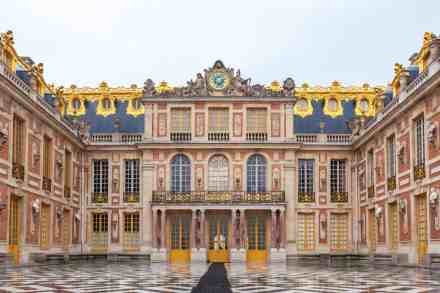
Live like Louis XVI for a day

From our UK edition

Some of the ways the rich can amuse and refresh themselves today include spas in the Maldives with glass floors offering views of brightly coloured fish during treatment, private retreats in the mountains of St Lucia costing thousands per night, and fabulous overnight trains through Rajasthan. But the last word in luxury is still to be found in the heartlands of European civilisation – France – and it almost always involves the creative, bordering on unbelievable co-option of heritage, only possible through the most fabulous contacts, patience and expense.

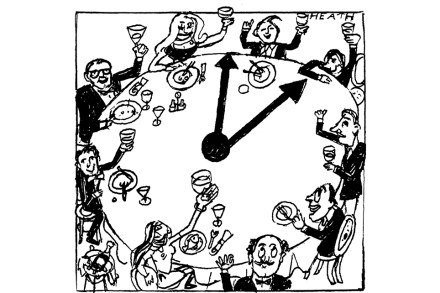
Boozy lunches are back

From our UK edition

The financial crash of 2008 didn’t kill the boozy lunch outright, but it took the wind out of its sails. Ever more Americanised work styles further deflated the tradition, before Covid stamped on it. But the boozy lunch is back. It’s certainly surprising. After all, we are in the middle of a cost-of-living squeeze and a hospitality staffing crisis so severe that it has driven many restaurants to bankruptcy. But try meeting a friend for lunch in Farringdon, Soho or Mayfair and you wouldn’t know it. You must elbow your way in, wait for a harried but upbeat maître’d and thank your lucky stars you have a booking – if you do, that is. If not, there’s always Pret. As a special treat, I met my father recently at the smart Italian restaurant Luca in Clerkenwell.

The strange allure of wine tinnies

From our UK edition

Some years ago, on a trip up America’s Pacific Northwest, I spent a night in Portland in a hotel that was depressing in the way that not-quite-posh, not-quite-cool hotels can be. As part of its attempt to inject a sense of pizzazz into my cavernous room, there was a welcome pack whose starring feature was a can of Pinot Noir – the size and shape of a Diet Coke can, with a joke on the side about this being ‘soccer mom’ wine. The reference to hassled housewives ferrying their progeny about to games, desperate for surreptitious booze, depressed me further and I added ‘wine in tins’ to the list of vulgar American inventions I’d forever resist.

The lives of even anti-Putin Russian artists are being made impossible

From our UK edition

Swift and sure, the guillotine blade came down on Russians in the West on 24 February last year, the day Russia invaded Ukraine. The logic was clear as concerned Putin loyalists; cutting them off from western gravy trains in the face of their dear leader’s grotesque aggression made some sense. They could bed down with the devil, so to speak, but not on our buck. So one doesn’t weep much over the relegation to Europe’s fringes of the likes of openly pro-Putin musicians such as pianist Denis Matsuev or the former LSO and Munich Philharmonic chief conductor Valery Gergiev. Then there’s the soprano Anna Netrebko, who, seen as being close to Putin, was sacked immediately by the Met when she didn’t condemn the Russian President fast enough.

Martin Amis and the death of the lascivious young man

From our UK edition

In the days since Martin Amis died at 73 of oesophageal cancer, the papers have been full of tributes. Mostly by men, mostly admiring, and clearly envious of Mart’s gutsy, mad way with words and his lusty, hard-living literary life, full of the cigarettes that killed him and more booze and women than today’s young literary chaps could ever hope to get anywhere near.  Amis was, it seems clear in memoriam, a man’s writer.  Except that he wasn’t. At least, he wasn’t for young women like me. Primed already by the total horniness of Philip Roth’s narrators, and particularly Alexander Portnoy of Portnoy’s Complaint, I dove happily into the fervid folds of Mart’s pages, mentally pinched and groped by his incessant, entirely unforgiving imagery of sexual conquest.

What Miriam Cates gets wrong about working mothers

From our UK edition

Miriam Cates and I have a different idea of what Thatcherism was all about. To me, the Lady T era was more feminist than any other before or after because it included all people, including women, in its vision of work, wealth, power and success. It did so without all the carry on about menstruation and endometriosis and menopause and who knows what else that comes with female empowerment discourse today.  'I felt like nothing more than a drudge,' said Thatcher in a 1954 interview in Forward, a Conservative pamphlet, of being at home with two babies and the housework after the mental stimulation of chemistry and law. Later, she would extol the virtues of women’s role in the home as doting mothers and responsible housekeepers and decry 'women’s lib'.

The great AI panic is spiralling out of control

From our UK edition

I refuse to get Amazon Alexa, and never use Siri, because I find the concept of human-style interactions with robots somewhere between the unhealthy and the grotesque. And almost always more hassle than they’re worth because they don’t actually 'understand' what you’re telling them. But I don't find them sinister, and find myself sceptical of the growing panic about AI since Chat GPT-4 launched in March. A fortnight ago, British scientist Geoffrey Hinton, 75, made a dramatic exit from Google, so that he could speak freely about the dangers of the technology he’d helped create. His fears seem to revolve around the 'hive mind' function of AI, whereby everything one robot learns, they all learn.

Ealing’s ‘women-only’ tower block is regressive

From our UK edition

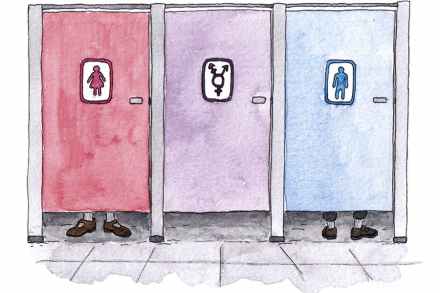
Designs for a tower block in Ealing just for women – the first in Britain – have been given the thumbs up by planners. On the surface of it, the scheme, proposed by the Women’s Pioneer Housing association, which was founded in the 1920s by women’s rights campaigners, sounds rather good. It offers a permanent, refuge-style living arrangement for vulnerable and poor women,  including victims of domestic violence. Some utopian touches are in the offing too: deeper balconies designed to keep prying eyes away, slightly lower kitchen work surfaces, even ventilation systems suited for menopausal women (presumably the option to open the window wide on the 15th floor will be limited).

The joy of India’s heritage hotels

From our UK edition

As the pandemic roared through India, I wondered when tourists like me would be able to return to a country so central to the traveller’s imagination. When we did return, would it show the scars of the hideous death toll and extreme burden of suffering? Would we feel safe? Finally, nearly three years since I first wondered this, I went to find out. I flew not long after India relaxed all Covid paperwork late last year. A sadistically bureaucratic nation at the best of times, India had scrapped British e-Visas in retaliation for something that no one can quite work out, making the visa application process somewhat Kafka-esque. The e-Visa has, thankfully, since returned.

What the Cambridge dons drink

From our UK edition

In June last year, King’s College Cambridge made more than £1 million from an auction of just 41 lots from its wine cellar. Not bad for a college that until just a few years ago had a hammer and sickle flag hanging in its student bar. But the Marxist sympathies of some of its legendary fellows and students stand little chance against the viticultural genius of the cellar’s buyer: Peter de Bolla, a scholar of 18th century literature and aesthetics. Included in the bonanza sale were 12 bottles of 1999 Echezeaux, an apparently legendary grand cru from Henri Jayer, for which someone bid £100,000. De Bolla had bought them on release and, to give some indication of the return on his investment, when he bought the 1996 vintage he had paid £31.11 per bottle.

The age of the male hag

From our UK edition

This, we are told, is a very bad time to be a woman. When young, we're warned that we are sexual prey, privy to a misogynistic ordeal both on the streets and in the sheets, courtesy of the jungle of app-mediated romance. Despite being slaves to the gym and learning to pole dance, we still can’t win. We are locked in a never-ending hell spiral that sees droves of us as young as 18 racing to the plastic surgeon, desperate to fill our faces with Botox and hyaluronic acid in a bid to look sexier, younger, hotter, fitter, less tired and more like the stars of reality TV. Did I mention younger?  And now a new book, Hags: The Demonisation of Middle-Aged Women by Victoria Smith, has arrived.

In defence of Waitrose

From our UK edition

I recently had a call with my accountant, a miniskirt-wearing, swashbuckling bon vivant and wine connoisseur. To soothe myself before we rang off – tax is always depressing – I brought up Waitrose, saying by way of apology for my erratic finances that most of my money went in the supermarket, a large branch of which is between my nearest Tube station and my flat. She hemmed knowingly down the phone. We both agreed it was a good use of funds. Life’s short – or might be. If one can, surely one ought to eat what one wants? And if that means a pair of smoked salmon, pea and lovage terrines or five types of mackerel pate on a Monday, or a medley of pre-chopped mango and strawberry with own-brand coconut and lime ice cream, then so be it.

It’s no surprise dog attacks are on the rise

From our UK edition

Love of dogs is hardly new in Britain. There is a growing strand of research exploring the shared history we have with our canine pets. There is some lovely work on Victorian pet cemeteries and dog breeding, while an excellent little series by Kathleen Walker-Meikle includes the indispensable Dogs in Medieval Manuscripts, which chronicles the prominent if exotic space in the imagination held by our furry friends a millennium ago.   But if domestic animals had an obvious role in the private lives of our ancestors beyond being cute and fond furry friends – cats as mousers, dogs to scare baddies off, chase after sheep and keep other rogue animals in line – today the relationship has taken on a more sentimental, claustrophobic and frankly troubling turn.

Still fabulous: Savage Love podcast reviewed

From our UK edition

Two podcast MOTs this week. I am a long-term listener of sex and relationships podcast Savage Love, hosted by Seattle-based Dan Savage. And tuning in to his most recent instalment, I can confirm it is still fabulous. A quick primer for those not familiar: Savage is famous for giving the world such gems as 'monogamish' (mostly monogamous; Savage and underwear model husband Terry were monogamish before becoming poly),  'fuck first' (do the deed before, not after, your huge romantic meal), and 'DTMI' (dump the motherfucker).

The queen of chess makes her next move

When a young male friend offered to teach me chess last summer, I thought it sounded an exotic thing to learn at forty — and a feminist itch made me want to prove I could hold my own against the dorky boys. Perhaps one day — for the moment I am still pretty hopeless. Radical gender imbalance continues to characterize the chess landscape. Gender ratios are slowly shifting among children as old beliefs about cognitive preference and ability are proved wrong, but top-level chess is still heavily male-dominated. At the very top, it is all male: there is only one woman in the top 120, Hou Yifan of China, ranked 115th.

polgár

Noma and the death of fine dining

From our UK edition

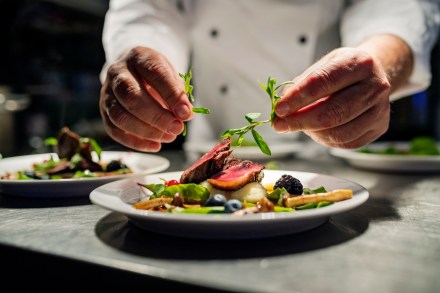
The Menu is a horror film about fine dining that revolves around a psychotic head chef (Ralph Fiennes) who runs a destination restaurant on an American island. The island is uninhabited apart from the chef and his staff, who pluck it for the most refined marine treats to serve the obnoxious clientele on a nightly surprise menu. As I sat in the cinema watching it recently, I felt delighted, then sick, then scared – and then enlightened. Enlightened because I finally understood that fine dining – once the summit of high living and my own former obsession as a greedy twenty-something working in lifestyle journalism – is over. It is not just that in this era of obsessive authenticity and sentimentality fine dining feels passé.

Stop broadcasting your ‘personal news’

From our UK edition

‘Some personal news! Delighted to announce I’ll be joining [insert major company] as the new [insert extremely impressive-sounding, well-paid, prestigious job title] this week! It’s been great working at [insert other major, if slightly less gleaming company] but I’m so [insert word denoting excitement or thrill, including "excited" and "thrilled"] at what the future holds! You can find me at [new prestigious institutional email address].’ It is no exaggeration to say that over the past week, half of my Twitter feed has been composed of alerts that follow this exact script. As the trickle thickened to a deluge, I wondered if there was some secret spoof going on. Were they all in on a new year joke?

Joyce Carol Oates intellectualizes Yellowstone

A neo-Western drama set on a vast ranch in Montana run through with trashy romance plot lines and violent disputes about land and legacy — "who owns the West?" — has made Yellowstone the most-watched TV series in America. The season four finale drew over 11 million viewers. And yet, while millions of Americans are lapping up the epic sprawl of violence, lust, family and wilderness, many — particularly the coastal intelligentsia — don’t watch it. One vocal exception is Joyce Carol Oates, the Pulitzer-nominated author of fifty-nine novels and one of the great chroniclers of the last American century.

A sceptic’s guide to English wine

From our UK edition

Being in possession of a well-kept secret is every wine-buyer’s goal, not least because uncorking an unusual find impresses even the snootiest of guests. English wine-makers have long been trying to break up any residual secrecy about the worthiness of their wines. Not quite new world, not quite old world, English wine was always going to fill an odd space in the market.  Confession: I never buy wine from the British isles. Almost anything else has always struck me as both better value and nicer to drink. And then I met Matt Hodgson. Hodgson runs Grape Britannia, a modest but expert shop and bar in Cambridge that sells only English wine (plus some Welsh and one from the Scottish borders).

Why war museums matter

From our UK edition

On Christmas Day 1942, the German battlecruiser Scharnhorst, along with five destroyers, left its Norwegian base and headed for a series of Arctic convoys, the British fleets transporting material and support to the Soviets. The townclass cruiser HMS Belfast, used to escort the convoys through some of the most dangerous seas in the world, played a vital role in the Royal Navy’s clever game of bait-and-blast that resulted in the destruction of the Scharnhorst, a monster that had already sunk a British carrier and two destroyers. Belfast, the most powerful cruiser in the Navy at her relaunch in 1942 (she hit a mine in 1939 and needed three years of repairs), now sits in the Thames by City Hall, a visitor attraction operated by Imperial War Museums.