Zak Mir

Is ethical investment only for millennials and hipsters?

From our UK edition

In the 'bad old days' – namely before the late 20th century – it was traditionally the case that the less ethical and the less green a business or sector, the better. There was, and still is, a whole cacophony of 'sin stocks, from tobacco to oil and gas to defence and junk food. The reason for an enthusiasm for all things sinful was, and probably still is, because such businesses tended to have the most secure profits profile. After all, people will always smoke, go to war and binge eat. However, from a moral standpoint investors would be scraping the bottom of the barrel in terms of a clear conscience by going for such an approach.

What does the future look like for Apple?

From our UK edition

In case you missed it,  Apple’s market capitalisation has now hit the $1trillion mark – something which is as mind boggling as it was inevitable. Everyone with a newswire, Twitter feed and website seems to have latched onto the milestone. You'd have thought they'd all successfully predicted this event on 1 April 1976, when the company was founded. But the question now is whether the valuation has made a fool of all of us? According to Mike Ingram, Chief Market Strategist at WH Ireland, 'In just over a decade Apple has transformed itself from a niche tech company for nerds to a global consumer goods powerhouse. While it currently deserves its status, there is the real possibility that Apple may be pipped by the next big thing.

Is there money to be made from the blockchain hype?

From our UK edition

It is said that the story of diamond mining in South Africa began with someone who inadvertently kicked a large stone in the dusty ground, only to discover that said stone was in fact a huge diamond. This started a rush of speculators hoping to make a fast buck. For many of today’s speculators, blockchain is that dusty diamond. They stake their claims and reach into their pockets – or most likely try to convince others to reach into theirs ­– to start mining on the promise that they will deliver gemstones. As well as the excitement associated with a new technology, be it the internet, smart phones, Virtual Reality or Artificial Intelligence, the question which tends to rear its head very early on is whether there is money to be made.

Arlene Foster on the Northern Irish economy, Brexit, and Jeremy Corbyn

From our UK edition

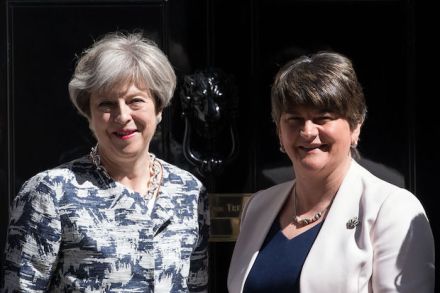
Arlene Foster has been the leader of the Democratic Unionist Party (DUP) since December 2015, and the Member of the Northern Ireland Assembly for Fermanagh and South Tyrone since 2003. In this interview, Foster discusses the DUP’s unlikely alliance with the Mrs May’s Conservative Party; why the DUP would not strike a deal with Labour anytime soon, and the British media’s ill-conceived perception of her party. After the last UK general election, Foster was thrown into the political spotlight after Theresa May entered into a ‘confidence and supply deal’ to prop up the Conservative minority government with her 10 MPs, as the DUP are now the fifth largest party in the House of Commons.

Roger Bootle: A post-Brexit Britain could be ‘more open, less protectionist and more competitive’

From our UK edition

One of the City’s best-known economists, Roger Bootle, discusses whether a success could be made from Brexit, just over a year after Britain to leave the European Union. Bootle begins by explaining the ‘overblown’ nature of the ‘European Single Market’ concept: I don’t think what has been clearly said or argued is that the [European] ‘Single Market’ is vastly overblown. There are advantages and disadvantages of not being part of it. However, I do think it has become a protectionist entity. The original idea for a [European] ‘Single Market’ was a British one supported by former Conservative Prime Minister, Margaret Thatcher.

Jacqueline Gold, founder of Ann Summers, on how she became one of Britain’s richest women

From our UK edition

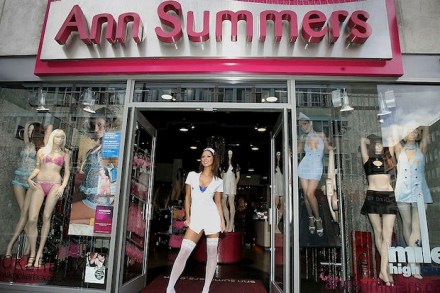
Ann Summers chief executive Jacqueline Gold has been credited with transforming the lingerie company into a more female-friendly business – and in the process has become Britain’s 16th richest woman, according to the latest Sunday Times Rich List. So what was the key to her success? Gold believes that identifying a gap in the market was what turned Ann Summers into such a recognisable brand. 'I knew that women were desperate to buy sexy lingerie and sex toys, but there wasn’t anywhere they could do that which offered a female-friendly, safe environment.' she explains. 'I spoke to friends and saw that we could replicate the popular concept of 'at home' parties, but with Ann Summers products.