Ysenda Maxtone Graham

Who will be London’s next bishop?

From our UK edition

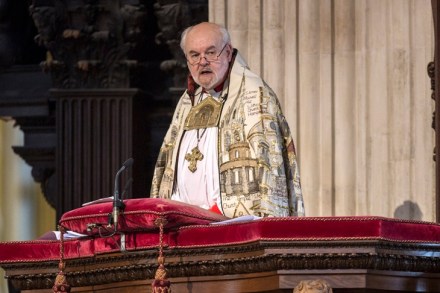
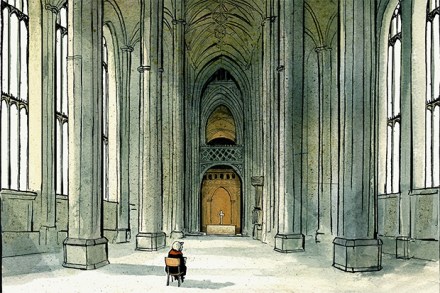
In typical theatrical style, the outgoing Bishop of London, Richard Chartres, he of the sonorous voice and imposing beard, ‘never knowingly underdressed’, ‘the last of the great prince bishops’, attended his final service as bishop at last Thursday’s liturgy at St Paul’s Cathedral for Candlemas — the day on which Simeon spoke the words, ‘Lord, now lettest thou thy servant depart in peace.

Poor bewildered beasts

From our UK edition

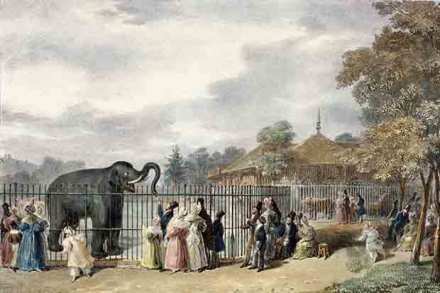
If you’ve ever read a history of the early days of the Foundling Hospital, you’ll remember the shock: expecting to enjoy a heartwarming tale of 18th-century babies being rescued from destitution and brought to live in a lovely safe place, you will have found instead that the tale was mostly about babies dying after they arrived. So it is with this fascinating book about the early days of London Zoo. Expecting to read about lions, tigers and monkeys in all their boisterous aliveness, you wade instead into disturbing descriptions of the illnesses they suffered and their pitiful early deaths.

In praise of Advent

From our UK edition

The first Sunday of Advent is 27 November this year. For those of us who prefer Advent services to Christmas ones, the earlier the better, frankly. I relish the frisson of gloom, foreboding and fear of judgment you get at Advent, alongside the hope. ‘The Holly and the Ivy’ is all very well, but it’s the minor chord at the end of ‘O Come, O Come, Emmanuel’ that I crave. So do thousands of others, it seems. The Advent service at Salisbury Cathedral, for example, is so oversubscribed these days that it’s repeated on three consecutive evenings, starting on the Friday before Advent Sunday. So, tears barely dry from the Remembrance Sunday requiem, you find yourself queuing in the cloisters for an hour and a half on Friday 25 November.

Sweet sorrow

From our UK edition

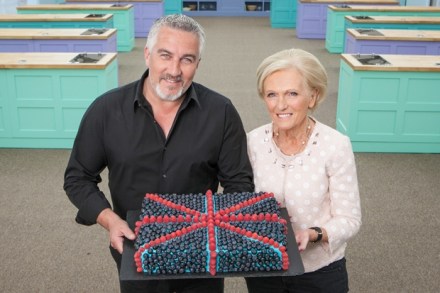
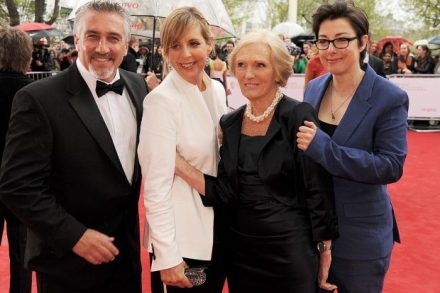
So, is that it? The end of sweetness, and the end of taste? Physically speaking, those things will no doubt carry on, when The Great British Bake Off moves to Channel 4 next year. We’ll still take vicarious pleasure in the mouth-watering sweetness of someone’s ‘crème pat’. The taste of lavender will still ‘come through’ in a contestant’s 12 identical puff pastry miniatures. But I’m referring to the abstracts: the sweetness, and the taste. I fear that those might have gone for ever.

Let’s not deceive ourselves, Great British Bake Off will never be the same again

From our UK edition

So, is that it? The end of sweetness, and the end of taste? Physically speaking, those things will no doubt carry on, when The Great British Bake Off moves to Channel 4 next year. We’ll still take vicarious pleasure in the mouthwatering sweetness of someone’s ‘crème pat’. The taste of lavender will still ‘come through’ in a contestant’s 12 identical puff pastry miniatures. But I’m referring to the abstracts: the sweetness, and the taste. I fear that those might have gone for ever.

Hope, fights and grammar schools

From our UK edition

A typical Kentish town, with its grammar school at one end and its secondary school at the other, is a throwback to the Bad Old Days, or the Good Old Days, depending on what your views are on academically selective state education. If Theresa May’s plans go ahead, the whole country might look something like this. In my childhood home town of Sandwich, Kent, the two schools, Sir Roger Manwood’s grammar school and the Sandwich Technology School, have staggered going-home times to avoid the fights on the station platform that used to happen every afternoon. Their uniforms are tellingly different: the Manwood’s students wear smart blazers and ties, the Tech ones wear casual black polo shirts and black jerseys. There’s a slight shiftiness in the afternoon atmosphere.

The vanity line

From our UK edition

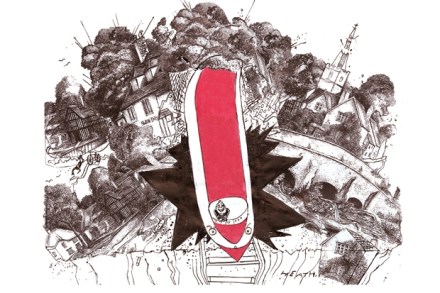
Jeremy Corbyn may not be right about many things, but when he sat on the floor of a train, hoping to raise awareness about overcrowding, he was at least on to something. Of course, in classic Corbyn style, he proved to have ignored reality to make his point: there were plenty of seats on that particular train. It was nonetheless a point worth making. Millions of passengers jostle for standing space every day; Britain’s rail system is in urgent need of help. And there is apparently money to be spent. It just won’t be going on the most overcrowded lines. Instead, the cash is destined for High Speed 2 — one of those mysterious vanity projects that refuses to go away even though common sense begs it to. Polls show the vast majority of us are against it.

Death in Greenwich

From our UK edition

With the current political saga running in our heads, trumping all other stories, it has been hard to concentrate on the bedside book over the last few weeks. When, in this true Victorian murder mystery, I came to the sentence, ‘Ebeneezer Pook, however, had no intention of succumbing to the crowd’s pressure’, all I could see in my head was Jeremy Corbyn emerging from his house, ducking under the prickly rosebush and refusing to stand down. And when I came to this complicated passage: Mrs Thomas’s story buttressed the account that William Sparshott had given and would dovetail with the account Olivia Cavell was about to give.

Imperial ambitions

From our UK edition

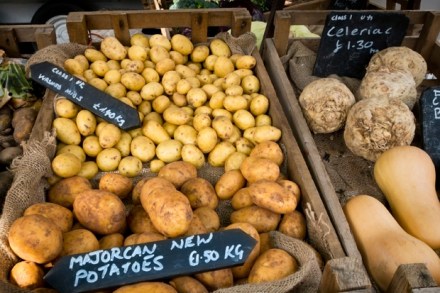
Early on the morning of Friday 24 June, Darren Gratton went into his butcher’s shop in Barnstaple and changed his wall signs, which at this time of year are mostly about barbecue packs. Emboldened in the Brexit dawn, he deleted all references to ‘kg’ and replaced each one with ‘lb’. Tempted to do the same to the labels inside the display cabinets, he decided not to, for fear of a threatening call from Trading Standards. But that small act of wall-chart insurrection was enough to spark an article in the local paper, which triggered a deluge of emails from other shopkeepers across the country in support of his brave action with the squeaky pen.

Blue plaque blues

From our UK edition

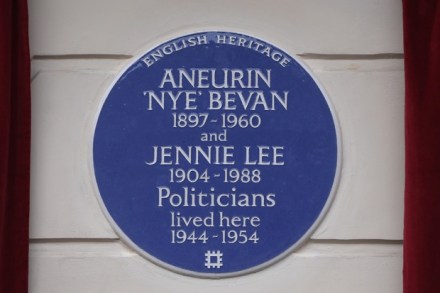
Blue plaque spotting is one of the mind-broadening pleasures of British life. A walk to the dentist can be transformed into a serendipitous encounter with a forgotten genius from the past. ‘Luke Howard, 1772–1864, Namer of Clouds, lived and died here,’ says the blue plaque on 7 Bruce Grove, Tottenham. Even if you’ve never heard of Luke Howard, you instantly take a liking to him — and never again will you hear the word ‘cumulonimbus’ without thinking of him. ‘Lived here’ is the key: you’re passing the very house where the person woke up for breakfast each day, and the intimacy of that is what makes the encounter so much more affecting than merely reading about him or passing a statue of him.

One club, no hearts

From our UK edition

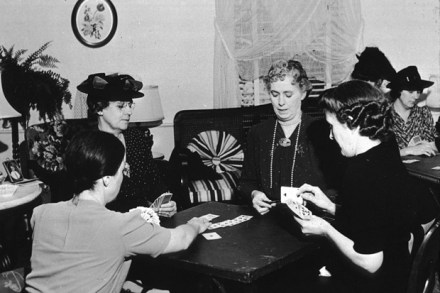
Not a single line of this highly distinctive memoir happens out of doors. All of it takes place in rooms: the dining-rooms and living-rooms, mainly, of five elderly, thin, Jewish bridge-playing ladies, Bette, Bea, Jackie, Rhoda and Roz, in a desirable suburb of New Haven, Connecticut. Their napkin rings are made of silver, porcelain, tortoiseshell, bamboo and Bakelite, and they put on their best necklaces and get out the best coffee cups when it’s their turn to host. They have met together to play bridge every Monday afternoon for over half a century. ‘Five ladies, luncheon of silvery fish, two decks of cards and a scoring pad nearby.’ (It’s five in the club, by the way, so there’s an extra if one of them is ill.

Forget about Shakespeare. We should be celebrating Charlotte Brontë

From our UK edition

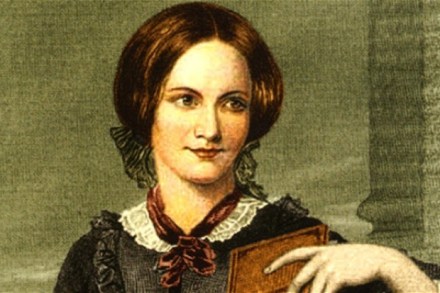
Major anniversary of her birth today, on 21 April. A ‘national treasure’, epitomising a certain kind of stoical, homely, female Britishness. Revered and adored by millions. Her family home a major tourist attraction. A life dedicated to self-sacrifice and the service of others. Plainly but elegantly dressed: not a follower of fashion. Rather severe-looking when not smiling. Yes, I’m thinking of Charlotte Brontë, and so should we all be, in this her 200th anniversary week. The third of six children of the Revd Patrick and Maria Brontë, all of whom died long before their father did, she wrote a revolutionary novel so grippingly, movingly brilliant that people still love it even if it was their set text. ‘There was no possibility of taking a walk that day.

The price of a cathedral

From our UK edition

We’ve all done it: been overcome by a sudden sense of hard-upness at the moment when the collection plate comes round at the end of a cathedral service. We fumble in our pockets, feel a £1 coin and a £10 note, and decide that the £1 coin will do. This is a cathedral, for goodness sake, not a parish church: they must be rich, with all those gold-coloured vestments and choristers in ruffs. But if we want our cathedrals to be alive and singing psalms in 20 years’ time, this misconception about cathedrals must change. Indeed, the sub-dean of Coventry is openly clamping down.

About a boy

From our UK edition

A boy, a car, a journey, a question: the first sentence of Elizabeth Day’s new novel goes like this: From the back seat of the old Chevette, heading north, the boy asked his question into the restless air. The restless air? The reader makes the mental adjustment: it’s not the air that’s restless, it’s the boy and probably his whole family. So why the transferred epithet at this early stage? It sets the tone for a transferred-epithet-filled novel so full of anguish and poetic touches that you’ll find yourself reading it in a hushed voice. Jim, the boy in question, ‘read the air around people, the calm or seasick air’. His mother, Nancy, notices how ‘the sun was warming his sunrise bones’.

Ladies be good

From our UK edition

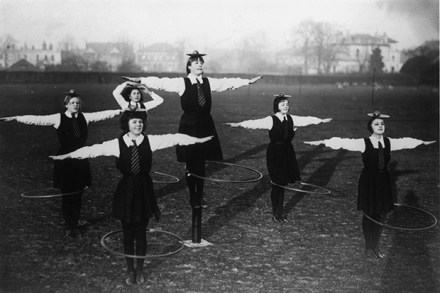
I wonder if Cheltenham Ladies’ College is still like that,’ I thought, as I interviewed a succession of 1950s old girls recently. Their memories left me reeling, and I felt relieved not to have been a sensitive girl sent to Cheltenham from an outpost of the empire, condemned to spend seven years being hissed at in Gothic classrooms by sarcastic unmarried women. I still can’t decide whether I would have preferred to have had a terrifying time at Cheltenham in the Fifties but be -brilliantly taught, or have gone somewhere relaxed like Southover (which closed in 1988) and have a lovely time but learn nothing. Probably Cheltenham — but only just. So last month I decided to find out if any of the old scariness remained.

Why ‘my’?

From our UK edition

It used to be ‘Your M&S’. That was presumptuous enough. Now, when you drive past Earls Court exhibition hall, pathetically covered in plastic sheeting while being demolished to make way for a high--quality, mixed-tenure residential neighbourhood, the hoarding tells you you’re going past ‘My Earls Court’. You can read all about it on myearlscourt.com. No, it is not my Earls Court. And nor will I like it more if you try to tell me it is mine. The same with Church Street, London NW8: there’s redevelopment here, too, and it’s being flaunted as ‘mychurchstreetnw8’. No it’s not. Stop trying to make me take psychological ownership of your so-called urban renaissance. This is what I call ‘the aggressive first person’.

Big heads

From our UK edition

The term ‘superhead’ was first used during the Blair government in 1998: an eye-catching word for a new breed of Superman-style headmasters or headmistresses, fast-tracked star teachers who would be parachuted into failing inner-city state schools and paid six-figure salaries to ‘turn them around’. It reaped rewards and can generally be considered a Good Thing. Sir Michael Wilshaw, for example, now chief inspector of schools, became known as ‘the hero of Hackney’ for transforming the academic record of Mossbourne Community Academy, built on the site of the totally-failed Hackney Downs School. Sometimes power went to the superheads’ heads and they were caught siphoning off funds to pay for their holidays.

One holy mess

From our UK edition

This novel, John Irving’s 14th, took the sheen off my Christmas, and here are the reasons.   The comments on the back of the book (‘Irving is the wisest, most anguished and funniest novelist of his generation’ — Chicago Sun Times) made me feel lonely. He might have been wise, anguished and funny in The World According to Garp, 33 years ago. But never once in these 458 pages did I laugh, sympathise, or glean an ounce of wisdom. Instead, I lost confidence that reading novels could ever be a pleasure.   Take the main character, Juan Diego, a ‘dump kid’ growing up on one of the vast rubbish dumps on the edge of Oaxaca (‘Wahaca’). I enjoy reading about a dump as much as the next person, so was hopeful.

The best short story collections — from childish gabbling to jaded nihilism

From our UK edition

Anyone who enjoyed Ali Smith’s novel How to be Both, with its charmingly loopy monologue of an Italian Renaissance painter prattling away to us through one of the book’s famously interchangeable halves, will be glad to see her new book of short stories, Public Library and Other Stories (Hamish Hamilton, £16.99). It looks reassuringly similar: white hardback; photograph of two contemporary studenty people on the jacket; large font-size; non-justified lines; no quotation marks for dialogue. Here we are again reading Smith’s deliberately childlike prose.

Ticks and crosses

From our UK edition

Houses, as any plumber will testify, do sometimes blow up in gas explosions, destroying their contents and inhabitants, but would that really happen on the night before a wedding in a swanky house in Connecticut, killing daughter, daughter’s fiancé and owner’s lover? It seems too good to be true —the perfect big bang to set a novel in motion — and it made me distrustful from the start. It’s bad enough for a fictional weirdo to engineer such a disaster, but it’s worse for a novelist to engineer one, just so he can crack open a cast of characters’ sorrowful interior monologues and keep them going for a novel’s length. Did You Ever Have a Family is a strange book: a psychological thriller that intrigues rather than thrills.