Ysenda Maxtone Graham

Where are the snows of yesteryear?

I like a book where you don’t think you’re going to be interested in the subject, but then find it’s so vigorously and engagingly written that you’re enchanted. This is one of those. I’m not a skier —I’m quickly bored when coffee-drinking mothers start recounting their children’s latest achievements on the piste — so I expected to have had enough by page five, as I set off across the blinding whiteness of this ‘biography’ of snow, written by a man who’s wearing ski-goggles in the jacket photo. But in Giles Whittell’s genial company, reading it was a great pleasure.

Mission impossible? | 13 December 2017

If you work for the Church of England in any capacity, from Archbishop of Canterbury to parish flower-arranger, how do you deal with the distressing statistics that in the past 20 years, average Sunday attendance has plummeted to 780,000 and is going down by a rate of about 20,000 a year? Do you pretend it’s not happening and just tell everyone about the spike in your numbers at Christmas, or accept that it might be happening but believe that God’s grace will deal with the problem in its own good time? Or do you throw your weight behind a vast national marketing initiative, hurling millions of pounds at the problem? Are you, in short, a denier or a panicker?

The joys of Neglexit

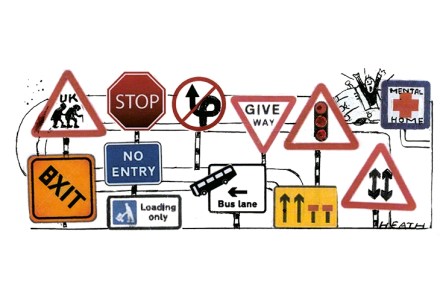
The new political buzzword is ‘Neglexit’: the state of being in which, because the government is so wrapped up in Brexit negotiations, Britain is barely being governed. No big, visionary new policies are being launched. Gone are the days when every parliamentary session included an NHS Bill, a Criminal Justice Bill or an Education Bill. ‘The UK is stuck in political and bureaucratic torpor. The country — as an administrative entity — has virtually stopped working… ministers just don’t have the time to attend to the needs and ambitions of ordinary citizens,’ said a report from Bloomberg Businessweek.

No country for old women

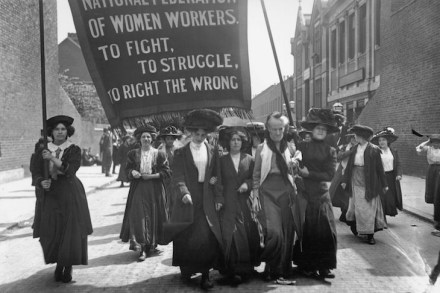
Lissa Evans has had a good idea for her new novel. It’s ‘suffragettes: the sequel’. She sets her story not in 1918 but in 1928. Two washed-up spinster suffragettes in their sixties, Florrie (known as ‘the Flea’) and Mattie, live together platonically in a house in Hampstead known as the Mousehole, because it used to be a convalescent home for hunger-striking suffragettes during the Cat and Mouse Act. It’s freezing, and they cut up old Christmas cards for splints, conversing like two dotty old dons. ‘What utter spinach!’ ‘Small sherry? Or a toddy? Buck you up a bit.’ Their WSPU glory days are behind them. Florrie is now a sanitary inspector, and Mattie gives lectures with slides about her window-smashing past.

The lost boys

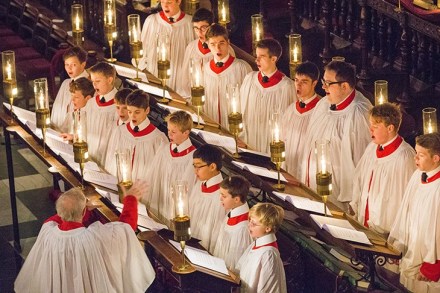
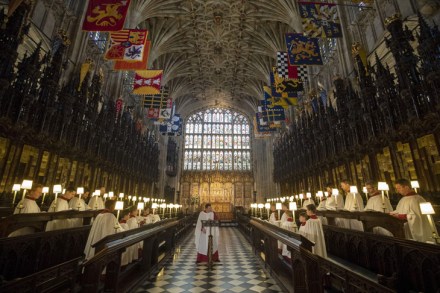
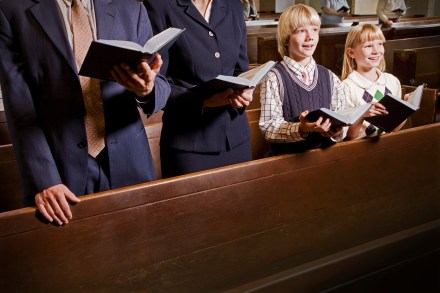
One by one, cathedrals have succumbed to the inevitable. In blazes of publicity, with front-page photographs of girls in cassocks in the cloisters, most deans and chapters have signalled their drive for equality of opportunity by inaugurating a girls’ choir to run alongside the boys’ one. So now, at the vast majority of our cathedrals, instead of boys singing up to eight services per week, the two top lines take turns, in varying ratios, with girls aged from eight to 18. The scheme has been working for 27 years, since Salisbury started the trend in 1991, and let me say from the outset: some of the girls’ top lines are extremely good and the boys’ top lines have adapted pretty well to the enforced job share.

Make or break?

My husband started reading Diana Evans’s third novel, Ordinary People, the day after I’d finished it. Three days later, I asked him how he was getting on. He said: ‘I’ve just got to the knifing.’ I said: ‘What knifing?’ I’d already forgotten about the knifing. A whole knifing in south London, complete with innocent dead boy and devastated mother. The incident’s strange forgettableness was a sign of the flaws of a novel so nearly very good, and admirable in many ways. It’s sprawling (like the suburbs of south London in which it’s set), and many of its extended scenes, though beautifully and richly imagined, lack the vital element of plot-forwarding relevance that would make them memorable.

A tale of two Sarahs

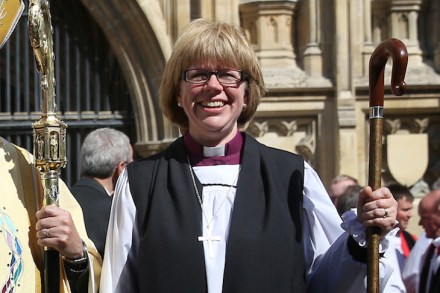
If you’re looking for a snapshot of the state of global Christianity today, a good place to start would be by looking at two violently contrasting Sarahs: Bishop Sarah, and Cardinal Sarah. One is Anglican, the other Catholic; one white, the other black; one bland, the other terrifying. Both are tipped to be leaders of their respective churches: Bishop Sarah as a future archbishop of Canterbury; Cardinal Sarah as a possible pope. I wonder which of them Jesus would prefer to be stuck on a desert island with. Sarah Mullally, the Bishop of London--elect, comes across as about the most upbeat, smiley person you could hope to meet.

Yet more ponies for Jean

After three hot-water-bottle-warmed evenings of highly satisfying bedtime reading, I can confirm that, even in a world where Francis Spufford’s superb The Child that Books Built exists, we need this new memoir by Lucy Mangan, about her childhood of being a bookworm. It’s enchanting.

Talking heads | 16 November 2017

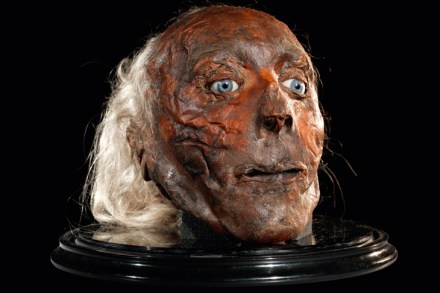
Under the central dome of UCL — an indoor crossroads where hordes of students come and go on their way to lectures and lunch — there’s an intriguing exhibition on at the moment about death. ‘Human remains are displayed in this exhibition’, it says in white lettering on the floor atall four entrances, to warn any passing snowflakes. The real head of Jeremy Bentham, who died in 1832, glass eyes staring out at you from behind a vitrine, is indeed a bit queasy-making. This is the central object of the exhibition. Bentham still has his long dark-grey hair at the back and sides of his bald pate, and his whole head is leather-brown from the tanning treatment after his death. He looks as if he’s grinning or grimacing.

Problems of her own

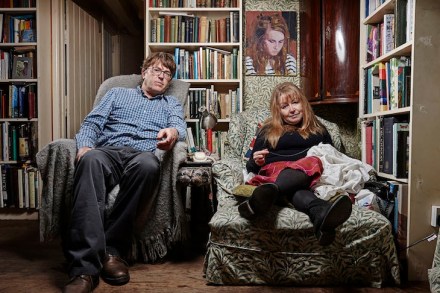
If you don’t yet watch Gogglebox on Channel 4, start doing so now. Far from making you despise our couch-potato nation, it will make you feel great affection for it. Sprawled on L-shaped sofas with comfort cushions or slobbering dogs on their tummies, or sitting side by side on armchairs with a vase of carnations on a doily between them, the programme’s chosen telly-watchers make what must be the most unselfconscious, and therefore genuine, remarks spoken by anyone on air. There’s no doubt in my mind that Giles and Mary are the most watchable of all the watchers.

Lazy bays

 Barbados Homesick by nature, I like my foreign places to be exotic but also to remind me of home. Barbados, for types like us, is the ideal holiday destination. Sea so warm you can loll in it for hours on end, and the charm of dusty rum shacks on hot afternoons — but also cucumber sandwiches for tea, and Sunday Matins in Anglican parish churches where they sing Victorian hymns. The cucumber sandwiches were a daily treat at our English family-owned hotel Cobblers Cove on the west coast. Afternoon tea in the drawing room is on the house, and that is only one touch among 1,000 or so that make staying there bliss.

Descent into hell | 7 September 2017

It’s awful, but the surname Rausing (once synonymous only with the Tetrapak fortune) now summons up a terrible stench in the imagination. It’s that of Eva Rausing’s decomposed body, wrapped in a tarpaulin on the marital double bed in Belgravia, buried under a mattress, several flat-screen televisions and a heap of blankets and duvets. When it was discovered by police forcing open the duct-taped bedroom door in July 2012 — more than two months after her husband Hans had left it there, unable to face up to his wife’s death from cocaine-induced heart failure — the only way Eva could be identified was by a fingerprint and the number on her pacemaker.

How to conquer America

Teenagers, in my experience, divide into the unmotivated and the motivated sort. You can spot the symptoms: given a free day, the unmotivated one will go out to buy a new phone charger, while the motivated one will go on an advanced sailing course. If you’re the unmotivated sort, read no further. This piece is not for you. You have as little chance of getting a place at an American university as my lazy dog does of winning Crufts. And when I say motivated, forget the Oxbridge level of motivation.

Please can the bullying of Theresa May stop?

We all remember it from school, whether as perpetrator, or assistant of perpetrator, or victim: the moment when everyone turns against another pupil and it becomes legitimate to be vile to her. When she is ‘down’, it becomes more and more enjoyable to torture her and to find endless new aspects of her to be woundingly vicious about, every hour of every day. It has been like this for Theresa May in the last week. She’s the outcast in the playground, knowing that if she so much as opens her mouth to say something, she’ll receive a torrent of withering sarcasm. Please can it stop? It leaves a nasty taste in the mouth, whatever one’s politics.

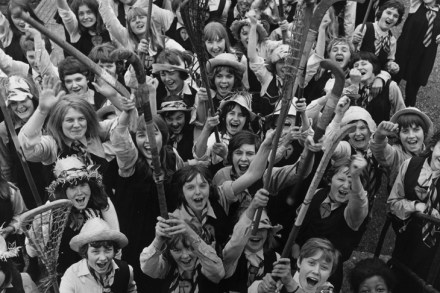
Mad matrons and horrid housemistresses

It’s not often that books make me laugh aloud. Even books I’m officially finding funny often do no more than make me smile, or emit a sharp soundless puff of breath from the nostrils. But this book made me guffaw. Normally, only P. G. Wodehouse has that effect. It’s tragicomedy, really.

Not-so-sweet 16

I like novelists who don’t try to do everything in their novels, but just to do something well. This is what Francesca Segal achieves in The Awkward Age, published four years after her book, The Innocents, won the Costa First Novel Award. She takes six characters — widowed, middle-aged Julia, her teenage daughter Gwen, her grandparents-in-law Philip and Iris, her new American boyfriend James, and James’s teenage son Nathan — and plonks them in sturdy houses in Hampstead, sets the clock, and lets the story play out. Gwen and Nathan are now forced to share a dwelling. Like a good piece of Bach, what unfolds has an inevitability to it but manages also to be surprising at every moment.

Moths vs the middle classes

It’s not the free movement of people I spend my nights fretting about; it’s the free movement of pests. It’s the thuggy Spanish bluebells invading our woodland and killing our own delicate flowers; it’s the Asian caterpillars devastating our box hedges; it’s the black-winged killer ladybirds from North America wiping out our spotted red ones with a nasty fungal disease. And — particularly worrying for anyone trying to run a household — it’s the tiny webbing clothes moths, thought to have originated from South Africa, their larvae feasting on our favourite cardigans and carpets — probably feasting right now, under the very bed in which we are failing to sleep.

A gaping hole in the week

This is a gem of a book for Radio 4 lovers, particularly those of us who work out which day of the week it is by who’s speaking on the station at 9.02 a.m. Published the week that Midweek was abolished for ever, it is Libby Purves’s story of the programme she presented for 33 years. In this brief memoir she has not only immortalised the distinctive flavour of the ‘And now for some lively conversation’ Wednesday-morning 45 minutes. She has also reminded us that Radio 4 is ‘basically, a marvel’: for many people, it is ‘their university and their friend’. All presenters, Purves writes, are aware that they are obsolescent.

A word in your ear

Do you, or do you not, fork out for an audioguide — one of those necklace-like, strappy contraptions you’re offered at the beginning of exhibitions, which cost an extra £3.50? The nation is divided. Some loathe them — as I was reminded reading an obituary of the historian Eric Christiansen, which said, ‘The British Museum’s Viking Exhibition in 2014 drew his wrath as visitors blocked everyone else’s view as they listened to their headsets, while ignoring any object which did not have a spoken description.’ I blushed, because that’s exactly what I do. Not in room one or two, when I’m still all energy and excitement and take pains to look at every single item with equal attention.

You’ve got to have faith

Of all the reasons for choosing to live in a ground-floor flat rather than a first-floor one, it might not occur to you that your choice could be the game-changing clincher in your child’s educational prospects — but so it is. In the terrifying admissions criteria for Britain’s oversubscribed faith and church primary schools, you will often find these words: ‘If applicants share the same address point (for example, if they live in the same block of flats), priority will be given to those who live closest to the ground floor and then by ascending flat-number order.’ That detail gives a hint of the desperation of these schools to seem ‘fair’, and of the desperation of parents to get their first child into them.