Ysenda Maxtone Graham

The man behind Justin Welby

From our UK edition

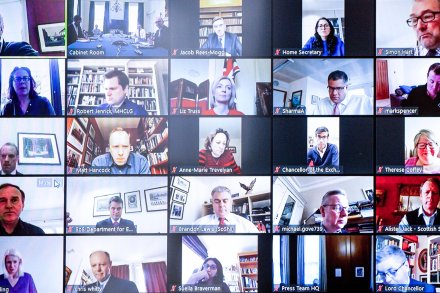
In the leafy seclusion of the Lambeth Palace grounds, Archbishop Justin Welby goes for his daily jog. He used to run along the Thames and over the bridges until Canon David Porter, his Chief of Staff, put a stop to it. David Porter grew up in Belfast in the 1960s and he knows how easy a target a lone high-profile jogger can be. As well as being Welby’s physical protector, Canon Porter has taken on the role of his bureaucratic gatekeeper. ‘No one comes to Justin except through David’ — that’s the impression I get from everyone I’ve spoken to who has tried to contact the Archbishop recently. ‘Nothing happens without David’s knowledge and permission.

Ysenda Maxtone Graham: British Summer Time Begins

From our UK edition

30 min listen

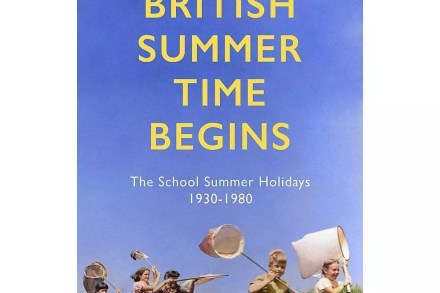
In this week's books podcast my guest is the writer Ysenda Maxtone Graham, whose new book casts a rosy look back at the way children used to spend their summer holidays. British Summer Time Begins: The School Summer Holidays 1930-1980 is a work of oral history that covers everything from damp sandwiches and cruelty to animals to tree-climbing, messing about in boats or endless games of Monopoly; intimidating fathers, frustrated mothers and grandparents who, if you weren't careful, would eat your pet rabbit. The good old days, in other words.

The government is strangling choirs, but the evidence just isn’t there

From our UK edition

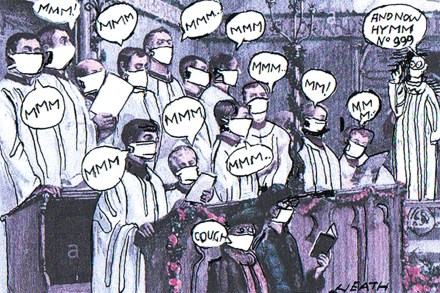
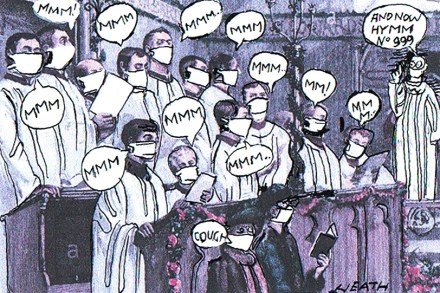
A brief but sharp twist of the knife was felt across the world of our gagged choral musicians on Friday evening, when the Times Science Correspondent Tom Whipple tweeted ‘It’s not good news’ about the future of choral singing. Sage documents had ‘dropped’, he wrote, containing the ominous statement, ‘There is some evidence to suggest that singing can produce more aerosols than normal talking or breathing; it may be more akin to a cough.’ And ‘Singing for any appreciable amount of time therefore may present a risk for the creation of infectious aerosols and allow for infection transmission.’ Were these the long-awaited Porton Down findings? They weren’t.

Why is Sheffield Cathedral’s choir being disbanded for ‘inclusivity’?

From our UK edition

The Dean of Sheffield, the Very Revd Peter Bradley, comes across as a likeable man of sound mind and brisk sense of humour. Of his own liturgical tastes, he assures me, ‘drums and guitars are not my tradition. The London Oratory is more my world, musically speaking. I cannot say too strongly how committed I and the cathedral are to the Anglican choral tradition and evensong.’ As for his current portfolio, he says, ‘I’m Acting Precentor at the moment. I wish I’d been paid for it. God knows I’ve earned it.

Britain’s choirs are facing oblivion

From our UK edition

Britain’s choirs are facing oblivion. Yet they’re also terrified of returning. One story explains why. Picture this innocent choral-society scene in Skagit County, Washington State, on the evening of 10 March. One-hundred-and-twenty singers, most of them elderly sopranos, gathered in the Presbyterian church to rehearse for two hours, their chairs 15cm apart. At half-time they took a break for shared snacks, and at the end the helpful ones stayed to stack the chairs. Fifty-two of those singers came down with Covid-19, supposedly through the release of aerosol droplets in the ether. Thus began the swirling of rumours across the world about the grave dangers of singing.

My mother — as I remember her best

From our UK edition

Nine cups of milky Nescafé Gold Blend a day; a low-tar cigarette smouldering; a hot-water-bottle always on her lap; the Times crossword almost completed at the Formica table; knitting on the go; and novels — she always read the last page first. She was one of that generation of women who didn’t go to university but were incredibly well-read and knew poems by heart. This was Kathleen, the mother of Nicholas Royle, novelist and professor of English at Sussex University. In a remarkable and moving memoir he has captured and preserved a loving, kind, impatient woman — and perhaps, with her, all of our mothers in the sweet predictability of their sayings and habits.

Civilized caffeination

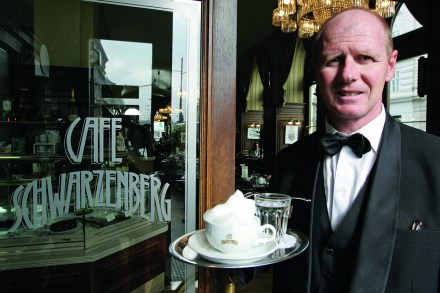
Palaces, art galleries, parks, composers’ houses, operas, concerts, Spanish Riding School horses, full-throated choirboys wearing sailor suits...yes, I go to Vienna for all these delights. But, deep down, probing my true desires and motives, I really go there for the coffeehouses. It’s just that to make the coffeehouse experience the most delicious it can be, you need to arrive cold, hungry, intellectually stimulated and with aching feet from visiting one of the above attractions. Then you’ll feel the warmth seeping into you as you sink down onto a coffeehouse banquette.

viennese coffeehouse

Coronavirus has started a new age of online snooping

From our UK edition

This is proving a rich period for those of us who can’t resist snooping into the interiors of other people’s houses. You might call us nosey Parkers, and you’d be right; but we would protest that we’re simply deeply curious about humanity, and that one of the best ways of gleaning the essence of people’s characters is by snooping into the domestic hinterland of their daily lives. This snooping habit is not to be confused with the darker side of noseyness: curtain-twitching. Not that there are many curtains in the part of London where I live. Shutter-adjusting would be a more accurate term. While curtain-twitchers secretly gaze out, we snoopers secretly gaze in.

Will the word ‘Continental’ make a comeback after Brexit?

From our UK edition

Feasting on the remnants of my edible Christmas presents during the otherwise frugal month of January, I experienced a frisson when I opened the box of Thorntons ‘Continental’ chocolates. For anyone who grew up in the 1950s, 1960s and 1970s, the word ‘Continental’ carries with it a waft of balmy air from the Mediterranean, a sense of longed-for glamour, pleasure and breakfast on a balcony, unavailable on this rainy, cut-off island. I’m wondering whether, as we leave the EU and return to being a small country across the water from a many-countried, warmer landmass, the word ‘Continental’, and the concept, will come back into use. Do other small countries across bodies of water from large continents have this concept?

It’s time for the word ‘Continental’ to make a comeback

From our UK edition

Feasting on the remnants of my edible Christmas presents during the otherwise frugal month of January, I experienced a frisson when I opened the box of Thorntons ‘Continental’ chocolates. For anyone who grew up in the 1950s, 1960s and 1970s, the word ‘Continental’ carries with it a waft of balmy air from the Mediterranean, a sense of longed-for glamour, pleasure and breakfast on a balcony, unavailable on this rainy, cut-off island. I’m wondering whether, as we leave the EU and return to being a small country across the water from a many-countried, warmer landmass, the word ‘Continental’, and the concept, will come back into use. Do other small countries across bodies of water from large continents have this concept?

Duty, devotion and lack of self-pity — Anne Glenconner is an example to us all

From our UK edition

Trained from a young age to be self-effacing, never liking to be the centre of attention, having been traumatised for life by being made to wear a bright green dress sewn from old parachute material at her own coming out dance in 1950, Anne Glenconner must be wincing at being thrust into the limelight by today’s columnists. Suddenly she is being fêted as Lady Stiff Upper Lip, poster girl for the British non-self-pitying spirit and an example to us all — particularly to Prince Andrew and the Duke and Duchess of Sussex. She protests she wasn’t stiff-upper-lipped at one of the worst moments of her life, which was on a Concorde flight to Miami in 1986 to see her son Christopher, who lay in a coma in hospital after a motorcycle accident in his gap year.

Kent’s new Rose

From our UK edition

East Kent is bracing itself. Its Church of England clergy are enjoying their last quiet months before Rose Hudson-Wilkin arrives as the new Bishop of Dover in the autumn, replacing Trevor Willmott. History is being made — the C of E is to have its first black woman bishop. But some members are clutching their heads in despair at what they see as Justin Welby’s predictably flashy appointment. Behind the scenes, there’s a lot of sighing going on. Rose Hudson-Wilkin is the Chaplain to the Speaker of the House of Commons. Known for her dangly earrings, she is widely loved in the Palace of Westminster and is in her element as she strolls the corridors in her red clericals, purveying hugs and prayers at moments of political crisis.

An asymmetrical friendship

From our UK edition

If you know your Peter Conradi from your Peter J. Conradi, you’ll also know that the former is foreign editor at the Sunday Times, while the latter is a professor emeritus at the University of Kingston and the authorised biographer of the late Iris Murdoch, of whom he was a devoted friend and disciple. It’s Peter J. who has written this crisp memoir, and he gets the doppelgänger confusion over with early on: ‘We two Peter Conradis have never met,’ he writes, ‘but we share an optician, who once offered me his new spectacles instead of my own, so the world was out of focus.

Doing time

From our UK edition

Nine on a Thursday morning is University Hour for those of us who don’t commute to an office every day. We time the clearing away of breakfast to coincide with Radio 4’s In Our Time. Melvyn Bragg, with his deadpan questioning, is our Thursday educator. Last week’s programme was a classic of the genre: about an obscure 17th-century physician I’d never heard of, Sir Thomas Browne — and here were three university professors who’d devoted their entire working lives to studying him. ‘With me to discuss…’, Melvyn said, introducing them all. These professors (one male and English, two female and American) would propel the nation’s knowledge-graph of Sir Thomas Browne from 0 per cent to 95 per cent before Book of the Week.

Thank God for hymns!

From our UK edition

Before embarking on this hymn to hymns, I’ll admit that hymn-enthusiasts feel a slight sense of anticlimax on Easter Sunday, when the pleasingly austere hymns of Lent are replaced with the too-happy, exclamation-mark-ridden hymns of Easter. Within minutes of the start of the Easter Eucharist, our mouths will ache from repetitive singing of the over-vowelled word ‘Alleluia’. I’ll also admit that I sometimes long for hymns to be over. I check to see how many more verses there still are: three down, three to go. I’m relieved if the vicar says ‘omitting verses five and six’ of a slow seven-verser. Anything to speed up our increasingly padded and long-winded Anglican services.

The return of plainchant

From our UK edition

‘I’m still warmed up from last night,’ said Sophie Bevan early on a Sunday morning in the practice-room behind the presbytery of St Birinus Catholic Church in the charming village of Dorchester-on-Thames, Oxfordshire – a tiny Pugin-esque gem dwarfed by the enormous Anglican abbey up the road. She and the other four members of the Davey Consort (two of them her cousins from the musical Bevan clan) were running through a Renaissance polyphonic mass, with Sophie’s husband, the composer and conductor Ryan Wigglesworth, directing from the practice harpsichord.

God’s messengers

From our UK edition

A good question for your upcoming Lent quiz: where are angels mentioned in the Nicene Creed? I asked this at a vicarage supper party after finishing Peter Stanford’s highly informative book about angels, which had left me angel-obsessed and an angel bore. No one came up with the answer. ‘Of all things visible and invisible, of course!’, I declared triumphantly. Once you see it, it’s obvious that the ‘invisible’ are the angels, but it had never occurred to me before.

Old flame

From our UK edition

It was a close-run thing for my friend who’s having a new kitchen installed in her house in Chiswick. After a persuasive campaign by her eloquent architect, who has an induction hob in his own house and loves it for its clean lines and hyper-efficiency, she had got as far as ordering one for herself. Having placed the order, she couldn’t sleep. She tossed and turned, worrying about the imminent change to her cooking life that the induction hob would (literally) induce, let alone the need to buy a whole new set of ‘induction-ready’ pans. No more knobs to turn a fraction to the left while frying an omelette, ever again? Just a plus and minus touch-screen sign to jab with the ball of the index finger, 9-8-7-6-5-4 and down to 3?

High and mighty | 13 December 2018

From our UK edition

In this 200th anniversary of the birth of Mrs C.F. Alexander, author of ‘Once in Royal David’s City’, all of us for whom Christmas properly begins when we hear the treble solo of verse one on Christmas Eve should remember her and be thankful. She was born Cecil Frances Humphreys, ‘Fanny’, to a successful land agent in Dublin in 1818, and she seems to have been genuinely mild, obedient, good as He. From an early age she had an instinctive liking for vicars, rectors, deans, bishops and archbishops, although she was shy and at her most relaxed with children and dogs. She eventually married a Church of Ireland rector of her own, William Alexander, who later became a bishop, and they lived a long, happy life of parenthood and charitable works.