Ysenda Maxtone Graham

At sea: can Sunak navigate the migrant crisis?

From our UK edition

36 min listen

On this week's podcast: Can Rishi Sunak steady the ship? Patrick O'Flynn argues in his cover piece for The Spectator that the asylum system is broken. He is joined by Sunder Katwala, director of the think tank British Future, to consider what potential solutions are open to the Prime Minister to solve the small boats crisis (00:52). Also this week: Should we give Elon Musk a break? In the aftermath of his sensational purchase of Twitter, Mary Wakefield writes in defence of the tech billionaire. She is joined by James Ball, global editor of The Bureau of Investigative Journalism, to ask what his plans are for the social media platform (14:27). And finally: Ysenda Maxtone Graham writes in the magazine this week about the joy of hating the Qatar World Cup.

The joy of loathing the Qatar World Cup

From our UK edition

It was on 2 December 2010, when the boys of the global footballing community were still quaintly playing FIFA 11 on PlayStation 3, that the venue was announced for the football World Cup of 2022. Among the crowds in the great hall of the Fifa headquarters in Zurich on that Thursday were David Beckham, Bill Clinton, Roman Abramovich, Sebastian Coe and Boris Johnson.  What a moment of disappointment it was for us. Not only had England got just a paltry two votes in its bid to host the 2018 World Cup, losing out to Russia, but we learned that the 2022 one was going to be held in a tiny, single-city desert state whose football team had never got near to qualifying, and whose summer temperatures were 50°C.

The glamour and romance of London’s vanished department stores

From our UK edition

There are two journeys I’ll need to make after reading Tessa Boase’s heartbreakingly poignant book about London’s lost department stores. First, to Mile End, to see the tiny Georgian building bang in the middle of the pillared façade of what used to be Wickhams and is now Tesco and Sports Direct. During Wickhams’s 1920s expansion, one neighbour, a German clockmaker called Otto Spiegelhalter, simply refused to budge, whatever the financial offer. He eventually agreed to sell his garden so that the store could expand round the back of him. But there, dwarfed by the clock tower, his two-storey house still stands, a monument to stubbornness.

The parallel universe you can explore on two wheels

From our UK edition

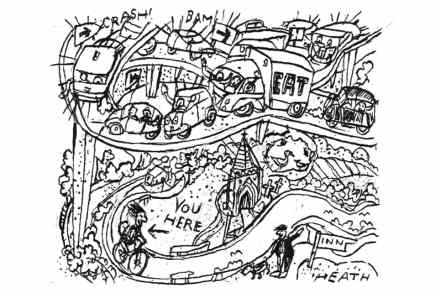
Many of us daydream about escaping into an imaginary parallel universe. The good news is that Britain has its own genuine, and literally parallel, universe that we can escape into at any moment. It’s the National Cycle Network that threads its way quietly and meanderingly over, under and alongside our gridlocked main roads and our daily lives. Once you try it, you’ll fall in love with supposedly ‘broken Britain’ all over again. You’ll be reminded that it’s a country of dog-walkers, rivers, farms and front gardens. And you don’t have to wear Lycra to do this. You just need ordinary clothes, plus KitKats, Thermos and sandwiches, and off you trundle at 8 mph.

Spare us the preaching: The Railway Children Return reviewed

From our UK edition

It doesn’t help the cause of The Railway Children Return that the original 1970 Railway Children film is currently on iPlayer. Just to test my capacity to cry, having emerged dry-eyed from the new one, I came home and re-watched the original. Yup. The 2022 sequel has three scenes of the new cohort of Railway Children – three second world war evacuees from Manchester, Lily, Pattie and Ted – waving goodbye to their soldier father as he departs for war, in the fog, never to return. Violins soar. Eyes remain dry. The 1970 film has just one scene of Daddy arriving home, in the fog of a steam train, and it still makes me sob every time. So is a return more moving than a departure? It certainly can be, but you have to live through the desolation first.

After Boris

From our UK edition

30 min listen

In this week’s episode:After Boris, who's next?On the day the Prime Minister resigns, Katy Balls and James Forsyth discuss the aftermath of Boris Johnson’s premiership. Who might be the next Tory leader? (0.51).Also this week:Who are the wealthy Russian émigrés ready to fight in the war?Sean Thomas talks with Moscow-based journalist, Gabriel Gavin about the Russian émigrés who hate the war, but know they have to win it (19.56).And finally: Are 20mph speed limits causing more trouble than Brexit?Ysenda Maxtone Graham makes this case in the magazine this week. She's joined by Cllr Johnny Thalassites from the Kensington and Chelsea borough. (22.26)Hosted by Lara Prendergast & William MooreProduced by Natasha Feroze.

The pernicious creep of the 20mph zone

From our UK edition

‘Twenty is plenty’ say the passive-aggressive road signs as you drive very slowly through 20mph zones all over Britain. The slogan is accompanied by a cartoon drawing of a snail. Then you get a frowny-frowny-frowny electronic sign and you slow from 25 to 20 to make it turn into a smiley face. That’s how we’ve been softened up: with a cocktail of the sanctimonious and the kindergarten. As I crawl along the empty dual carriageway of Park Lane late in the evening, where the speed limit has been reduced from its previous 40mph to the now blanket central-London limit of 20, I hiss: ‘No, twenty is not plenty. Twenty is lente.’ It feels ludicrously slow: the trundle of a Dinky car, and an affront to common sense.

Inside Taiwan’s plan to thwart Beijing

From our UK edition

37 min listen

In this week’s episode:Ian Williams, author of The Fire of the Dragon: China’s New Cold war, and Alessio Patalano, Professor of War and Strategy in East Asia at King’s College London, talk about how the war in Ukraine has changed the thinking in Taiwan. (00:37) Also this week: Was Sue Gray’s report on Downing Street parties a game-changer or a damp squib? The Spectator’s editor, Fraser Nelson, and our political editor, James Forsyth, join the podcast to discuss the fallout from partygate. (15:39) And finally:If rising restaurant prices are causing you grief, you're not alone. Writer Yesenda Maxtone Graham and The Spectator’s Wikiman columnist, Rory Sutherland, join the podcast.

I’m being priced out of eating out

From our UK edition

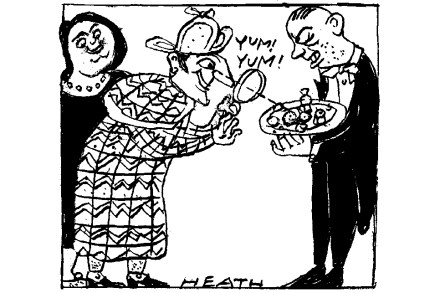
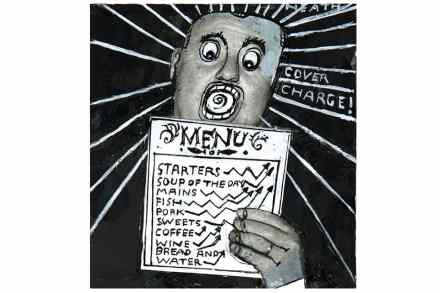
I used to be able to afford to go to restaurants. Yes, it was a treat, but it was just about doable, and though it was never a pleasure to be presented with the bill, it didn’t leave you reeling from shock and buyer’s remorse. The schnitzel in my favourite London restaurant has gone up from £12 to £20 for the small one and from £22 to £33 for the normal-sized one. Meanwhile, restaurants and pubs all over Britain no longer offer a mere hamburger. It has to be called a ‘short rib and flank burger, smoked Applewood Cheddar, shallot marmalade, garlic aioli and skin-on fries’ to justify its £17.50 price tag.

Sister, where are you? – Clover Stroud mourns her beloved sibling

From our UK edition

‘CERTIFICATE IS NOT EVIDENCE OF IDENTITY,’ the freshly issued death certificate read. In the craziness and shock of grief for her beloved sister Nell Gifford, who died at 4.20 p.m. on 8 December 2019, aged 46 (‘Cause of death: metastatic breast cancer’), Clover Stroud found herself clinging to those capitalised words. ‘Yes, the certificate was wrong… My sister was not the deceased and the very certificate I was holding was telling me that.’ She started searching for her everywhere. ‘Whereareyouwherareyouwhere-areyouwhereareyou’ she asks for one whole page of this book in an enlarged typeface denoting the din in her head. She feels as if she’s setting out into the evil depths of a forest, but what will she find?

Boris’s bunker: the PM’s defensive strategy

From our UK edition

33 min listen

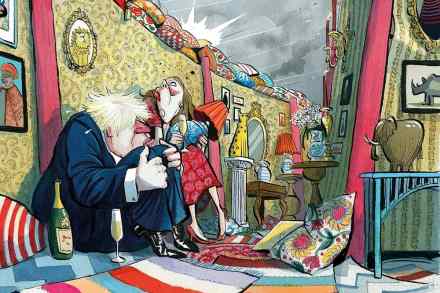
In this week’s episode: What’s the mood like in Boris’s bunker?For this week’s cover story, James Forsyth writes about the defensive bunker mentality inside No. 10 and the PM’s strategy of keeping MPs sweet to hold back a no confidence vote. James joins the podcast along with Spectator Editor Fraser Nelson to discuss. (00:50)Also this week: Have we forgotten how to take a joke?Jimmy Carr has caused an online outcry after an off-colour joke from his new show, His Dark Material was clipped and posted without context on social media. Ministers, such as Nadine Dorries and Sajid Javid, have now criticised a comedian for telling a joke. In the Spectator this week both in print and online, two of our writers came to Carr’s defence.

Bring back communion wine

From our UK edition

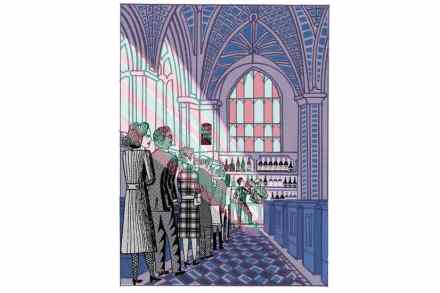
The Church of England has always been clever at producing theology to suit itself. If we don’t start protesting, we may never get communion wine back again. Too many risk-averse clergy have discovered how efficient, hygienic and cheap it is just to give us a wafer each. They explain it away by reminding us that ‘Christ is sacramentally and equally present in both the bread and the wine, so if you receive only one, nothing is lacking’. ‘But it’s so unfair,’ I want to hiss at the presiding priest when I see him or her having a sip of wine ‘on behalf of the congregation’. ‘It’s one rule for you, another for us.

The bittersweet truth about homemade marmalade

From our UK edition

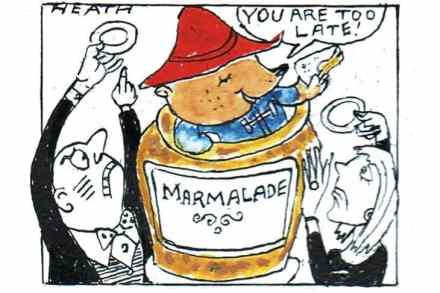
The spectrum of ‘bestowing homemade gifts on one’s friends’ ranges from giving to foisting. Pure giving is when you make something by hand especially for a particular person. Foisting is when you don’t let a friend leave your house before pressing a copy of your privately published memoir into their hands. Where does homemade marmalade come on this spectrum? I think it comes nearer the benign ‘giving’ end than homemade jam, which is at the ‘foisting’ end, along with homemade sloe gin and nettle ale. It’s the difference between treasure-giving and glut-giving.

Dancing on Terence Conran’s grave

From our UK edition

‘Who,’ asks Stephen Bayley, in one of the ‘S.B’ chapters of this irresistibly spiky co-written book, ‘could countenance working for a man like Terence, a man of such fluid principles, of such day-glo opportunism, of such sun-dried narcissism, guiltless hypo-crisy and Hallelujah Chorus egomania?’ Well, both S.B. and R.M. (the ad man Roger Mavity) did work for Terence Conran, in exalted positions. Both fell out with him, and both experienced at first hand all those qualities and more. In their separate chapters they take turns to express the essence of his genius and to get their own back for his disdainful treatment of them. One of his worst traits was his refusal to acknowledge the vital contributions of his seconds-in-command.

The time is up for long films

From our UK edition

‘Programme starts at 3.45, so the film will start at 4.15, and it’s two hours and 43 minutes long, so we’d be out just before 7 p.m.’ This is the No Time to Die calculation, and I think many of us are doing it and wondering: ‘Can I face it?’ A dark afternoon spent in a state of total surrender to the longueurs imposed on us by a self-indulgent director? Thirsty from too much popcorn, leg muscles seizing up, not allowed to look at your phone, pressure on the bladder, Daniel Craig never smiling and the end nowhere near in sight?

How Harris Westminster conquered Oxbridge

From our UK edition

Westminster School is being kept on its toes by its partner sixth-form college round the corner, Harris Westminster. There’s no imminent threat yet, in the ‘How many did you get into Oxbridge?’ stakes: last year, Westminster (private, £10,497 per term for day sixth-formers) got 71 of its pupils into Oxbridge, and Harris Westminster (state, £0 per term) got 36 in from a cohort about twice the size. But watch those Oxbridge statistics draw closer to each other in the next few years, as Harris Westminster’s highly motivated and excellently taught students continue to soar, and Oxbridge colleges become ever more nervous of offering places to the (as they see it) over-entitled and over-advantaged privately educated middle classes.

Don’t pity me for living in London

From our UK edition

Londoners have had to learn, more than ever before, to master the art of fielding pity. We’ve been on the receiving end of lots of it this year from people living in the country who care about us, which makes it worse because we’re supposed to be grateful. I’m still smarting from a few recent zingers: ‘I do feel sorry for you, being cooped up in that small house.’ ‘It must be stifling there. We’ve got a nice breeze down here.’ ‘It’s all so lovely and green. Even London must be looking quite green.

Max Pemberton, Andrew Watts, Ysenda Maxtone Graham

From our UK edition

20 min listen

On this week's episode, Dr Max Pemberton explains that while just as many people are seeing their GP as before the pandemic, something has changed. (00:55) After, Andrew Watts argues that you shouldn't buy a second home in Cornwall. (09:15) Ysenda Maxtone Graham finishes the episode, lamenting the loss of indoor singing.

Let hymn in: the silencing of indoor singing is senseless

From our UK edition

‘And now we sing our final hymn, number 466.’ Remember that? The euphoria of congregational hymn-singing? The well-organised types always had the book open at the correct page, balanced precariously on the pew. The rest of us hurriedly flicked to 466 while singing the first verse, knowing it by heart from a thousand school assemblies. ‘Our shield and defender, the ancient of days…’ I can’t believe I’m writing this in the past tense, but it has been so long — almost 15 months — since anyone not in a choir sang a congregational hymn. How I miss that light-headedness, almost faintness, of standing up after a long service and singing your heart out, filling and emptying your lungs, fortified by the tiny wafer and sip of sweet wine.

Learning to listen: Sarah Sands goes in search of spirituality

From our UK edition

It was the 13th-century wall of a ruined Cistercian nunnery at the far end of her garden in Norfolk that turned Sarah Sands’s thoughts to exploring monasticism in her final year as the editor of BBC Radio 4’s Today programme. She already had a soft spot for the ‘Thought for the Day’ slot — ‘an oasis of reflection’. But she was finding it increasingly hard to set aside any time for reflection in her busy, noisy, anxiety-filled ‘5G life’ — office meetings from pre-dawn to dusk and evenings of emailing with the phone beeping every few seconds.