Ysenda Maxtone Graham

In the dark early 1960s, at least we had the Beatles

‘These things start on my birthday – like the Warsaw Uprising – and spoil my day,’ wrote the understandably self-pitying Barking housewife Pat Scott in her diary on the first day of the Cuban Missile Crisis in October 1962. ‘And then to spoil it more, Ted [her husband] took his driving test for the second time and failed.’ It is clashes like these, of the personal and humdrum against the political and global, that make David Kynaston’s close surveys of Britain in the second half of the 20th century such fascinating and lively documents. Yes, the world might be about to end, but that was no excuse to spoil Pat’s 37th birthday.

How to get rid of your saggy tattoo

Sagging angels, wilting lilies, drooping lines from love sonnets, withered swallows, flaccid snakes, limp dragons, shrivelled babies’ names: this will be the view inside the British bathroom, and at the British seaside, and in British hospital beds and morgues, in 2060, when today’s tattoo-wearers now in their prime will be in their seventies and eighties.  None of us thinks we’re going to grow old, but (as happened so cruelly to 1960s rock stars) age will creep up, and the skin will stretch, even that of the handsomest, healthiest tattoo trendsetters with the best body art money can buy.

Hell is a heat pump

‘So, as Rishi Sunak has announced that we’re now allowed to keep installing new gas boilers till 2035, and they last about 15 years, that means I’ll be able to keep a gas boiler till 2050, so I might even be allowed to die with a gas boiler still going in my house, and may never have to switch to an ugly, expensive air-source heat pump which makes an annoying fridge-like hum in the garden, vibrates through the bedroom wall and keeps the house at a weird, lukewarm temperature all day and night.’ I think many of us were making that kind of calculation last month. Were we tempted by Sunak’s raised offer of a government grant of £7,500 for switching to a heat pump, up from £5,000, to reward us for doing our bit towards net zero? I don’t think so.

India’s century: Sunak’s plan for a new Indo-Pacific alliance

35 min listen

This week: In his cover piece for the magazine, The Spectator’s political correspondent James Heale writes that the PM’s visit to New Delhi for the G20 Summit next week could be a defining moment in the special relationship between Britain and India. He is joined by Shanker Singham, former advisor to UK Secretary of State for International Trade, to discuss Rishi's Indian summer. (01:18) Also on the podcast: Owen Matthews The Spectator’s Russia correspondent expresses his concern about the US’s waning support for Ukraine in the magazine this week. He argues that ultimately it is America – and the outcome of next year's presidential election – that could decide Ukraine’s fate.

Why are cathedrals cutting ties with choral schools?

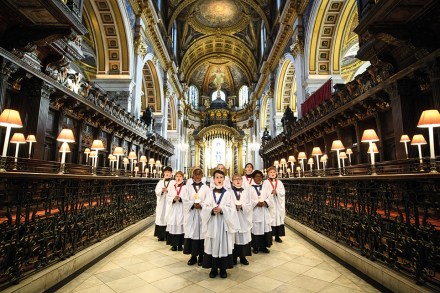
There’s worrying news for all who care about the incomparable cultural phenomenon that is the singing of choral evensong in British cathedrals every day of the week. Canterbury cathedral announced in March that it’s cutting ties with its local independent choir school, St Edmund’s, ending a happy relationship that has lasted for 50 years. St Edmund’s was only informed about the end of the contract a few days before the public announcement.  If these small powerhouses of excellence are lost, the nation will be culturally the poorer for it From now on, Canterbury’s choristers will be drawn from any and all local schools, and they will sing just three services each per week.

‘A year of fish fingers’: how motherhood put me off frozen food

It’s 100 years since the American inventor Clarence Birdseye, with an investment of $7 for an electric fan, a few pails of brine and some blocks of ice, started developing his system of packing fresh food into cardboard boxes and freezing it at high speed, thus ushering in the frozen food era. If you go into your nearest branch of Iceland, you’ll see that the era is still in full swing.  In the colourful and far from morgue-like aisles, cheerful, sensible couples are filling their trolleys for the week, tempted by the dazzling food photography and the ‘tanginess’ of everything. This is wall-to-wall packaging seduction. ‘Oumph! Mexican spiced fajitas’, shouts the frozen ‘Oumph!’ brand.

A vision of what it means to be blind

To give us a sense of precisely how blind Selina Mills is she asks us to cover our right eye completely with our right hand and put a fist up in front of our left eye, so it blocks our central sight. ‘Now imagine the remaining sight is murky and blurry, as if covered in Vaseline or clingfilm.’ That really is quite blind. Born completely blind in one eye (a hand-painted glass eye was fitted when she was ten), Mills has been gradually losing sight in the other. Now, with just 15 per cent of her sight left, she is ‘legally blind’ and has had a social services person round to her house to give her ‘cane-training’, including a choice of cane tips (‘pencil’, ‘marshmallow’, or ‘rolling marshmallow’), and lessons on how to swish efficiently.

The disappointing truth about Aperol spritz

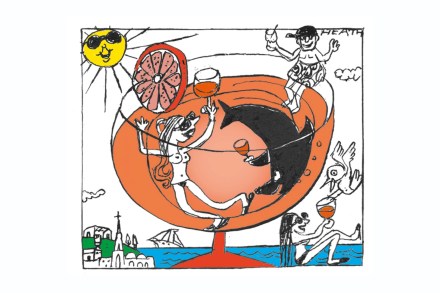
I’m in Tuscany, where the piazzas glow orange at dusk, not only from the sunsets but also from the profusion of Aperol spritz. The bright orange drink has exploded in popularity in the past five years. Everyone’s drinking it: young women, middle-aged couples, groups of wrinkly tanned men, all sucking from straws sticking out of vast wine glasses loaded with ice cubes that give the illusion that there’s more liquid than there is in the famous 3-2-1 formula: three parts prosecco (equating to just one-tenth of a bottle), two parts Aperol and one part soda water, plus the obligatory orange slice. At the trendiest bar in Lucca I scoured the menu for the two drinks I used most to associate with Italy: Martini Rosso and the bellini. They weren’t there.

A last-minute escape from the Holocaust

At the beginning of his profoundly moving memoir of his grandparents, parents, the Holocaust and the Gulag, Daniel Finkelstein writes: This the story of how my family took a journey which ended happily in Hendon, eating crusty bread rolls with butter in the café near the M1, but on the way took a detour through hell. Who would have guessed what those people, tucking into rolls at the newly-opened Brent Cross shopping centre in the mid-1970s, had been through?

The sadness of Britain’s seaside resorts

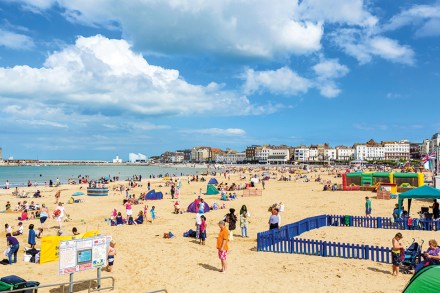
Now the exhilaration kicks in, the lightness of heart, a joyfulness surging along the warmed blood vessels and tingling extremities: every cell feels as if charged with new life. There has been a ritual, a sacrifice, an offering to the waves of flesh and pain, and in return, there is restoration, life given back. Thus Madeleine Bunting describes the bliss, not of swimming, but of having just emerged from the icy British sea into which she is addicted to plunging in winter as well as summer. In this fizzing state, having pulled her clothes back on, she goes straight to the nearest steamy café for fish and chips and tea. When package holidays became available, ‘Blackpool moved lock, stock and barrel to Benidorm’  Tempted?

The lost shepherds

40 min listen

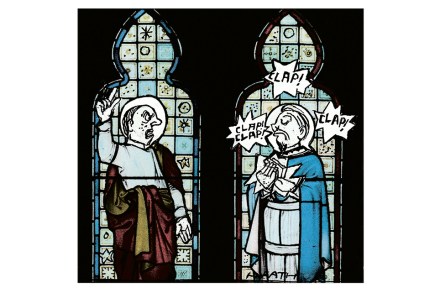
On the podcast this week: In his cover piece for the magazine, journalist Dan Hitchens examines whether Archbishop Justin Welby and Pope Francis can heal the divisions threatening to tear apart the Church of England and the Catholic Church. He is joined by Telegraph columnist Tim Stanley to ask whether these two men – once heralded as great unifiers by their respective Churches – can keep their flocks in order. (01:05)  Also this week:  In his column, The Spectator’s associate editor Douglas Murray questions whether the English countryside can be considered exclusionary, after the news that the green and pleasant land will be studied by ‘hate crime’ experts. He is joined by the explorer and broadcaster Dwayne Fields to ask is the countryside racist?

Help! I’m trapped in a 15-minute city

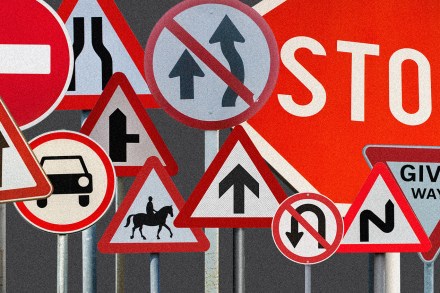
It’s a nasty moment when you receive a letter informing you that a fortnight ago, at a specific number of minutes past an hour, your car was photographed turning into a side road which, at the time, you had no idea you weren’t allowed to turn into.   You vaguely recall the junction. There was no ‘No entry’ sign: just a torrent of words (‘except’, ‘through’, ‘motor vehicles’, ‘access’) that you didn’t have time to read. That outing will now be forever sullied in your memory by the £65 fine. Protesting ‘but the sat-nav told me to do it!’ is as ineffectual, legally speaking, as Adam bleating to God that ‘the woman gave me fruit from the tree and I did eat’. The punishment is still enforced.

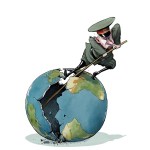
Is Putin winning?

37 min listen

This week:Is Putin winning?In his cover piece for the magazine, historian and author Peter Frankopan says that Russia is reshaping the world in its favour by cultivating an anti-Western alliance of nations. He is joined by Ukrainian journalist – and author of The Spectator's Ukraine In Focus newsletter – Svitlana Morenets, to discuss whether this could tip the balance of the war (01:08).Also this week:The Spectator's assistant online foreign editor Max Jeffery writes a letter from Abu Dhabi, after he visited the International Defence Exhibition. He is joined by author and former member of the ANC Andrew Feinstein, to uncover the covert world of the international arms trade and how governments seek to conceal it (17:52).

My search for London’s cheapest flat

Maternal nocturnal worry number 57a: how are our offspring going to get their toes on any rung of the property ladder if they want to carry on living in London? I’m sure thousands of us mothers of young adults lie awake at 2.30 a.m. contemplating the fact that a one-bedroom flat in Leytonstone now costs £375,000. We curse ourselves for not having bought the whole house next door to us in 1989 when it was for sale for a third of that amount.  What makes these properties cheap is not only that they’re tiny, but also that they’re hard to get to Last week I set out to find the cheapest flat for sale in Greater London.

Will shoe-polishing be given the boot for good?

As I digest the news that Kiwi are ceasing the sale of its shoe polish in the UK, due to plummeting demand in the age of trainers, I find myself in mourning chiefly for the tin. What will the ritual of shoe-polishing feel like when it no longer starts with the thumb-against-index-finger rub of the butterfly-twist opener? That was a brilliant invention by Kiwi, and I’m afraid that the shoe polish tin that survives in the British market – Cherry Blossom’s, the same shallow cylindrical shape as Kiwi’s but with a ‘press hard here and the other side pops off’ opening system – doesn’t provide quite the Proustian kick of Sunday evenings in the 20th century: that combination of nausea at the strong smell and at the thought of tomorrow’s history test.

The puppetry renaissance

Advance ticket sales for My Neighbour Totoro, the Royal Shakespeare Company’s current production running till mid-January, beat all Barbican box-office records. I went on a rainy weekday evening last month, and the place was heaving with Hayao Miyazaki fans of all ages, lots of them clutching furry Totoros they’d bought in the theatre shop.  It’s an impressive, dreamlike production, set in rural Japan after the second world war, and another triumph for the art of puppetry. Totoro himself is huge and cuddly, with an enormous round tummy and inane grin when he bares his teeth. There’s a whole puppeteer inside his pink tongue, as well as three or four more inside his body, which gives you a sense of the scale of him.

The etiquette of canapés

Canapés are one of life’s delights and surprises – surprises because drinks party invitations usually give nothing away. Perhaps because ‘nibbles’ is such a hideous word, or perhaps just because of invitation convention, hosts tend simply to put ‘Drinks, 6.30 to 8.30’ on the Paperless Post card. So you arrive with no idea whether you’re in for two hours of fizz on an empty stomach, or for a culinary treat in a succession of miniatures. Always braced for the worst-case scenario – starvation in high heels – I’m overjoyed to spot a tray of canapés coming towards me through the throng, and am pathetically grateful to the host for this beneficence.