Ysenda Maxtone Graham

James Heale, Andrew Kenny, Lara Prendergast, Ysenda Maxtone Graham and Nina Power

41 min listen

On this week’s Spectator Out Loud: James Heale wonders what Margaret Thatcher would make of today’s Conservatives (1:28); Andrew Kenny analyses South Africa’s expropriation act (6:13); Lara Prendergast explores the mystery behind The Spectator’s man in the Middle East, John R Bradley (13:55); Ysenda Maxtone Graham looks at how radio invaded the home (30:13); and, Nina Power reviews two exhibitions looking at different kinds of rage (35:13).  Produced and presented by Patrick Gibbons.

The magic of early radio days

‘Is it necessary to have the window open when listening to the new device?’ asked Edith Davidson, the wife of the Archbishop of Canterbury, in 1923, referring to the latest fashionable contraption, the wireless. We might laugh – but it does take time for the older generation to catch up with new technology. To this day I instinctively roll down my car window (unnecessarily, I’m pretty sure) to point my phone towards the sensor that will grant me access to my local club. In her joyous, richly illustrated book about the early years of radio from the listeners’ point of view, the BBC radio producer Beaty Rubens takes us inside the British home.

The brilliance of Cicely Mary Barker

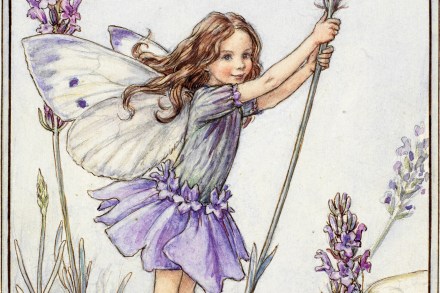
When Cicely Mary Barker’s Flower Fairies of the Spring was published in 1923, a post-first world war mass wishful belief in fairies was at its height in Britain. Just over two years previously, Sir Arthur Conan Doyle, writing in the 1920 Christmas issue of the Strand Magazine, had stated that the ‘Cottingley Fairies’ (tiny winged figures visible in photographs taken near Bradford by Elsie Wright and Frances Griffiths) were almost certainly genuine and were clear evidence of the existence of psychic phenomena. Barker remained unmarried, and lived a quiet life of flowers and innocence The public – 21 years on from the birth of Peter Pan – were hungrier than ever for fairies: their innocence, their delicate beauty, and their hint of benign mischief.

Is anything still cheap?

Things used to cost approximately what you expected them to cost. Now, the price of almost every item is eye-wateringly, gasp-inducingly more than you expect it to be. The nation is reeling from a month of crippling generosity. The new cashless existence anaesthetised us a little from the financial violence as we went through Advent visiting actual shops, discovering that almost no item cost less than £50, and trying not to feel physical pain or to look at the numbers on the screen as we heard the transactional beep. Now, in January’s glare, bank statements are regurgitating our crazy Decembers.

Where do you stand on ‘I was sat’?

Perhaps because more and more BBC radio programmes are being broadcast from Salford, the whole of Britain is getting used to hearing multiple uses of the expression ‘I was sat’ or ‘I was stood’. Often, those words come at the very beginning of programmes, spoken by the presenter to set the scene. ‘I’m sat in a crowded pub’, ‘I’m sat in the back of a van on a lay-by’, ‘I’m stood in the rain on the outskirts of Oldham, waiting for…’ To those who live south of the Watford Gap services, this simply sounds grammatically wrong. It’s a misuse of the passive voice. It should be ‘I was sitting’ or ‘I was standing’.

Tirzah Garwood just isn’t as good as her husband

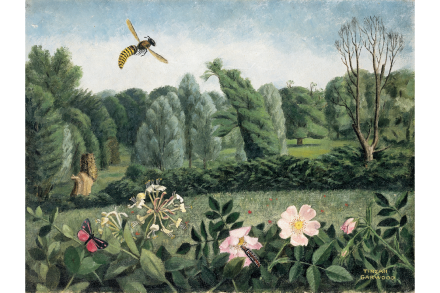
Tirzah Garwood, wife of the more famous Eric Ravilious, is having a well-deserved moment in the sun, benefiting from this era of equality in which artists’ and composers’ wives and sisters (such as Clara Schumann, Fanny Mendelssohn and Elizabeth Siddal) are having the spotlight shone on their under-appreciated works.

The dreadful fate of Queen Victoria’s granddaughters

‘Cela me revolte,’ wrote Queen Victoria in her diary in 1894 when her adored granddaughter Alexandra of Hesse announced her engagement to the Tsarevich Nicholas, ‘to feel that she has been taken possession of and carried away by those Russians.’ The sisters all look alike in the photos: uncomfortable dress, priceless jewellery, grimace, hair in bun  The queen was proprietorial about the four surviving daughters of her late daughter Alice, who had died of diphtheria, aged 35, when little Alix was only six. To lose one of those granddaughters to the Russians had been bad enough.

Gregg Wallace was no national treasure

To call Gregg Wallace a ‘national treasure’, as some did after his fall from grace last week, was inaccurate. Just because he is (or was) very popular on television does not qualify him. To attain national treasure status, a person needs to be older, as well as much nicer. The expression is vastly overused, lavished on too many undeserving celebrities, and it needs to be reined in. As Julie Burchill (sick to death of them last Christmas) wrote, ‘it seems harder to name a public figure who isn’t one’, and that most of them ‘can’t open their cake-holes without mouthing centrist platitudes which we’ve all heard a million times before’. David Attenborough is the yardstick.

What’s gone wrong at Winchester Cathedral?

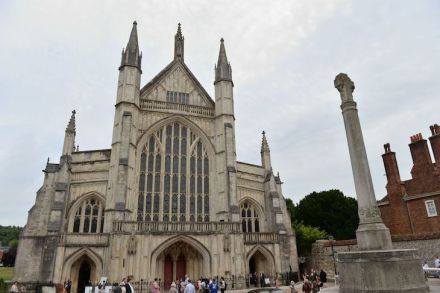
The Dean of Winchester, the Very Revd Catherine Ogle, has announced that she will be retiring on 1 May 2025. The timing is interesting, as news of Ogle's retirement emerged just hours before the Archbishop of Canterbury Justin Welby resigned over the John Smyth abuse scandal. They walked out during the sermon The congregation of Winchester Cathedral started making their feelings about Ogle clear earlier this year, by going on a kind of Holy Communion hunger strike during services. Deeply unhappy about the damage being done to the musical life of their beloved cathedral under the reign of the controversial Precentor Andrew Trenier and the weak (but steely beneath her friendly surface) Dean, some of them refused to go up to the altar for communion.

The toddlers being prepared for the seven-plus exam

The feverishness of the private prep-school market in London has reached such a pitch that children in the nursery class at Eaton House Belgravia are being prepared for the seven-plus from the age of two. ‘Some of them are still in nappies, and some of them still need a nap,’ the headmaster Ross Montague tells me. ‘We have folding camp beds, and our lovely nursery team of six teachers deal with that.

Damian Thompson, Paola Romero, Stuart Jeffries, Ysenda Maxtone Graham, and Nicholas Farrell

35 min listen

On this week’s Spectator Out Loud: Damian Thompson argues that Papal succession plotting is a case of life mirroring art (1:26); Paola Romero reports on Venezuela’s mix of Evita and Thatcher, Maria Corina Machado, and her chances of bringing down Nicolas Maduro (11:39); reviewing Richard Overy’s book ‘Why war?’, Stuart Jeffries reflects that war has as long a future as it has a past (17:38); Ysenda Maxtone Graham provides her notes on party bags (24:30); and, Nicholas Farrell ponders on the challenges of familial split-loyalties when watching the football in Italy (27:25).  Presented by Patrick Gibbons.

The joy of party bags

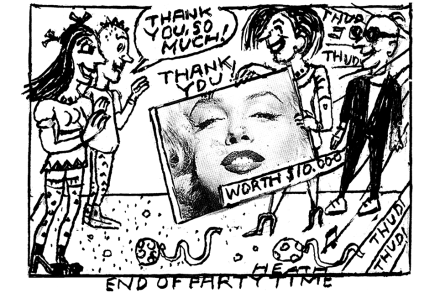
The perfect, unpretentious, well-constructed party bag was given to guests leaving a recent Hatchards party. It contained a wedge of farmhouse cheddar and box of cheese biscuits from Paxton & Whitfield, a bottle of good white wine and an elegant hardback copy of Lucky Jim. The next evening, I tucked into all of these simultaneously, feeling spoilt, and meditating on how much nicer they were than some of the tat my children used to bring home from birthday parties in white polythene bags: a slice of synthetic birthday cake oozing its jam on to tadpole-sized balloons (which wouldn’t inflate, however hard you blew) and a polystyrene aeroplane whose wing broke off on assembly. To come home from a children’s birthday party without a party bag these days is almost unthinkable.

Now the National Trust is wrecking the Cotswolds

Gawping at the famous sights of the Cotswolds has been a popular pastime for centuries. So too is writing about the huge numbers of people gawping at the famous sights of the Cotswolds. The Times, Telegraph, Express and the BBC have all covered the explosion of mass-tourism since the pandemic, which is driven mainly by social media algorithms bombarding the globe with irresistible Cotswolds images. You can now tour the Cotswolds to gawp at the sight of thousands of other people gawping, or buy a paper and gawp at a professional gawper gawping at gawpers.

My prep school scarred me for life

On one blissful, cloudless day during the summer holidays of 1972, Charles Spencer, who had just turned eight, surveyed the scene in his mother’s garden in Sussex. He’d spent the morning cycling and swimming, and a barbecue was being prepared. He remembers thinking: ‘This is too good to last.’ And he was right. A date he was dreading, 12 September, arrived. His father drove him the 100 miles from his house on the Sandringham estate in Norfolk to Maidwell Hall, the boarding prep school in Northamptonshire where Spencer would be a pupil for the next five years. We all remember that end-of-summer-holidays dread: the savage haircut, the putting on of itchy school uniform after months in cotton. Spencer evokes this brilliantly in his unputdownable memoir A Very Private School.

Death of a choir

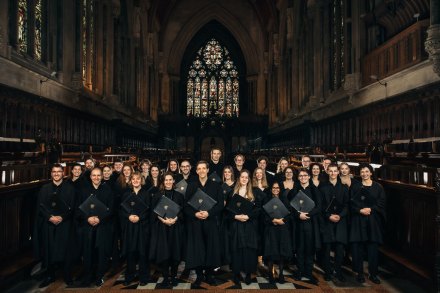
Always make your redundancy announcement when the people at the receiving end of it are on a high. This seems to be the favoured method of today’s managing executives, who perhaps imagine that adrenalin will somehow anaesthetise the blow of getting the sack. For the Cambridge student choir St John’s Voices, the news of its imminent disbanding and the redundancy of its director Graham Walker came just two minutes after the light was switched off at the end of a three-day recording session of Russian choral masterpieces last week. Does egalitarianism have to be promoted at the expense of up-and-running excellence?

Lukas Degutis, Ysenda Maxtone Graham, Richard Bratby and Toby Young

27 min listen

On this week’s Spectator Out Loud: Lukas Degutis reports from Riga, exploring Latvia’s policy of expelling Russian speakers (01:16); Ysenda Maxtone Graham explains why she believes applause has no place at a funeral (10:03); paying homage to Christopher Gunning, Richard Bratby argues that composers of ads, film soundtracks and TV theme tunes should be taken more seriously (14:46); and Toby Young questions the Bidens’ choice of dog (21:50). Produced and presented by Patrick Gibbons.

Plan Bibi: stalemate suits Netanyahu

48 min listen

Welcome to a slightly new format for the Edition podcast! Each week we will be talking about the magazine – as per usual – but trying to give a little more insight into the process behind putting The Spectator to bed each week. On the podcast this week: plan Bibi In the early hours of Friday morning, Benjamin Netanyahu leaked his ‘Day after Hamas’ plan for post-war Gaza. But the plan is not a plan, writes Anshel Pfeffer – it is just a set of vague principles that do not stand up to the slightest scrutiny. Its sole purpose is rather to keep the ministers of Netanyahu’s fragile cabinet together to ensure his political survival.

Please stop clapping at funerals

The Happy Clappies – evangelical Christians who clap along to worship songs during church services – have been around since the 1980s. The slightly derogatory term was coined in 1985, and the practice is still going strong: you can hear it as you walk past any evangelical church on a Sunday morning. But in the past couple of years a new phenomenon has appeared: the Sad Clappies. These are the congregations who erupt into prolonged applause at funerals and memorial services. It’s rare to go to a funeral or memorial service these days where clapping doesn’t happen. It usually starts after the first of the (often rather too many) tributes.

The dying art of thank-you letters

‘Still no word of thanks. No letter, no email, no text. No acknowledgement that it even arrived. Did it arrive? Did I post it to the wrong postcode? Did I tap in the wrong account number? Of course it arrived. He just can’t be bothered to thank me. Such bad manners! I blame his mother for not bringing him up properly.’ These are the insomniac thoughts of the older generation as they try to come to terms with the younger generation’s bewildering non-thanking habit. The silence of early January, the non-landing of letters from grandchildren and godchildren on the mat, the non-pinging of affectionate emails of gratitude, really pains them, brought up as they were on the belief that writing thank-you letters is good manners, and good manners mean everything.