Wolfgang Münchau

Wolfgang Münchau

Wolfgang Münchau is a former co-editor of Financial Times Deutschland and director of Eurointelligence.

Europe’s reckless caution over AstraZeneca

From our UK edition

The first smear campaign against AstraZeneca, when Emmanuel Macron falsely claimed at the start of the year that the jab was ‘quasi--ineffective’ in over-65s, did serious damage to public confidence in the Oxford vaccine across Europe. The latest concerted action by the leaders of Germany, France, Italy, Spain and the Netherlands may have destroyed it altogether. The decision temporarily to ban Astra-Zeneca originated in the German health ministry, which was spooked by reports of cerebral venous sinus thrombosis, and was blindly followed by other European leaders. This is a scandal whose roots are political, not medical, and it will have terrible consequences.

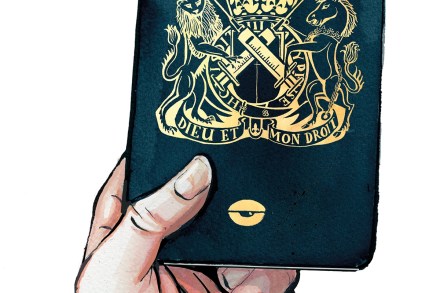
Papers please: what will immunity passports look like?

From our UK edition

40 min listen

On this week's episode, we talk vaccine passports (1:10), Nord Stream 2 (14:55) and the appeal of chess (30:50).With entrepreneur Louis-James Davis, journalist James Ball, analyst Wolfgang Münchau, academic Kadri Liik, chess columnist Luke McShane and chess streamer Fiona Steil-Antoni.

Biden vs Merkel: the battle over Russian gas is heating up

From our UK edition

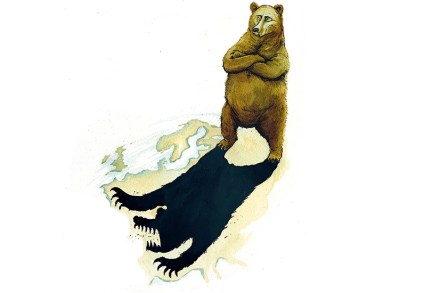
Two months ago, a Russian pipe-laying ship called the Akademik Cherskiy left the Baltic island of Rügen to finish the last few miles of the most controversial gas pipeline in the world. Germany hopes that Nord Stream 2 will improve its access to Russia’s vast reserves of natural gas. In America, however, the project is seen as a way for Moscow to exert influence over Europe. Its completion marks the biggest diplomatic crisis in transatlantic relations since the Iraq War and now, as then, we see Germany pitched against the US. But this time, Germany is far more determined. Since its inception, the pipeline —which runs directly from Russia to Germany — has been opposed by many in Europe who share America’s concerns about dependency on Russian energy.

Is this the man who will replace Angela Merkel?

From our UK edition

Markus Söder is the one to watch in German politics. The ascent of the Bavarian Minister-President and leader of the Bavarian Christian Social Union is probably the closest modern Germany has come to Macron-style disruption. The situation is less dramatic than France in 2017 — there is no great disaffection with Chancellor Angela Merkel or with politics in general — but there is a sense that the country needs a shift in direction. Bavaria symbolises that new direction. When I grew up in Germany’s deep west in the 1960s and 1970s, we went to Bavaria on holiday and admired its quaint backwardness. We did not take it very seriously until the Munich Olympics in 1972.

Brexit, if used properly, can speed Britain’s post-Corona recovery

From our UK edition

Will the recovery be shaped like a V or a U, some other letter or perhaps the Nike swoosh? This is a much-discussed question among economists right now — but it is not the most important question. We’re familiar with the idea of an up-and-down financial crisis where things return to their starting point: we had roller-coasters in the mid-1980s. Even after the global financial crash of 2008-09, financiers still kept their place as masters of the universe. Global supply chains were repaired and the old power structures remained in position. This time might be very different. Old fixes are being applied to a new crisis. Central banks, for example, have less scope to cut interest rates than they did ten years ago.

Anti-Americanism, anti-Semitism, anti-capitalism

From our UK edition

Looking back at the 1960s and 1970s, when I grew up in Germany, one of the most striking things was that everyone talked about work and money. The country was infuriatingly materialistic. The old West Germany felt more like an economy than a country. It used to have a proper currency, the Deutschmark, but it lacked a proper political capital. At a time when the British believed in incomes policies, capital controls and state ownership, Germany was as laissez-faire an economy as you could find anywhere in Europe. The Germans were the Americans of Europe, as a friend remarked at the time. Everyone was brimming with confidence and the superiority that comes with the belief that you are running the world’s most superior economy.