Wolfgang Münchau

Wolfgang Münchau

Wolfgang Münchau is a former co-editor of Financial Times Deutschland and director of Eurointelligence.

The many challenges facing Germany’s new Chancellor

From our UK edition

Sixteen years after Angela Merkel became Chancellor, Germany will have a new leader next week: Olaf Scholz. We might expect Scholz to enact a few domestic reforms but do little to change the country’s foreign policy — as is the tradition for a new German government. But this time, the consensus behind the country’s foreign policy has broken down. Relations with Russia are at a delicate phase and things might be about to change rather a lot. German Chancellor Angela Merkel and Olaf Scholz (Getty Images) Scholz is from the centre-left Social Democratic party and both of his coalition partners, the Greens and the liberal FDP, are pushing for reform.
Covid could paralyse the new German coalition

From our UK edition

An iron curtain has descended on Europe, and once again, it goes right through the middle of Germany. The average national infection rate is currently exploding, but the real story is not the average, but the vast gap between east and west, with another gap between the north and south. The north-west of Germany is like the rest of the western EU, cases growing but not at such an alarming rate. But the south-east is like central and eastern Europe. Hospitals are overflowing. Berlin has ceased all non-emergency operations. Germany’s formidable and numerous intensive care units are now for the first time in the pandemic experiencing bottlenecks, for which they have made no emergency planning. The politics behind this is potentially quite dangerous.

Ukrainian annexation is already happening

From our UK edition

Nato and the EU are fearing a Russian invasion of eastern Ukraine. They have reason to be concerned, given that Russia would not blink to escalate while the West is still fumbling around on how best to respond. Brussels and Washington are in firefighting mode, while Russia chooses the when and the where. Annexation in the east, meanwhile, is already happening — not by force but through civil and economic ties. Military mobilisation looks like a sideshow, a distraction from what is really happening already: a slow annexation of the eastern quasi-independent republics. The pro-Russian regions of Donetsk and Luhansk declared independence from Kiev in 2014 but have never been recognised by Ukraine.

What is the Bank of England playing at?

From our UK edition

Last week, the Bank of England sent a number of confused messages. One was almost shocking: Andrew Bailey said that it isn’t his job to steer markets on interest rates 'day by day and week by week'. But as economic commentator Matthew C. Klein dryly noted this is literally his job. It is debatable whether the Bank of England needs to manage the entire yield curve (ie, buying and selling bonds in an attempt to set interest rates years into the future) but the central bank should be in charge of the short end. Those opposing an interest rate rise say that central banks should never shock markets. The Bank of England should copy the ECB, it’s argued, and start giving guidance on interest rate rises months in advance.

The EU is driving Poland away

From our UK edition

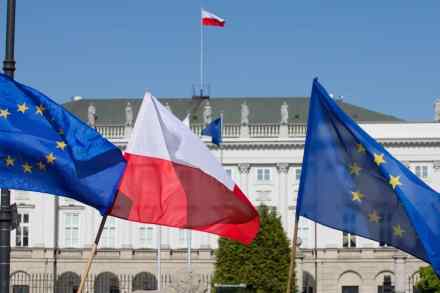
Until yesterday, it was possible to imagine that there would be a political solution to the standoff between the EU and Poland. Poland would reform the disciplinary chamber for its judges, and the EU would be satisfied that its principal grievance had been addressed. The Polish government had already promised to reform its disciplinary chamber, but it was unable to set a binding timetable, as it relies for its majority on United Poland (UP), a small, deeply anti-European party. Zbigniew Ziobro, the leader of UP, is also justice minister. The EU used to be quite adept at handling political impasses like this one, through diplomacy rather than full confrontation. But this time is different.

Merkel knows how to stop Polexit. The EU won’t listen

From our UK edition

The EU is notoriously bad at learning from its own mistakes, mostly because it is unable to recognise these mistakes in the first place. A notable exception is austerity. There is now a consensus that it was a disaster, which blighted Europe’s economic resilience for a generation. A mistake the EU has not recognised yet is its role in Brexit: how it negotiated with David Cameron, and how it sided with the second referendum after the election, thus helping to create the political backlash that has destroyed even the faintest hope of a rapprochement with the UK. In what may be her last European Council, Angela Merkel yesterday spoke truth to power when she warned her fellow leaders not to treat Poland in the same way.

Who will succeed Merkel?

From our UK edition

The results of the German election have shifted somewhat since last night's exit poll. What we know for sure is that a red-red-green coalition — between the centre-left SPD, far-left Die Linke and the Greens — is short of a majority, which is contrary to what every single opinion poll projected in the last few weeks That is the single biggest news from the German elections. It deprives SPD leader Olaf Scholz of what he would have needed to force the free-market liberals of the FDP and Greens into a coalition, also known as the traffic light coalition. A coalition involving Die Linke could have been leveraged to sharpen minds, the threat of socialists and anti-capitalists having access to the chancellery. That threat is now gone and Scholz's negotiating position is weakened.

The stalemate election: can Germany move beyond Merkel?

From our UK edition

Germany’s election campaign has taken many unexpected turns. In January, Angela Merkel’s Christian Democrats (CDU/CSU), were leading by about 20 percentage points. By April, the Greens were ahead. By July, the CDU/CSU had bounced back, and then all of a sudden, the Social Democrats (SPD) came out of nowhere to a solid lead by last weekend. The gap has since closed a little ahead of Sunday’s election — and the joyride is still not over. What is also different about these elections is that, based on current polling, four, five or even six coalitions might be arithmetically possible. So the real battle will likely start only after the election.

Aukus is a disaster for the EU

From our UK edition

It is hard to overstate the importance of the so-called Aukus alliance between the US, the UK and Australia — and the implicit geopolitical disaster for the EU. The alliance is the culmination of multiple European failures: naivety at the highest level of the EU about US foreign policy; Brussels’s political misjudgements of Joe Biden and his China strategy; compulsive obsession with Donald Trump; and the attempt to corner Theresa May during the Brexit talks. If you treat the UK as a strategic adversary, don’t be surprised when the UK exploits the areas where it enjoys a competitive advantage. The EU has outmanoeuvred itself through lazy group-think.

How the pandemic pushed up inflation

From our UK edition

Eurozone core inflation came in at 1.6 per cent in August, while headline inflation hit 3 per cent. In Germany, at least, the all-important national metric went up by a notch — to 3.9 per cent. The recorded inflation data are, to some extent, a bounce-back recovery effect — coupled with the rise in German VAT — which will distort inflation numbers from July until December. But there has been a 2.7 per cent rise in industrial goods, minus energy, which is partly a supply chain effect that could prove persistent. Food, alcohol and tobacco are up 2 per cent but services only 1.1 per cent. It is services that are keeping inflation numbers pinned down — for now, anyway. Interestingly, both France and Italy are registering inflation rates of over 2 per cent.

The vaccination campaign is making the same mistakes as Remain

From our UK edition

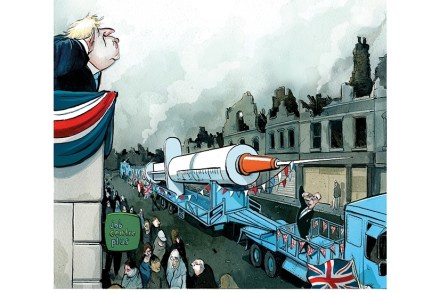
One of the great cautionary tales of the last five years is how political campaigns can start off with what looks like a strong case and end up losing with 48 per cent of the vote. What happened to the Remain campaign is now happening to the campaign to deploy vaccines – and in several countries. Governments are telling anti-vaxxers that they are stupid; they are exaggerating their case like the French education minister, who suggested that vaccination means that you can no longer infect others. Or they are lecturing people, saying that they should listen to the experts. And when things get really bad, they are talking about compulsion. Compulsory vaccination is the second referendum of our time. Vaccination is one of the great success stories of modern science.

Could Germany’s flood disaster have been prevented?

From our UK edition

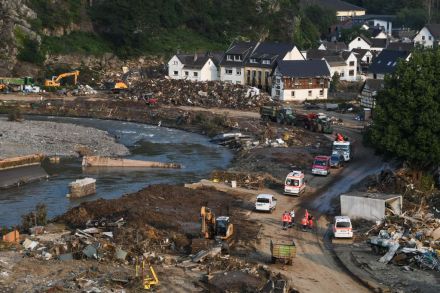
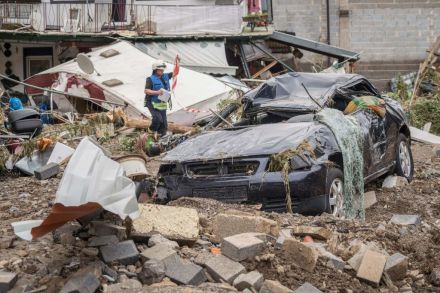
As the floods which have devastated homes and caused over 150 deaths recede in the Rhineland, three types of political implications have already emerged. People are talking about climate change – for the first time during the campaign. Armin Laschet, Merkel’s successor, failed to rise to the occasion when he was caught laughing as the German President Frank-Walter Steinmeier addressed grieving families in the Rhineland. And it also emerged that flood warnings were issued, but were not passed on to the population. Germany is still in shock, especially because other parts of the country have since flooded. South-eastern Bavaria has now suffered the worst floods ever recorded, with massive destruction of infrastructure.

Germany’s flood disaster could trigger a political upheaval

From our UK edition

There is an interesting history to the politics of floods in Germany – and a possibility that history might be repeating itself. The official death toll in Germany has risen to 93 this morning, but 1300 people are still reported missing in the region of Ahrweiler, in western Germany. This is without a doubt the most extreme natural disaster that has hit Germany in living memory. We should not at this point draw any hasty conclusions about the political impact. It is possible that it will benefit the Greens because climate change is back on the political agenda. Historically, floods have benefited incumbent governments.

Italian politics is fracturing

From our UK edition

Just in time for the football final, Italy’s Five Star party reached a deal. Giuseppe Conte, a former prime minister, has agreed to take on the leadership of the party, but only on condition that he will be fully in charge of the politics of the movement and of the parliamentary party. Beppe Grillo, the party’s founder, agreed to those conditions, which reduces his hold. This compromise may not last. Many details have yet to be agreed. But Conte is in a strong position because the majority of parliamentarians and voters are behind him — a powerful combination.

Climate policy will be a casualty of this decade of bungling

From our UK edition

The German newspaper Frankfurter Allgemeine Zeitung has been publishing leaks from the European Commission of its Fit for 55 programme, a reference to the 55 per cent CO2 reduction target for 2030. A critical part of that programme is the so-called carbon border adjustment mechanism (CBAM). The idea is to a keep a level playing field with non-EU companies, who may not be subject to the same carbon taxes and fees as EU producers. The scheme is limited initially to the following sectors: electricity, iron and steel, cement, aluminium and fertilisers. Companies in some sectors will get free allowances, to be phased out over time, to protect them from possibly unfair competition. The tax is a levy on importers. Those not exempt will have to pay for CBAM certificates.

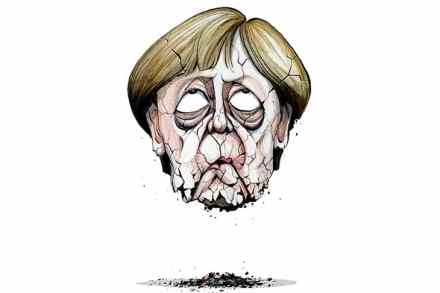
Angela’s ashes: Merkel is leaving the EU in chaos

From our UK edition

Perhaps the most absurd thing ever said about Angela Merkel is that she was the de facto leader of the western world. She has certainly been one of Europe’s most successful politicians, if you define success as political survival. But as she comes to the end of her 16 years in office, her luck is deserting her and the mess she has created is becoming horribly apparent. She leaves behind a split EU that is not just unled but might now be unleadable. Humiliating reminders of Merkel’s imploded authority come regularly. Take her latest idea to keep British tourists out of the EU this summer. Germany is imposing a mandatory 14-day quarantine for UK arrivals, whether they are vaccinated or not, and Merkel wanted other EU states to do the same.

Can the EU save Italy?

From our UK edition

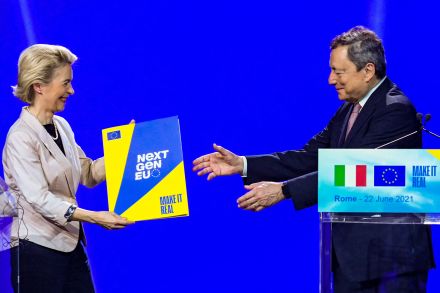
There’s been a lot of hype around the green light given by the European Commission yesterday to Italy’s recovery plan. But let’s break it down: the final headline numbers are €68.9 billion in EU grants by the year 2026 and €123 billion in loans. If you take the grant component, and divide it over the six-year duration, you arrive at an average of 0.6-0.7 per cent of Italy’s 2019 GDP each year. It is front-loaded, and it’s by no means a modest sum. What’s harder to accept however, is folding in the loan component to arrive at some giant fake headline number. The whole point of this exercise is not to produce a classic fiscal boost, but fiscally-assisted structural reforms.

Is the euro area at risk of an inflation surge?

From our UK edition

If you like a snapshot of a bang-on target, this is it: headline inflation in the euro area for May came in at 1.99 per cent on an annual basis, which gives a whole new meaning to close to, but below 2 per cent. The number itself, however, is entirely meaningless.  As ever, the more important number is the core rate of inflation, which excludes energy, food and alcohol, and which shows no sign of breaking out its range of around 1 per cent. But even the core rate is subject to some noise. For example, the pandemic-related cut in the VAT rate during the second half of last year contributed to the steep fall in the core rate in August and the steep rise in January.

The EU has learnt nothing from Brexit

From our UK edition

This is Brexit all over again. The Swiss government pulled the plug on its seven-year negotiation of the EU-Swiss institutional framework agreement on Wednesday. Its failure was driven by familiar issues: freedom of movement and dynamic alignment. Just one year ago, the EU's Brexit negotiators still insisted on dynamic alignment — the idea that Britain would have to follow new EU rules even after it left the bloc. It was only the credible threat of the Johnson administration walking out of negotiations that ended this anti-democratic monstrosity. Every country, the EU included, has the right to restrict market access. But nobody has the right to impose their own legislation dynamically on third countries.

The Brexit bounce is underway

From our UK edition

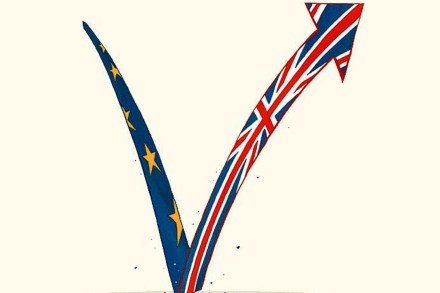
The collapse in UK-EU trade after 1 January was widely reported. What has not been reported nearly as much is that UK exports have made a near-complete recovery. They were up 46.6 per cent in February after falling by 42 per cent in January. Imports are not there yet. They were up 7.3 per cent in February after a fall of 29.7 per cent in January. The one prediction I am happy to make is that they will recover too.  What these and other numbers are telling us is that even this bit of the Brexit scare stories will not come true. If you look at the latest IMF data and projections in the graphic above, you don't find a discernible macroeconomic effect of Brexit in the first ten years after the referendum.