William Moore

William Moore

William Moore is features editor of The Spectator

The mystifying process – and problems – behind choosing the next Archbishop of Canterbury

From our UK edition

39 min listen

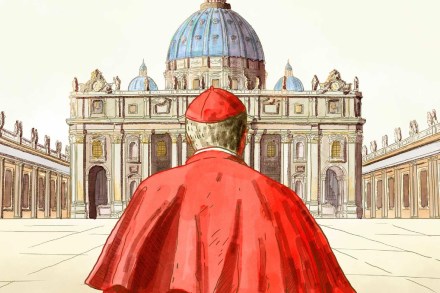
After Pope Francis died, it took the Roman Catholic Church just 17 days to choose a successor in Pope Leo XIV. It has been well over 6 months since Archbishop of Canterbury Justin Welby resigned and we are only just making sense of those chosen to sit on the Crown Nominations Commission (CNC), that will recommend his successor. Even then, it’s unlikely we will know more until the autumn. Why has it taken so long? Journalist, commentator – and quite frankly expert – Andrew Graystone joins Damian Thompson and William Moore, the Spectator’s features editor, to take listeners through the process.
The real Brexit betrayal, bite-sized history & is being a bridesmaid brutal?

From our UK edition

44 min listen

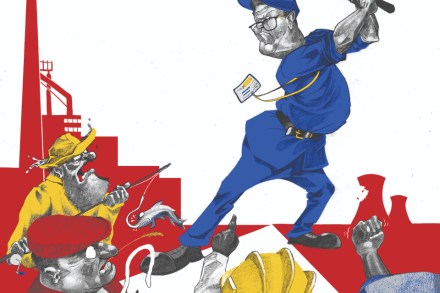
The real Brexit betrayal: Starmer vs the workers‘This week Starmer fell… into the embrace of Ursula von der Leyen’ writes Michael Gove in our cover article this week. He writes that this week’s agreement with the EU perpetuates the failure to understand Brexit’s opportunities, and that Labour ‘doesn’t, or at least shouldn’t exist to make the lives of the fortunate more favourable’. Michael makes the argument that ‘the real Brexit betrayal’ is Labour’s failure to understand how Brexit can protect British jobs and industries and save our manufacturing sector. Historian of the Labour Party Dr Richard Johnson, a politics lecturer at Queen Mary University writes an accompanying piece arguing that Labour ‘needs to learn to love Brexit’.

Low Life: The Spectator columns of Jeremy Clarke

From our UK edition

28 min listen

To mark the second anniversary of the death of Jeremy Clarke – one of the Spectator’s most loved writers – we’ve compiled some of his Low Life columns, as read by Jeremy in 2016, for this special episode of Spectator Out Loud. Included in this compilation are: New Man (00:42); Virgin (5:16); Debauchery Competition (9:32); Buddhism (14:12); The Beach (18:58); and, Memory (23:40). Read by Jeremy Clarke, with an introduction from William Moore.  Produced by Patrick Gibbons.

See change, A.I. ghouls & long live the long lunch!

From our UK edition

38 min listen

This week: the many crises awaiting the next pope‘Francis was a charismatic pope loved by most of the world’s 1.4 billion Catholics’ writes Damian Thompson in the cover article this week. But few of them ‘grasp the scale of the crisis in the Church… The next Vicar of Christ, liberal or conservative’ faces ‘challenges that dwarf those that confronted any incoming pope in living memory’.   Ahead of Pope Francis’s funeral this weekend, Damian joined the podcast alongside the Catholic theologian Fr Alexander Lucie-Smith to unpack all the political intrigue underpinning the upcoming papal conclave. They say that he who enters the conclave as a pope, leaves as a cardinal – do we have any clues to who could emerge as Francis’s successor?

Easter special: assisted dying, ‘bunny ebola’ & how do you eat your creme egg?

From our UK edition

34 min listen

This week: should the assisted dying bill be killed off?Six months after Kim Leadbeater MP launched the Terminally Ill Adults (End of Life) Bill, a group of Labour MPs have pronounced it ‘irredeemably flawed and not fit to become law’. They say the most basic aspects of the bill – having gone through its committee stage – do not hold up to scrutiny. Dan Hitchens agrees, writing in the magazine this week that ‘it’s hard to summarise the committee’s proceedings except with a kind of Homeric catalogue of rejected amendments’ accompanied by a ‘series of disconcerting public statements’.  With a third reading vote approaching, what could it tell us about the country we live in?

Trump shock, cousin marriage & would you steal from a restaurant?

From our UK edition

39 min listen

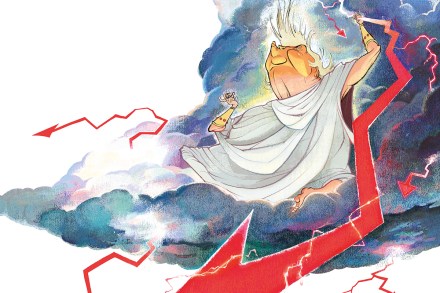
This week: Trump’s tariffs – madness or mastermind?‘Shock tactics’ is the headline of our cover article this week, as deputy editor Freddy Gray reflects on a week that has seen the US President upend the global economic order, with back and forth announcements on reciprocal and retaliatory tariffs. At the time of writing, a baseline 10% on imports stands – with higher tariffs remaining for China, Mexico and Canada. The initial announcement last week had led to the biggest global market decline since the start of the pandemic, and left countries scrambling to react, whether through negotiation or retaliation.

Cruel Labour, the decline of sacred spaces & Clandon Park’s controversial restoration

From our UK edition

51 min listen

This week: Starmerism’s moral vacuum‘Governments need a mission, or they descend into reactive incoherence’ writes Michael Gove in this week’s cover piece. A Labour government, he argues, ‘cannot survive’ without a sense of purpose. The ‘failure of this government to make social justice its mission’ has led to a Spring Statement ‘that was at once hurried, incoherent and cruel – a fiscal drive-by shooting’.  Michael writes that Starmer wishes to emulate his hero – the post-war Prime Minister Clement Atlee, who founded the NHS and supported a fledgling NATO alliance. Yet, with policy driven by Treasury mandarins, the Labour project is in danger of drifting, as John Major’s premiership did.

The age of the strongman, Tesla under attack & matinee revivals

From our UK edition

35 min listen

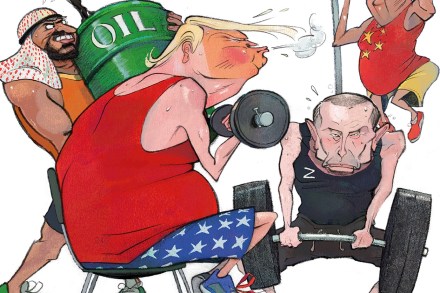
This week: welcome to the age of the strongman ‘The world’s most exclusive club… is growing,’ writes Paul Wood in this week’s Spectator. Membership is restricted to a very select few: presidents-for-life. Putin of Russia, Xi of China, Kim of North Korea and MBS of Saudi Arabia are being joined by Erdogan of Turkey – who is currently arresting his leading domestic political opponent – and Donald Trump, who ‘openly admires such autocrats and clearly wants to be one himself’. ‘This is the age of the strongman,’ Wood declares, ‘and the world is far more dangerous because of it.’  Despite their bombast, these ‘are often troubled characters’, products of difficult childhoods.

Labour’s growing pains, survival of the hottest & murder most fascinating

From our UK edition

43 min listen

This week: why is economic growth eluding Labour?‘Growing pains’ declares The Spectator’s cover image this week, as our political editor Katy Balls, our new economics editor Michael Simmons, and George Osborne’s former chief of staff Rupert Harrison analyse the fiscal problems facing the Chancellor. ‘Dominic Cummings may have left Whitehall,’ write Katy and Michael, ‘but his spirit lives on.’ ‘We are all Dom now,’ according to one government figure. Keir Starmer’s chief aide Morgan McSweeney has never met Cummings, but the pair share a diagnosis of Britain’s failing economy. Identifying a problem is not, however, the same as solving it.

Massacre of the innocents, saving endangered languages & Gen Z’s ‘Boom Boom’ aesthetic

From our UK edition

37 min listen

This week: sectarian persecution returnsPaul Wood, Colin Freeman and Father Benedict Kiely write in the magazine this week about the religious persecution that minorities are facing across the world from Syria to the Congo. In Syria, there have been reports of massacres with hundreds of civilians from the Alawite Muslim minority targeted, in part because of their association with the fallen Assad regime. Reports suggest that the groups responsible are linked to the new Syrian president Ahmed al-Sharaa (formerly known as Abu Mohammed al-Jolani). For some, the true face of the country’s new masters has been revealed. Whether the guilty men are punished will tell us what kind of country Syria has become since the fall of Assad’s dictatorship.

Why Ukraine’s minerals matter, the NHS’s sterilisation problem & remembering the worst poet in history

From our UK edition

42 min listen

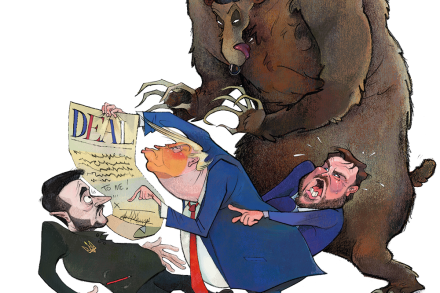
This week: the carve-up of Ukraine’s natural resources From the success of Keir Starmer’s visit to Washington to the squabbling we saw in the Oval Office and the breakdown of security guarantees for Ukraine – we have seen the good, the bad and the ugly of geopolitics in the last week, say Niall Ferguson and Nicholas Kulish in this week’s cover piece. They argue that what Donald Trump is really concerned with when it comes to Ukraine is rare earth minerals – which Ukraine has in abundance under its soil. The conventional wisdom is that the US is desperately short of these crucial minerals and, as Niall and Nicholas point out, the dealmaking president is driven by a nagging sense of inferiority in comparison to rare earth minerals powerhouse China.

Inside Nigel’s gang, my day as a ‘missing person’ & how to save James Bond

From our UK edition

38 min listen

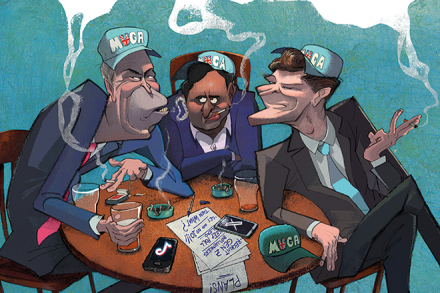
This week: Nigel’s gang – Reform’s plan for power.Look at any opinion survey or poll, and it’s clear that Reform is hard to dismiss, write Katy Balls and James Heale. Yet surprisingly little is known about the main players behind the scenes who make up Nigel Farage’s new gang. There are ‘the lifers’ – Dan Jukes and ‘Posh George’ Cottrell. Then there are the Tory defectors, trained by Richard Murphy, a valued CCHQ veteran, who is described as a ‘secret weapon’. The most curious new additions are the Gen Zers, who include Tucker Carlson’s nephew, Charles Carlson, and Jack Anderton, known as ‘the Matrix’. Katy and James joined the podcast to lift the lid on Nigel Farage’s inner circle.

New world disorder, cholesterol pseudoscience vs scepticism & the magic of Dickens

From our UK edition

48 min listen

This week: the world needs a realist resetDonald Trump’s presidency is the harbinger of many things, writes The Spectator’s editor Michael Gove, one of which is a return to a more pitiless world landscape. The ideal of a rules-based international order has proved to be a false hope. Britain must accept that if we are to earn the respect of others and the right to determine the future, we need a realist reset. What are the consequences of this new world order? And is the Trump administration reversing the tide of decline, or simply refusing to accept the inevitable? Michael Gove joined the podcast alongside the geopolitical theorist Robert Kaplan, author of the new book Waste Land: A World in Permanent Crisis.

Britain’s bureaucratic bloat, debating surrogacy & is smoking ‘sexy’?

From our UK edition

40 min listen

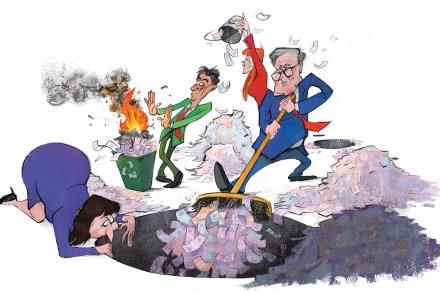
This week: The Spectator launches SPAFFThe civil service does one thing right, writes The Spectator’s data editor Michael Simmons: spaffing money away. The advent of Elon Musk’s DOGE in the US has inspired The Spectator to launch our own war on wasteful spending – the Spectator Project Against Frivolous Funding, or SPAFF. Examples of waste range from the comic to the tragic. The Department for Work and Pensions, Michael writes, ‘bought one Universal Credit claimant a £1,500 e-bike after he persuaded his MP it would help him find self-employment’. There’s money for a group trying to ‘decolonise’ pole dancing; for a ‘socially engaged’ practitioner to make a film about someone else getting an MBE; and for subscriptions to LinkedIn.

Labour’s Irish insurgent, Germany’s ‘firewall’ falls & finding joy in obituaries

From our UK edition

48 min listen

As a man with the instincts of an insurgent, Morgan McSweeney, Keir Starmer’s chief of staff, has found Labour’s first six months in office a frustrating time, writes The Spectator’s editor Michael Gove. ‘Many of his insights – those that made Labour electable – appeared to have been overlooked by the very ministers he propelled into power.’ McSweeney is trying to wrench the government away from complacent incumbency: there is a new emphasis on growth, a tougher line on borders, an impatience with establishment excuses for inertia. Will McSweeney win his battle? And what does this mean for figures in Starmer’s government, like Richard Hermer and Ed Miliband? Michael joined the podcast alongside Starmer’s biographer Tom Baldwin. (1:04) Next: can the AfD be stopped?

Industry tragedy, Trump vs the Pope & the depressing reality of sex parties

From our UK edition

42 min listen

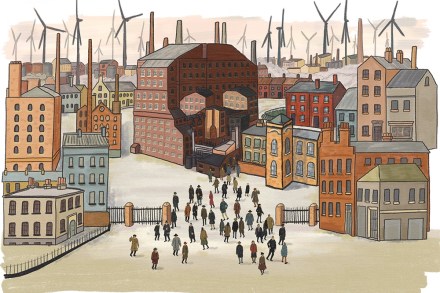
This week: the death of British industryIn the cover piece for the magazine, Matthew Lynn argues that Britain is in danger of entering a ‘zero-industrial society’. The country that gave the world the Industrial Revolution has presided over a steep decline in British manufacturing. He argues there are serious consequences: foreign ownership, poorer societies, a lack of innovation, and even national security concerns. Why has this happened? Who is to blame? And could Labour turn it around? Matthew joined the podcast, alongside the head of the Trades Union Congress (TUC), Paul Nowak. (1:05) Next: the Pope takes on President TrumpThe Pope has nominated Cardinal Robert McElroy to be the new Archbishop of Washington.

Empire of Trump, the creep of child-free influencers & is fact-checking a fiction?

From our UK edition

43 min listen

This week: President Trump’s plan to Make America Greater In the cover piece for the magazine, our deputy editor and host of the Americano podcast, Freddy Gray, delves into Trump’s plans. He speaks to insiders, including Steve Bannon, about the President’s ambitions for empire-building. Could he really take over Canada, Greenland and the Panama Canal? And if not, what is he really hoping to achieve? Academic and long-time friend of J.D. Vance, James Orr, also writes in the magazine this week about how the vice president-elect could be an even more effective standard-bearer for the MAGA movement. Freddy and James joined the podcast, just before Freddy heads off to cover Trump’s inauguration.

The truth about grooming gangs, ‘why I’m voting for the AfD’ & exploring YouTube rabbit holes

From our UK edition

47 min listen

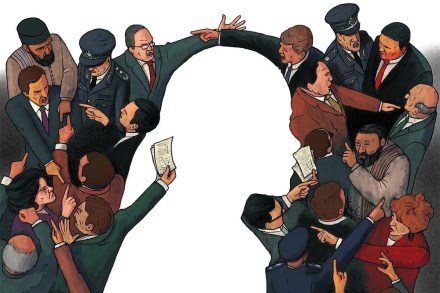
This week: what does justice look like for the victims of the grooming gangs?In the cover piece for the magazine, Douglas Murray writes about the conspiracy of silence on the grooming gangs and offers his view on what justice should look like for the perpetrators. He also encourages the government to take a step back and consider its own failings. He writes: ‘If any government or political party wants to do something about the scandal, they will need to stop reviewing and start acting. Where to begin? One good starting point would be to work out why Pakistani rapists in Britain seem to have more rights than their victims.’ To unpack his piece in a little more detail, we were joined by journalist Julie Bindel, who has been reporting on the grooming gangs for almost 20 years.

The West’s right turn, Michael Gove interviews Jordan Peterson & the ADHD trap

From our UK edition

45 min listen

This week: the fight for the future of the right From Milei in Argentina to Trump in the US, Meloni in Italy to the rise of the AfD in Germany, the world appears to be turning to the right, say James Kanagasooriam and Patrick Flynn. One country, however, seems to be the exception to this rule: our own. Britain under Keir Starmer appears to be putting on a revival of the old classic Socialism in One Country. However, beyond Westminster, the data show that Britain is not moving to the left in line with its government. While the Conservatives and Reform are locked in a near-constant struggle for supremacy, polling shows that the public are moving to the right.

Best of 2024 with Dominic Sandbrook, Mary Beard and Harriet Harman

From our UK edition

75 min listen

This week is a special episode of the podcast where we are looking back on some of our favourite pieces from the magazine over the past year and revisiting some of the conversations we had around them. First up: the Starmer supremacyLet’s start with undoubtedly the biggest news of the year: Starmer’s supermajority and the first Labour government in 14 years. In April, we spoke to Katy Balls and Harriet Harman about just what a supermajority could mean for Keir Starmer. Listening back, it’s an incredibly interesting discussion to revisit. The aim of Katy’s piece was to communicate the internal problems that could arise from such a sweeping victory and, crucially, how Starmer might manage a historic cohort of backbenchers.