William Cook

The Good Life – how a 70s sitcom became a Conservative lodestar

From our UK edition

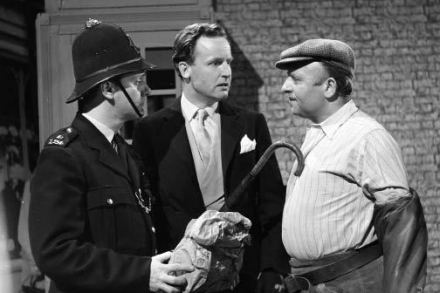
When the writers John Esmonde and Bob Larbey came up with the idea for The Good Life, they were looking for a vehicle for Richard Briers, who’d just turned 40. He was well established but not quite famous — the other three actors even less so. Felicity Kendal and Penelope Keith were cast on the strength of their performances in an Ayckbourn play. Paul Eddington was a ‘first eleven light-comedy actor’ (as Briers put it) but he was hardly a household name. In the opening credits, Briers’s name was above the title, the other three were below it. Briers’s Tom Good was the lead; Kendal was ensured a decent role as his wife, Barbara, but Jerry and Margo Leadbetter were initially conceived as supporting characters.

At home with the Pre-Raphaelites

From our UK edition

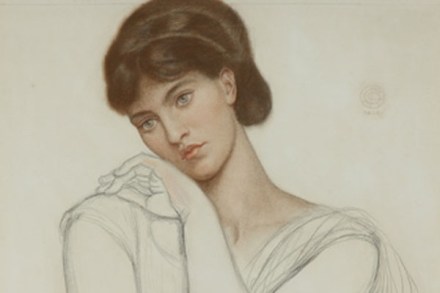
Andrew Lloyd Webber cried when he first came to Wightwick Manor, and standing in the Great Parlour of this magnificent Victorian villa you can see what moved him to tears of joy. Lloyd Webber loves the Pre-Raphaelites (he’s always had the common touch) and Wightwick is a living monument to the one artistic movement that England can truly call its own. There’s William Morris wallpaper on the walls and Charles Kempe stained glass in the windows — and beneath the minstrels’ gallery is Edward Burne-Jones’s ‘Love Among The Ruins’ (which has this month travelled to London for the biggest Pre-Raphaelite exhibition since the 1980s).

Art and soul

From our UK edition

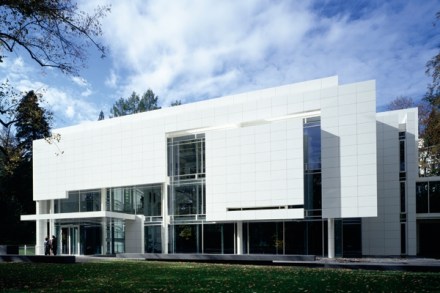
Imagine you had £20 million to spare, burning a big hole in your pocket. What would you spend it on? You could buy a stately home or a private jet, but that would be so boring. Surely the nicest way to spend it would be to ask one of America’s greatest architects to build a new museum in your hometown, to show the world your favourite paintings. Now that really would be fun. For the man I’ve come to meet today, this is no idle fantasy. It’s the story of his life. Ten years ago, Frieder Burda invited Richard Meier to design a gallery to house his art collection, here in Baden Baden. Since it opened in 2004, the Frieder Burda Museum has transformed this sedate spa town into a cultural oasis in the Black Forest.

From Prussia with love

From our UK edition

In a baroque palace in Potsdam, on the leafy outskirts of Berlin, those industrious Germans are throwing a spectacular birthday party. The Neues Palais is a flamboyant folly, built by Frederick the Great to celebrate Prussia’s victory in the Seven Years War, and this summer it’s become the forum for a huge exhibition celebrating the 300th birthday of Prussia’s greatest monarch. But this lush retrospective isn’t just a slice of historical nostalgia. It signals a change in that complex creature the German psyche. For the first time since 1945, when Prussia was erased from the map, Germans are becoming proud of being Prussians once again. Throughout the Cold War, Prussia was a dirty word on both sides of the Iron Curtain.

On the waterfront | 28 April 2012

From our UK edition

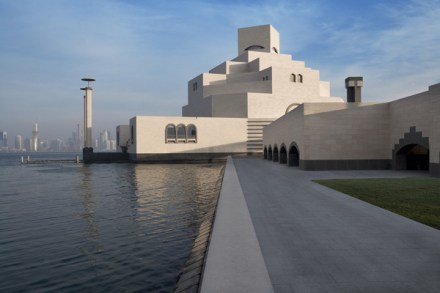
William Cook says that I.M. Pei’s latest building, Qatar’s Museum of Islamic Art, once again captures the spirit of the age Standing outside Qatar’s Museum of Islamic Art, in Doha, watching the sun rise over the Persian Gulf, you’re reminded of Mies van der Rohe’s dictum: ‘less is more’. Van der Rohe was a hero of the man who made this building, and I.M. Pei’s new museum sums up that minimalist rule of thumb. Doha’s modern skyline is a panorama of skyscrapers, but they all look trite and transient beside this discreet masterpiece. Pei’s Museum of Islamic Art is only a few years old, but it feels as if it’s stood here for a century. It’s part of the landscape, the way great architecture ought to be.

At home with Rubens

From our UK edition

William Cook believes that the British cannot really understand the artist until they’ve been to Antwerp In a quiet corner of Tate Britain there is a little exhibition that sheds fresh light on an artist whom the British have never really learned to love. Rubens & Britain (until 6 May) is a fascinating show, documenting his work in England, and like all good exhibitions it leaves you wanting more. There are Rubens in countless British galleries, of course, but really to understand him you have to travel to his hometown, Antwerp. Here, Rubens is everywhere, even on the toilet doors in trendy bars and restaurants. My first visit was a revelation, and I’ve been back several times since.

Indefatigably British

From our UK edition

My German grandmother never understood the point of pantomime. She’d lived in England for more than half her life, spoke English like a native (actually, a good deal better) and had a sound appreciation of English humour, from Lewis Carroll to The Good Life. However, she was happy to admit that the panto bug had completely passed her by. She knew that pantomime was the one art form that was indefatigably British, and that no foreigner could ever hope to decipher it. Of course she was absolutely right. No other entertainment sums up our innate Euroscepticism quite like panto. And no British Christmas is complete without a chorus of ‘Oh, no you’re not!’ or ‘He’s behind you!’ That’s not to say, though, that we actually enjoy it.

Stealing beauty

From our UK edition

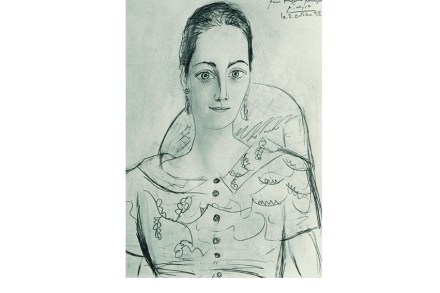
I’m standing alongside Angela Rosengart, in a room full of portraits Picasso drew of her, when something spooky happens. Out of the corner of my eye, the old woman beside me becomes the young woman on the wall. It’s over in an instant, but it’s still strange and rather wonderful. For a moment, Frau Rosengart is young again, just as Picasso saw her. We’re in the Rosengart Museum in Lucerne, a grand neoclassical building (formerly a branch of the Swiss National Bank) that houses Rosengart’s extraordinary art collection — more than 100 works by Klee, plus dozens of other modern masters: Léger, Kandinsky, Modigliani...

Northern lights | 8 October 2011

From our UK edition

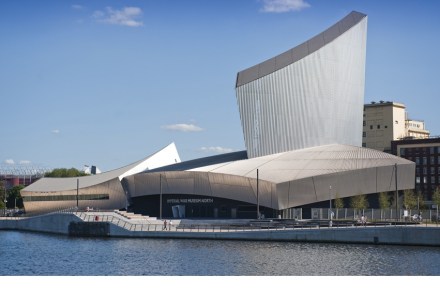
Those BBC refuseniks will rue the day they passed up the chance to relocate to Salford, England’s new cultural capital, says William Cook Standing on the roof of Daniel Libeskind’s Imperial War Museum North, staring at the shiny new buildings down below, you could be forgiven for thinking you were in Hamburg or Berlin. There’s the same futuristic skyline, the same glint of glass and metal. There’s even a sleek modern tram, snaking between the shops and cafés along the quay. But this isn’t a continental conurbation — this is Salford. The improbable renaissance of this unloved city sums up England’s biggest schism, not between black and white or rich and poor, but between north and south.

Blackpool’s ups and downs

From our UK edition

The town’s first visitors were daytripping mill workers; now it’s a place for hen and stag parties. William Cook charts its changing fortunes, as a photographic exhibition reveals Think of Blackpool and fine art probably isn’t the first thing that springs to mind, but Britain’s biggest, brashest seaside resort is the unlikely home to one of Britain’s loveliest little galleries. Hidden behind the grey seafront, a drunken stumble from the North Pier, the Grundy Art Gallery was founded in 1911 by two brothers — local philanthropists and art lovers — and this summer it celebrates its centenary with a photographic exhibition that spans the past 100 years. No other town encapsulates Britain’s ups and downs quite as well as Blackpool.

An instinct for comedy

From our UK edition

William Cook discovers that the clue to Nicholas Parsons’s enduring success lies in his ability to laugh at himself When I was a kid, watching Sale of the Century on my grandma’s colour telly, Nicholas Parsons used to seem like the smartest man in show business. Meeting him half a lifetime later, in a rooftop restaurant in Kensington, I’m pleased to find that he still looks just as dapper. His blue blazer is neatly pressed, his white shirt is crisply ironed and his bright eyes sparkle like a schoolboy’s. You’d never guess he was in his eighties, with more than 60 years in showbiz behind him. He’s worked with Tony Hancock, Kenneth Williams — all the greats, and he’s outlived the lot of them. He’s a living marvel.

Consolations of Constable

From our UK edition

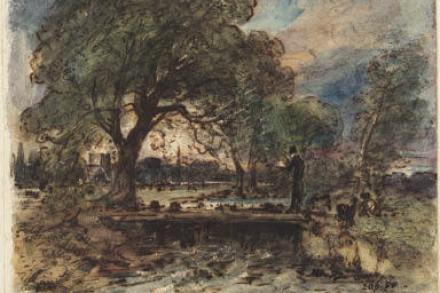
William Cook takes refuge from the modern world at an exhibition of the artist’s paintings of his beloved Salisbury I’d always thought of Constable’s paintings of Salisbury Cathedral as grand, majestic things — but seeing them again in Salisbury, with Richard Constable, the artist’s great-great grandson, you begin to look at these splendid pictures in an entirely different light. Richard has come here, to the Salisbury & South Wiltshire Museum, to attend the opening of an exhibition that celebrates his ancestor’s close relationship with this city, and standing alongside him, in the shadow of Salisbury Cathedral, you realise John Constable wasn’t painting architecture, but the landscape of his private life.
Little big man

From our UK edition

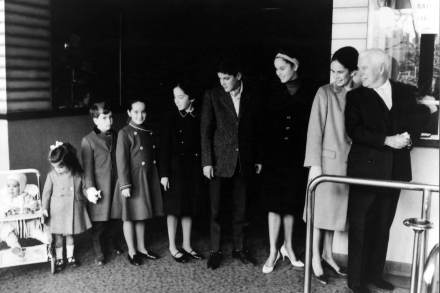
A museum dedicated to Charlie Chaplin will open soon. William Cook gets a preview and talks to the star’s son Michael about life with a legend Standing in the deserted drawing-room of Charlie Chaplin’s Swiss château, waiting to meet his eldest surviving son, Michael, I remember something Auberon Waugh once said to Naim Attallah. ‘A lot of sons of famous fathers seem to be upset by the circumstance, even destroyed by it,’ said Waugh. ‘But I don’t think they need be. It entirely depends on the personality.’ However, Waugh was merely the son of the best British novelist of the last century. The man I’ve travelled here to meet is the son of the 20th century’s biggest film star — for a while, the most famous man in the world.

Interview: Goodies’ triple triumph

From our UK edition

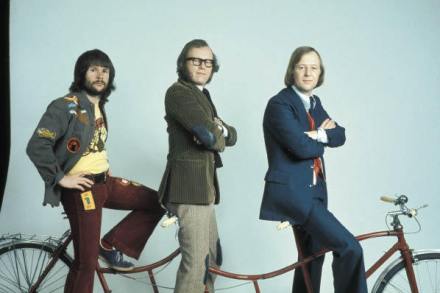
Here in HMV on London’s Oxford Street, three comedians are signing autographs. Here in HMV on London’s Oxford Street, three comedians are signing autographs. The queue of fans stretches through the foyer, almost out on to the street. Nothing unusual about that — this record shop regularly stages personal appearances by Britain’s biggest stars. What’s so surprising is that these comics are in their late-sixties, and the show that they’re promoting hasn’t been on TV for nearly 30 years. As The Goodies autograph their new DVD (a compilation of vintage shows, rereleased to mark their 40th anniversary) their greatest hits are replayed on a giant screen above their heads. Yet this isn’t just nostalgia. These old clips still feel fresh and funny.

Picasso by Picasso

From our UK edition

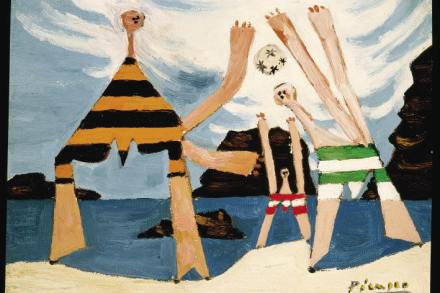
In an upstairs room in an unfrequented corner of Zurich’s Kunsthaus, there is a portrait of one of the unsung heroes of modern art. In an upstairs room in an unfrequented corner of Zurich’s Kunsthaus, there is a portrait of one of the unsung heroes of modern art. Wilhelm Wartmann was the first director of this splendid gallery, and in the autumn of 1932 he mounted the first major retrospective of the work of Pablo Picasso. This autumn, to celebrate its centenary, the Kunsthaus is mounting the same show. It’s a unique chance to see how the world saw Picasso at his peak — and how Picasso saw Picasso — for this groundbreaking exhibition was curated by the artist himself.

Mrs Gaskell’s bicentenary: Knutsford’s Amazons

From our UK edition

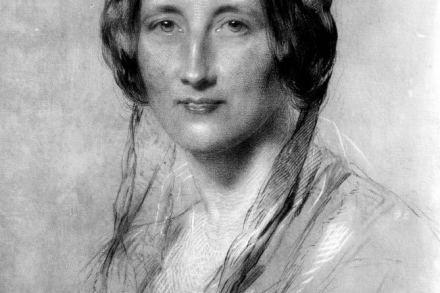
On the southern edge of Manchester, a few miles from the airport, there is a commuter town where the Victorian novel remains very much alive. This year Knutsford celebrates the bicentenary of its most famous daughter, who immortalised this ‘dear little town’ in several of her finest stories. More than 150 years after it first appeared, in weekly instalments in Dickens’s Household Words, Cranford remains Mrs Gaskell’s most enduring creation. And in these streets you can still trace the outline of the world that she created. Elizabeth Gaskell was born in 1810, in Chelsea, the daughter of a Unitarian minister. Her mother died when she was a few months old, and Elizabeth was packed off to an aunt in Knutsford.

The new alternatives

From our UK edition

William Cook goes to Skegness and watches Cannon & Ball attract an adoring audience It’s August and Edinburgh is full of fashionable young comedians, but here in Skegness the Festival Fringe seems a million miles away. With its amusement arcades and fish and chip shops, this unpretentious place feels forgotten by the metropolitan arts establishment. There are no TV producers on the windswept promenade, no theatre critics in the bingo halls. Yet Skegness boasts a theatrical heritage far older than the Edinburgh Festival — traditional seaside entertainment. And this summer it’s playing host to Britain’s most seasoned seaside entertainers, Cannon & Ball. Throughout the 1980s Cannon & Ball were one of the biggest acts in Britain.

A brave new Germany

From our UK edition

William Cook, a ‘closet Kraut’, grew up feeling ashamed of his country. This summer, during the World Cup, he finds that the stigma has finally lifted I’m standing in a noisy bar in south London, watching a World Cup match on a giant TV screen, hemmed in on all sides by happy, tipsy football fans. The place is packed, but no one seems to mind. There are lots more people outside, peering in through the windows, all desperate to see the game. Yet these aren’t England fans. These supporters are all German. They’ve flocked to this German bar, called Zeitgeist, to cheer on the German national team. They’re a symbol of how much Germany — and our view of Germany — has changed.

Belgium meets its Waterloo

From our UK edition

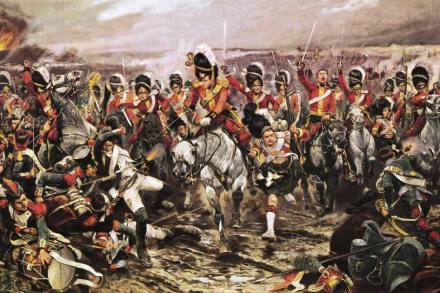
Last weekend, on a windswept plain about ten miles south of Brussels, 3,000 grown men dressed up as soldiers to re-enact the Battle of Waterloo. Performed every five years, on the original battlefield, this noisy extravaganza attracts more than 50,000 visitors, and on Sunday I was one of them. It was an extraordinary experience, more vivid than any movie. I wouldn’t have missed it for the world. Yet what’s most intriguing about this surreal Belgian spectacle is what it reveals about our muddled idea of Europe — and the people in the biggest muddle are the Belgians themselves.

Comic timing

From our UK edition

New Labour inspired a golden age of political comedy. William Cook looks to satire’s future Although few will mourn Gordon Brown’s departure, his drawn-out demise should be a source of sadness for comedy aficionados, be they red, yellow or blue. For New Labour’s most unlikely legacy was to inspire a renaissance in political comedy. It may have ended with a disgruntled whimper rather than a bang, but for anyone with a taste for satire these were 13 golden years. When Tony Blair first swept into Downing Street in 1997, a lot of left-wing comics seemed bemused. They’d been attacking the Tories for 18 years. Now that the Labour landslide they’d yearned for had happened, they didn’t quite know what to do.