William Cook

Notes on… Eastern Germany

From our UK edition

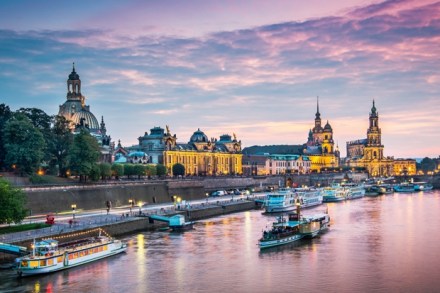
Ever since the Berlin Wall came down, I’ve been pottering around eastern Germany, where my father’s family came from, and fled from at the end of the second world war. I thought my interest would fade as my father’s fatherland was absorbed by the Bundesrepublik — but for me, this strange hinterland grows more intriguing with each passing year. Take the historic heartland of Hitler’s Reich, subject it to 45 years of communism and then 25 years of capitalism. What do you end up with? A mad mishmash of past and present, the last century laid bare. Naturally, the former GDR isn’t uniformly pretty (indeed, large swaths of it are spectacularly ugly) but for anyone interested in history, it’s a fascinating place.

Our infatuation with high-rise housing has been catastrophic. Good riddance to the Red Road flats

From our UK edition

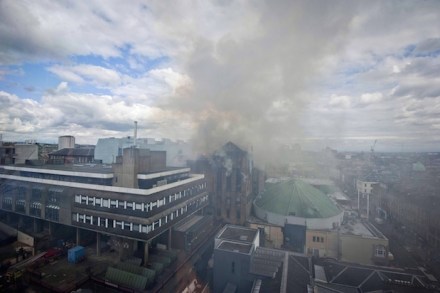
‘If you meet anyone in a pub or at a party who says he is an architect,’ advised Auberon Waugh, ‘punch him in the face.’ Typically, the late, great Spectator columnist articulated an important truth: modern architects have scarred our cityscapes with some truly horrendous buildings, none more so than Glasgow’s notorious Red Road flats. What better way to mark the opening of this summer’s Commonwealth Games than to blow them up? Five of the six blocks will be blown up on 23 July. These five are already empty. The sixth, which currently houses asylum seekers, is due for demolition at a later date.

Why building a new garden city at Ebbsfleet is a terrible idea

From our UK edition

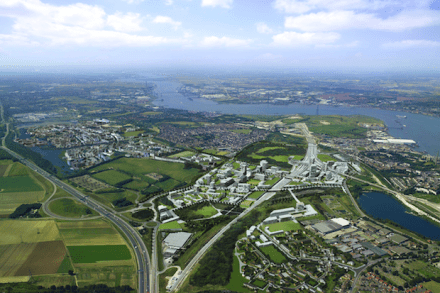
So, the government plans to create a new ‘garden city’ in Ebbsfleet, Kent, with 15,000 new homes. Yesterday’s announcement by George Osborne has been widely praised. The local Tory MP is enthusiastic. Boris Johnson tweets that it’s ‘great news.’ The best critique Ed Balls can muster is that it’s all ‘too little, too late.’ Labour wants 200,000 ‘new homes’ (that emotive mantra) per year by the end of the decade. I don’t live in Kent. This garden city isn’t in my back yard. So why, when I heard this news, did my sentimental heart sink? ‘New homes’ is such a sly use of words. How could anyone be against new homes? What this phrase really means, of course, is lots and lots of brand new houses.

Today Crimea, tomorrow Estonia?

From our UK edition

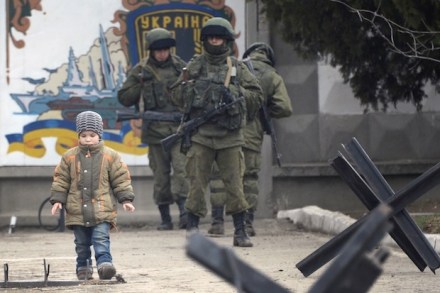
 Tallinn, Monday  ‘I have some sad news,’ says the Estonian politician, as we sit down to dinner. ‘War has broken out.’ The pain in his voice is palpable. For this patriotic man, and many like him, Russia’s invasion of Crimea has reawakened memories of an era everyone here hoped was over. Wandering the cobbled streets of Tallinn, Russia seems a long way away. You could be in Bremen or Lubeck. Yet Tallinn’s European heritage is only half the story. It’s been Estonia’s capital for just 45 years, from 1918 (when Estonia first won its independence) to 1940 (when Stalin invaded) and again from 1991 (when Estonia regained its independence) to today.

The Ikon Gallery’s greatest hits

From our UK edition

In a crowded storeroom at Ikon, Birmingham’s contemporary art gallery, its director Jonathan Watkins is unwrapping the pictures for his latest show. His excitement is infectious. He’s like a big kid on Christmas day. This exhibition marks the start of Ikon’s 50th season, for which he’s devised a special programme — a history of Ikon, which doubles as a compact history of contemporary art. To celebrate Ikon’s half-century, Watkins is mounting shows by five artists, one from each decade, who’ve exhibited here during the past 50 years. First up is the photorealist John Salt — the first artist ever shown at Ikon.

Is it a good idea to splash money on European cities of culture?

From our UK edition

As you enter the old KGB building, at the end of Freedom Street, the first thing that hits you is the cold. Outside it’s below freezing. Inside it’s even colder. The cells are in the basement, down a dank and narrow corridor. Upstairs are the offices where the KGB filed away the details of the men and women they kept below. In the foyer, where people used to come in to enquire about their next of kin (who might be dead or in Siberia or in a cell downstairs for all they knew), there’s a letterbox where visitors could leave incriminating memos about their neighbours. ‘During the Soviet occupation the State Security Agency imprisoned, tortured, killed and morally humiliated its victims in this building,’ reads a plaque outside.

The best thing to come out of Davos

From our UK edition

Another new year and once again the world’s leading CEOs and politicians descend on Davos, transforming this little Alpine town into the world’s most (self-) important talking shop. Yet there’s another side to Davos that’s far more interesting than dry geopolitical debate. Long before it became a stage for the World Economic Forum, this quiet corner of the Swiss Alps was the home of one of the most brilliant figures in modern art. Ernst Ludwig Kirchner spent his last 20 years in Davos. The town features in many of his finest paintings. It’s the only place with a museum devoted to his work. The Kirchner Museum in Davos is a striking piece of modern architecture, a Rubik’s Cube of glass and concrete bathed in natural light.

Interview David Chipperfield: It is better to be fond of architecture than amazed by it

From our UK edition

For a man who’s about to celebrate his 60th birthday, Sir David Chipperfield looks remarkably fresh-faced. His pale blue eyes are bright and piercing, his thick white hair is cut in a fashionable short crop. Clad in a dark polo neck, he looks almost boyish. This youthful vitality is reflected in his work. At an age when most of us tend to start slowing down, he’s busier than ever. His offices in London, Berlin, Milan and Shanghai employ more than 200 people. His current projects range from Paris to St Louis. I meet him in his groovy high-rise office overlooking Waterloo Station. He’s just flown in from Mexico City, where he’s built yet another new museum.

Tangier: Hidden treasure

From our UK edition

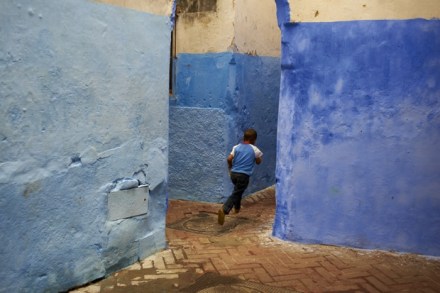
‘I remember you from last time,’ said the young man on the promenade. It was my first night back in Tangier. I was alone and tired and lonely. I liked the idea of meeting someone who knew me, if only from a brief encounter a few years before. ‘Yes, of course,’ I said, though I didn’t recognise him. In his cheap suit he seemed anonymous, like a policeman in plain clothes. It was nearly midnight, but the esplanade was still crowded. On the beach below, shrieking children were sprinting across the sand. Out to sea, over the Strait of Gibraltar, the bright lights of Tarifa were winking in the darkness. The Spanish coast seemed very close, yet a long way out of reach. We’d been talking for several minutes before I realised I’d never met this man before.

Slow Train to Switzerland, by Diccon Bewes – review

From our UK edition

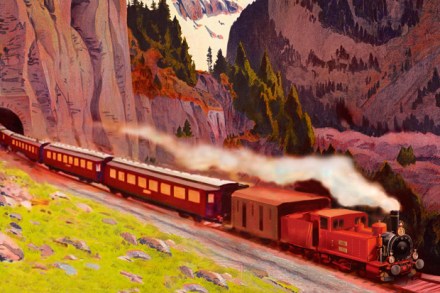
In 1863, the pioneering travel agent Thomas Cook took a group of British tourists on the first package holiday to Switzerland. One of them, a jolly young woman called Jemima Morrell, kept a diary — and 150 years later, English émigré Diccon Bewes has followed in her footsteps. His Slow Train to Switzerland (Nicholas Brealey, £18.99) is a fascinating survey of how that country (and ours) has changed. The main thing that strikes you about this charming book is how gung-ho those early tourists were. The trains were rickety, the hotels were spartan, and the toilet facilities virtually non-existent. Yet rather than moaning about these hardships on TripAdvisor, Jemima rose before dawn every day to hike up endless Alps and glaciers.

Notes on … Christmas shopping in Bruges

From our UK edition

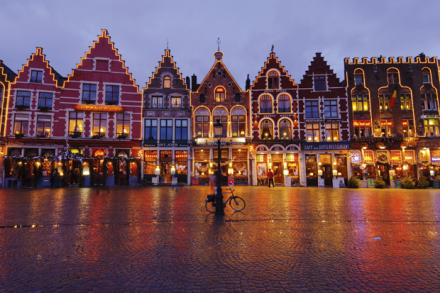
Most Belgians of my acquaintance tend to be rather disparaging about Bruges. It’s a theme park, they say, a Flemish Disneyland. Antwerp is livelier, Ghent is more authentic. A lot of its historic buildings are actually clever fakes. All of this is true, but that doesn’t stop it being one of Europe’s most beautiful cities — and an ideal destination for Christmas shopping. Given the choice between Bruges and Westfield, I know which shopping centre I’d choose. Like a lot of pretty cities, Bruges is a monument to boom and bust. Commerce paid for its ornate medieval architecture, but then the river silted up and Bruges became a backwater. Preserved by poverty, it was rediscovered by the Victorians as a romantic refuge from modern life.

The false paradise of Metroland

From our UK edition

Gaily into Ruislip Gardens runs the red electric train… Near the end of the Metropolitan Line, where London dwindles into woods and meadows, stands a Tudor manor house, built within the moat of a motte-and-bailey castle. Now a quaint museum, charting the history of the farms that once surrounded it, this modest landmark shares its name with the local Tube station, Ruislip Manor. A century after they built it, the railway that runs through here still feels out of place. There are fields on one side, suburban semis on the other. Welcome to Metroland, the bizarre no-man’s-land between town and country, created by the Metropolitan Railway, which celebrates its 150th birthday this year.

Henry van de Velde — the man who invented modernism

From our UK edition

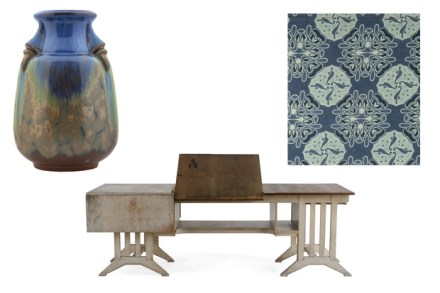
In the Musée du Cinquantenaire, a grand gallery on the green edge of Brussels, those bureaucratic Belgians are welcoming home a prodigal son. Henry van de Velde — Passion, Function, Beauty is a celebration of the 150th birthday of Belgium’s most prolific polymath, yet a lot of people here in Brussels scarcely seem to know his name. While Victor Horta is fêted as the father of Art Nouveau, his great rival, van de Velde, is frequently forgotten. It’s ironic that this prophet of modern design wasn’t honoured in his own country until he’d made his name in Germany, the nation that invaded his homeland twice in the course of his long career.

Yorkshire: England’s sculptural heartland in the north

From our UK edition

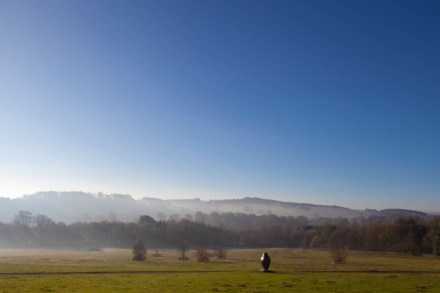
I am standing on the deserted shop floor of a Victorian mill in Wakefield, with the industrial history of Yorkshire spread out before me like a map. Down below, the River Calder, once so busy, is now a leisurely, peaceful place. Children play beside the water. There are fishermen on the banks. It’s a lot prettier than it used to be. It’s also a lot less businesslike. But among these redundant warehouses, a strange renaissance is taking place. This derelict mill reopened last month — not as a factory but as a new annex of the Hepworth, a museum that has welcomed nearly a million visitors in its first two years. Incongruously Yorkshire, a county built on hard graft, is becoming increasingly renowned as a centre of the sculptural arts.

Second city blues

From our UK edition

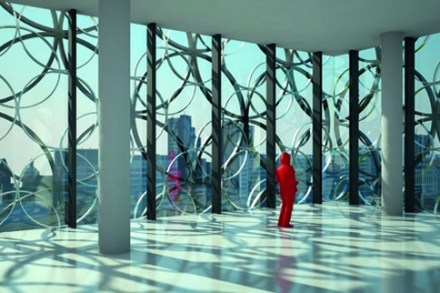
Why are clever-clever people so rude about Birmingham? Bruce Chatwin dismissed his hometown as absolutely hideous, Kenneth Tynan called his birthplace a cemetery without walls. Britain’s second city has always been belittled, not least by those who’ve left it, and now the old slights have been revived in the current debate about HS2. Never mind the pros and cons of that controversial high-speed railway — it’s the destination which really gets London’s goat. If HS2 went to Liverpool we’d be sure to mind our p’s and q’s, but Brum has always been an easy target. As Londoners never tire of telling one another, ‘Fancy forking out all that cash, just to make it a bit easier to get to Birmingham.

Notes on…Walking in the Lake District

From our UK edition

What is it about the Lake District? The weather is often filthy, the locals are famously surly (‘sup up and sod off’ reads the sign above the bar) and its lakes are dwarfed by the great waterways of the Alps. And yet I’ve been walking here more times than I can count. From childhood camping trips to grown-up get-aways, from tents and caravans to timeshares, I’ve measured out the holidays of half a lifetime in the Lakes. Its towns are humdrum, its altitudes are modest. So why do I keep coming back? For me, and countless weekend walkers like me, the main attraction of the Lake District is its artificiality. These bare fells were forested until our forebears cleared them to make fields for sheep. The sheep no longer pay their way, and tourism is taking over.

Le Corbusier was ashamed of the house he built

From our UK edition

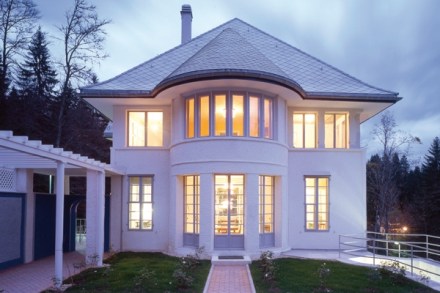
On the outskirts of La Chaux-de-Fonds, an industrial town in the Swiss Jura, stands one of the most beautiful houses I’ve seen. Elegant and understated, La Maison Blanche is the kind of house you dream of living in. Wide windows overlook a wooded valley. The rooms are bathed in silver light. The ambience is serene and timeless, more like a temple than a townhouse. You’d never guess the man who built it was the bogeyman of modern architecture — the man who began a movement that replaced terraced streets with tower blocks. In this lovely house, and the art-nouveau villas he built beside it, you can see the traditional architect Le Corbusier could have been. Le Corbusier was born here in La Chaux-de-Fonds in 1887.

Artists Open Houses: Brighton’s alternative to gallery going

From our UK edition

I’m standing in a palatial flat in one of the most beautiful squares in Brighton, in a huge whitewashed room flooded with natural light. The lucky man who lives here, Ted Davis, is showing me around. His home isn’t usually open to the public, but this month anyone can wander in. Ted is a photographer — rather a good one, in fact. His perceptive portraits adorn these walls, alongside his still lifes of wilting flowers,  and for the next four weekends his splendid apartment in Palmeira Square will become a temporary exhibition space. It’s part of an annual festival here in Brighton called Artists Open Houses, in which hundreds of local artists like Ted transform their homes into pop-up galleries. ‘It’s like hosting a party,’ he tells me.

The man behind Eric and Ernie

From our UK edition

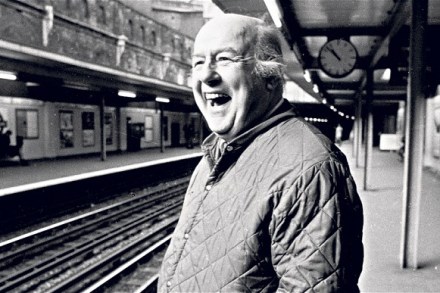
It takes a special sort of talent to turn a good act into a great one, and without John Ammonds, who died last month, aged 88, it’s quite possible that today’s couch potatoes never would have heard of Morecambe & Wise. As their BBC producer, he transformed them from jobbing comics into a national institution. The seven series he made with them still stand as the acme of Light Entertainment television. When Ammonds teamed up with Eric and Ernie, their double act was two-dimensional. Viewers liked them but they didn’t warm to them. Ammonds reconnected them with their theatrical roots, filming them on a raised stage with wings and curtain.

Wandering eye

From our UK edition

‘When Matisse dies,’ declared Picasso, ‘Chagall will be the only painter left who understands what colour really is.’ Wandering around this splendid show you can see exactly what he meant. Chagall never used colour for cheap effect, but to convey meaning and emotion. The effect of seeing so many of his works together is almost overwhelming — a symphony hung upon a wall. But these aren’t the romantic paintings of Chagall’s later years, the visions of young lovers floating over seas of flowers. These are the urgent artworks of his youth, made at a time of immense upheaval. By focusing on these early years, to the virtual exclusion of his later work, this fascinating retrospective casts Marc Chagall in an entirely different light.