William Cook

A & E just saved my son’s life. Let’s not forget how important it is

We were lucky. The ambulance came in half an hour. By then my teenage son Edward was unconscious. He’d had a headache the day before, but by the evening he seemed to be getting better – sitting on the sofa, watching telly, annoying his little sister. We’d been through the meningitis checklist on the NHS website: no rash; no stiff neck; no aversion to bright light. He ate a big supper and went to bed. In the small hours he started vomiting. We thought it was the norovirus. By dawn he was delirious. Then he stopped responding altogether. My wife and I went with Edward in the ambulance. The paramedics wired him up to all sorts of devices and drove to hospital with the siren on. When we arrived at A&E, a full team of medics was waiting for us.

Germany is shackled in the immigration debate. But Britain isn’t so must lead the way

Today Angela Merkel will meet David Cameron in Downing Street. She will tell him what she can do – and what she cannot do – to help keep Britain in the EU. Yet she might like to begin by telling him what she plans to do to keep her own people behind the EU project, for in Germany the Eurofederalist consensus is being challenged like never before. In Germany, as in Britain, the most emotive issue is immigration. In Germany, as in Britain, people are scared to discuss this issue frankly, for fear of being branded racists. And now a new movement has emerged to fill this vacuum: Patriotische Europaer Gegen die Islamisierung des Abendlandes, aka Pegida – Patriotic Europeans Against the Islamisation of the West. Who are Pegida? What do they want?

Cockfighting: the last, hidden link to Bali’s warlike past

Driving around Bali, the first thing I noticed was the big wicker baskets by the roadside. Inside each basket was a cockerel. I asked my friend Wayan why these birds were there. ‘They put them by the road to make them used to people,’ he told me. ‘Then they won’t be scared when it’s time for them to fight.’ ‘What do you mean, time to fight? A cockfight?’ He nodded. Cockfighting is a clandestine activity here. No one talks about it, but those baskets are everywhere. Cockfighting is an ancient Balinese tradition. The Indonesian government frowns on it, and the heavy gambling that goes with it (men can lose farms on a single fight), but it remains a part of daily life.

Fortune tellers, pound shops and Orville: why I love Blackpool

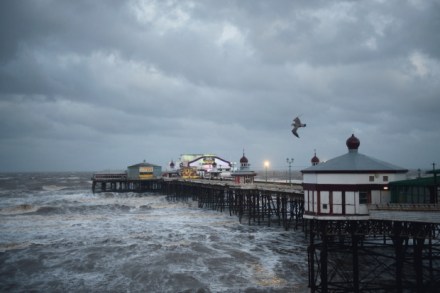
‘Jesus is the light of the world,’ reads the sign outside Blackpool’s Central Methodist Church, but all along the promenade the lights are going out. I’d returned to my favourite seaside resort to catch the end of the Illuminations, an annual attraction that brings several million visitors here every year. Since 1879, this vast canopy of fairy lights has stretched Blackpool’s summer season into autumn, flooding the seafront with ‘artificial sunshine’. But even Blackpool, with all its razzamatazz, can’t turn winter into summertime. From the Central Pier to the South Pier, the Illuminations are now all dormant. Only a modest cluster remains, between the Tower and the North Pier.

Europeans no longer fear Germany. But do the Germans still fear themselves?

In the old Death Strip between East and West Berlin, which runs through the centre of the city, there is a graveyard full of German war heroes and a few war criminals too. From the Red Baron to Reinhard Heydrich, the best and worst of the German military are buried here. There’s also a mass grave full of civilians, killed by Allied air raids, and a memorial to the 136 East Berliners who died trying to cross the Berlin Wall — which ran through this cemetery. The Death Strip is still an empty space. Germany has been marking two anniversaries this year — one a celebration, the other a painful duty. The 25th anniversary of the Mauerfall (as Germans call the fall of the Berlin Wall) is one of those rare events in German history about which they can feel unequivocally happy.

German history is uniquely awful: that’s what makes it so engrossing

As I grew up half German in England in the 1970s, my German heritage was confined to the few curios my grandmother had brought here after the war: a signet ring, a cigarette case, a scrapbook with some missing pages.... She’d changed her name, she’d changed my father’s name, the nation she came from lay in ruins — but from this salvaged bric-à-brac I pieced together the story of my father’s German family, a story they’d done their best to bury in the country they’d left behind. Through a range of objects, large and small, from the Gutenberg Bible to the Reichstag, the director of the British Museum has done much the same thing for Germany as a whole.

First look at the new Dad’s Army

Back in the last century, when people still watched television rather than computers, I fulfilled the lifetime ambition of every comedy nerd when I finally got to meet David Croft and Jimmy Perry. Whoever said ‘don’t meet your heroes’ clearly never met any sitcom writers. I was working on a BBC series about the history of British sitcom – since eclipsed by countless cheap clip shows, but actually quite a novelty back then – and though the actors were interesting, it was the writers who really shone. Like Galton & Simpson (Hancock, Steptoe) and Clement & La Frenais (Porridge, The Likely Lads), Croft & Perry were enchanting.

A voyage along my grandfather’s coastline

My grandfather was born in a huge white house on the Baltic coast of eastern Germany, and ever since I was a child I’ve been fascinated by this enigmatic tideless sea. I’ve travelled along its southern shore, from Germany to Estonia, but I’d always wanted to sail across it, and last month, at last, I did, aboard the Queen Victoria on Cunard’s Royal Viking Adventure. I joined the cruise in Stockholm (the other passengers had sailed here from Southampton). Why had no one ever told me what a stunning city this is? Perched on a little island, the old town is perfectly preserved — a cluster of cobbled alleys, patrolled by blond, athletic Swedes. As we set sail, the view became even better.

Tate Modern’s latest show feels like it’s from another planet

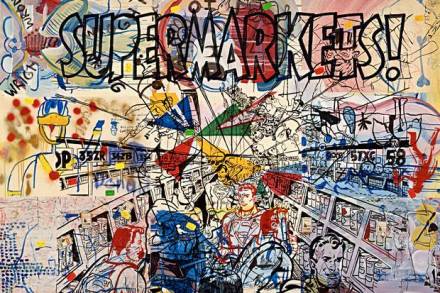
‘Some day we shall no longer need pictures: we shall just be happy.’ — Sigmar Polke and Gerhard Richter, 1966 Who says Germans have no sense of humour? OK, so their writers tend to be a pretty gloomy bunch — but like loads of other German artists, from Otto Dix to Georg Baselitz, Sigmar Polke’s paintings are illuminated by a dry, mordant wit. It’s encapsulated in an early doodle called ‘Mona Lisa’ (1963), which hangs near the entrance to this hugely enjoyable retrospective — the first comprehensive survey of his eclectic, eccentric work. ‘Original value $1,000,000,’ reads the handwritten caption. ‘Now only 99c, including frame.’ That Polke’s pictures now sell for many millions (with or without frames) adds another layer of meaning to this student jape.

Chasing the shadows of slavery in Barbados

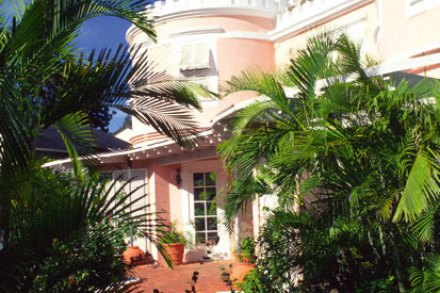
Driving up the west coast, from Bridge-town to Speightstown, you soon see why people around here call this the Platinum Coast. It’s not just the colour of the coral sand — it’s the colour of the foreign money. These seafront lots sell for millions, prices few Bajans can afford. Yet once you head inland you encounter another country, a land of chattel houses and plantation houses — remnants of the twin trades that shaped this island, slaves and sugar. Built on borrowed land, the first chattel houses were purely practical: basic wooden bungalows, easy to dismantle and put up elsewhere. Palatial plantation houses aped their British antecedents — Georgian and Jacobean mansions, impractically relocated.

Have scientists really found proof of life after death?

When I finally reached the hospital, my grandma had already lost consciousness. As soon as I saw her, I could tell she wouldn’t wake up again. We all stood around and waited, and hoped it wouldn’t take too long. I sat on the bed and held her hand. Thankfully, it only took an hour or so. Eventually, the nurse came in and checked her pulse and told us she was dead. Except she wasn’t. Not exactly. The nurse was right – her heart had stopped – but from the way she held my hand, I could tell she was still there. I didn’t say anything. I knew she’d be gone soon enough. For a few more minutes I kept her company, stroking her hand while everyone else fussed around us. It was an extraordinary sensation, one of the oddest moments of my life.

Liechtenstein is utterly ridiculous – but that’s a big part of its appeal

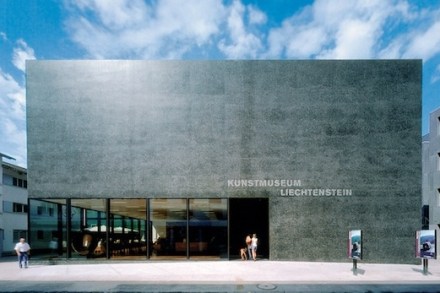
It’s official: Europe’s least visited country is unloved little Liechtenstein. Last year, a mere 60,000 tourists travelled to this absurd Alpine principality. For discerning Spectator readers, this is great news. Liechtenstein is charming, its absurdities are enchanting, and it boasts one of the most stylish (and least crowded) modern art museums in Europe. Nothing spoils a sightseeing trip so much as lots of other sightseers. Spend a weekend in Liechtenstein - only two hours by train from Zurich - and you and your significant other should have the entire country (virtually) to yourselves. Liechtenstein is utterly ridiculous, but that’s a big part of its appeal. One of the smallest countries in Europe, it’s only 24km from end to end and barely 12km across.

The false paradise of Metroland | 29 August 2014

Gaily into Ruislip Gardens runs the red electric train… Near the end of the Metropolitan Line, where London dwindles into woods and meadows, stands a Tudor manor house, built within the moat of a motte-and-bailey castle. Now a quaint museum, charting the history of the farms that once surrounded it, this modest landmark shares its name with the local Tube station, Ruislip Manor. A century after they built it, the railway that runs through here still feels out of place. There are fields on one side, suburban semis on the other. Welcome to Metroland, the bizarre no-man’s-land between town and country, created by the Metropolitan Railway, which celebrates its 150th birthday this year.

The enigma of Werner Herzog

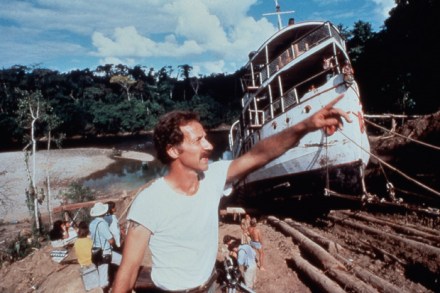
Strange things happen to Werner Herzog — almost as strange as the things that happen in his haunting, hypnotic films. In 1971, while making a movie in Peru, he was bumped off a flight that subsequently crashed into the jungle. Years later, he made a moving film about that disaster’s sole survivor. In 2006, while filming an interview with the BBC in Los Angeles, he was shot in the belly by some nutter with a small calibre rifle. Most film-makers would have been turned to jelly by this terrifying interruption; Herzog simply laughed it off, cheerfully dropping his trousers to reveal a bleeding bullet wound, and a natty pair of Paisley boxer shorts. ‘He has become a catalyst for extraordinary events,’ says his British producer Andre Singer.

Robin Williams in London

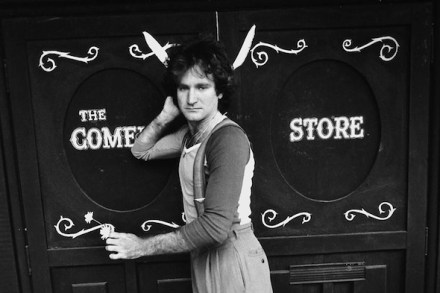
In 2001 I wrote a book called The Comedy Store (still available in some good bookshops – and quite a lot of bad ones) about the London comedy club that kick-started modern British comedy. The book was a bit of a mixed bag, but the best bits were where I shut up and let these comics talk about each other. And the comic they talked about most of all was Robin Williams. Their tales of seeing him perform for the sheer love of it, in front a few hundred tipsy punters, show what a great comic we’ve all lost. Robin Williams first played the Comedy Store in 1980, on a trip to London to dub the voice-over for Robert Altman's Popeye. The compere that evening was Alexei Sayle.

The loveliness of Lucerne

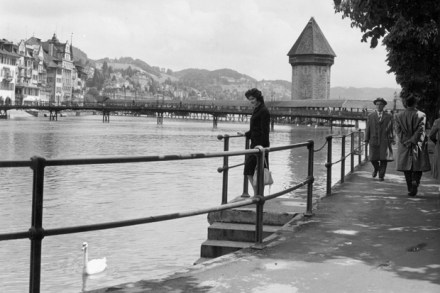
When Queen Victoria came here for her summer holidays, Lucerne was already a bustling tourist destination. Today it’s just as popular. It’s easy to see why. When you emerge from the busy train station (Lucerne is far too civilised to have an airport), Switzerland’s loveliest lake lies before you, framed by a ring of mountains. The forecourt doubles as a quay. If you like looking at the Alps but can’t be bothered to trek up them, Lucerne will suit you perfectly. You can sit in a quayside café and gaze at them all day. Lucerne’s biggest draw is its summer music festival (15 August to 14 September this year) which brings together Europe’s greatest orchestras.

How Napoleon won at Waterloo

In a one-horse town called Hestrud, on the Franco-Belgian border, there’s a monument which encapsulates Europe’s enduring fascination with Napoleon. The story carved upon this plinth is more like poetry than reportage. As Napoleon passed through here, on his way to Waterloo, he struck up a conversation with a bold little boy called Cyprien Joseph Charlet. ‘You think victory will always follow you, but it always disappears,’ this audacious lad told him, apparently. ‘If I were you, I’d stay at home. Tomorrow your star will surely dim.’ Well, that’s the story, anyway. Fact or fiction, or a bit of both? In a way, it hardly matters.

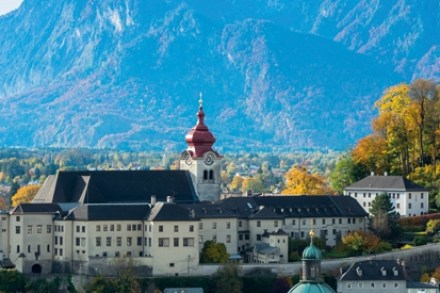
Salzburg – more than just a ridiculously pretty place

Salzburg is so ridiculously pretty, it’s sometimes hard to take it seriously. Standing on the ramparts of its knights-in-armour castle, surrounded by snowcapped mountains, admiring the delicate cluster of domes and spires and turrets below, you can’t help thinking, ‘Is this for real?’ Well, yes and no. Salzburg is absurdly beautiful — the baroque architecture, the Alpine scenery — but what’s most intriguing is its sense of theatre, the way it’s adapted to fit the fantasies of millions of foreign visitors like me. Salzburg’s biggest draw is Mozart — a wunderkind who personifies the city’s clever blend of fact and fiction.

Bill Forsyth interview: ‘If we hadn’t made a go of it, my plan was just to disappear.’

I watched the new DVD of Gregory’s Girl on the train from London up to Edinburgh. I hadn’t seen Bill Forsyth’s school-yard comedy in more than 30 years. Incredibly, it hasn’t dated in the slightest. When I saw it in the cinema, in 1981, as an acne-ridden adolescent, this tender romance was a revelation — for me, and millions like me. Funny yet heartfelt, it was that rare and precious thing — a rite of passage movie that was neither patronising nor pretentious. Half a lifetime later, Gregory’s Girl still rings true. A reticent, retiring man, Forsyth doesn’t do many interviews, but to promote this new DVD he’s agreed to meet amid the serene splendour of Edinburgh’s Museum of Modern Art.

I can’t recall a time when the destruction of a structure made so many people so distressed

It really is rotten luck, and also cruelly ironic. Just as Glasgow was done debating how best to demolish its hideous Red Road flats, its most beautiful building, Glasgow School of Art, goes up in smoke. No one hurt, apparently, which is a relief, but an awful lot of artwork lost, a unique archive and a precious library. However it’s the actual building which everyone seems most upset about. Indeed, I can’t recall a time when the destruction of a single structure made so many people so distressed. It shows we can love or hate a building, like a person. It shows architecture really matters. So why does Charles Rennie Mackintosh’s masterpiece matter so much?