William Boyd

A book signing – or a mental breakdown?

From our UK edition

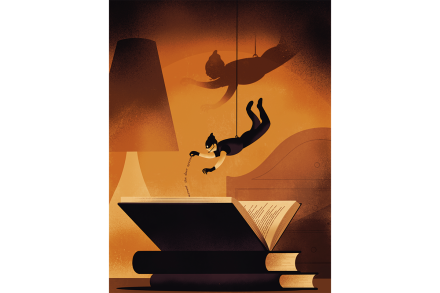
The late John Updike once wrote an amusing article about signing books. This wasn’t at some literary event with a few dozen fans queueing – no, it was vastly more daunting. An American book club had taken one of Updike’s novels for its Book of the Month and asked him to sign 25,000 copies – guaranteed sales, of course, hard to refuse. They sweetened the pill by flying him to a Caribbean island for a couple of weeks and putting him up in a beachside bungalow. There, a team of assistants brought him 100 books at a time and he would sign away, three hours in the morning and three hours in the afternoon. Updike was very droll about the discombobulating effects of signing your own name thousands upon thousands of times. It became an almost existential crisis.

Inside Nigel’s gang, my day as a ‘missing person’ & how to save James Bond

From our UK edition

38 min listen

This week: Nigel’s gang – Reform’s plan for power.Look at any opinion survey or poll, and it’s clear that Reform is hard to dismiss, write Katy Balls and James Heale. Yet surprisingly little is known about the main players behind the scenes who make up Nigel Farage’s new gang. There are ‘the lifers’ – Dan Jukes and ‘Posh George’ Cottrell. Then there are the Tory defectors, trained by Richard Murphy, a valued CCHQ veteran, who is described as a ‘secret weapon’. The most curious new additions are the Gen Zers, who include Tucker Carlson’s nephew, Charles Carlson, and Jack Anderton, known as ‘the Matrix’. Katy and James joined the podcast to lift the lid on Nigel Farage’s inner circle.

The lure of the spy novel

From our UK edition

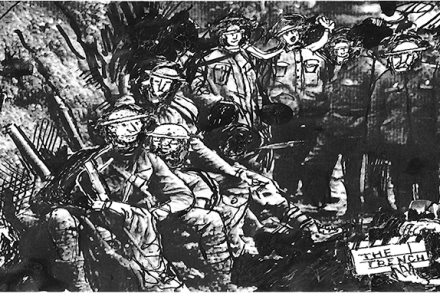
Anniversaries. Back in mid-December 1998, 26 years ago to the month, we wrapped my first (and probably only) feature film as a director, The Trench. I always think about the film on 11 November, because during the shoot we observed a uniquely different minute’s silence in the labyrinth of trenches we had constructed on a soundstage at Bray Studios in Berkshire. The film follows a squad of young soldiers as they wait, over two fraught days in 1916, for the Battle of the Somme to begin. We paused filming at 11 a.m. and fell silent. I was standing in the frontline trench with a dozen young actors who were all in their totally authentic first world war uniforms, Lee-Enfield rifles in their hands. Time travel.

Christmas Short Story: The Road Not Travelled

From our UK edition

Today Meredith Swann is driving in her new car under the M40 flyover checking on her GPS system to see if she’s following the flowing arrows correctly. She has switched off the woman’s voice — ‘Turn left in 200 yards’ — because it reminds her uncannily of her mother, all calm, quiet advice with a subtext of disapproval. She turns and turns again. Now she is on a road of towering glass office blocks. Is she lost? No, there it is — Sainsbury’s Homebase. She parks, steps out of her car and pulls down her T-shirt to cover the neat dome of her pregnant belly. The car magically locks itself as she walks away, its lights giving her a knowing wink of acknowledgement. In the vast Homebase she is daunted and diminished by the size of the place.

The ups and downs of making Chaplin

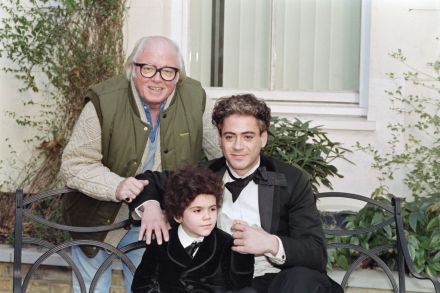
The commission Thirty-four years ago, in the summer of 1990, I had a call from my Hollywood agent, Geoffrey Sanford. Lord Richard Attenborough, the film director, would like to meet me to discuss a project. I said “Yes, please,” instantly. The timing was good — I had delivered my fifth novel Brazzaville Beach to my publishers and was awaiting its autumn publication. I met Dickie, as everyone called him, with his co-producer and right-hand woman, Diana Carter, in Blake’s Hotel in west London. The subject of the meeting was a proposed film of the life of Charlie Chaplin, a passion project of Dickie’s. But there was a complication. A script had already been written by Dickie’s old friend, the actor-director-producer Bryan Forbes.

Chaplin

Martin Amis and the hunters’ lunch

From our UK edition

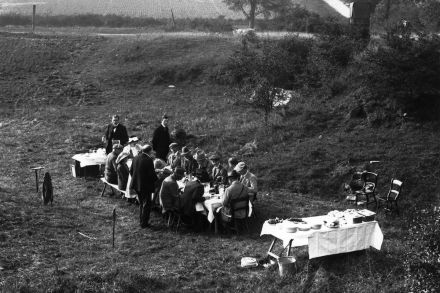
Dordogne, France Down here in southwest France, the ripple effect of the war in Ukraine has become oddly visible. Normally the fields around our house are planted with sunflowers and maize – but not this year. Wheat and barley stretch to the horizon. As you drive around, the roadside fields all bear witness to the marked change. The faltering supply of grain from Ukraine has made French farmers wake up. Grains are the new cash crops and for this summer, at least, the Dordogne will look subtly different. The great summer rite of passage here is the répas des chasseurs – the hunters’ lunch The awful news of the death of Martin Amis in May prompted a rush of memories for me. Extraordinarily, I first met him when I was 17, in Paris, in 1969.

Evelyn Waugh’s sincerest form of flattery

T.S. Eliot once made the significant point, in an essay on Philip Massinger, that “Immature poets imitate; mature poets steal; bad poets deface what they take, and good poets make it into something better, or at least something different.” Eliot knew exactly what he was talking about (himself). However, change “poets” to “novelists” and the same pertinence applies. In fact, this wholesale, covert purloining may be true of all artists in all ages in all the seven arts. Let’s start with some backstory. Evelyn Waugh (1903-66), as they say, needs no introduction. William Gerhardie (1895-1977) is almost wholly forgotten today, but in the 1920s he was the luminous young wunderkind of English literature — a kind of Donna Tartt or Sally Rooney of his times.

gerhardie

What the Russians thought of James Bond in the 1960s

From our UK edition

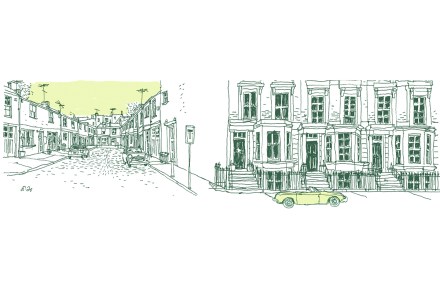
Last year I wrote a piece about James Bond for the ‘Freelance’ column of the Times Literary Supplement. All true Bond lovers — of the novels, I mean — know that he lived in a ‘comfortable flat in a plane-tree’d square off the King’s Road’, as Ian Fleming described it in Moonraker. Further internal evidence in Thunderball indubitably established that it was Wellington Square — but there was considerable mystery and doubt about exactly which house contained the Bond apartment. In my article I claimed to have identified it as No. 25, based on a certain amount of sleuthing and, I thought, convincing circumstantial evidence. No.

The Road Not Traveled

Meredith Swann is driving in her new car under the M40 flyover, checking on her GPS system to see if she’s following the flowing arrows correctly. She has switched off the woman’s voice — “Turn left in 200 yards” — because it reminds her uncannily of her mother, all calm, quiet advice with a subtext of disapproval. She turns and turns again. Now she is on a road of towering glass office blocks. Is she lost? No, there it is — Sainsbury’s Homebase. She parks, steps out of her car and pulls down her T-shirt to cover the neat dome of her pregnant belly. The car magically locks itself as she walks away, its lights giving her a knowing wink of acknowledgment. In the vast Homebase she is daunted and diminished by the size of the place.

road traveled meredith

William Boyd on the miraculous snaps of boy genius Jacques Henri Lartigue

From our UK edition

What must it be like for an artist to achieve success only at the end of a long, relatively ignored career? The word ‘bittersweet’ seems particularly apt. Yet, late recognition is better, I suppose, than dying in oblivion like Vincent van Gogh, Franz Kafka or John Kennedy Toole. One of my favourite photographers, Jacques Henri Lartigue (1894–1986), did manage to savour the sweet smell of success in his old age. Lartigue’s late flowering was down to New York’s Museum of Modern Art and its then director of photography, John Szarkowski. There’s a very good argument to be made that during Szarkowski’s tenure at MoMA (1962–91) his shows transformed 20th-century photography.

The joy of a French Christmas

From our UK edition

I am heading off to rural south-west France for Christmas. This is the 25th Christmas running that I’ll have spent in France. One of the attractions is that Christmas is a one-day holiday there. Everyone is back at work on Boxing Day. You have a large meal with your family and that’s it. I have no regrets about missing the weeks-long commercial bacchanalia that we experience here in Britain. In our local village in France a few tinsel-draped pine branches are propped against walls — the only sign that a global fête nationale is taking place. Church bells ring for midnight mass. Then it’s over and the pine branches are swiftly removed. Normal life resumes.

Writer’s Notebook

From our UK edition

Just back from a few days in Rome — the perfect small metropolis for ‘street-haunting’, as Cyril Connolly described his love of strolling through cities. I first went to Rome in 1976, aiming to interview — for my university magazine — three of the writers who lived there or thereabouts at the time. I duly wrote to Anthony Burgess, Gore Vidal and Muriel Spark. All of them politely turned me down but I went anyway and have revisited the city many times. In fact, in the way life sometimes arranges these things, I later met all three writers and even came to know Burgess and Vidal a bit.

A is for Artist, D is for Dealers

From our UK edition

‘S is for Spoof.’ There it is on page 86, a full-page reproduction of a Nat Tate drawing, sold at Sotheby’s in 2011 for £6,500. A sum which, it is added, with all due respect to [William] Boyd’s ability as an artist, probably proves the point about promotion being more important than talent. It’s always something of a shock to encounter in a serious book the artist I invented and it’s a measure of the huge frame of reference encompassed in Breakfast at Sotheby’s that even Nat Tate and his drawing can make a salutary appearance. Philip Hook has realised and brilliantly exploited the peculiar advantages of the A-Z format. Using the alphabet as a template forces you to think laterally.

Diary – 31 March 2012

From our UK edition

Vienna. I’m here on the first leg of a short three-city tour for my new novel — Eine Grosse Zeit in German. The weather is sensational, warm and sunny, and even though we’re still firmly in March and there isn’t a leaf on a tree, Vienna’s cafés have their tables out on the sidewalk wherever possible. I’m staying in the incomparable Hotel Sacher — which probably serves the best breakfast on the planet and they cook your scrambled eggs in front of you while you wait. After a couple of interviews I have something of a gap in my schedule and decide to walk to my next appointment with a TV programme which is being filmed in the Sigmund Freud Museum, formerly Freud’s apartment and consulting rooms at no. 19, Bergasse.

Christmas short story: The Dreams of Bethany Mellmoth

From our UK edition

The Dreams of Bethany Mellmoth, by William Boyd Illustrated by Carolyn Gowdy Bethany Mellmoth is in a quandary — and she doesn’t like quandaries. It’s December 20th. Five days until Christmas. The fact that this is a Christmas quandary makes it no more bearable. In truth she thinks that this fact makes it more unbearable. Her mother and father — nearly two decades divorced — both demand her presence on Christmas Day. The quandary will be resolved — Bethany is good at resolving things — but she hasn’t quite figured out how — yet. Her father — Zane Mellmoth — texted her from his home in California. ‘Coming to London. Must see you Christmas Day lunch. Big surprise. Lots to celebrate.

Humiliation

From our UK edition

London is the first city of humiliation: London does it better than anywhere else. I should know, its latest victim. First my divorce — you would think, what with war in Korea and the death of King George — that the Times would have more newsworthy events to report than my decree absolute from my wife of 18 months. ‘Novelist Yves Hill divorces, confesses to adultery’. Of course I confessed — only to spare myself the further wounds, the death by a thousand cuts, of admitting to Felicity’s adultery with that zero, that nul, that parvenu nonentity Gerald Laing-Turner.

The artist as a middle-aged man

From our UK edition

It’s perhaps worth reminding ourselves at the outset, as we reach the third volume of John Richardson’s stupendous biography of Picasso, exactly where we are. Picasso died in April 1973, aged 91, and it comes as something of a shock to realise that at the end of this volume, in 1932, he’s a middle-aged man entering his fifties: yet he had another 40 years to go. Is it this that daunts us when we try to weigh up the man and his work — his longevity, his century-straddling superhuman productivity? When we think of the kind of artist he was, or even the kind of genius he was, Archilochus’s old adage comes to mind — particularly useful when we come face to face with prodigious gifts: ‘The fox knows many things; the hedgehog knows one big thing.

All at sea

From our UK edition

On 2 July 1816 the French frigate Medusa, en route for Senegal, ran aground on the dreaded Arguin sandbank off the west coast of Africa. Incompetent seamanship had landed the vessel there and attempts to refloat the Medusa over the next couple of days proved to be in vain. The decision was therefore taken to press on for St Louis in Senegal, a couple of hundred miles to the south, in various of the ship’s boats and barges but, as they couldn’t carry all the passengers and crew, a large raft was constructed, from spars and timber lashed together, which would be towed behind four of the larger boats. The raft was substantial — 20 metres long by 7 wide — had a mast with a sail and even a small raised deck at the centre.

Tough is the night

From our UK edition

‘Mostly we authors repeat ourselves,’ Scott Fitzgerald observed late in his life. ‘We learn our trade, well or less well, and we tell our two or three stories … as long as people will listen.’ There’s a lot of truth in this remark (though some authors have more than two or three stories to tell), but in the case of the American writer Richard Yates, subject of this fascinating biography, there was only one story that obsessed him and Yates, essentially, told it again and again in both his long and short fiction whether people were listening or not.