William Atkinson

William Atkinson

William Atkinson is The Spectator's assistant content editor

Kemi and the Crewkerne debacle

Kemi Badenoch found herself in warmer water this week after backing a former neo-Nazi to stand as a local council candidate, before he subsequently pulled out – he has now been appointed as an anti-extremism advisor to the Conservative Party's Culture and Integration Commission. Natasha Feroze is joined by The Spectator's William Atkinson, and the former Editor of Conservative Home, Paul Goodman, to reflect on the story, and the wider Keminisation of the Conservative Party, as commented on by James Heale in this week's political column.

Kemi's Tory refurbishment – and the Crewkerne debacle

Puttshack has ruined crazy golf 

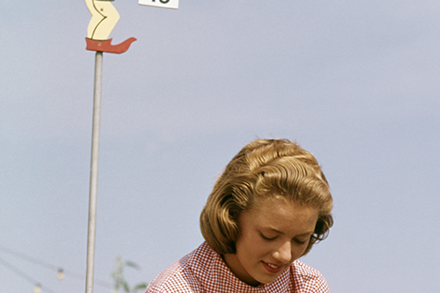
It is a great family disappointment that I could never get into golf. My late grandfather would become so engrossed watching the Masters that he used to light one cigarette off the other. But it was always unfathomable to me. Attempts to play at school were less a good walk spoiled and more a Friday afternoon wasted. Yet my antipathy has a glorious exception: there are few things in life I enjoy more than a round of crazy golf. For years I have toured the nation’s courses, putting past plastic dinosaurs and animatronic windmills, Slush Puppy and scorecard in hand. ‘Proper’ golf is difficult. Crazy golf reduces it to the essentials: hole, putter and Newtonian physics, the odd stegosaurus notwithstanding.

Reading isn’t dead

Do you remember the first time? Picking them out, not knowing what to expect, but compelled by an attraction you couldn’t quite define; fumbling awkwardly, not entirely sure how to get into it but finding your way; discovering a pleasure you’d never yet known, and were desperate to find again. I am, of course, discussing reading for pleasure – a habit that all of us, one hopes, have long since gotten into. There must have been a point at which Young Billy went from his parents trying to force him to read books about trains and tractors to him doing so of his own volition. Or perhaps the transition is smooth, unthinking.

Andy Burnham is a joke

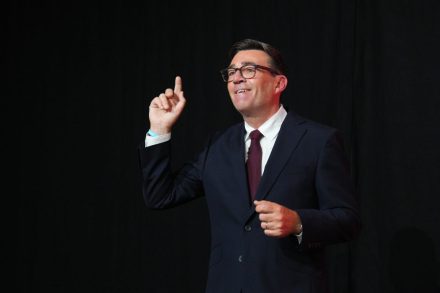
Can I shock you? I like Andy Burnham. Not in a gay way. More that, when he comes on the TV, I don’t throw a sock at him. As hard as I try, I can’t bring myself to hate our new Prime Minister. He seems a nice bloke, a committed family man, sincere in his desire to house the homeless, bring the country together, and promote fewer bad things and more good things. I also like the Smiths, cricket, and pubs; if we went for a pint, we’d probably get along. Yet premiers are not judged by their fondness for Scampi Fries. More’s the pity; them's the breaks. An algorithmic parody of what a Northern Prime Minister should be like - Andy Capp with the nuclear code But I do struggle to take Burnham seriously.

The sheer awfulness of CPAC GB

Readers, I have been to a few political conferences in my time. But none of them were as empty, miserable, or downright weird as CPAC GB. Having heard that Liz Truss was bringing the American conservative jamboree across the Atlantic, I felt obliged to go, and comforted myself that there would at least be a bar to flee to if it all got too grotesque. But there was no bar. Or at least there wasn't until I discovered the secret pathway from the Intercontinental Hotel that emerged next to the O2's Wetherspoons. Until then, being cursed with vision, hearing and sanity meant enduring an event that made Truss's premiership look like a model of tact and foresight.

England and Norway should unite

Tonight, Erling Haaland and Harry Kane should be playing together, not against each other. Partially because Haaland is a Yorkshireman, born in Leeds, and this Nordic stuff is just an affectation, but also because England and Norway should not be different countries. With our combined control over the North Sea, we’d have fish and oil beyond our wildest dreams Back in 1066, as one is reminded by the big French cloth now sojourning at the British Museum, history took a wrong turning. Harald Hardrada should have bested Harold Godwinson at Stamford Bridge. Had he then stuffed Billie the Conqueror down in Hastings, a millennium of Anglo-Norwegian unity could and should have beckoned.

Put Paul Dacre in the Lords

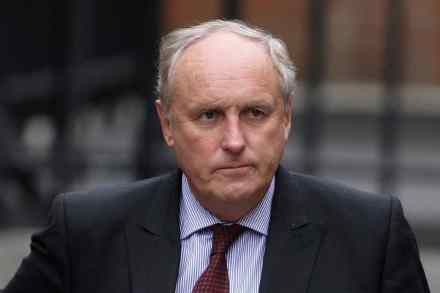
For those us who dabble in journalism, it is a constant effort to make our prose as engaging, punchy, and robust as our limited vocabularies can manage. It is thus utterly refreshing and deeply imposing to be reminded of how best to do it by a master of their craft. Exhibit A: Paul Dacre’s statement following Prince Harry’s loss in court yesterday. Read it and grin. Dacre and his publications stood for people like us: ordinary suburban Brits ‘There isn’t a laundry in the cosmos big enough to wash all the dirty linen he has aired about his own family’. ‘I feel sorry for the way a confused and angry young man has been drawn into this case’. This ‘trumped-up action’ raises ‘profoundly disturbing questions about the conduct of elements of the legal profession’.

Nigel Farage rage quits

13 min listen

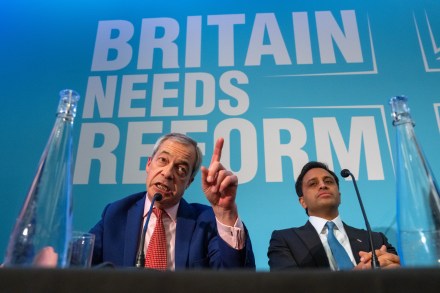
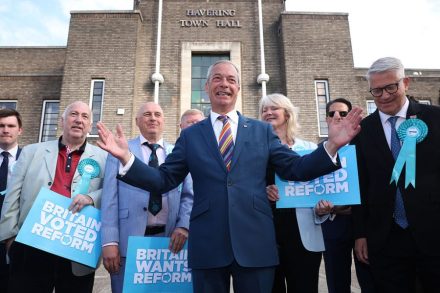
Nigel Farage has resigned as an MP to force a by-election in Clacton, where he intends to stand again. It comes as scrutiny mounts over Reform UK’s funding, the £5 million gift Farage received from the businessman Christopher Harborne and his association with the convicted criminal George Cottrell. So rather than wait for a ruling from the parliamentary standards commissioner, Farage will be out on the doorsteps in Clacton, fighting what he is branding a ‘people vs the establishment’ referendum. It is a risky strategy, but one that plays to Farage’s strengths as a campaigner. Will Labour and the Tories call his bluff and leave him with egg on his face? Or should we prepare for the by-election of the ages? Noa Hoffman discusses the story with James Heale and William Atkinson.

Nigel Farage rage quits

A snap election need not be a disaster for Reform

We live in a time of ifs and wills. If Reform and Restore split the right-wing vote in Makerfield, will Andy Burnham win this Thursday’s by-election? If he does re-enter the Commons, will he challenge Keir Starmer for Labour’s leadership? If he does so, will it be a contest or a coronation? If Burnham wins, will he then call an election? And if he does so, will Labour win it? I cannot go inside Burnham’s head; as Lara Brown has highlighted, there isn’t much in it, except the Happy Mondays. But I can read polls. The two hypotheticals that have been done with Burnham give Labour a slim lead. In our current era of multi-party politics, that could be enough to eke out a slim majority or at least to be the largest party in a hung parliament capable of cobbling together a government.

My love for black and white birds 

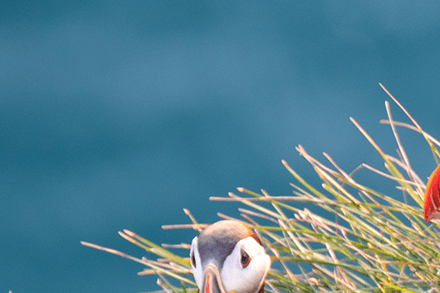
All my life I have been obsessed by black and white birds. Magpies are my tormentors, my morning omens of whether my day will be worthwhile or miserable. Penguins are my salvation. When I’m a little melancholy, I pop along to London Zoo to read them poetry. In my experience, they enjoy The Wasteland. There is another black and white bird that I have long found appealing: the puffin. My attempts to spot them, however, have been in vain. On a school geography field trip to the far north, I managed to see Iceland’s ugliest dog but no puffins. There seemed to be a family curse. My uncle was once booked a birthday trip to Puffin Island, off Anglesey, only to discover they’d all flown away. But then I blagged a trip to Shetland.

Will the Tories win the Aberdeen South by-election?

For all of the squabbling between Reform and Restore, the Right’s best chance at a by-election win on 18 June may not be in Makerfield, but 300-odd miles further north – in Aberdeen. The beneficiary wouldn’t be Nigel Farage or Rupert Lowe, but Kemi Badenoch’s Conservatives. The Tory candidate is now ‘quietly confident’ It’s unsurprising that this contest has been largely overlooked. My Westminster colleagues treat the suburbs of Manchester as being almost unfathomably distant, so the North Sea coast seems like an alien planet. But Aberdeen is also a city used to being ignored. According to the Centre for Cities, between 2010 and 2020, household incomes in the city fell by almost 7 per cent; between 2010 and 2023, it was one of only two cities in the UK to lose jobs.

William Atkinson, James Delingpole, Daisy Dunn & Margaret Mitchell

30 min listen

On this week’s Spectator Out Loud: William Atkinson sends his dispatch from the Shetland Islands; James Delingpole remembers Malcolm, his ‘gloriously unfiltered’ father; Daisy Dunn reviews Mary Beard’s Talking Classics; and Margaret Mitchell explores corporate dread and the institutional gothic. Produced and presented by Patrick Gibbons.

William Atkinson, James Delingpole, Daisy Dunn & Margaret Mitchell

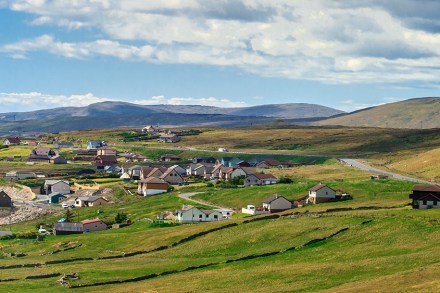
‘Do you know the local MP?’ ‘Aye, she runs the sauna’: my Shetland dispatch

The Shetland Islands The SNP have had better weeks. It’s strange to think that it was only this month that the party won a staggering fifth term in office, despite independence being no closer, and a record of failure on everything from education to drug deaths. Perhaps the most remarkable result for the SNP leader John Swinney was the election of Hannah Mary Goodlad in the Shetland Islands. Since 1950, this was the first time these islands had voted for someone other than the Liberals or Lib Dems. Goodlad triumphed after a vigorous campaign featuring windswept social media videos and three visits from Swinney; before her election, she ran an outdoor sauna business.

Make the fez great again

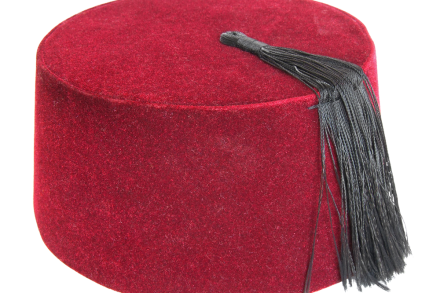
Ireturned from a recent holiday to Morocco with three mementos: a bright red pair of swimming trunks (teenager-sized; the largest the supermarket had), a bright red nose (thanks to my unscientific aversion to sun cream) and a bright red fez.  I’ve always wanted to own a fez and since purchasing it in a Marrakesh souk – ‘For you, sir, special price’ – I have been besotted with it. I’ve worn it on the Tube, to a pub quiz and around the Spectator offices, to variable enthusiasm from colleagues. As far as practicality goes, it is a useless hat. It  doesn’t keep the sun off. Its finest Moroccan cardboard will wilt in its first brush with the rain. But that won’t keep it off my head.

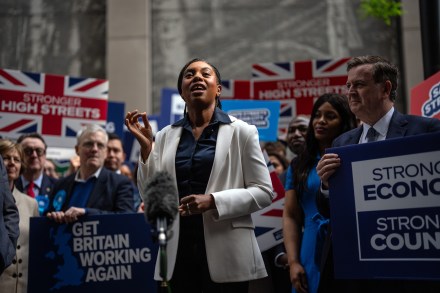
Badenoch is the perfect Tory leader

Plenty of narratives can be pulled out of last Thursday’s elections. Labour’s shattered hold over its Northern and Welsh heartlands; the imperviousness of Scottish voters to the inadequacies of SNP rule; the onward march of Reform; the continuing irrelevance of the Lib Dems; the foaming of the River Tiber heralded by sectarian success. But one that cannot – if you still want to be able to look yourself in the eye in the morning mirror – is that they were good for the Conservatives. Trying to turn these results into a victory only leaves Badenoch looking like Comical Kemi Kemi Badenoch was out in front of the cameras early, surrounded by beaming activists, heralding her party’s success in taking back Westminster from Labour.

We can still save Prince Harry

‘It won’t last,’ my schoolfriend Albert told me, as we staggered down Embankment one summer evening in 2018, a few pints into his birthday pub crawl. I wasn’t sure as to what he was referring. The evening twilight? His youthful good looks? Our ability to walk in a straight line? He expanded: ‘Harry and Meghan. She’s not right for him. They’ll be divorced within five years. Just you wait.’ Then he burped. I was surprised by Albert’s comments. I, like tens of millions of other viewers, had been taken in by the royal wedding weeks before. Yes, the presence of Oprah Winfrey and an over-enthusiastic American preacher had been a little gauche.

Why Starmer must stay

I have little interest in what Keir Starmer will say in the Commons later today. I’ve only been in political journalism for four years, and I’m already onto the fall of my fourth prime minister. The death drawls of a premiership have a familiar and tedious air; whatever Starmer says about l’affaire Mandelson, the original sin was appointing an old chum of the world’s most famous nonce as our man in Washington. The exact details of who knew what when are secondary to that mistake. The Prime Minister’s speech will allow for various itches to be scratched.

School dinners are glorious

I don’t much miss being a teacher. A pathological dislike of teenage boys, a congenital inability to remember historical facts and an unwillingness to spend my spare moments lesson-planning rather than go to the pub meant that a brief career diversion to pay off my overdraft did not become a lifelong vocation. But there is one thing I do hanker for, that makes me briefly wish I was back in the classroom: the daily delight of school dinners. After four hours of trying to wrangle the Year 10s into memorising the membership of the League of Nations, sitting down for a steaming hot plate of fish, chips and jam roly-poly was a godsend. It was a little patch of civilisation between shepherding the droogs and staring at PowerPoints.

Is Britain losing its sense of fairness?

49 min listen

Has Britain become a freeloader’s paradise, asks the Spectator’s economics editor Michael Simmons in our cover piece this week. Michael analyses ‘the benefits of benefits’, at a time when Britain’s welfare bill is burgeoning and most households are struggling with cost of living. For example, while a family of four can expect to pay £111 to visit the Tower of London, that is just £4 total on Universal Credit (UC), and for London Zoo it is £108 compared to £26. Michael is not arguing against the idea of helping those in need, but pointing out that – as the benefits bill continues to increase – this is another case of governments prioritising ‘welfare over work’ and ultimately squeezing the working poor.

Is Britain losing its sense of fairness?

Is time up for Viktor Orban?

For a country of ten million people that spent most of the 20th century occupied and impoverished, Hungary today is thriving. This, in the eyes of his supporters, is down to the 16-year rule of Viktor Orban. Hungary’s Prime Minister has, to use his phrasing, aimed to create an ‘illiberal democracy’. He has reformed the country’s judiciary, given tax breaks to mothers to increase the birth rate and zealously resisted the EU’s refugee policies. The last is illustrated by the 140-mile fence along the Serbian border constructed during the 2015 migration crisis. Proud border guards tell you that 1.1 million migrants have been kept out in a decade. Nevertheless, Orban faces his toughest election yet when Hungarians go to the polls this Sunday.