Victoria Lane

Savannah

From our UK edition

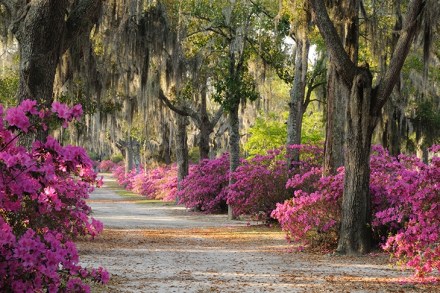
Savannah GA is supposed to have lots of ghosts, but I’d forgotten that. It was an April morning and sunlight filtered through the Spanish moss. As I arrived at Wright Square, someone fell into step with me and we crossed the road together. At the other side I glanced to see who it was. No one. Huh. This is the Ghost Coast and there is an industry around it, including night-time tours in a black trolley bus that end in a visit to Savannah’s most haunted residence, the gothic Sorrel-Weed House. At dusk you pass groups of people being told unsettling stories — I caught a snippet about a cat that vanishes into thin air. One evening a friendly grey shadow wound itself about my shins. Was it an apparition?

Baby love

From our UK edition

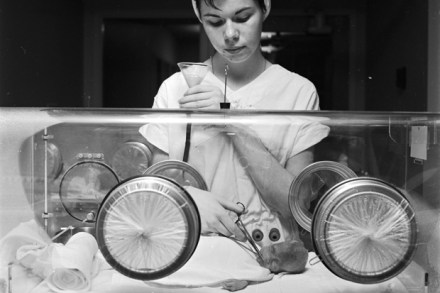
I like Radio 4 — you can have it on in the background burbling away for hours and hours without taking in a word, and then there comes a moment when you’re making a cup of coffee and find yourself plunged into the story of how, during the first half of the 20th century, premature babies living in incubators were on display to the paying public at Coney Island amusement park. For instance. Life Under Glass (Radio 4, Tuesday) was an intriguing little half-hour documentary, presented by Claire Prentice, about Dr Martin Couney, an American paediatrician who started off touring world fairs in the 1890s with his ‘infant hatchery’ and then from 1903 to 1943 established a sideshow exhibition at Coney Island, that ‘great whirlpool of joy...

Courchevel

From our UK edition

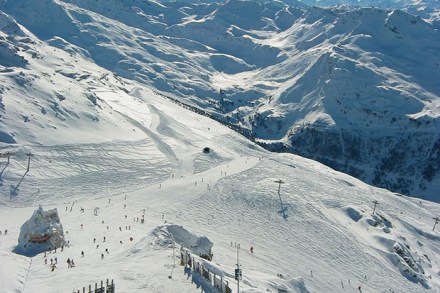
The last time I stayed in Courchevel it was in a tatty roadside chalet a long way down the mountain. One detail sticks: pickled cockles piled high on a platter at the closing banquet, à la Fanny Cradock. That was more than a decade ago. This time, we were staying at 1,850 metres, which is another world. The resort, always chichi up top, has undergone a kind of wholesale rebranding in recent years and now the high end of Courchevel is ridiculously high-end. There’s Prada and Chanel and Gucci and Cartier. Three of France’s 16 ‘palais’-designated hotels are here. There are 12 Michelin stars (more per square metre than anywhere else in the world), dished out among seven restaurants, including two for Pierre Gagnaire at Les Airelles.

Notes on …The Tarn Valley

From our UK edition

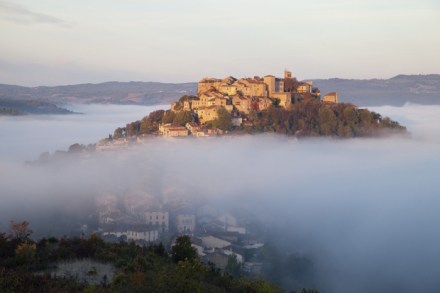
Why didn’t I know about the Tarn Valley? I’d often been right next door. But here, north-east of Toulouse, between the baking fields of Gers and the rocky mountains around Carcassonne, is this best-kept secret. It’s a lush region of great rivers, rolling green hills and towns with magnificent red-brick gothic architecture and is sometimes referred to as the Triangle d’Or (mostly by estate agents). The sea is three hours away in either direction, which is a boon, meaning that even in August it was eerily devoid of tourists. If the points on the triangle are the towns of Gaillac, Albi and Cordes sur Ciel, in between are any number of really beautiful bastide villages.

‘Morocco is a diabetic’s nightmare’

From our UK edition

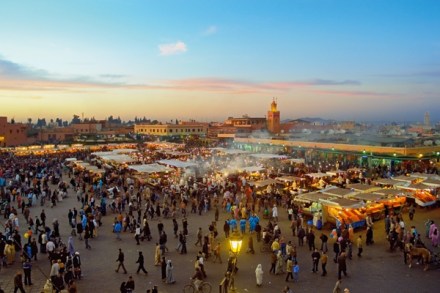
Fleeing streets of slush, we touch down in a north African spring, where we are driven through the desert scrub outside Marrakech, passing dusty ochre expanses filled with old plastic containers and half-built hotels and the odd donkey before turning down a track which runs alongside a walled garden. Tantalising green fronds poke above the wall. The gates open (someone is posted to look through a gap in the wall to time it right) and reveal a lush complex of grass, palms, roses, figs and orange trees around a T-shaped pool. This hotel is one of a handful to have popped up a short way away from the clamour of the city. It’s peaceful — there is a view of the Atlas mountains in the distance — but you can get to the souk whenever you want.

Aeolian joys

From our UK edition

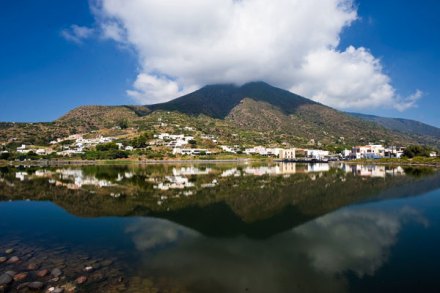
It’s 5 a.m., a splashy grey dawn, and we’re out of here on easyJet. Palermo is another world of heat and brightness but we’re not stopping; at the port we board a catamaran which churns its way towards the Aeolian islands, the volcanic archipelago off the north-east corner of Sicily. The islands are named after Aeolus, son of Zeus and god of the four winds, but there was scarcely a whisper of a breeze in the two weeks we were there. We had all sorts of plans, to island-hop, go to the hot mud baths on Vulcano, visit the black sand beaches of Stromboli and climb its volcano by night, perhaps a day on Panarea, Italy’s Ibiza, where glamorous people prowl in bars.

Incredible string band

From our UK edition

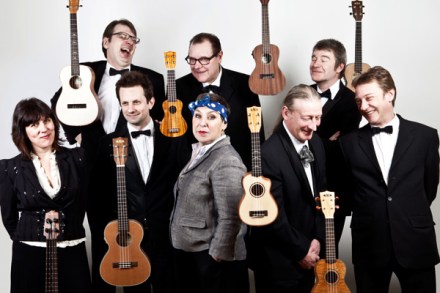
The Ukulele Orchestra of Great Britain are performing at the Albert Hall: playing their tiny instruments in a very big space. There must be 5,000 people here, but the orchestra’s friendly jokes, the modesty of the ukulele sound and the familiarity of the audience make the concert seem intimate. The Ukes have been going for 28 years, and in the past half-decade or so they’ve gone mega. Their formula is a mash-up of the ridiculous and the sublime; the players poke fun at their ‘bonsai guitars’, then pluck from them a wildly diverse range of music with virtuosity and irreverence.

Brown study

From our UK edition

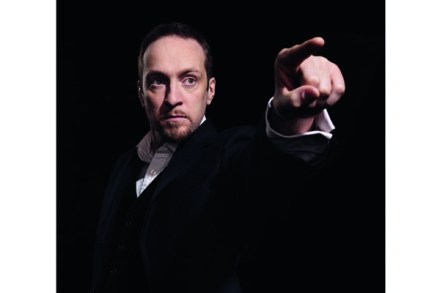
Stage hypnotists need the trust of their audience, but also a whiff of danger. So Derren Brown calls his show Svengali, though he is not really an evil puppetmaster but a gentle, coaxing, mostly ethical puppetmaster. That show, which opened for its first run at the end of 2010, is back for a short time at the Novello theatre (until 11 August). It’s fun watching the audience drift through the doors and wondering who will end up on stage dancing naked or eating raw onions or whatnot. A thousand potential victims. There are quite a lot of children given that Derren can be a bit sweary on stage — but one of his special abilities is to deliver the f-word innocuously. He asks his audiences not to reveal anything, and perhaps he hypnotised us because I’m inclined to obey.

A life in letters

From our UK edition

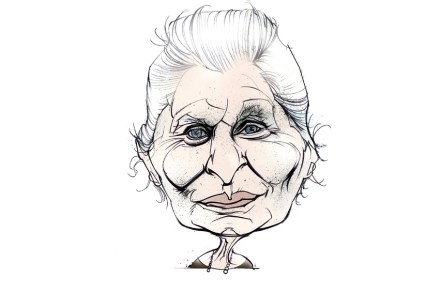
Diana Athill, now nearly 94, lives in what must be the nicest retirement home in London, a large red brick house at the top of Highgate village, run by a charitable trust and populated by former writers and doctors and psychiatrists. On this unseasonably warm day she has on a flowing Kenyan kaftan — the residents’ summer clothes get packed away in autumn to make space, and she is worried about what to wear if the heatwave continues. A strong, boxer’s face, direct blue eyes. She aims a hearing aid at her ear, it whistles briefly, and away we go. Her latest book (see review, p. 38) is a kind of epistolary memoir, called Instead of a Book: her first book was Instead of a Letter, and she thinks this will be her last.

Dare to be dull

From our UK edition

After rootling in the BBC archives on the internet recently I started thinking, wouldn’t it be good if more programmes from the past were shown in full? The online archive contains less than a tenth of the total footage stored by the BBC (which would amount to nearly 70 years of TV if you watched non-stop), and only a few hundred complete shows out of so many thousands. The same thing occurred to me again while watching Great Thinkers: In Their Own Words, the first in a series of three, which went out on BBC4 on Monday. There is a segment of the episode devoted to a Horizon presented by Stanley Milgram about his notorious electrocution experiment, and a clip in which he speaks about five consecutive sentences to camera without it cutting away to anything else.

Give Charlie a break

From our UK edition

The boy’s gone to jail. Isn’t that enough? I was watching the news on the evening of 10 December, some follow-up reports about the student protest the day before, and saw a clip of a young man wielding a mannequin’s leg — shod in a lady’s wedge-heeled boot — as he declared that he and the other protestors were ‘very angry’. He didn’t look that angry; actually he looked extremely placid and was obviously in a chemically altered state. My first thought was: Charlie! And then: you haven’t hidden that leg very well. Charlie Gilmour is now in prison for his activities at the protest. But when he was two, I had just left school and had a gap-year job as his childminder.

In the beginning was the crossword

From our UK edition

On Thursday evening, a stream of distinguished visitors poured through the doors of 22 Old Queen Street. These were the readers who had applied and been picked to attend a party to celebrate the publication of the 2,000th Spectator crossword. Tom Johnson, aka Doc, crossword editor, presided over a roomful of dons, doctors, vicars and at least one astrophysicist — ‘the country’s finest crossword minds’, as Spectator editor Fraser Nelson put it. The atmosphere was heady with wine fumes, wit and only the occasional whiff of pedantry. News had got around, and there were guests from Scotland, Northern Ireland, Switzerland, France...

For his next trick …

From our UK edition

‘I think he is probably the devil,’ said the work experience boy when I was going to meet Derren Brown, the magician, mindreader, ‘psychological illusionist’, what-have-you. ‘Because he does exactly what I’d do if I was the devil, which is pretend he can’t really do magic and that it’s all just a trick.’ Brown turns out to be an extremely nice man, so his evil telly presence must at times be a bit of an albatross for him. The thing is that, meeting him, you can’t help being aware that he is a genius puppet-master with strange powers of perception and the ability to manipulate people into doing the most extraordinary things.

An 80-year-old mystery

From our UK edition

‘The older I get, the more inclined I am to say those three words: I don’t know,’ says Baroness Rendell of Babergh. She turns 80 this week, and seems milder in person than in her writing. In photographs, too, she looks a bit haughty and forbidding, with incredible Ming the Merciless eyebrows. But the door was opened by a smallish woman with a sandy helmet of hair, a quizzical expression and an illuminating smile that appears from nowhere and sends her features skywards. The mouth, the eyebrows, the hair — everything lifts, as though she has stuck her finger in a socket. She has written, she estimates, about 70 books: her output is catching up with her years.