Tom Slater

Tom Slater

Tom Slater is the editor of Spiked.

The press regulation lobby represent the few, not the many

From our UK edition

Those pushing for press regulation claim to have the people on their side, and since the phone-hacking scandal, Hacked Off has posed as warriors for the victims of press intrusion, standing up to the big media barons. Today, MPs vote on amendments to the Data Protection Bill that would effectively force publications into state-backed regulation for the first time in 300 years. The amendments, tabled by Labour’s Tom Watson and Ed Miliband, would also kickstart the second part of the Leveson inquiry. Watson claims this is ‘for the many, not the few’. But if that's really the case, why are these plans being sneaked into obscure amendments to a dry-sounding piece of data legislation?

Giving Malia Bouattia the boot won’t be enough to save the NUS

From our UK edition

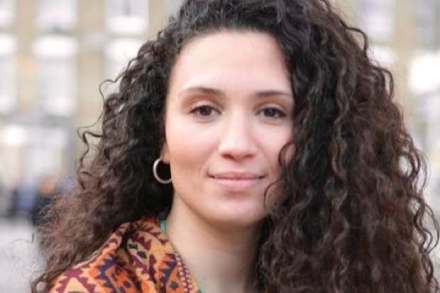
Farewell then, Malia Bouattia. The only president of the National Union of Students to earn herself a condemnation from the Home Affairs Committee, Bouattia has been defeated in her bid to win re-election at the NUS conference in Brighton. Her time in charge of the NUS was ended by Shakira Martin, the Union's vice-president for further education, who received 402 votes to Bouattia’s 272. Malia’s presidency was dogged by scandal. And as deluded as the NUS is, even it couldn’t continue to tolerate a leader who called Birmingham University a ‘Zionist outpost’ and once refused to back a motion condemning Isis, because she thought doing so would justify Islamophobia.

Censorious universities are a bigger problem than Stepford students

From our UK edition

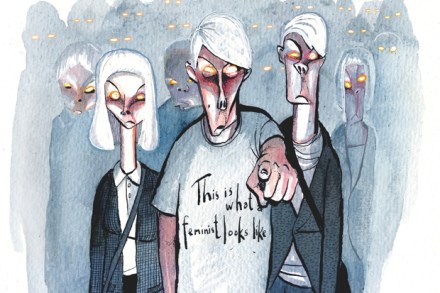
Have you heard the one about the students who said clapping could cause anxiety? Or the students who banned sombreros? Of course you have. You can’t move these days for tales of Britain’s blue-haired belligerents and their campus war on free speech, ‘fascist’ tabloids and fancy dress. Student leaders have become a national embarrassment – and with good reason. They’ve turned everything that was good about being a student – broadening your mind, having fun, being free – upside down. But it’s become a little too easy to bash students, to pretend that a new generation of so-called 'snowflakes' are single-handedly destroying Enlightenment values. Student union politicos are, after all, entirely unrepresentative.

Donald Trump’s media fanboys are as bad as his haters

From our UK edition

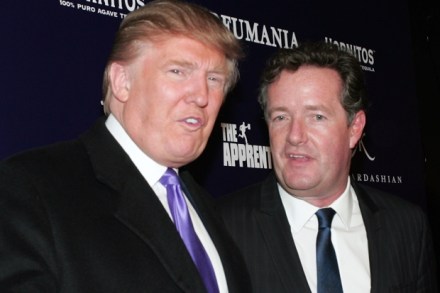
Vicious, arrogant, obnoxious and possibly evil. These were the words Donald Trump used to describe Piers Morgan, when he won the first series of Celebrity Apprentice. That’s right: even the man they say is Hitler’s second coming is wary of Britain’s most insipid TV export. The combination made last night’s exclusive ITV interview, between Morgan and The Donald himself, a recipe for outrage. Twitterers compared it to Alien vs Predator. Or Jeremy Kyle meets Frost/Nixon. Alan Sugar told Morgan to climb out of Trump’s arse. And 140-character bilge did fly. But the chummy, half-hour chat, filmed in Trump Tower, wasn’t anything to write home about.

The backlash against the NUS has begun

From our UK edition

In a move that has left student union politicos across the country clinging to their therapy dogs, the University of Lincoln Students’ Union has voted to disaffiliate from the NUS. Springing from the new, anti-NUS sentiment that is brewing on campuses across the country, Lincoln students voted 881 to 804 to leave. This was a big breakthrough, putting wind in the sails of disaffiliation campaigns currently being fought at York, Oxford, Exeter and Manchester. And though this was all sparked by the election of new NUS president Malia Bouattia – the overgrown student fond of waxing lyrical about the ‘zionist-led media’ – the gulf between NUS leadership and its members has been growing for years.

Edinburgh University staff are now under surveillance, thanks to the Home Office

From our UK edition

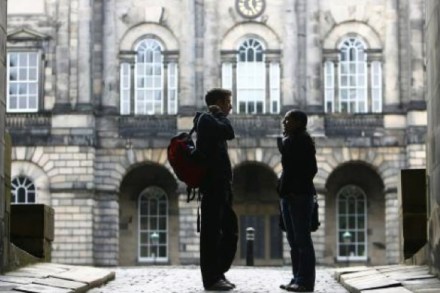
Another British university has been revealed as a mini GDR. And this time it’s not the fault of those speech-policing students’ unions. The University of Edinburgh – which recently hit headlines after its students association banned head-shaking – has been slammed for an Orwellian new practice designed to keep tabs on its staff. Under a new scheme, reported in Times Higher Education, university staff will be required to report their whereabouts ‘when officially at work, but not in their normal place of work’. The provisions, originally meant to apply only to staff from outside the EU, have been extended to all 13,000 employees, in an effort to ensure they are applied in a ‘fair and proportionate’ manner.

Don’t blame the students. They’re a product of a Britain that’s losing its love of free speech

From our UK edition

In the past 12 months a curious thing has happened: student politics, for decades the most irrelevant, cut-off sphere of public life, has become headline news. The explosion of campus censorship – the primary means through which twentysomething politicos vent their political passions today – is followed, reported on and critiqued by greying commentators on a daily basis. The shock-horror headlines about the rise of 'no platforming' and the sclerotic growth of speech-policing 'safe spaces' seem a little strange. Not least because the No Platform policy – introduced by the National Union of Students in 1974 – is about as old as some of the commentators currently filling column inches with their castigations of the illiberal yoof.

Why is the Home Office giving in to illiberal youth by banning rappers like Tyler, The Creator?

From our UK edition

In a 2012 interview on Newsnight, foul-mouthed LA rapper Tyler, The Creator told a churlish Stephen Smith that the point of his music was to ‘piss old white people off like you’. Now, the old white people at the Home Office seem to have proved him right, by banning the rapper – real name Tyler Okonma – from entering the UK for the next three to five years. Okonma’s manager, Christian Clancy, wrote in a blog post that he received a letter stating that the rapper would not receive a visa because his work ‘encourages violence and intolerance of homosexuality’ and ‘fosters hatred with views that seek to provoke others to terrorist acts’.

If comedians can’t take a politically incorrect joke, who can?

From our UK edition

Jerry Seinfeld’s takedown of the political correctness of today’s youth should give us all pause for thought. In an interview on US radio, the sitcom and stand-up star said that college campuses have become a no-go area for comedians. ‘I don’t play colleges, but I hear a lot of people tell me, “Don’t go near colleges. They’re so PC”' he said, before launching into a story about the time his 14-year-old daughter accused his wife of being ‘sexist’ for suggesting that she may soon want to start seeing boys. ‘They just want to use these words. That’s racist. That’s sexist. That’s prejudice. They don’t know what the fuck they’re talking about.

‘Anti-lad’ crusaders have begun a cultural cleansing of British universities

From our UK edition

You can’t be on a campus for more than 10 minutes nowadays without hearing about inclusivity. Universities and students’ unions are mad for it. At the University of Sussex, a statement declaring that ‘The Union is committed to providing an inclusive and supportive environment’ has to be read, aloud, before every students’ union meeting. Students who want to set up a new society at the University of Bristol must satisfactorily prove that they will ‘respect and promote the Bristol SU values of equality, diversity, safe space and inclusivity’. It’s big in America, too.

The Greens’ regressive message has lost them student votes

From our UK edition

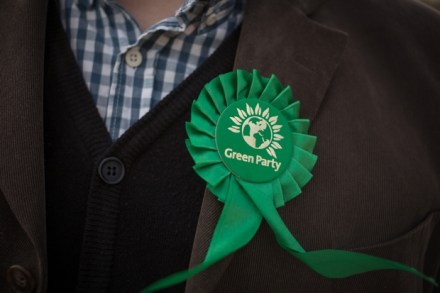
‘If you’re not a socialist before you’re twenty-five, you have no heart; if you are a socialist after twenty-five, you have no head,' goes the old, oft-misattributed saying. But if you’re a Green party supporter on a university campus today, you’re more likely to have no friends. It was reported last week that the Green party's share of the student vote has almost halved in the past two months – falling from a peak of 28 per cent to a paltry 15. In January, the Greens’ vote was creeping up on Labour (the consistent student favourites) but it has now plummeted below even that of the so-called ‘Tory scum’ you hear so much about on tuition-fees demos.

If we want to tackle anti-Semitism we must challenge hate speech, not censor it

From our UK edition

One month on from the Charlie Hebdo massacre, free speech is still under attack. The outpouring of public revulsion at the bloody silencing of ‘blasphemous’ cartoonists after the attack was inspiring. It was a visceral display of support for the right to speak one’s mind – as crudely, offensively and blasphemously as one chooses – that has been absent for some time. But deep-rooted ambivalences have remained – and now these look to be exploited by policymakers looking to institute blasphemy laws of their own. When it comes to cracking down on aberrant ideas, Europe has long been leading the way. Restrictions on hate speech are in place across Europe.