Tom Goodenough

Tom Goodenough

Tom Goodenough is online editor of The Spectator.

There’s one thing Rees-Mogg and his loyal followers don’t agree on

From our UK edition

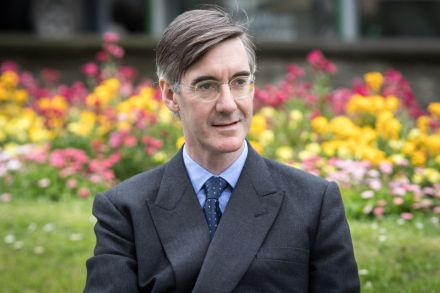
Most politicians can only dream of having the cult following that Jacob Rees-Mogg is enjoying at Conservative party conference. His events are packed out an hour before they are due to start. Cries of 'Mogg for PM' have been heard. And when Rees-Mogg walked into the room at a Leave means Leave rally last night, he was greeted with wild applause just for turning up. Mogg’s loyal supporters hang on his every word, but there’s one thing on which they don’t agree with their idol on: whether it’s time for Theresa May to go. The problem for Rees-Mogg is that in firing up his followers to 'chuck Chequers', it’s difficult to row back when some then take the logical next step and call for the PM’s head.

Has Priti Patel found the answer to Corbynism? | 30 September 2018

From our UK edition

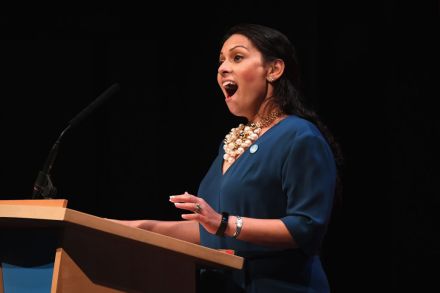
What’s the antidote to Corbyn? Thatcher, according to Priti Patel. Britain’s former PM might be public enemy number one in the eyes of the Corbynistas, but it’s vital the Tories return to Thatcher’s ideas and her way of doing things. That, at least, is the verdict of Patel, the Brexit-backing former international development secretary. Patel said that Britain is now at a crossroads: a similar juncture to the one it faced when Thatcher came to power in the seventies. Back then, she said, regressive socialism was in danger of taking control. The same is happening now, according to the Tory MP, and it’s vital that the Conservatives and the government learns from a prime minister that ‘fought the left very successfully’.

Clerical error

From our UK edition

Next month the Islamist preacher Anjem Choudary will be released from prison, having served just half of his five-and-a-half-year sentence. He was jailed for his role in encouraging Muslims to join Islamic State. At the time of his sentencing in 2016, the judge described the hate preacher as ‘calculating’ and ‘dangerous’. The Justice Secretary, Rory Stewart, echoed that verdict earlier this month, calling Choudary ‘deeply pernicious’ and a ‘destabilising influence’. His views remain the same; his status as a martyr — at least in the eyes of his followers — is assured; and his hatred of Britain is more ferocious than before. He will emerge as a greater menace than when he was locked up.

Momentum’s Brexit fudge would make the Labour party proud

From our UK edition

What Momentum thinks about Brexit matters. But is Momentum prepared to ask its members what it really thinks about Brexit? Not yet is the answer, according to Jon Lansman, the group’s founder. And it’s refusal to do so produces a fudge on the hot topic of the day of which the Labour party itself would be proud. While the group’s World Transformed festival has been a hotbed of discussion on all kinds of issues – socialism, Marxism, anti-Semitism, climate change, to name  a few – there’s one topic that isn’t on the menu: Brexit. At least, that is, in so far as coming to a settled position among Momentum members goes. So is this a failure on Momentum’s part?

Why Labour’s Brexit MPs are finally feeling more upbeat

From our UK edition

Kate Hoey has paid a heavy price for being a supporter of Brexit. The Labour MP has been hounded online and faced a vicious deselection battle in her Vauxhall constituency from activists who say that she has no place representing an area in which nearly eight in ten voters backed ‘Remain’. But rather than change her mind, Hoey has stuck to her guns. At a Labour Leave event on the fringes of the party’s conference in Liverpool, Hoey had a message for her critics: there’s no contradiction in backing Brexit and being a leftie. Hoey wasn’t the only Labour MP making that point at last night’s event.

Momentum’s big worry is that it is failing to capitalise on its success

From our UK edition

What now for Momentum? The grassroots organisation has had extraordinary success over the last few years, not least in shoring up Jeremy Corbyn's position as Labour leader. The World Transformed, Momentum's event down the road from the party’s main conference in Liverpool, is a testament to the group’s growing influence: in its three years of existence, it has morphed into a lively, well-organised festival. Even if you think some of the speakers are barmy, the febrile atmosphere could not be more different from the stale feeling on the Tory fringes. Yet this isn’t a time for celebration for Momentum. Far from it. Indeed the organisation is finding that with clout comes responsibility – and its founder, Jon Lansman, is under pressure.

Spectator Podcast: The people vs Brexit

From our UK edition

The clamours for a second referendum are growing. But are those calling for a ‘people’s vote’ really interested in what voters think? Or is this just a plot to stop Brexit? Rod Liddle isn't convinced about the case for giving voters a second say. The vote to leave the EU was unequivocal, he says in this week’s cover piece. So why won’t the luvvies just accept it and move on? Rod is joined on this week's Spectator podcast by James McGrory, executive director of ‘People’s Vote’ and Tom Slater, deputy editor of Spiked Online.

Jeremy Corbyn’s plan for the media: make it more boring

From our UK edition

It should be said that Jeremy Corbyn’s ideas for shaking up the media aren’t all bad. The Labour leader is right for instance to focus on the need to help out local media; the death of regional newspapers in recent years means that local government is almost entirely unaccountable nowadays. It’s only when things go badly wrong that people actually sit up and pay attention. Corbyn is also right on the need to reform freedom of information laws, which have now been rendered virtually redundant by those in authority who know exactly how to prevaricate and obstruct requests at every turn. But too many of the Labour leader’s other ideas are half-baked and reveal a simple truth: Jeremy Corbyn simply doesn’t understand the media.

The Spectator Podcast: When money dies

From our UK edition

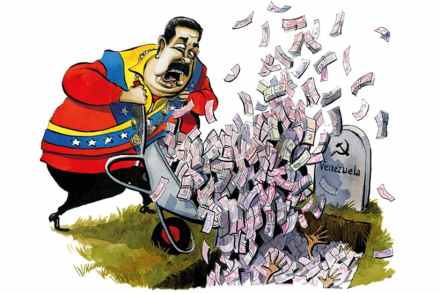
Venezuela is racked with hyperinflation. The crisis is now so bad that the president has instituted a new currency which essentially cuts off several zeros from the old one. But will Maduro’s mad policies actually make things worse in a country that is already suffering terribly? On this week's Spectator podcast, Professor Steve Hanke, an expert on hyperinflation who served as an adviser to former Venezuelan president Caldera, and Dr Julia Buxton, of Swansea University, discuss Jason Mitchell's cover piece on what happens when money dies.

Police treating Westminster car crash as terrorist incident

From our UK edition

A man in his twenties has been arrested on suspicion of terrorist offences after a car crashed into security barriers outside Parliament. A number of cyclists and pedestrians were injured in the incident which took place at 7.37am today. Armed police officers were filmed leading a man in handcuffs away from the scene. The Met Police's assistant commissioner Neil Basu confirmed that the incident is being treated as a terrorism. He said: 'Given that this appears to be a deliberate act, the method and this being an iconic site, we are treating it as a terrorist incident and the investigation is being led by officers from the Counter Terrorism Command. Officers are searching the vehicle and no other weapons have been found at this time.

Theresa May takes back control in Brexit talks

From our UK edition

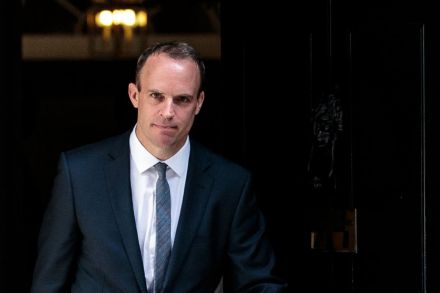
For months it has been claimed that Theresa May has been sidelining her Brexit department in talks with the EU. Now, the Prime Minister has confirmed that is exactly what she is doing. In a dull sounding written statement on the ‘machinery of government’ put out just hours before MPs head off on their summer holidays, the PM said that to ensure things are ‘organised in the most effective way’ as the countdown to Brexit gets closer, she will now ‘lead the negotiations with the European Union’; Dominic Raab, the PM said, will be ‘deputising’ on her behalf. For Brexiteers, this news will go down badly.

Jacob Rees-Mogg adds to Theresa May’s woes

From our UK edition

Poor old Theresa May. Donald Trump’s Brexit comments have overshadowed the president’s long-awaited visit, but even after Trump departs for the golf course, her troubles won’t go away. Jacob Rees-Mogg offered an unwelcome reminder of that on the Today programme this morning, saying that he thought Trump had a point. Rees-Mogg said that all the president had done is spell out what was actually in the Brexit white paper. Take a look, he said, at this passage in the Brexit white paper: For once, it seems, Trump has actually done his reading. In his comments to the Sun, Trump made it clear that Theresa May’s Brexit plan would mean the US "would be dealing with the European Union" instead of with the UK during trade talks.

The Spectator Podcast: Revolution!

From our UK edition

Is Brexit going in circles? With the resignations of David Davis and Boris Johnson – and widespread unhappiness at the Prime Minister's Chequers plan – it is hard to pretend that things are going well. But is the drama only just getting started? In this week's cover piece, James Forsyth says that a no-deal Brexit, or calling the whole thing off altogether, are now distinct possibilities. On the podcast, James says that this week's events show that it is not only the Brexit ultras who could cause the PM trouble; 'this rebellion goes far deeper into the Conservative party,' he argues. Paul Goodman, editor of ConservativeHome and John Springford, deputy director at the Centre for European Reform, join James for the discussion.

David Davis breaks his silence on his resignation

From our UK edition

David Davis has broken his silence on his resignation. Unsurprisingly his comments on the Today programme are devastating for Theresa May’s Brexit strategy. The now-departed Brexit secretary said his position was no longer tenable because he simply didn’t believe in the PM’s approach. In his resignation letter last night, he had said that ‘that the national interest requires a Secretary of State in my Department that is an enthusiastic believer in the approach, and not merely a reluctant conscript’. He went further on the Today programme, calling the PM’s approach a ‘dangerous strategy’.

Raheem Sterling’s article is brilliant but did he actually write it?

From our UK edition

England’s Raheem Sterling has underwhelmed so far at the World Cup. Off the pitch, however, he is winning new fans. The Manchester City winger’s essay blog, ‘It was all a dream’, tells the story of his father’s murder and his mother’s subsequent struggles to make ends meet. It’s brilliantly written, tugs at the heart strings and there’s a happy ending: Sterling, the ten-year-old boy who had to help his mother clean hotel toilets, now earns hundreds of thousands of pounds a week and is idolised by football fans the world over. Sterling isn’t the only footballer recently to have shown a previously unknown talent for writing.

Raheem Sterling’s article is brilliant but did he actually write it?

From our UK edition

England’s Raheem Sterling has underwhelmed so far at the World Cup. Off the pitch, however, he is winning new fans. The Manchester City winger’s essay blog, ‘It was all a dream’, tells the story of his father’s murder and his mother’s subsequent struggles to make ends meet. It’s brilliantly written, tugs at the heart strings and there’s a happy ending: Sterling, the ten-year-old boy who had to help his mother clean hotel toilets, now earns hundreds of thousands of pounds a week and is idolised by football fans the world over. Sterling isn’t the only footballer recently to have shown a previously unknown talent for writing.

Barnier’s reality check adds to May’s Brexit woes

From our UK edition

Could Brexit talks soon be heading for the ‘meltdown’ that Boris Johnson predicted? Michel Barnier’s press conference just now hardly inspires confidence that things are going to plan. The EU’s chief negotiator said that Britain was playing a ‘blame game’ in Brexit talks and that it had to accept the consequences of its decision to leave the EU. He went on to call for the British government to have something of a reality check over the way things were going. Today, that reality check came in the form of his rejection of Britain’s backstop proposal to solve the Irish border problem. Theresa May had put forward the suggestion that the whole of the UK would remain in the customs union after Britain leaves the EU next March.

Is Alexander Nix gravely misunderstood?

From our UK edition

Alexander Nix looks the part of a Bond villain: the sinister-sounding surname, the cut-glass accent and his position at the centre of a conspiracy theory involving Brexit, Trump and dodgy data. Even Steve Bannon – the man most people love to hate – thinks he is bad news. But have we all got the beleaguered former chief executive of Cambridge Analytica wrong? Is he actually the victim in the fallout surrounding his company’s downfall? You’d be forgiven for thinking so on the basis of his appearance in parliament this week. Nix’s time in front of the select committee was supposed to be a chance for MPs to pile in and complete his humiliation. In the end, they failed; the pillorying backfired.

The conclusion to the Ken Livingstone debacle will please no one

From our UK edition

Perhaps the most remarkable thing about Ken Livingstone’s resignation statement is that he finally managed to avoid saying the word that got him into so much trouble in the first place. The former mayor of London said that with ‘great sadness’ he was cutting up his party membership card because 'the ongoing issues around my suspension from the Labour Party have become a distraction from the key political issue of our time'. Livingstone’s decision to renounce his membership brings to an end his suspension from the party of more than two years, which came about after he suggested in 2016 that Hitler was a zionist. But while the row is now, in a sense, concluded, this is an outcome that will please no one. Ken has been allowed to quit the party on his own terms.

Heidi Alexander joins the march of the moderates out of Westminster

From our UK edition

The march of the Labour moderates away from Westminster continues, with Heidi Alexander the latest to quit parliament. The Labour MP announced this morning that she will stand down from her seat and take up a job working with Sadiq Khan at City Hall. Her departure is no real surprise: speculation has been rife for a while that she would quit. It has also been obvious that Alexander wasn’t happy, to say the least, working under Jeremy Corbyn. Alexander was one of the first to quit the shadow cabinet in 2016 in the wake of the referendum. At the time, she told Corbyn that ‘a change of leadership is essential’, in the hope that Labour's moderates could oust their leader.