Tom Goodenough

Tom Goodenough

Tom Goodenough is online editor of The Spectator.

Keith Vaz finally steps aside

From our UK edition

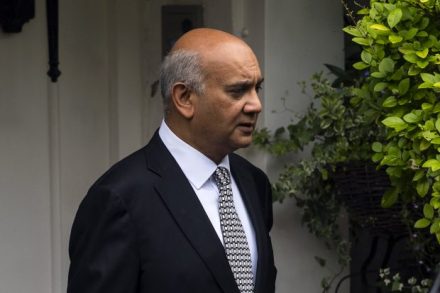
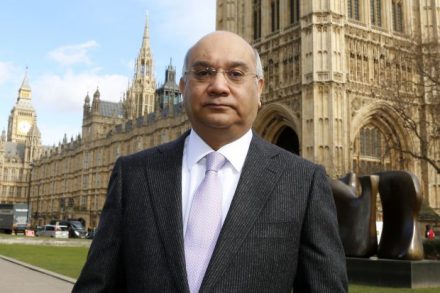
Keith Vaz has finally stepped down as chairman of the Home Affairs select committee following allegations surrounding a pair of male prostitutes. In a statement (which was published on Twitter ahead of an embargo), Vaz had this to say: It is in the best interest of the Home Affairs Select Committee that its important work can be conducted without any distractions whatsoever. I am genuinely sorry that recent events make it impossible for this to happen if I remain chair. The integrity of the select committee system matters to me. Those who hold others to account must themselves be accountable. That Vaz has bowed to pressure might not seem a surprise but his eventual decision to quit wasn't for a lack of effort in attempting to cling on and persevere in the post.
Will Keith Vaz cling on?

From our UK edition

If yesterday's appearance of Keith Vaz in the Commons was a show of defiance, today will be a taste of reality for the Labour MP. The steely silence when he asked questions in Parliament spoke volumes; MPs are not happy with Vaz's attempts to carry on as normal in the wake of allegations surrounding a meeting with two male prostitutes at his flat. Yet as far as Vaz was concerned, it was business as usual. That will change this afternoon as he'll finally have to confront reality. When the Home Affairs Committee meets shortly after 3pm, he'll find out whether that Sunday Mirror expose is enough to end his chairmanship of the committee. And with bombshell timing, the Mirror have today released recordings which the paper claims show Vaz was not set up.

The BMA sees (some) sense over junior doctor strikes

From our UK edition

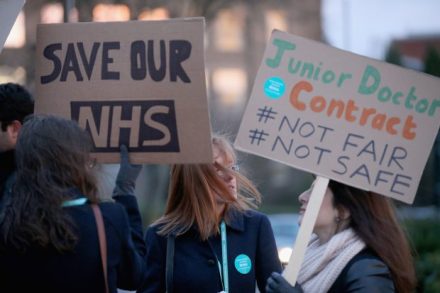
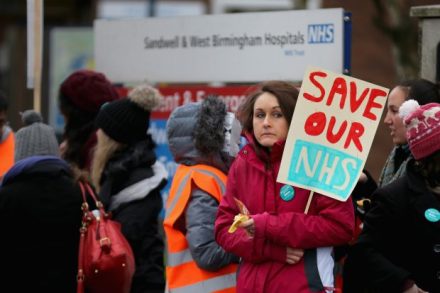
Junior doctors have scrapped plans to strike next week. In a dispute which looks increasingly messy and interminable, this is a small token of welcome news. But whilst the BMA has made the right decision in this instance, they are still sticking with their threat to stage three five-day walkouts in October, November and December. What's more, in justifying why they called off the strike which was due to start on September 12, they're trying to have their cake and eat it. After all, when industrial action was announced last week, patient safety - that all important concept which the BMA had trumpeted in the earlier stages of this row - seemed to have been forgotten. Hospital managers were given just 11 days to work out what to do.

Is May dropping the ‘Leave’ campaign’s immigration policy?

From our UK edition

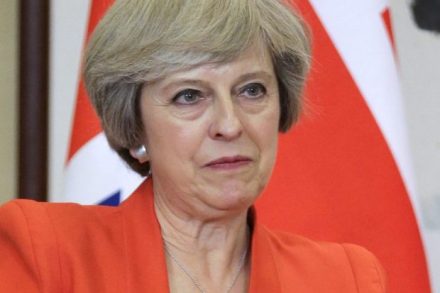
'Brexit means Brexit', Theresa May has repeatedly reassured us. But it seems Brexit might not mean an introduction of a 'points-based' immigration policy which Vote Leave - and a number of cabinet ministers, including Boris Johnson - had called for during the referendum campaign. The Prime Minister said the system was no 'silver bullet' and planned to look 'across the board' for answers instead. As is becoming clearer - and as James Forsyth pointed out after May's Marr interview yesterday - the Prime Minister has a style in front of journalists which involves giving little away.

The Spectator podcast: The Swedish model. How not to welcome refugees | 3 September 2016

From our UK edition

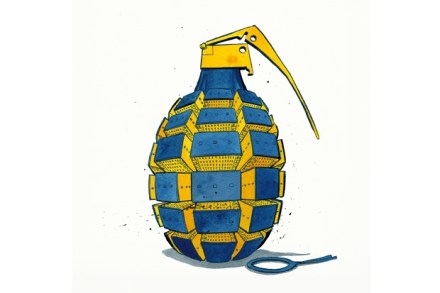
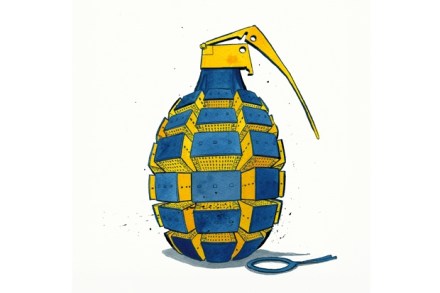
For a certain type of social democrat, no country gets them quite as hot and bothered as Sweden. As Toby Livendell writes in this week's Spectator cover story, Sweden has long regarded itself as a humanitarian superpower, taking in 650,000 asylum seekers in the last 15 years. But by far the biggest issue is integration. And this was brought to stark British attention last week when a Birmingham schoolboy was murdered with a grenade in Gothenburg. So, what has gone wrong in Sweden? To answer that question, Lara Prendergast is joined on the Spectator podcast by Fraser Nelson and Ivar Arpi. Ivar says: 'Basically the Swedish idealism ran into a big wall called reality in the autumn of 2015.

Caroline Lucas could breathe new life into the Greens

From our UK edition

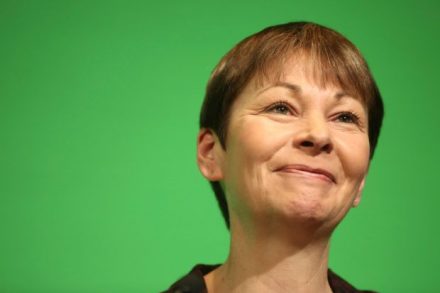
Winning the Green Party leadership race on a joint ticket makes Caroline Lucas and Jonathan Bartley the first ever job share at the top of an English political party (the Scottish Greens have been doing it for years by having two co-convenors at the top). The pair won convincingly, picking up 86 per cent of the vote in the first round. Yet whilst the margin of their win was clear, what's less obvious is how the job share will work in reality. There is, though, one valuable asset that Lucas will certainly be able to offer the Greens.

It’s no surprise fellow medics are turning against junior doctors

From our UK edition

When the BMA announced a new round of strikes they will have been prepared for a backlash from certain quarters. The criticism yesterday from Jeremy Hunt and Theresa May, who accused striking doctors of 'playing politics', won't have come as a surprise. But what is different about this latest, unprecedented industrial action are the attacks on junior doctors now coming from fellow medics. For the Academy of Medical Royal Colleges to intervene as they did last night indicates a significant shift in this drawn-out dispute. Here's what they said in a statement: 'The Academy of Medical Royal Colleges is disappointed at the prospect of further sustained industrial action by junior doctors. We are acutely aware that the NHS is under extreme pressure at the moment.

The latest junior doctor strikes are a sign of desperation

From our UK edition

The junior doctors row bubbles on. This time, medics will walk out for five back-to-back days starting on September 12. Predictably, Jeremy Hunt has condemned the strike; and the BMA is blaming Jeremy Hunt. It's a bitter and somewhat dull stalemate which will bore many for its endless intransigence. Yet beneath this, it's clear this latest industrial action will cause chaos: the strikes comes at such late notice that contingency plans put in place before industrial action earlier this year will not have been made. The strike is messier, too, for the increasing remoteness of a sensible compromise being struck. The BMA's Mark Porter dismissed the 73 concessions made by the Government as 'completely meaningless', likening the switches to editing commas and changing a 'word here and there'.

The Spectator podcast: The Swedish model. How not to welcome refugees

From our UK edition

For a certain type of social democrat, no country gets them quite as hot and bothered as Sweden. As Toby Livendell writes in this week's Spectator cover story, Sweden has long regarded itself as a humanitarian superpower, taking in 650,000 asylum seekers in the last 15 years. But by far the biggest issue is integration. And this was brought to stark British attention last week when a Birmingham schoolboy was murdered with a grenade in Gothenburg. So, what has gone wrong in Sweden? To answer that question, Lara Prendergast is joined on the Spectator podcast by Fraser Nelson and Ivar Arpi. Ivar says: 'Basically the Swedish idealism ran into a big wall called reality in the autumn of 2015.

Is the worst nightmare of Corbyn’s opponents about to come true?

From our UK edition

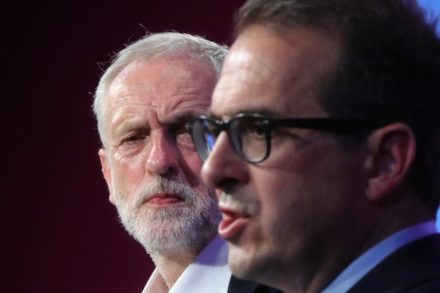
Could Jeremy Corbyn come out of the Labour leadership contest with an even bigger mandate? Few would be surprised and a new poll on the front page of the Times today suggests that such an outcome is highly likely. The YouGov survey indicates Corbyn is beating his rival Owen Smith by 62 per cent to 38 per cent amongst Labour voters - a result which would gift him a three per cent spike on last year's vote, when he won 59.5 per cent. This would spell disaster for those challenging Corbyn and make it almost certain that the Labour leader would still be in place come a 2020 general election.

Theresa May’s great Brexit brainstorm starts today

From our UK edition

Summer is over. Or at least as far as Theresa May is concerned it is, as the PM gathers her cabinet at Chequers today to talk business about Brexit. It's the most important gathering of her time in office so far and a chance to spell out an action plan for Britain's departure from the EU. She put a stop yesterday to talk of a second referendum and today she has repeated her pledge that there won't be an attempt to 'sort of stay in the EU by the back door'. But whilst those words are a reassurance of what won't happen, today's meeting is also a chance for the PM to thrash out what she hopes will happen over the weeks and months ahead. It's also an important opportunity for each cabinet minister to spell out the 'opportunities' of Brexit: this is the key to making Brexit a success.

Britain hits back over French threat to scrap Calais ‘jungle’

From our UK edition

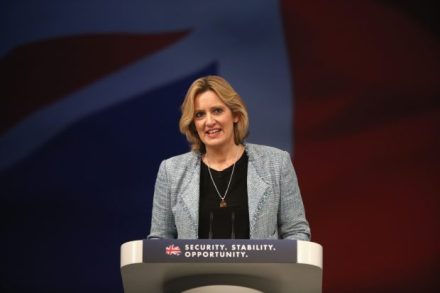
It's no surprise that demands from French politicians to scrap the Le Touquet deal and shift the migrant 'jungle' from Calais to Dover has gone down badly in Britain. Today's front pages are full of talk of 'Le Stitch up'. And the Home Office has waded in to say these plans are a complete 'non starter'. This all sets the scene for a testy meeting for Amber Rudd as she crosses the Channel to meet her French counterpart, Bernard Cazeneuve, for talks today. Their meeting will be a private one but it isn't difficult to work out that Calais will be top of their agenda. What's difficult about finding a solution, however, is that all of this talk is something of a phoney war of words, at least for now.

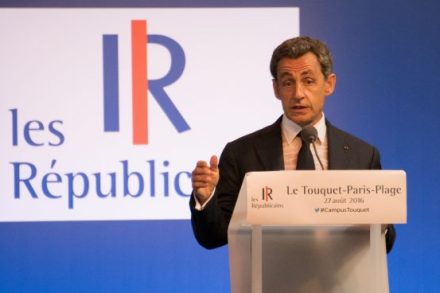
Nicolas Sarkozy threatens Britain over Calais migrant ‘jungle’

From our UK edition

During the referendum campaign, David Cameron sparked fury by suggesting the migrant camp in Calais could be shifted to Britain following a vote for Brexit. Now, that threat is resurfacing. This time, it's French politicians saying they'll tear up the deal known as the 'Treaty of Le Touquet' - a change, they say, which will allow migrants wanting to claim asylum in the UK to do so before they cross the Channel. The president of the Calais region, Xavier Bertrand, is amongst those calling for an amendment to the current deal. The good news for Britain? He doesn't have the power to do anything about the treaty, so his threats are all bluster. But there are others clambering for the top job in France who would have the authority to tear up the agreement.

The Spectator Podcast: Marriage for one | 27 August 2016

From our UK edition

An increasing number of women are entering into the institution of marriage with their dream partner: themselves. In her cover piece this week, Ariane Sherine investigates the women who have brought a new literalism to saying, 'I do'. But is this just a quirky fad? Or are we witnessing a profound social change? Lara Prendergast speaks to Ariane and Spectator editor Fraser Nelson on this week's Spectator podcast. Ariane tells Lara: 'There are an increasing number of women who have decided, because they don't have a man - or maybe some of them don't want a man - that if they can't find Mr Right, well, I'm going to embrace myself and marry myself and it's going to be a really positive and self-affirming ritual. I'm going to invite all my family and friends and have my big day, man or no man'.

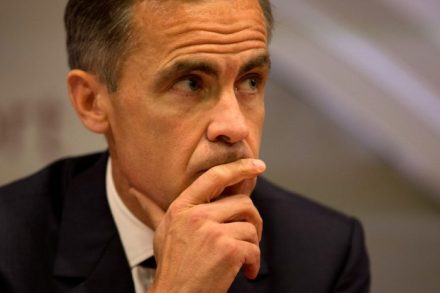
Mark Carney’s referendum ‘uncertainty spike’ exposed as bluster

From our UK edition

In the runup to the referendum, we heard repeated warnings that, whatever the outcome of the actual vote, the damage to the UK economy had been done. The Bank of England, whose governor has been accused of becoming something of a fellow traveller for Project Fear, warned in its Monetary Policy Committee meeting in March that: ‘There appears to be increased uncertainty surrounding the forthcoming referendum on UK membership of the European Union’. In April, the BoE was at it again, downgrading second-quarter growth from 0.5 per cent to 0.3 per cent. Warnings such as these risk of being self-fulfilling: if you talk about uncertainty, it’s hardly surprising that investors feel uncertain, creating a knock-on effect out of nowhere.

Owen Smith flounders in Brexit attack on Corbyn

From our UK edition

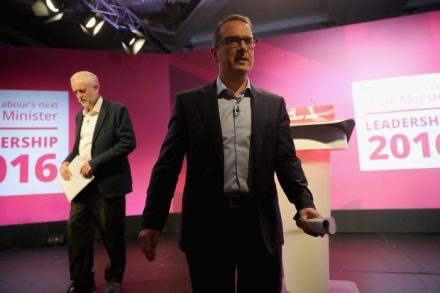
Owen Smith desperately needs to make up ground in Labour's leadership contest (bookies’ odds, perhaps more reliable than the polls, suggest Corbyn has an 84 per cent chance of winning next month). What's more, with voting soon drawing to a close, he has less and less time to do so. Which all explains why last night's leadership hustings in Glasgow was much more bitter than any of the others which came before it. The main topic of contention yesterday? The referendum - something which Smith is trying eagerly to make his own cause and his reason for being. Earlier this week, he said he wanted to block Brexit - a strategy which perhaps wasn't as fruitful as he hoped it would be.

Today’s net migration figures show the huge task facing Theresa May

From our UK edition

The good news for the Government is that net migration is down. The bad news? It's down by so little (a fall of 9,000 to a total of 327,000) that you won't hear anyone crowing about today's figures. That the 'tens of thousands' target made by the Government still hasn't been met is no surprise at all. And we can expect to see a continuation of the semantic shift from that Tory 'promise' down to a 'pledge'. So apart from telling us that, as far as net migration is concerned, it's business as usual, what do today's figures show us? For one, they make it clear that solving this issue won't be easy for the Prime Minister. Net migration from certain EU countries like Romania and Bulgaria is at a record high.

The Spectator Podcast: Marriage for one

From our UK edition

An increasing number of women are entering into the institution of marriage with their dream partner: themselves. In her cover piece this week, Ariane Sherine investigates the women who have brought a new literalism to saying, 'I do'. But is this just a quirky fad? Or are we witnessing a profound social change? Lara Prendergast speaks to Ariane and Spectator editor Fraser Nelson on this week's Spectator podcast. Ariane tells Lara: 'There are an increasing number of women who have decided, because they don't have a man - or maybe some of them don't want a man - that if they can't find Mr Right, well, I'm going to embrace myself and marry myself and it's going to be a really positive and self-affirming ritual. I'm going to invite all my family and friends and have my big day, man or no man'.

Owen Smith makes a foolish pledge to block Brexit

From our UK edition

Jeremy Corbyn's embarrassing train row is a gilt-edged opportunity for his rival to try and make up ground in the party's leadership contest. Instead, Owen Smith is more intent on alienating Labour voters by setting out how he wants to block Brexit. It's a foolish move on Smith's part. So why has he done it? It seems Smith's only motivation is to try and snatch away a core group of Corbyn supporters who want Britain to stay in the EU (after all, Corbyn said hours after the referendum that Article 50 should be triggered straight away). But the dim possibility of attempting to gain traction amongst sulking Remainers means Smith has taken his eye off a far bigger prize: the millions of Labour voters who did back Brexit.

Nicola Sturgeon resurrects Project Fear by claiming Brexit will cost Scotland billions

From our UK edition

If you thought the Brexit vote marked the end of 'Project Fear', you'll be saddened to know it's back. This time it takes the form of a warning from Nicola Sturgeon about what leaving the EU might cost Scotland. The Scottish Government report into the 'economic risk' to the country of Brexit, on which Sturgeon's prediction is based, doesn't appear to be worth the paper its written on however. It puts the bill as between £1.7bn and £11.2bn - a range so huge as to render it virtually meaningless. The report also suggests a similar, although thankfully, slightly smaller chasm in possible tax revenue, this time between £1.7bn and £3.7bn down after Brexit.