Toby Young

Toby Young

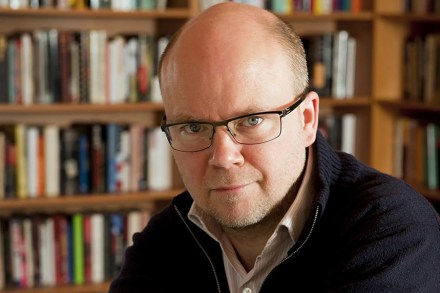
Toby Young is associate editor of The Spectator.

Yvette Cooper wants to lock up your sons

From our UK edition

In his independent review of the Prevent programme last year, Sir William Shawcross warned that something had gone very wrong with Britain’s counter-terrorism strategy. Instead of focusing on Islamism, Prevent was wasting its time investigating complaints of ‘far-right’ extremism from left-wing teachers, e.g. 14-year-old boys ‘caught’ watching TikTok videos of Nigel Farage. He has pointed out that 75 per cent of MI5’s caseload is taken up with Islamist threats, but 11 per cent of referrals to Prevent are related to Islamist terrorism. The result, Shawcross said, is a ‘dangerous’ surge in anti-Semitism, as we can see from the pro-Palestinian marches that have disfigured our cities for the past year.

Fraser Nelson, Cindy Yu, Mary Wakefield, Anthony Sattin, and Toby Young

From our UK edition

31 min listen

On this week’s Spectator Out Loud: Fraser Nelson signs off for the last time (1:30); Cindy Yu explores growing hostility in China to the Japanese (7:44); Mary Wakefield examines the dark truth behind the Pelicot case in France (13:32); Anthony Sattin reviews Daybreak in Gaza: Stories of Palestinian Lives and Cultures (19:54); and Toby Young reveals the truth behind a coincidental dinner with Fraser Nelson and new Spectator editor Michael Gove (25:40).  Produced and presented by Patrick Gibbons.

Israel’s revenge, farewell Fraser & the demise of invitations

From our UK edition

37 min listen

This week: Israel’s revenge and Iran’s humiliation. As the anniversary of the October 7th attacks by Hamas approaches, the crisis in the Middle East has only widened. Israel has sent troops into southern Lebanon and there have been attempted missile strikes from the Houthi rebels in Yemen and from Iran. Is there any way the situation can de-escalate? And how could Israel respond to Iran? Former BBC foreign correspondent Paul Wood and defence and security research Dr Limor Simhony join the podcast (1:03). Next: it’s the end of an era for The Spectator. This issue is Fraser Nelson’s last as he hands over the reins to Michael Gove. Having spent 15 years as editor, with 784  issues to his name, what are his reflections on his time here at 22 Old Queen Street?

Did Michael Gove mean what he said?

From our UK edition

I thought the Spectator dinner for Michael Gove hosted by Fraser Nelson would be cancelled. To be clear, this wasn’t a dinner where the Ming vase would be passed from one custodian to another, witnessed by the magazine’s general staff. Rather, this was a dinner to celebrate Michael’s legacy as education secretary organised weeks earlier by Rachel Wolf, founder of the New Schools Network, and which Fraser had kindly agreed to host. But – talk about bad timing! – at 1.30 p.m. on the day it was due to take place it was announced that Michael would be succeeding Fraser as editor.

Why play the Saudi anthem before an all-British boxing match?

From our UK edition

For only the second time in my life, I went to the Kingdom of Saudi Arabia last weekend. At least, it felt like I was in Saudi. I’m talking about the Anthony Joshua-Daniel Dubois fight at Wembley Stadium. Billed as the British version of George Foreman vs Joe Frazier, it was bankrolled by the Saudis and might as well have been taking place in Riyadh. The Master of Ceremonies was not Michael Buffer, then American ring announcer – although he was there and did say ‘Let’s get ready to rumble!’ – but His Excellency Turki Alalshikh, chairman of Saudi Arabia’s General Entertainment Authority.

The science of voting for Kamala Harris

From our UK edition

The latest issue of Scientific American, a popular science monthly published by Springer Nature, contains an editorial endorsing Kamala Harris. She is the candidate that anyone who cares about science should vote for, apparently. Her positions on issues such as ‘the climate crisis’, ‘public health’ and ‘reproductive rights’ are ‘lit by rationality’ and based on ‘reality’, ‘science’ and ‘solid evidence’, while her opponent ‘rejects evidence’ in favour of ‘nonsensical conspiracy fantasies’. There’s something a bit odd about a science magazine getting embroiled in the grubby world of politics On the face of it, there’s something a bit odd about a storied science magazine getting embroiled in the grubby world of politics.

Help! I’ve got class envy

From our UK edition

The summer holidays were a washout as far as my children are concerned, because we had to cancel our trip to Norway when I discovered two of their passports had expired. But in an effort to make it up to them, I managed to squeeze in a trip to Salcombe last weekend. Unfortunately, I failed to factor in the eye-watering expense of spending two days in the south Devon coastal town. It cost me the best part of £2,000. I’ve had cheaper meals at a London restaurant with three Michelin stars – and this was a beach shack Salcombe must be the most expensive seaside resort in Britain. For instance, a seafood platter for two at the Crab Shed, where I booked lunch on Sunday, will set you back £148.A single crab is £32.

Labour’s backwards steps on free speech

From our UK edition

Free speech advocates like me need to stop talking about the meagre gains we made under the last government because the present one seems to be listening carefully, taking notes, then gleefully reversing each one. First it torpedoed the Higher Education (Freedom of Speech) Act. Then it threatened to put the ‘legal but harmful’ stuff back into the Online Safety Act. Now, Yvette Cooper has said trying to get the police to record fewer ‘non-crime hate incidents’ (NCHIs) was a dreadful mistake. A non-crime hate incident was recorded against a man for whistling the Bob the Builder tune To grasp just how potty this is, you need to understand what an NCHI is.

How to exploit a crisis

From our UK edition

The phrase ‘never let a good crisis go to waste’ is often attributed to Winston Churchill, but it’s something the left is better at than the right. Take the Center for Countering Digital Hate (CCDH), a lobby group that campaigns for more online censorship run by Imran Ahmed, a former adviser to Hilary Benn and Angela Eagle. Earlier this month, the CCDH held an ‘emergency’ meeting to discuss the role of social media in fuelling the public disorder that followed the murder of three girls in Southport, and on Tuesday it published the policy recommendations that emerged from that meeting.

I was wrong about staycations

From our UK edition

I hadn’t intended to go on a ‘staycation’ this summer. Quite the contrary, I’d booked a family holiday to Norway. Last August, I made the mistake of renting a villa in Majorca and it was so hot it was impossible to do anything, including sleep. So this year I insisted on going north and arranged to borrow a log cabin near Trondheim. The two oldest children were so unimpressed – they loved the nightlife in Majorca – that they refused to come, which was fine by me. The flights were £200 each way and it meant we only had to rent a Fiat Uno instead of a six-seater. One of the legacies of having been a journalist for 40 years is that I’ve done a lot of travel pieces and find it painful to pay for foreign trips out of my own pocket.

Will Starmer make the Online Safety Act even worse?

From our UK edition

Good God, there’s a lot of guff being talked about the Online Safety Act. This was a piece of legislation passed by the previous government to make the UK ‘the safest place in the world to go online’. To free speech advocates like me, that sounded ominous, given that ‘safety’ is always invoked by authoritarian regimes to clamp down on free speech. But after we raised the alarm, the government stripped out the most draconian clauses and put in some protections for freedom of expression, so even though it’s bad, it’s not quite as awful as it could have been. What about the BBC, which got several things wrong in its reporting of an explosion in the car park of Gaza’s al-Ahli hospital? Step forward Sir Keir Starmer.

Free speech stops riots 

From our UK edition

With depressing predictability, the riots have led to calls for more censorship. Historically, it was the authoritarian right who blamed outbreaks of civil disorder on too much free speech, but this knee-jerk, illiberal reaction is now more likely to be found on the left. I’m not just thinking of Paul Mason, who called for Ofcom to revoke GB News’s broadcast licence, or even Carole Cadwalladr, who tweeted: ‘This should be our Dunblane moment. Only with social media not guns.’ I’m thinking of statements by the Prime Minister and the Home Secretary. Is Sir Keir going to urge the police to investigate his own role in ‘whipping up violence’?

Welcome to the new global theocracy

From our UK edition

I had a revelation while watching the Olympics opening ceremony. It was during the infamous section that I (and almost everyone else) understood to be a reference to Leonardo da Vinci’s ‘The Last Supper’. A large woman in a halo-like headdress was flanked by various avant-garde performance artists, including three drag queens. These, presumably, were the disciples. The table then turned into a catwalk and we were treated to a fashion show featuring representatives of the LGBT community, culminating in a naked man covered in sparkly blue paint. Sacré bleu! ‘This is France,’ tweeted Emmanuel Macron afterwards, apparently satisfied that this performance, like the rest of the opening ceremony, had epitomised everything worth celebrating about La Belle France.

The intersectional feminist rewriting the national curriculum

From our UK edition

The appointment of Becky Francis CBE to lead the Department for Education’s shake-up of the national curriculum is typical of Labour’s plan to embed their ideology across our institutions – or rather entrench it, since the long march is almost complete. On the face of it, Professor Francis is ‘unburdened by doctrine’, to use Sir Keir Starmer’s phrase about how Labour intends to govern. As former director of the Institute of Education and current CEO of the Education Endowment Foundation, she has the outward appearance of a technocrat. But scratch the surface and, like so many Labour appointees, she emerges as a long-standing adherent of left-wing identity politics.

Are the Rees-Moggs ready for their new reality?

From our UK edition

I felt slightly anxious for Sir Jacob Rees-Mogg when I read he’d agreed to have a reality show made about his family by an American television channel. I imagine most people’s reaction on hearing this was to think: ‘Are you stark raving bonkers?’ But as someone who’s appeared in several reality shows and been followed around by a BBC camera crew for a fly-on-the-wall documentary, I don’t think this was necessarily a mistake. It all depends on how the Rees-Moggs are portrayed, and while I doubt they’ll be able to control that – being given ‘final cut’ on such programmes is a rarity – they should be able to influence it.

What Labour could learn from Australia and New Zealand

From our UK edition

I’m just coming to the end of a four-week speaking tour Down Under and have spotted some worrying signs of what our new government might have in store for us, particularly on the free speech front. During its six years in power, the Labour party in New Zealand tried to criminalise ‘hate speech’ against minority groups, and Australia’s Labor government has announced it will bring forward legislation to strengthen laws against speech that incites hatred in relation to race, religion, sexual orientation and transgender identity. Will Keir Starmer do likewise? In England and Wales, it’s already a criminal offence to stir up hatred on the basis of a person’s race, religion or sexual orientation, although Nicola Sturgeon went further.

The joys of Canada by train

From our UK edition

There cannot be a lazier way of travelling across Canada than in the Rocky Mountaineer. There are luxury trains, and then there’s this. For two days, I sat in a sumptuously upholstered, air-conditioned carriage, looking out at the vast wilderness of Canada’s interior, as waiters plied me with wine, chocolates and three-course meals. When imagining my trip across the Canadian Rockies, I had envisaged plenty of bracing walks and fresh air. But by the end of my journey, I had gained five-and-a-half pounds. I went on a walk around the frozen lake accompanied by a guide who warned us about a bear known as the Boss who weighs 497lbs Admittedly, I was in GoldLeaf, the most luxurious section of this glass-domed, double-decker train.

The funny side of being cancelled

From our UK edition

Douglas Is Cancelled, the new drama series on ITV, should come with a trigger warning – for me, anyway. Watching it brought back memories of my own cancellation six years ago, which I found so traumatic that I lost half a stone. Admittedly, the middle-aged white man at the centre of this drama (Hugh Bonneville) only has one position to lose – he’s a television presenter – whereas I lost five. But apart from that the similarities are uncanny. Did the writer, Steven Moffat, read the 5,000-word piece I wrote about my experience? Or do all cancellations follow the same pattern? Douglas’s trial begins when someone on Twitter says they overheard him telling a sexist joke at a wedding.

The joy of my new allotment

From our UK edition

I was pleasantly surprised when I got an email from the Acton Gardening Association last October telling me that a plot had become available at the Bromyard allotments. I had put my name down so long ago, I’d completely forgotten. I asked if I could come and see the plot before making up my mind, and got a bit of a shock. It was strewn with weeds and discarded plastic and had what looked like a fly tip at one end. There were no crops apart from some potatoes and spring onions. I could see at a glance it would be a lot of work to get it into a fit state to plant some summer vegetables, not to mention looking after them once they were in the ground. ‘I’ll take it,’ I said. I didn’t visit again until this April, by which time it resembled a little patch of wilderness.

New Zealand’s culture wars backlash

From our UK edition

I’m in New Zealand on a speaking tour organised by the Kiwi Free Speech Union, and in some ways it’s like visiting Britain in a more innocent era. This struck me when I went on a tour of the Hobbiton movie set, where The Lord of the Rings and The Hobbit were filmed. The Shire of Tolkien’s imagination, lovingly created by Peter Jackson, is an idealised version of rural England – and New Zealand, with its perfectly manicured lawns and open-faced, friendly people, is a bit like that. Although, to be fair, I may be viewing the country through rose-tinted spectacles because Labour was heavily defeated in the most recent election, winning just 34 out of 120 seats.