Toby Young

Toby Young

Toby Young is associate editor of The Spectator.

Ignore the half-wit experts – the new GCSE marking system is as easy as 1,2,3…

From our UK edition

The amount of nonsense being talked about the new GCSEs in English and maths, whereby exams have been graded 9-1 rather than A*-G, is astonishing. The new grading system is ‘gibberish’ and will cost young people jobs, according to the Institute of Directors. The NSPCC thinks greater differentiation at the top end, with 9 being worth more than A*, will take a terrible toll on children’s mental health, while Mary Bousted, the General Secretary of the Association of Teachers and Lecturers, says the new system is ‘inherently ridiculous’. ‘To put 1 at the lowest and 9 at the top when the grades go alphabetically in a different order from A* to G just seems to put the icing on the cake,’ she says. Let us take these points in reverse order.

This year’s exam results for free schools prove Michael Gove was right

From our UK edition

As readers of The Spectator will know, I have been banging the drum for free schools for eight years – almost as long as Michael Gove, who first started talking about them in 2007. But it has been hard to persuade people of their virtues without any results to point to. Education is plagued by crackpot theories and un-evidenced policies and free schools were often dismissed as just another fad. Until this week. Now, at last, the advocates of the free schools policy have some results to point to – and they are spectacular. Last week, King’s College London Mathematics School, a specialist sixth form college that opened in 2014, topped the Times’s A level results table.

As easy as 1, 2, 3…

From our UK edition

The amount of nonsense being talked about the new GCSEs in English and maths, whereby exams have been graded 9-1 rather than A*-G, is astonishing. The new grading system is ‘gibberish’ and will cost young people jobs, according to the Institute of Directors. The NSPCC thinks greater differentiation at the top end, with 9 being worth more than A*, will take a terrible toll on children’s mental health, while Mary Bousted, the General Secretary of the Association of Teachers and Lecturers, says the new system is ‘inherently ridiculous’. ‘To put 1 at the lowest and 9 at the top when the grades go alphabetically in a different order from A* to G just seems to put the icing on the cake,’ she says. Let us take these points in reverse order.

Hunt-the-iPhone was the highlight of my hols

From our UK edition

For years, Caroline and I have been squabbling over where to spend our summer holidays. Her ideal is a family-friendly Mediterranean resort where she can lie on a beach reading a paperback, while mine involves renting a car and driving from place to place, staying in Airbnbs and packing in as many ‘fun’ activities as we can. Last year she got her way; this year it was my turn. So we took an easyJet flight from Gatwick to Munich. Admittedly not perfect, given that we were going to Italy, but it was the cheapest deal I could find: £450 all-in, including the kids. A bargain, even factoring in a 6.25 a.m. departure and a return flight to Luton.

Don’t like our diversity agenda? You’re fired

From our UK edition

Earlier this week, a technology website published an internal memo written by a Google employee called James Damore criticising the company’s efforts to diversify its workforce. This is ‘where angels fear to tread’ territory. The American technology sector has come under fire for years for failing to hire and promote enough women and Google is being investigated by the US Department of Labor for allegedly underpaying its female employees. What makes this memo particularly controversial is that Damore takes Google to task for discriminating in favour of women. He begins by saying that he is pro-diversity and accepts that sexism is one of the reasons women don’t constitute 50 per cent of the workforce in the tech industry.

The Google ‘anti-diversity’ memo isn’t anything of the sort

From our UK edition

Earlier this week, a technology website published an internal memo written by an employee of Google called James Damore criticising the company’s efforts to diversify its workforce. This is where-angels-fear-to-tread territory. The America technology sector has come under heavy fire for a number of years for failing to hire and promote enough women and Google is currently being investigated by the US Department of Labour for allegedly under-paying its female employees. But what makes this memo particularly controversial is that Damore takes Google to task for discriminating in favour of women. He begins by saying he is pro-diversity and accepts that one of the reasons women don’t constitute 50 per cent of the workforce in the tech industry is because of sexism.

Parents, not schools, are key to the knowledge gap

From our UK edition

The Education Policy Institute (EPI) has just published a report looking at the attainment gap between disadvantaged and non-disadvantaged 16-year-olds in England — and the news is not good. While the gap has narrowed by three months since 2007, it is still 19.3 months. That is to say, it is as if disadvantaged pupils have received 19.3 months less schooling than their peers by the time they take their GCSEs. For the persistently disadvantaged, i.e. those who have been eligible for free school meals for at least 80 per cent of their school lives, the gap is 24.3 months. Most people’s instinctive reaction to this news will be frustration and anger.

Rupert Murdoch has helped me understand Jeremy Corbyn’s appeal

From our UK edition

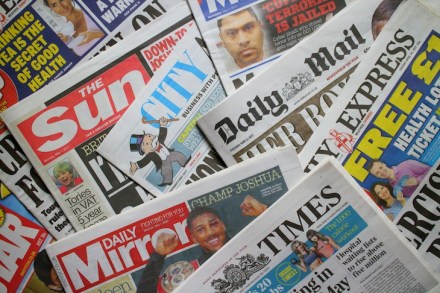
For our 16th wedding anniversary, Caroline and I went to the Almeida Theatre to see Ink, a new play about Rupert Murdoch’s purchase of the Sun in 1969 and the subsequent circulation war with the Daily Mirror. It is terrifically funny, brimming with comic characters and acerbic one-liners, as you would expect from writer James Graham, perhaps best known for This House, his play about the five-year duel between the Labour and Conservative whips during the period 1974-79. Ink is due to transfer to the Duke of York’s Theatre on 9 September and I cannot recommend it highly enough. One of the things that struck me as the Murdoch character prowls the stage, laying out his plans for world domination, is how similar he is to Jeremy Corbyn.

Now I get it – Corbyn is the new Murdoch

From our UK edition

For our 16th wedding anniversary, Caroline and I went to the Almeida Theatre to see Ink, a new play about Rupert Murdoch’s purchase of the Sun in 1969 and the subsequent circulation war with the Daily Mirror. It is terrifically funny, brimming with comic characters and acerbic one-liners, as you would expect from writer James Graham, perhaps best known for This House, his play about the five-year duel between the Labour and Conservative whips during the period 1974-79. Ink is due to transfer to the Duke of York’s Theatre on 9 September and I cannot recommend it highly enough. One of the things that struck me as the Murdoch character prowls the stage, laying out his plans for world domination, is how similar he is to Jeremy Corbyn.

Winter is nearly here – bring on the body count

From our UK edition

As a Game of Thrones fan, I feel ambivalent about the fact that the saga is finally wending its way to a conclusion. The latest season, which debuted on Sunday, is the last series but one; there will only be a total of 13 episodes across both. On the one hand, I feel sad about the fact that a television series that has given me so much pleasure is coming to an end. But I’m also a little relieved. At times, following the sprawling cast of characters and multiple story-lines has felt a bit too much like hard work. The past few seasons have become bogged down as the writers have dutifully charted the fates of minor figures such as Tommen Baratheon, an almost supernaturally boring princeling. I often found myself having to Google who the characters are just to keep track of them.

My wife’s revenge has me at break point

From our UK edition

Fifteen years ago, when I was The Spectator’s drama critic, Caroline used to complain that she had become a ‘theatre widow’. I was spending at least three nights a week in the West End while she was cooped up at home. Occasionally, I was able to persuade her to come with me, but most of the time she just made a face: ‘I’d love to accompany you to the musical version of Salman Rushdie’s Midnight’s Children, but unfortunately I have an unbreakable appointment with the sofa and the TV set.’ Well, she has her revenge. Caroline is captain of the Park Club Ladies Second Team and if she hasn’t got a match or a tournament, she’s doing ‘drills’ or playing in the ‘social’.

The government should think again before scrapping its free schools plan

From our UK edition

On the front page of today's Times it says ministers are thinking of scrapping the free schools policy in order to give more money to schools. I hope it’s not true. Not only would it constitute a terrible loss of self-confidence on the Government’s part and confirm the narrative that the Conservatives are enacting Labour’s manifesto rather than their own. It would also be a betrayal of the thousands of people who’ve set up free schools and are in the process of setting them up. We have taken on the educational establishment and put our necks on the line at the behest of successive Conservative Education Secretaries. Are they really going to abandon us now?

The trouble with diversity training

From our UK edition

Is diversity training snake oil? According to its proponents, women and minorities are not competing with white men on a level playing field when it comes to career advancement because of the ‘unconscious bias’ of their white male colleagues. The solution, if you’re the CEO of a large company, is to pay a ‘diversity consultant’ to train your managers to recognise and eliminate this bias. In America, it’s an $8-billion-a-year industry, yet a recent study in Australia suggests that, whatever is holding back women and minorities, it isn’t unconscious bias.

J.K. Rowling’s schizophrenic politics | 1 July 2017

From our UK edition

On the face of it, there is nothing complicated about the politics of Harry Potter, who made his first appearance in The Philosopher’s Stone 20 years ago. Like his creator J.K. Rowling, who once gave £1 million to the Labour party, he is a left-wing paternalist in the Bloomsbury tradition — the love child of John Maynard Keynes and Virginia Woolf. He feels a protective duty towards the common man (‘muggles’ in the lexicon of the novels) and a loathing for suburban, lower-middle-class Tories like the Dursleys, his Daily Mail-reading foster parents. The arch-villain of the saga is Voldemort, a charismatic Übermensch who believes in purity and strength and in the final novel promotes his own version of the Nuremberg Laws through the Ministry of Magic.

J.K. Rowling’s schizophrenic politics

From our UK edition

On the face of it, there is nothing complicated about the politics of Harry Potter, who made his first appearance in The Philosopher’s Stone 20 years ago. Like his creator J.K. Rowling, who once gave £1 million to the Labour party, he is a left-wing paternalist in the Bloomsbury tradition — the love child of John Maynard Keynes and Virginia Woolf. He feels a protective duty towards the common man (‘muggles’ in the lexicon of the novels) and a loathing for suburban, lower-middle-class Tories like the Dursleys, his Daily Mail-reading foster parents. The arch-villain of the saga is Voldemort, a charismatic Übermensch who believes in purity and strength and in the final novel promotes his own version of the Nuremberg Laws through the Ministry of Magic.

The writers of the Guardian’s ‘Brexit Shorts’ have swallowed Project Fear

From our UK edition

Earlier this week the Guardian launched ‘Brexit Shorts’, a series of monologues written by Britain’s ‘leading playwrights’ about the aftermath of the EU referendum. Now I know what you’re thinking: ‘What fresh hell is this?’ But bear with me. Watching the first batch of these short films, which are on the Guardian website, isn’t complete purgatory. Not because they’re much good, obviously — although one is, and I’ll come to that in a moment. But because the reason these writers are so anxious about Brexit is due to their uncritical acceptance of Project Fear. Perhaps they’ll become a little less hysterical once they’ve been introduced to some solid facts.

Panic of the playwrights

From our UK edition

Earlier this week the Guardian launched ‘Brexit Shorts’, a series of monologues written by Britain’s ‘leading playwrights’ about the aftermath of the EU referendum. Now I know what you’re thinking: ‘What fresh hell is this?’ But bear with me. Watching the first batch of these short films, which are on the Guardian website, isn’t complete purgatory. Not because they’re much good, obviously — although one is, and I’ll come to that in a moment. But because the reason these writers are so anxious about Brexit is due to their uncritical acceptance of Project Fear. Perhaps they’ll become a little less hysterical once they’ve been introduced to some solid facts.

Nick’s a visionary – he deserves a second chance

From our UK edition

I first met Nick Timothy in July 2015. He had just been appointed director of New Schools Network, the free schools charity I now run, and wanted to talk about the future of the policy. He has been portrayed in the media in the past week as a right-wing thug, as well as a swivel-eyed Brexiteer, but that wasn’t the impression he gave as he sipped his builders’ tea. On the contrary, he was trying to think of ways to weaken the association between free schools and the Tory party, particularly within the education sector. His mission, he explained, was to create cross-party support for the policy by setting up more free schools in disadvantaged areas.

Why I’m backing Corbyn the Great

From our UK edition

Comrades. I’m going to tell you why I think Jeremy Corbyn is the right person to lead this country. First of all, I like the fact that he’s not a typical politician. There’s something refreshing about his refusal to play the media’s game. Ordinary politicians are ready with a quote when a big story breaks, but not our Jeremy. He thinks nothing of switching off his phone and spending the day working on his allotment. Instead of talking to journalists on his way into meetings, he runs them over. When he does do interviews, his refusal to be interrupted speaks of a bold, confident leader who’s comfortable in his own skin. I particularly like his catchphrase and the way his voice goes all high-pitched when he says it: ‘Can I finish?

Race, gender and a terrifying witch hunt

From our UK edition

A leading article appeared in Nature last week in defence of intelligence research. It lamented the fact that it is not included on the undergraduate psychology curricula of many leading US universities, and attributed this to its association in the minds of students and faculties with elitism and racism. That, in turn, is due to the misuse of intelligence research in the past by eugenicists and ‘race scientists’ to justify their poisonous beliefs. The article expressed the hope that this toxic baggage can be discarded and intelligence rehabilitated as an important strand of psychology. This optimism is often shared by academics who study the genetic basis of human differences; not just variations in intelligence but in other personality traits too.