Toby Young

Toby Young

Toby Young is associate editor of The Spectator.

The problem with deciding things are ‘problematic’

From our UK edition

A controversy has erupted in Folkestone over a forthcoming screening of Zulu, the classic British war film. A charity has arranged to show the film at the Silver Screen Cinema on Saturday to raise money for members of the armed forces and their families, but the event may have to be cancelled following a letter to the town’s mayor signed by 28 locals objecting to Zulu’s ‘racist overtones’. ‘The film glorifies the myth that was created in 1879 after the humiliation of the British military defeat at the battle of Isandlwana,’ they write. ‘The Battle of Rorke’s Drift was, in reality, little more than a footnote after a far more important and far more gory battle earlier in the day, 11 miles away at Isandlwana.

This junk study proves nothing about helicopter parenting

From our UK edition

An academic paper by a group of child psychologists caused a stir earlier this week. ‘Helicopter parenting is bad for children,’ was how the Times reported it, and other news outlets summarised it in the same way. Here was proof, apparently, that wrapping your children in cotton wool and limiting their exposure to risk is bad for their emotional development and can lead to problems at school, as well as difficulties in later life. A few years ago, when I was in the first flush of fatherhood, I would have leapt on this study as confirmation that my laissez-faire attitude to parenting was more effective than the more hands-on approach of my peers.

Should women be paid for doing the housework?

From our UK edition

According to a new study published by some feminist academics at the Australian National University, women risk damaging their health if they work more than 34 hours a week. That’s not because women are the weaker sex, obviously, but because they do more housework and childcare than men, effectively working just as hard but dividing their labour between the office and home. On the back of this, the report’s authors have called for women to be paid the same for working a 34-hour week as men are for a 47-hour week. Until this happens, according to the researchers, women are being forced to choose between their health and gender equality. On the face of it, this proposal is bonkers.

A decent proposal

From our UK edition

According to a new study published by some feminist academics at the Australian National University, women risk damaging their health if they work more than 34 hours a week. That’s not because women are the weaker sex, obviously, but because they do more housework and childcare than men, effectively working just as hard but dividing their labour between the office and home. On the back of this, the report’s authors have called for women to be paid the same for working a 34-hour week as men are for a 47-hour week. Until this happens, according to the researchers, women are being forced to choose between their health and gender equality. On the face of it, this proposal is bonkers.

How to cope with unsold tickets and empty halls: my advice to Owen Jones

From our UK edition

My heart goes out to Owen Jones. The left-wing journalist is one of the headliners at a Labour party fund-raiser scheduled for next Saturday and, at the time of writing, 85 per cent of tickets remain unsold. It is particularly embarrassing for Jones, given that Rod Liddle managed to sell out the London Palladium last month. As someone who has struggled to attract audiences to these sorts of things in the past, I have a few tips for Owen. First of all, don’t give tickets away, because those who have already bought them will ask for their money back. Unfortunately, that horse has already bolted in Owen’s case.

I know all about unsold tickets and empty theatres

From our UK edition

My heart goes out to Owen Jones. The left-wing journalist is one of the headliners at a Labour party fund-raiser scheduled for next Saturday and, at the time of writing, 85 per cent of tickets remain unsold. It is particularly embarrassing for Jones, given that Rod Liddle managed to sell out the London Palladium last month. As someone who has struggled to attract audiences to these sorts of things in the past, I have a few tips for Owen. First of all, don’t give tickets away, because those who have already bought them will ask for their money back. Unfortunately, that horse has already bolted in Owen’s case.

Why have I bought a car I don’t actually like?

From our UK edition

I am currently in Brittany with the family, having made the 11-hour drive from London on Monday. It sounds like quite a lot of effort for a few days’ holiday, but my friend Wendy Steavenson invited us to stay and that so rarely happens when you’ve got four children that we felt we couldn’t turn her down. No doubt Wendy will regret this after 24 hours, as nearly all our previous hosts have. The journey wasn’t as much of an ordeal as it sounds since Caroline did the driving and I sat in the back and read Jonah Goldberg’s Suicide of the West.

A very enjoyable scandal

From our UK edition

As a conservative, I wasn’t sure what to make of the news that the BBC was adapting A Very English Scandal, John Preston’s entertaining account of the Jeremy Thorpe affair. On the one hand, it’s easy to depict Thorpe, the son of a Tory MP and an old Etonian, as a ruling class villain. Would the BBC turn his story into yet another ‘bash the rich’ tragi-comedy in the same vein as The Riot Club, a piece of left-wing agitprop in which members of the Bullingdon Club conspire to commit murder? When I heard Hugh Grant had been cast as Thorpe that confirmed my suspicions.

Stop boiling over about gammon

From our UK edition

I was disappointed by the reaction of my fellow conservatives to gammon-gate. For those who haven’t been following this mini-scandal, it concerns the use of the word ‘gammons’ by those on the Corbyn-ite left to describe middle-aged, red-faced, pro-Brexit white men who vote Tory. According to the snowflakes of the right, this is a deeply offensive epithet that manages to be both racist and ageist. ‘This is a term based on skin colour and age — stereotyping by colour or age is wrong no matter what race, age or community,’ tweeted the DUP MP Emma Little-Pengelly. Hard to disagree with that — and she could have thrown in snobbery for good measure.

May the marketisation of our schools continue

From our UK edition

Towards the end of 2009, shortly after I announced my intention to set up England’s first free school, I debated with Fiona Millar on Newsnight about the pros and cons of allowing parents to set up schools. Fiona had been having this debate, or ones very like it, for at least 20 years and it soon became apparent that I was outmatched. I felt like an amateur who’d stepped into the ring with Mike Tyson. After five minutes, as I lay bleeding at her feet, she turned to Jeremy Paxman and said: ‘I don’t even know why we’re bothering to have this debate. Toby’s not actually going to do this. Setting up a school is so complicated, it’s not something a group of parents is ever going to manage.

What every incel needs: a sex robot

From our UK edition

In a recent blogpost, an American economics professor called Robin Hanson asked why it is that income inequality is regarded as a terrible injustice by liberal progressives, but sex inequality — the fact that attractive people generally have more sex than unattractive people — is thought of by the same people as an unalterable fact of life that no one should complain about. ‘One might plausibly argue that those with much less access to sex suffer to a similar degree as those with low income, and might similarly hope to gain from organising around this identity,’ he wrote.

Justine Greening is wrong to pick on Eton

From our UK edition

The former education secretary, Justine Greening, has urged firms to discriminate against applicants from Eton on the grounds that it is easier to get good A level grades if you’ve been to Eton rather than a comprehensive. There are several odd things about her statement. First, why single out Eton? In terms of A level passes at grade A* or A, Eton is 12th in the independent school league table, behind Westminster, Wycombe Abbey, St Paul’s and City of London School for Girls, among others. Cardiff Sixth Form College is top, with 91.9 per cent of its students gaining A* or A in their A levels last year. I guess urging employers to discriminate against applicants from a sixth form in Cardiff wouldn’t have generated the same headlines.

The human cost of eco-tourism

From our UK edition

I’m currently in Africa, about to go gorilla trekking in the Bwindi Impenetrable Forest, a large primeval forest located in south-western Uganda on the border of the Democratic Republic of Congo (DRC). I’m looking at it out of my window as I write and it’s breathtaking: 207sq km of rainforest and one of the most biologically diverse places on earth. In addition to 220 species of butterflies, 348 species of birds and more than 1,000 flowering plant species, it’s home to about half the world’s population of mountain gorillas. The Ugandan government cordoned off this area in the early 1990s to create the Bwindi Impenetrable National Park, along with a section of the nearby Virunga mountain range, now the Mgahinga Gorilla National Park.

The left is heading for a reckoning with the new genetics

From our UK edition

Writing about the link between genes and educational attainment can be dangerous, as the psychologist Arthur Jensen discovered. After publishing a paper in the Harvard Education Review in 1969 entitled ‘How much can we boost IQ and scholastic achievement?’ he was compared to Hitler and, for a time, had to be accompanied to work by bodyguards. Last year, the political scientist Charles Murray, who addressed this subject in The Bell Curve, was attacked by a group of student protestors at Middlebury College and a female colleague who tried to protect him ended up in hospital. Jensen and Murray both strayed on to the live rail of black-white IQ differences, but even those who steer well clear of that can get into difficulty.

Tips on how to get your child into the best state school

From our UK edition

Monday was ‘national offer day’, which means that more than half a million parents across England were notified about which primary school their child got into. For most, the news was good, with nine in ten parents securing a place at one of their top three choices. But for some — particularly in London — the offer letters brought disappointment. In Kensington and Chelsea, for instance, just 68.3 per cent got their first choice of school. Not surprising, then, that parents have been resorting to fraud. In some cases, desperate parents end up spending so much money to game the system it would be cheaper to go private.

I used to think I was smarter than my wife. Not anymore

From our UK edition

According to new research published in Advances in Physiology Education, men tend to significantly overestimate their own intelligence whereas women only marginally overestimate theirs. The architect of this study, Katelyn Cooper, a doctoral student at Arizona State University, believes this helps explain why fewer women embark on PhDs in the life sciences and why there are fewer tenured female professors in STEM fields. She also thinks it partly explains why women are less likely to rise to the top of their chosen professions. I’m not so sure about that, but first a mea culpa. I used to think I was smarter than my wife. However, after being married to Caroline for more than 16 years I’m finding it harder and harder to cling on to this illusion.

Why we must save the Open University

From our UK edition

I was sorry to read about the difficulties facing the Open University today. The Mail splashed on the story, while the Times and the Sun have followed up. This is a story close to my heart because my father Michael Young was one of the founders of the OU. I told the story of how he came up with the idea for a ‘university of the air’ in an article for this magazine last year: In 1961, shortly after getting a job as a lecturer at Cambridge, my father had an idea. The faculty buildings, he discovered, were largely unused for six months of the year. The colleges, too, were empty. Why not create two Cambridges, one for term time and one for the holidays?

Death at a funeral

From our UK edition

Something very odd occurred at a funeral I attended last week — somebody died. I don’t mean the person who was being buried. They had died a few days earlier, obviously. I mean one of the mourners passed away during the service. That was shocking in its own right, but what made it surreal is that the other mourners carried on as if nothing had happened. The funeral took place in the deceased’s garden, where her family had arranged for her to be buried, and at the conclusion of the service someone announced that wine and food would be served. The 100 or so people in attendance formed a queue at the kitchen door and started chatting among themselves. Meanwhile, the poor woman who had died was flat out on the grass behind them.

Money can’t buy good exam results

From our UK edition

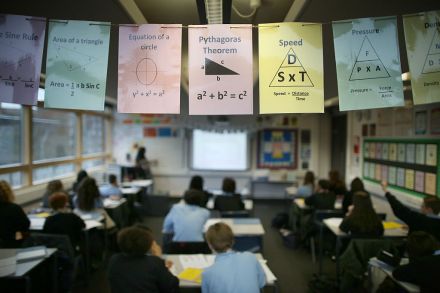
A paper published last week in an academic journal called npj Science of Learning attracted an unusual amount of press attention. It looked at the GCSE results of 4,814 students at three different types of school — comprehensives, private schools and grammars — and found that once you factor in IQ, prior attainment, parental socio-economic status and a range of genetic markers, the type of school has virtually no effect on academic attainment. Less than 1 per cent of the variance in these children’s GCSE results was due to school type.

If Corbyn wins, my escape route is clear

From our UK edition

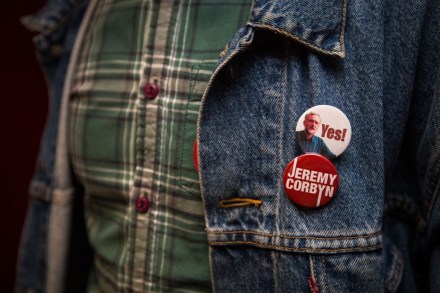
I’m currently in Israel on a press trip organised by Bicom — the Britain Israel Communications and Research Centre. Bicom does a good job of getting experts on the Israeli-Palestinian conflict to give talks to journalists and I’ve attended a few in their London offices. But this is the first time I’ve been on one of their legendary excursions to the Holy Land, which they organise about six times a year. In essence, you’re given a whistle-stop tour of the country while being briefed at every turn by senior ministers and officials on both sides of the divide. It’s seventh heaven for foreign policy nerds, but I also have another reason for being here, which is to weigh up the pros and cons of emigrating to Israel.