Toby Young

Toby Young

Toby Young is associate editor of The Spectator.

Cambridge’s shameful decision to rescind Jordan Peterson’s visiting fellowship

From our UK edition

According to the Equality and Human Rights Commission’s ‘Freedom of Expression’ guide for higher education providers and students’ unions in England and Wales, no speaker has a right to be invited to speak to students on a provider’s premises, but once someone has been invited they should not then be disinvited. It even suggests this may be a breach of Section 43 of the Education (No 2) Act 1986, which places a legal duty on universities to take ‘reasonably practicable’ steps to protect freedom of speech.

Why is it only privately educated women who get to lecture people about ‘oppression’?

From our UK edition

Scarcely a week passes without a privately educated young woman with a successful career in journalism publishing a book about how ‘oppressed’ women are. Names that spring to mind are Laurie Penny (Brighton College), Zoe Williams (Godolphin and Latymer), Laura Bates (King’s College), Afua Hirsch (Wimbledon High School) and Grace Blakeley (Lord Wandsworth College). Indeed, you’d be forgiven for thinking that in order to qualify as an ‘intersectional feminist’ and present yourself as a victim of ‘systemic inequality’ you need to be a member of the ruling class.

Angry women who lead charmed lives

From our UK edition

Scarcely a week passes without a privately educated young woman with a successful career in journalism publishing a book about how ‘oppressed’ women are. Names that spring to mind are Laurie Penny (Brighton College), Zoe Williams (Godolphin and Latymer), Laura Bates (King’s College), Afua Hirsch (Wimbledon High School) and Grace Blakeley (Lord Wandsworth College). Indeed, you’d be forgiven for thinking that in order to qualify as an ‘intersectional feminist’ and present yourself as a victim of ‘systemic inequality’ you need to be a member of the ruling class.

The rise of the woke corporation

From our UK edition

New employees at the British headquarters of Accenture, a global management consultancy, were slightly taken aback during a recent induction morning when the head of human resources encouraged them to wear rainbow-coloured lanyards declaring themselves ‘allies’ — not just at the meeting, but permanently. In addition, they were given the option of adding the word ‘ally’ in the same rainbow pattern to the footers of their company email addresses. Anyone confused by HR language — a reference to the second world war perhaps?

Why the squeezed middle are poorer than their parents

From our UK edition

It won’t be news to readers of The Spectator that one of the long-term effects of globalisation is the hollowing out of the middle class. In a study of wage growth in ten advanced economies published a few years ago, the Resolution Foundation found that median pay lagged behind growth in GDP, with the gap between the middle class and the highest-paid growing and the gap between them and the lowest-paid shrinking. The phenomenon is particularly pronounced in the US. There, the top 10 per cent of income earners have seen their share of national income increase since the 2007-08 recession, while the remaining 90 per cent have seen their share fall, with middle-income groups hit the hardest.

Four kids – what were we thinking?

From our UK edition

You’d think the little buggers would be grateful. Caroline and I had just shelled out for our two middle children — Freddie, 11, and Ludo, 13 — to spend a week in Austria on the school’s half-term ski trip. It meant we couldn’t afford to leave the house for the whole of February, but we stupidly paid for their sister to go on the same trip last year so felt we had no choice. Yet as soon as they came back they wanted to know where we were going on holiday this summer. Ten years ago, they were more than happy to go to Cornwall, which suited me down to the ground. I would sit on the beach behind a windbreak, reading a James Ellroy novel, while the children pottered about in the sand.

Bohemian Rhapsody’s Oscars win is a triumph over snobby film critics

From our UK edition

Midway through Bohemian Rhapsody, the big screen biopic about legendary Queen frontman Freddie Mercury that won four Oscars on Sunday, we see a montage of the critical reviews given to the group’s 1975 song of the same name. Queen had put it out as a single and it wasn’t expected to be a success. At six minutes, it was twice as long as most top 40 hits and its bizarre blend of opera, pop and hard rock was like nothing anyone had ever heard before. “Pompous and overlong,” concluded one music critic. “All flash and calculation without soul,” opined another. “A song that should be sunk to the bottom of the sea and never heard from again,” concluded a third.

There’s space for a new party in Britain, but not for another SDP

From our UK edition

I was 17 when the Labour party last split, in January 1981, and for a variety of reasons got quite caught up in the moment. It was partly because my father, the author of the 1945 Labour manifesto, was close to the Gang of Four — the original band of defectors — and was one of a hundred people named as supporters of the breakaway group in a full-page ad in the Guardian. But really I was just swept up by the general enthusiasm for the new party that seemed to affect vast swaths of the middle classes. If you recoiled from the economic policies of the Conservative government, which prioritised reducing inflation over full employment, but were equally querulous about the leftward shift of the Labour party, the SDP was an appealing alternative.

Been there, done that | 21 February 2019

From our UK edition

I was 17 when the Labour party last split, in January 1981, and for a variety of reasons got quite caught up in the moment. It was partly because my father, the author of the 1945 Labour manifesto, was close to the Gang of Four — the original band of defectors — and was one of a hundred people named as supporters of the breakaway group in a full-page ad in the Guardian. But really I was just swept up by the general enthusiasm for the new party that seemed to affect vast swaths of the middle classes. If you recoiled from the economic policies of the Conservative government, which prioritised reducing inflation over full employment, but were equally querulous about the leftward shift of the Labour party, the SDP was an appealing alternative.

All these striking kids want is a day off school

From our UK edition

Thousands of schoolchildren are planning to go on ‘strike’ on Friday to protest about government inaction on climate change. Called the ‘Youth Strike 4 Climate’, it has been inspired by a 16-year-old Swedish schoolgirl called Greta Thunberg who has spent every Friday since August protesting outside the Swedish parliament and has encouraged others to follow her lead. To date, there have been strikes in Australia, Belgium and the Netherlands, among other countries, with up to 70,000 children taking part each week. From a school’s point of view, this kind of thing is a nightmare. Teachers are usually working to a detailed plan in which a syllabus is being taught in a particular sequence.

Esquire falls foul of hashtag activism

You have to admire the inexhaustible capacity of the social justice left for taking offense. This week, the straight white male in the stocks is Jay Fielden, the editor-in-chief of Esquire. His sin? To put a white teenager called Ryan Morgan on the front of the March issue, accompanied by the line: ‘What it’s like to grow up white, middle class and male in the era of social media, school shootings, toxic masculinity and a divided country.’ Turns out, it’s a lot harder if you appear on the cover of Esquire. https://twitter.com/eiffeltyler/status/1095321466357403648 ‘Really @esquire?’ tweeted Karamo Brown, a television presenter in Los Angeles. ‘“What’s it like growing up white, middle class and male…” How idiotic!

esquire

The hypocrisy of the Eurovision boycott

From our UK edition

The Guardian last week published a ‘we, the undersigned’ letter from 50 ‘artists of conscience’ urging the BBC to boycott this year’s Eurovision Song Contest because it’s taking place in Israel. ‘Eurovision may be light entertainment,’ they wrote, ‘but it is not exempt from human rights considerations — and we cannot ignore Israel’s systematic violations of Palestinian human rights.’ The signatories included such luminaries as Julie Christie, Peter Gabriel, Roger Waters, Vivienne Westwood and Ken Loach. Ken’s inclusion will have come as a surprise to those Israelis who saw his film I, Daniel Blake in Tel Aviv a couple of years ago.

Tunnel vision

From our UK edition

The Guardian last week published a ‘we, the undersigned’ letter from 50 ‘artists of conscience’ urging the BBC to boycott this year’s Eurovision Song Contest because it’s taking place in Israel. ‘Eurovision may be light entertainment,’ they wrote, ‘but it is not exempt from human rights considerations — and we cannot ignore Israel’s systematic violations of Palestinian human rights.’ The signatories included such luminaries as Julie Christie, Peter Gabriel, Roger Waters, Vivienne Westwood and Ken Loach. Ken’s inclusion will have come as a surprise to those Israelis who saw his film I, Daniel Blake in Tel Aviv a couple of years ago.

We shouldn’t lower our expectations for white schoolchildren

From our UK edition

The Department for Education (DfE) published its finalised data on the 2018 GCSE results last week, revealing that, for the second year running, white pupils are doing worse in English secondary schools than any other ethnic group. According to the new Progress 8 measure, which assigns a score to GCSE entrants based on how much progress they’ve made between the ages of 11 and 16 relative to children of similar abilities, Chinese pupils do the best, with a score of 1.08, Asians are second (0.45), then blacks (0.12), mixed race (-0.02) and, bringing up the rear, whites (-0.10). What that score means is that on average white children are behind by a tenth of a grade in each of their best eight GCSEs compared to all English schoolchildren with the same grades at the age of 11.

The problem with measuring progress

From our UK edition

The Department for Education (DfE) published its finalised data on the 2018 GCSE results last week, revealing that, for the second year running, white pupils are doing worse in English secondary schools than any other ethnic group. According to the new Progress 8 measure, which assigns a score to GCSE entrants based on how much progress they’ve made between the ages of 11 and 16 relative to children of similar abilities, Chinese pupils do the best, with a score of 1.08, Asians are second (0.45), then blacks (0.12), mixed race (-0.02) and, bringing up the rear, whites (-0.10). What that score means is that on average white children are behind by a tenth of a grade in each of their best eight GCSEs compared to all English schoolchildren with the same grades at the age of 11.

The rush to judgment that belies the truth

From our UK edition

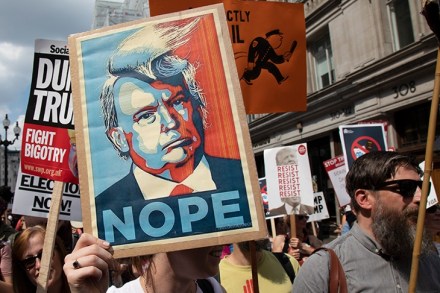
Donald Trump is often criticised by liberal news organisations like CNN and the New York Times for resorting to the phrase ‘fake news’ whenever he’s asked an awkward question. This is evidence of his slipperiness, we’re told, as well as his arms-length relationship with the truth. What’s more, it’s irresponsible to repeat this charge endlessly because it undermines public trust in journalism. That’s not just bad for the fourth estate; it’s bad for democracy. There’s some truth to that, which is why it was so disheartening to see the liberal media go out of its way last weekend to confirm Trump’s cynicism.

I see no signs of civilisation crumbling

From our UK edition

There’s a scene in Lord of the Flies, William Golding’s masterpiece about the collapse of western civilisation, in which a particularly sadistic boy named Roger starts to throw stones at a weaker, younger lad called Henry. Yet when he tries to hurt the boy, he finds he cannot do it. ‘Roger gathered a handful of stones and began to throw them,’ writes Golding. ‘Yet there was a space round Henry, perhaps six yards in diameter, into which he dare not throw. Here, invisible yet strong, was the taboo of the old life.’ Golding attributes this six-yard forcefield to civilisation. It’s the legacy of the various authorities Roger has been conditioned to respect — parents, school, policemen, the law, etc.

Save the male

From our UK edition

For the first time in its history, the American Psychological Association (APA) has issued guidelines for mental health professionals working with men and boys. That may not sound like a momentous event, but the APA is a powerful body in the US. It has 117,500 members, including the vast majority of practising psychologists, and an annual budget of $115 million. Its guidance documents carry the imprimatur of scientific authority and are hugely influential when it comes to policies and behaviour in public institutions. This edict will be referred to by university administrators when policing sexual interactions on campus, by the courts when deciding who to award custody to in divorce hearings and by HR departments when assessing complaints about male employees.

Socially segregated Oxbridge colleges are a dreadful idea

From our UK edition

The Guardian has published a piece by Andrew Adonis urging Oxford and Cambridge to set up ‘access colleges’ which would only admit applicants from comprehensives. I’ve long been a fan of Adonis. He did more to drive up standards in state schools as a Labour education minister than most Conservatives do as education secretaries. Unlike his partisan colleagues, he has also been wholly supportive of the free schools programme and gave me some much needed words of encouragement when I was trying to set one up. So I was disappointed to see him resurrect this old idea. The last time it was run up the flagpole, five years ago, I opposed it in an Oxford Union debate and my views haven’t changed.

The great awokening

From our UK edition

Is the social justice movement that’s sweeping British and American universities a secular religion? The core beliefs of the members of this cult certainly seem to play the same psychological role as the central tenets of the world’s major religions. They furnish their adherents with rituals and blasphemy laws, a way of distinguishing between the sacred and the profane, a vision of what it is to be a good person and live in a good society, and they enable them to engage in tribal sorting, dividing people between members of the in-group and the out-group. No doubt the same could be said of most political ideologies, but there’s one aspect of left-wing identity politics in which it reveals itself as more cult-like than other belief systems.