Toby Young

Toby Young

Toby Young is associate editor of The Spectator.

What would ‘sensitivity readers’ have made of my student scoops?

From our UK edition

‘Whatever you do, don’t call them snowflakes,’ Caroline said the last time I spoke to Oxford students. ‘That’s not a grown-up way of conducting a political debate. It’s like calling you a gammon.’ She’s right, of course, but by God they make it hard. This week we learned that the Oxford University students’ union is planning to elect a ‘consultancy’ of ‘sensitivity readers’ to scrutinise articles in student newspapers before publication to make sure they won’t offend anyone. If the union has its way, the editor of Cherwell, one of Oxford’s oldest student publications, won’t have final say over what’s published in the weekly paper.

The luxury of being pro-lockdown

From our UK edition

I’ve just written an essay for the People’s Lockdown Inquiry, a new collaboration between Buckingham University, the Institute of Ideas and the Reclaim party. The question I’ve puzzled over in my contribution is why the global elite became such enthusiastic supporters of the heavy-handed, statist approach to managing the coronavirus crisis — stay-at home orders, business closures, face masks — and passionate opponents of less draconian alternatives, such as those set out by the signatories of the Great Barrington Declaration. Choosing between these two positions is far from simple, with powerful moral arguments and compelling research evidence on both sides.

The curious parable of Dartington

From our UK edition

I spent last weekend in south Devon at Dartington, the former estate of Dorothy and Leonard Elmhirst, and now a charitable trust. I know the place quite well because my father was more or less adopted by the Elmhirsts when he was 14 and I spent four years there as a teenager while he was writing Dorothy and Leonard’s biography. He described it as his best book and I was pleased to see it on display behind the reception area at Dartington Hall, a Grade I listed building that is now a hotel, among other things. I’ve always thought the story of Dartington would make a good parable about the folly of left-wing idealism. When the Elmhirsts bought the estate in 1925, Dorothy was one of the richest women in the world, having inherited $15 million at the age of 17.

The rise of the pluto-meritocracy

From our UK edition

Meritocracy, a word coined by my father, gets a bad press these days. Two recent books — The Meritocracy Trap (2019) by Daniel Markovits and The Tyranny of Merit (2020) by Michael Sandel — hold it responsible for many of America’s ills, and in some settings saying you believe the most qualified person should get the job is classified as a ‘micro-aggression’ because it ignores the role that race plays in determining a person’s life chances. It’s one of those progressive doctrines that’s fallen out of favour. So kudos to Adrian Wooldridge, the political editor of the Economist, for producing a full-throated defence of the principle.

For journalists like Protasevich, free speech is a matter of life and death

From our UK edition

Last August I wrote a column in The Spectator’s US edition urging Donald Trump to take a leaf out of Alexander Lukashenko’s book and campaign for re-election on a vodka-and-sauna approach to managing the pandemic. Belarus was one of a handful of European countries not to impose a lockdown last year, with the President urging his citizens to have plenty of vodka and lots of saunas to avoid infection.

The problem with decolonising Shakespeare

From our UK edition

Scarcely a day passes without a major British institution announcing it is ‘decolonising’ itself. Most recently it was the turn of Shakespeare’s Globe, which announced a series of ‘anti-racist Shakespeare webinars’ as part of its ‘commitment to decolonising the plays of Shakespeare’. That brought me up short. At the time of Shakespeare’s birth, England didn’t have any colonies, although other European states did. True, The Tempest can be read as a metaphor for colonialism, with Prospero taking Sycorax’s island from her and enslaving Caliban, but Prospero is Milanese, not British. And it’s not exactly an argument in favour of colonial rule. Prospero wants nothing more than to return to Milan to reclaim his dukedom.

Our confusing voting system has cost me £25

From our UK edition

Some 114,201 ballots were rejected in the first round of the London mayoral election, approximately 5 per cent of the total votes cast. This wasn’t because people were deliberately spoiling their ballots to protest about the fact that no one standing represented their views. After all, there were 20 candidates in the election encompassing a broad spectrum of opinion. No, it was because they didn’t understand the supplementary vote system, whereby you’re supposed to put a cross next to the candidate of your first choice and a cross next to your second. According to official figures, 87,214 of the spoilt ballots were discounted because people had voted for more than one candidate in the first preference column.

We Lumas have the weight of the world on our shoulders

From our UK edition

In the introduction to an anthology of his jazz record reviews, the poet Philip Larkin imagines his readers. They’re not exactly full of the joys of spring. He describes them as ‘sullen fleshy inarticulate men… whose first coronary is coming like Christmas’. Loaded down with ‘commitments and obligations and necessary observances’ they’re drifting helplessly towards ‘the darkening avenues of age and incapacity’. Everything that once made life sweet has deserted them and their only solace is the memory of the music they once loved. I first read that passage 35 years ago and didn’t think it would apply to me one day. Admittedly, the men Larkin conjures up are more miserable than I’ll ever be.

Roddy McDougall, Theo Zenou, Gus Carter and Toby Young

From our UK edition

23 min listen

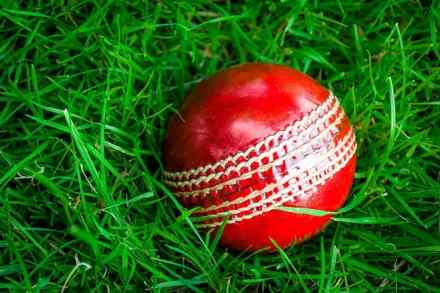
On this week’s episode, Roddy McDougall remembers heroes of the speedway, (01:15) Theo Zanou examines at Stanley Kubrick’s fascination with Napoleon, (07:20) Gus Carter looks at a memorial to everyday heroism, (17:20) and Toby Young explains what’s wrong with Equity’s anti-racism guidelines.

The problem with Equity’s anti-racism guidelines

From our UK edition

‘Rouse tempers, goad and lacerate, raise whirlwinds.’ Those were the words that Kenneth Tynan, the most celebrated drama critic of the 20th century, had pinned above his desk. During my five-year stint as The Spectator’s theatre critic I did my best to follow that philosophy. But according to a new set of guidelines devised by Equity and embraced by the National Union of Journalists, reviews should be ‘balanced, fair and designed to be productive’. Any critic living by that credo would be more likely to raise a yawn than a whirlwind. The guidelines, part of Equity’s anti-racism campaign, have been developed to help critics ‘challenge their own biases and to encourage responsible writing about race’.

Am I really paying £3,000 for six days in Wales?

From our UK edition

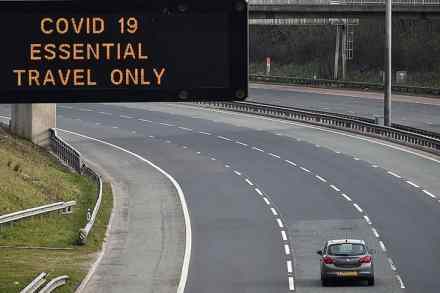
Has it ever been more difficult to plan a family holiday? At the time of writing, it is illegal to travel abroad from the UK for non-work purposes. That restriction is expected to be lifted in due course, although not before 17 May, and replaced by a traffic light system, with countries ranked green, amber or red depending on how they’re coping with the virus. Only eight places are expected to be on the green list — Australia, New Zealand, Ireland, Israel, Gibraltar, Iceland, Malta and the USA — and holidaymakers will be required to take a PCR test before boarding a plane home and another within 48 hours of returning.

Let’s show vaccine passports for football fans the red card

As I’ve written before, the thing I’ve missed the most in the past 12 months is going to see QPR with my son Charlie. So I’m alarmed about the prospect of having to produce a ‘Covid status certificate’ every time I want to go to a game. That was the advice in a recent letter signed by various sporting panjandrums and I fear it will also be the recommendation of the taskforce set up by the Department for Culture, Media and Sport to look into reopening sports venues. The first and most obvious objection is that it’s a breach of my liberty. It’s an inversion of the Common Law principle that everything should be permitted unless the law specifically prohibits it.

The facts about race and education

From our UK edition

Judging from the reaction to last week’s Commission on Race and Ethnic Disparities report, you’d think it had been written by a group of white supremacists who deliberately falsified the evidence about the prevalence of racism in contemporary Britain. Labour MP Clive Lewis tweeted a picture of the Ku Klux Klan alongside the hashtag #RaceReport, while Dr Priyamvada Gopal, a Cambridge University professor, compared the chairman of the Commission to Goebbels. In fact, only one of the report’s ten authors is white and the chairman, Dr Tony Sewell, says in the foreword: ‘We take the reality of racism seriously and we do not deny that it is a real force in the UK.

I’ve swapped booze for Pot Noodles

From our UK edition

Along with many other people, I gave up drinking for the month of January and then resumed with gusto on 1 February. But my 13-year-old son Fred, the only Christian in my household, urged me to give it up again for Lent. ‘Why not keep me company?’ he asked, having decided to forego sugar. But he didn’t just demand I stop boozing. He’d spotted the fact that when I go through a teetotal phase I compensate by stuffing my face with nuts and chocolate, thereby piling on the pounds. So he insisted I give up all three for 40 days. At least, he told me it was 40 days. In fact, the first day of Lent was 17 February and the last day is 3 April, which is 46 days.

Journalism is pure madness

On January 21, a Canadian online news outlet called the Tyee published a hit piece on Angelo Isidorou, a 24-year-old journalist for the Post Millennial, another online Canadian magazine. Isidorou had made himself a target by becoming a board member of the Non-Partisan Association, a municipal political party in Vancouver which, in spite of its name, is center-right. Isidorou’s sin, as captured on the Tyee’s front page, was that he had been photographed ‘flashing a symbol favored by hate groups’. The symbol in question was the thumb-to-index-finger ‘OK’ sign, which according to the Tyee’s reporter is a ‘widely recognized white power signal’.

journalism

Katja Hoyer, Fraser Nelson and Toby Young

From our UK edition

18 min listen

On this episode, Katja Hoyer looks at Ursula von der Leyen past mistakes. (00:45) Then, Fraser Nelson says the Defence Review could be a sign that Britain is learning from its foreign policy failings. (04:10) Finally, Toby Young explains the downsides to owning a small dog.

The terror of seeing my dog attacked

From our UK edition

I was walking with our one-year-old cavapoochon on the way back from the baker’s in Acton on Sunday morning when I spotted a man with two greyhounds coming towards me. At least, I think they were greyhounds. They looked like they’d been injected with steroids, making their muscles grow and pop and giving their faces ravenous, desperate expressions. ‘Just as well he’s keeping those dogs on the lead,’ I thought. Sure enough, as soon as they spotted Malinky they went crazy — barking, squealing, straining at the leash. Did they mistake her for a rabbit or a rodent of some kind? Mali looked terrified, as if she knew she’d been earmarked as a Scooby snack.

My plan to kick off life after lockdown

From our UK edition

The last time I went to a football game was on Saturday 7 March last year when my 12-year-old son and I went to see QPR play Preston North End. When we got there we were handed a certificate, signed by the manager, congratulating us on having travelled 228 miles. Pretty heroic given QPR’s record on the road is so poor the fans have a song they sing after away games, adapted from ‘The Lion Sleeps Tonight’: ‘We’re the Rangers, the mighty Rangers, we never win away… a win away, a win away, a win away…’ etc. But on that occasion we won 3-1, in spite of going a man down. The scenes on the train back to Euston were something to behold.

The new upper-class signifier

Ex-New York Times journalist Bari Weiss has written a fascinating piece for City Journal about the trials and tribulations of white, upper-middle-class parents at the country’s most exclusive private schools. Hard to work up much sympathy for them, you might think, but the reason for their current difficulties is interesting: the wholesale capture of these elite educational institutions by the woke cult. Weiss says: ‘Brentwood, a school that costs $45,630 a year, made headlines a few weeks back when it held racially segregated "dialogue and community-building sessions". But when I speak with a parent of a middle-school student there, they want to talk about their child’s English curriculum. "They replaced all the books with no input or even informing the parents.

harvard upper

How I learned to love audio books

From our UK edition

According to a charity called Fight For Sight, 38 per cent of people who’ve been using screens more during lockdown believe their eyesight has deteriorated. I am definitely in that category. This time last year, I didn’t need reading glasses; now I do. When I’m working at my desk this doesn’t much matter, but it has made reading in bed more difficult because I was in the habit of doing this on an iPad under the covers so as not to wake Caroline. Keeping my glasses in place while lying on my side, with one hand clutching my iPad and the other pulling the duvet tight over my head to eliminate any light pollution, is surprisingly difficult. The upshot is I’ve switched over to talking books.