Toby Young

Toby Young

Toby Young is associate editor of The Spectator.

Stuart Ritchie, Mary Wakefield and Toby Young

From our UK edition

This week: Stuart Ritchie asks whether we should worry about declining sperm counts (0:29). Mary Wakefield wants to end the term ‘making memories’. (9:00), and Toby Young shares his disastrous Airbnb winter break (15:10). Produced and presented by Natasha Feroze.

My comically awful Airbnb break

From our UK edition

Caroline likes to rent somewhere on Airbnb between Christmas and new year to break up the winter holiday. No, not in Courchevel or Barbados, I’m afraid, but something a bit more affordable. Last year, we spent three days in Margate, which worked out quite well, save for the eggy smell on the seafront. This year, she decided to rent a house in Cardiff. It was not a success. On arrival at the Airbnb, the first thing we noticed was howcold it was The reason for choosing that particular city is that QPR were playing Cardiff at 5.15 p.m. on Boxing Day. The plan was to embark on the drive after lunch, drop the bags off, then head to the stadium. We’d stay in Cardiff until 29 December, at which point we’d drive back to London in time for our home game against Luton.

The number at my Christmas table is growing ever smaller

From our UK edition

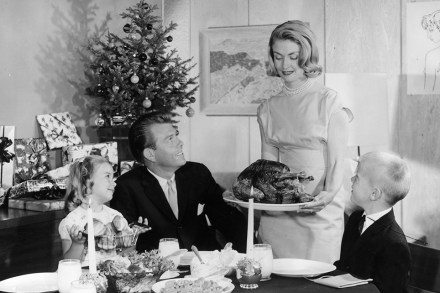
When I imagine the perfect Christmas lunch, I think of the end of A Christmas Carol in which Scrooge turns up unexpectedly at his nephew’s house and discovers a warm family gathering: ‘Nothing could be heartier… Wonderful party, wonderful games, wonderful unanimity, won-der-ful happiness!’ I can picture myself as an old man, parked in front of the telly wearing a Christmas hat, as Caroline creeps out to the neighbours’ drinks Back in my youth, the Christmas lunches hosted by my father, while not exactly hearty, were opportunities to get together with my extended family – my three half-siblings, my mother and sister, my grandmother Edith, an old friend of my father’s called Vincent.
‘Climate scepticism’ and ‘disinformation’ are not the same thing

From our UK edition

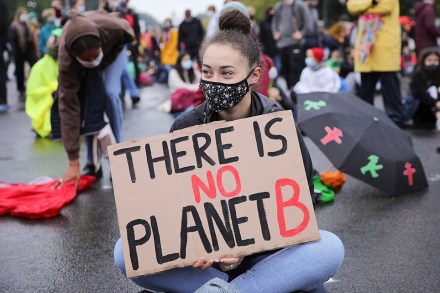
According to a quote in a recent article by the environment editor of the Times, I’m ‘the most prominent UK public figure’ whose posts on Twitter related to ‘climate scepticism’ are ‘heavily shared’. This was based on an analysis commissioned by the paper from two researchers at the University of London, Max Falkenberg and Andrea Baronchelli. Apparently, ten Twitter handles account for 25 per cent of the most widely shared sceptical tweets – and mine is one of them! Why are the people who sign up to the green agenda so quick to label those who don’t as ‘deniers’?

Michael Beale has broken my heart

From our UK edition

Most football fans have had their attention riveted on Qatar for the past couple of weeks, but for those of us who support Queens Park Rangers there’s been an unwelcome distraction at home. Our manager Michael Beale, who’s only been in charge for 21 league games, announced on Monday that he’s leaving us for Rangers, the Glaswegian football club. Having spent a huge amount of time and effort recruiting a manager in the summer – and seemingly picking a winner – QPR’s top brass will have to start again. Beale was one of the few people in authority (me included) who hadn’t disappointed my children Such behaviour isn’t particularly unusual in the modern game.

The good, the bad and the ugly of the new Online Safety Bill

From our UK edition

The new version of the Online Safety Bill seems, on the face of it, to be an improvement on the previous one. We’ll know more when it’s published – all we have to go on for now is a DCMS press release and some amendments moved by Michelle Donelan, the Digital Secretary and architect of the new Bill. The devil will be in the detail. Let’s start with something that hasn’t got much coverage today, but which I think is important. Plans to introduce a new harmful communications offence in England and Wales, making it a crime punishable by up to two years in jail to send or post a message with the intention of causing ‘psychological harm amounting to at least serious distress’, have been scrapped.

My prescription for surviving the winter

From our UK edition

Winter is finally upon us and I’m relying on my usual array of tablets and powders to ward off seasonal viruses. Caroline and the children constantly ridicule me, saying I’ve been taken for a fool by snake-oil salesmen, but I tell myself these concoctions are responsible for my robust good health. I’ve tested positive for Covid twice and usually get two or three colds a year. But I haven’t taken a day off due to illness since 1987. My basic daily intake consists of a multi-vitamin tablet, 1,000iu of vitamin E, 1,000µg of vitamin B12 and 4,000iu of vitamin D3, all washed down with 1,000mg of vitamin C.

Gary Neville’s fairweather morality

From our UK edition

Should England be participating in the Qatar World Cup? On the face of it, the case for a boycott is pretty compelling. Much of the infrastructure – including eight stadiums, an airport expansion, a new metro system and multiple hotels – has been built by migrant workers who are notoriously poorly treated by their Qatari employers. Women still have to obtain permission from their male guardians to marry, study abroad on state scholarships and receive certain reproductive health care. Muslim women who have sex outside marriage can be sentenced to flogging. Homosexuality is against the law and punishable by imprisonment. Freedom of expression and of the press leave a lot to be desired. The list goes on.

The case against climate change reparations

From our UK edition

I was a little disappointed by Boris Johnson’s argument against Britain paying reparations for the damage done to developing countries by climate change. Yes, he acknowledged at Cop27, Britain was the first country to industrialise and, as a result, ‘people in the UK have put an awful lot of carbon into the atmosphere’. But we simply don’t have the financial re-sources to pay compensation for all the harm caused by the industrial revolution. The economic model pioneered by Britain in the 18th century has lifted billions out of poverty Hmmm. I can think of several better arguments against climate change reparations.

What to do about the Equality Act

From our UK edition

Among people of a conservative disposition, it’s long been accepted that the Equality Act needs to be repealed. This legislation, passed in 2010 in the dying days of Gordon Brown’s premiership, was designed to embed Labour’s egalitarian ideology into the fabric of the British state, yet none of Brown’s successors have done anything about it. In July, Rishi Sunak told a group of Conservative party members at a leadership hustings in West Sussex that he would ‘review’ it if he became prime minister, but don’t expect major surgery. The most we can hope for is a bit of light cosmetic work. One thing about the Equality Act not widely understood is that it didn’t create much in the way of new law.

At last, a PM I can look down to

From our UK edition

Rishi Sunak’s victory is a testament to how much progress we have made on the equalities front. As recently as 25 years ago, someone with his characteristics could never have become prime minister. Yet in today’s Britain, being a member of an historically disadvantaged minority is no impediment to success. I’m thinking, of course, of his height. As one wag joked on Twitter, the shortest-serving prime minister in British history has been succeeded by the shortest serving prime minister in British history. As a vertically challenged man myself, I take great comfort from this. Positive role models are few and far between in the modern world. In film and television there are the two Toms – Cruise and Hollander – but let’s face it, most successful leading men are tall.

The embarrassing truth about how I got injured

From our UK edition

I had a bicycle accident last week. Not terrible, but not great either. Of the five I’ve had since I took up cycling more than 20 years ago, it ranked third. No stitches needed,unlike the worst, which required more than 50 and a night in hospital. I didn’t bother with A&E this time, in spite of concerned onlookers advising me to. I think it looked worse than it was. Head injuries generally do because there’s so much blood. I’m slightly wary writing about this because I don’t want to give the anti-motorist lobby any more ammo. In fact, there were no other vehicles involved. The accident was actually caused by the front wheel of my bike hitting one of those kerbs in the middle of the road designed to stop cars drifting into cycle lanes.

Will I be PayPal’s downfall?

From our UK edition

Dan Schulman, the president and CEO of PayPal, gave an interview earlier this year entitled: ‘The thing that separates good companies from great ones: trust.’ He told the audience that companies need to do more than deliver an outstanding product to build trust. In addition, they need to ‘stand up for social issues that are important’ and ‘do the right things to help create a better world’. Ironically, it is precisely because PayPal has been energetically pursuing this agenda that trust in the company is beginning to evaporate.

Is Russell Brand really so dangerous?

From our UK edition

Once the dust has settled over the government’s mini-Budget, another big political battle looms: the Online Safety Bill. This is the legislation that will make Ofcom responsible for regulating the internet so Britain becomes ‘the safest place in the world to go online’ – at least, that’s how the last government tried to sell it. It was due to go the House of Lords for a second reading in July, but was put on hold because of the Tory leadership contest and I was hoping it would never be resuscitated. Liz Truss and her lieutenants are currently going through the last administration’s legislative programme, seeing what they can ditch to free up some parliamentary time for new bills.

I’m on Andrew Doyle’s side – for now

From our UK edition

I’ve agreed to interview the author and journalist Andrew Doyle about his new book at the Conservative party conference – on stage, no less – so I thought I’d better read it. It’s about the inexorable rise of the social justice warriors, whom he regards as a danger to the survival of free speech and, by extension, the institutions and traditions that our liberal democracy depends on. My first reaction was one of irritation. The book is called The New Puritans: How the Religion of Social Justice Captured the Western World and it’s annoyingly similar to the title of a book I’ve been working on – Salem 2.0:the Return of the Religious Police to the Public Square.

PayPal backs down

From our UK edition

At 5.30 p.m. this evening, PayPal notified me that it has restored all three of the accounts it cancelled a couple of weeks ago – the accounts for the Daily Sceptic, the Free Speech Union and my personal account. In all three cases, the email read as follows: We have continued to review the information provided in connection with your account and we take seriously the input from our customers and stakeholders. Based on these ongoing reviews, we have made the decision to reinstate your account. You should now be able to use your account in the normal way. We sincerely appreciate your business and offer our apologies for any inconvenience this disruption in service may have caused. Forgive me if I don’t jump for joy Forgive me if I don’t jump for joy.

Why has PayPal cancelled the Free Speech Union?

From our UK edition

I thought one of the benefits of being cancelled – I lost five positions in quick succession at the beginning of 2018 – is that it immunises you from being cancelled again. After all, what more dirt could be thrown at me? The offence archaeologists did such a thorough job four years ago, sifting through everything I’d said or written dating back to 1987, that there was nothing left to dig up. But it turns out that was naive. Last week I got cancelled again. The instrument of my downfall was PayPal, the technology company that supports online money transfers and operates as a payment processor for online businesses, auction sites and so on. At around 2 p.m.

What Charles shouldn’t do

From our UK edition

One of the most regrettable trends of the past few decades is the creep of politics into every aspect of our public life. Institutions tasked with preserving our heritage, such as Tate Britain, Kew Gardens and the National Trust, are busy holding themselves to account for their historic links to slavery and colonialism, while the police, the civil service and the Church of England have embraced the mantra of equity, diversity and inclusion. The people in charge of these organisations – liberal, urban, highly educated – don’t think of these values as politically contentious, while those of us who don’t fall into those categories – probably the majority of the population – cannot help but feel alienated and disenfranchised.

I’ve finally been offended by a joke

From our UK edition

I went to the O2 on Sunday night to see the comedians Dave Chappelle and Chris Rock. Chappelle, who survived an attempt to cancel him last year, didn’t disappoint, delivering some hilarious, politically incorrect jokes, and Rock was equally seditious, although his set went on for too long. But the rest of the evening was pretty painful. The effort it takes to get to this relic of the New Labour era is truly Herculean. Indeed, Rock made a joke about it, claiming he’d set off from his hotel on Wednesday morning and only just arrived. The Tube station is North Greenwich, one beyond Canary Wharf, and your only hope of getting there in less than 90 minutes from west London is via jet ski along the Thames.

How science became politicised

From our UK edition

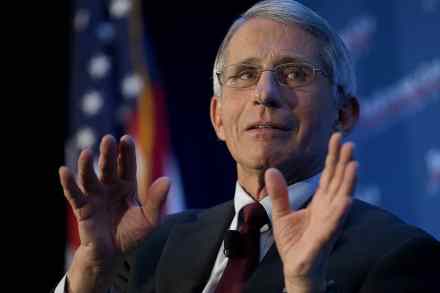
Here’s a paradox. Over the past two-and-a-half years, a cadre of senior politicians and their ‘expert’ advisers across the world have successfully promoted a series of controversial public policies by claiming they’re based on ‘the science’ rather than a particular moral or ideological vision. I’m thinking of lockdowns and net zero in particular. Yet at the same time, this group has engaged in behaviour that has undermined public confidence in science. Why appeal to the authority of science to win support for a series of politically contentious policies – and then diminish its authority? Take Anthony Fauci, for instance, who recently announced he’s stepping down as chief medical adviser to Joe Biden.