Tim Shipman

Tim Shipman

Tim Shipman is political editor of The Spectator.

‘There’s an awful lot more bile now’: Jonathan Lynn on how politics has changed since Yes Minister

A few years ago, everyone in Westminster was obsessed by The West Wing, but a decade of chaos and populism has rendered Aaron Sorkin’s vision of idealists devoted to the public good obsolete. The madness of the last government left even The Thick of It a tame parody of reality. But listening to everyone from Dominic Cummings to Morgan McSweeney bemoan the state of the civil service shows that Yes Minister/Prime Minister, with their portrayal of hapless ministers in the spell of apex mandarin Sir Humphrey Appleby, may be (somewhat surprisingly) the most enduring of television’s political classics. Sir Humphrey and his victim, Jim Hacker, were the creation of writing duo Antony Jay and Jonathan Lynn.

What is ‘Starmerism’?

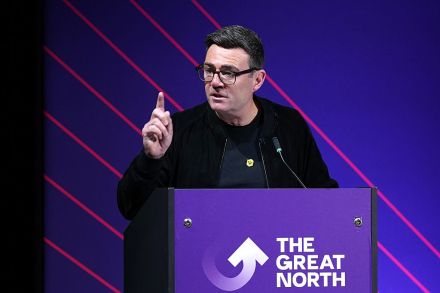
If Keir Starmer didn’t already understand Harold Macmillan’s warning about ‘events, dear boy, events’, he got a lesson on Saturday. At 4.49 p.m. on Truth Social, Donald Trump ate humble pie about the -sacrifice of British troops in Afghanistan, having previously claimed Nato forces avoided the front line. ‘We enjoyed it for a few minutes,’ a close aide recalled. Eleven minutes, to be precise. At 5 p.m. on the dot, Andy Burnham announced that he wished to stand in the Gorton and Denton by-election. So began the latest psychodrama at the top of the party. This was an open challenge to Starmer’s authority and a test both of his remaining political power and his willingness to use it.

Suella Braverman defects – not another one!

15 min listen

It’s psychodrama all round on Coffee House Shots today. Between Andy Burnham – who over the weekend was denied the opportunity to stand in the Gorton and Denton by-election – and Suella Braverman – who has just announced that she’s defecting to Reform (shock horror) – it seems like the main parties are competing to see who can appear the most split. After high-profile Labour MPs gave their support for Burnham’s return, what impact will this have on Labour party unity? And with this latest defection of a former Tory, can Nigel Farage dodge accusations that Reform is becoming the Tory party 2.0? Isabel Hardman speaks to Tim Shipman and Gabriel Pogrund. Produced by Oscar Edmondson.

Suella Braverman defects – not another one!

The week that turned politics upside down

Good evening. It is now 67 days since Keir Starmer stated that ‘every minute that we are not talking about the cost of living’ is ‘a minute wasted’. Well, we’ve barely heard about it since, so that’s 96,480 minutes wasted. Events do have a habit of upsetting things. This week it has been the activities of three alpha male egos unsettling people who were once friends and allies, and turning politics upside down. Starmer has just accused Donald Trump of ‘insulting and frankly appalling’ comments which ‘diminished’ the sacrifice of British soldiers killed in Afghanistan, after the President claimed Nato forces avoided the frontlines. This was fresh from his threats to seize Greenland by force (and then backing off).

Andy Burnham is back in the game – and Robert Jenrick reveals all

17 min listen

Three big stories for James Heale and Tim Shipman to pick over today: Andy Burnham’s return, the Donald Trump that refuses to go away, and the continued fallout of Robert Jenrick’s defection to Reform. This afternoon we found out that former Labour minister Andrew Gwynne is on the brink of standing down as an MP, after losing the whip during last year’s WhatsApp group scandal. A by-election is therefore on the cards in Gwynne’s Manchester seat, potentially paving the way for the ever-ambitious local mayor Andy Burnham to return to the Commons and make a leadership challenge against Keir Starmer. Would he be able to mobilise enough support?

Andy Burnham is back in the game – and Robert Jenrick reveals all

Starmer turns on Trump

10 min listen

Keir Starmer scored a rare win at PMQs, talking tough on Trump in light of the President’s escalating rhetoric on Greenland and the Chagos Islands. Kemi Badenoch pressed the Prime Minister on foreign affairs and Britain’s relationship with the US president, and Starmer departed from his usual caution to strike a notably firmer tone. What does this moment tell us about Labour’s emerging approach to Trump – and is the UK political class finally losing patience with the volatility of the White House? Was this the closest we’ll get to a Keir Starmer Love Actually Prime Minister moment? James Heale speaks to Tim Shipman and Isabel Hardman. Produced by Oscar Edmondson.

Starmer turns on Trump

Greenland: why Europe needs to ‘grow up’ | with Tim Marshall

15 min listen

Donald Trump has thrown another diplomatic hand grenade. This weekend, the President threatened sweeping tariffs on countries backing Greenland’s independence – a move that has rattled European capitals and reignited questions about America’s global strategy. Is this about Arctic security, rare earth minerals, or something more personal? As tensions rise, how should Britain respond? Can diplomacy defuse Trump’s latest escalation, or does this mark a deeper shift in US–European relations – and the future of Nato itself? James Heale speaks to Tim Shipman and Tim Marshall, foreign affairs analyst and author of Prisoners of Geography. Produced by Megan McElroy and Oscar Edmondson.

Greenland: why Europe needs to 'grow up' | with Tim Marshall

Jenrick’s defection strengthens both Kemi and Farage

What a week. Robert Jenrick’s defection to Reform yesterday electrified Westminster and the fallout is still spreading. When our editor asked everyone at The Spectator whether Badenoch or Farage was stronger as a result of the Tory leader’s decision to pre-empt the deal and kick him out, I answered that they both were in a better position than they had been on Thursday morning. Badenoch has solidified her control on the Tory party and Farage has enhanced a team which is weak on ministerial experience, showing further momentum. The battle to convince their own sides that Jenrick is a traitor/a key component of a future government has continued today.

Jenrick vs Badenoch: who won yesterday's defection?

Jenrick vs Badenoch: who won yesterday’s defection?

10 min listen

Yesterday was a breathless day in Westminster. The defection of Robert Jenrick spawned plenty of headlines and even more memes. But now that the dust has settled, how has the news been received? Was it a total victory for Reform, and evidence that they are slowly swallowing up the Tory party, or is Kemi still in the race? Today, the assisted dying bill is back in the Lords. As discussions about this legislation drag on, does its implementation look increasingly unlikely? Oscar Edmondson speaks to Tim Shipman and James Heale. Produced by Oscar Edmondson.

Iran’s useful idiots, Gordon Brown’s second term & the Right’s race obsession

43 min listen

As the world watches events in Iran, and wonders whether the US will intervene, the Spectator’s cover this week examines 'British complicity in Tehran’s terror’. When thinking about what could happen next in the crisis, there is a false dichotomy presented between regime survival and revolution; the reality is more complicated, though there is no doubt that this is the biggest threat to the theocratic regime in decades.  For this week’s Edition, host Lara Prendergast is joined by political editor Tim Shipman, columnist Rachel Johnson and features editor – and Edition co-host – William Moore. They commend the bravery of Iran’s protestors but criticise the ‘inept, naive and wrong’ response of the Foreign Office.

Inside Jenrick & Reform’s shotgun marriage

15 min listen

Robert Jenrick has sensationally defected to Reform. After a day that started with his sacking from the Conservatives – over plotting to reject – continued with the will-he-won’t-he drama of whether Farage would accept him as a new Reform member this afternoon; it ends with a press conference welcoming him to Farage’s gang. So what happens now? Kemi Badenoch was praised for her show of strength in swiftly expelling Jenrick, but she is undoubtedly weakened after this news and her frontbencher looks considerably lighter. Is this an inflection point for the Conservative party? And what role will Bobby J play in Reform – could he be their new shadow chancellor? Oscar Edmondson, Tim Shipman and James Heale discuss a hectic day on the British right. Produced by Oscar Edmondson.

Inside Jenrick & Reform's shotgun marriage

Is Jenrick joining Reform?

8 min listen

Kemi Badenoch has sacked Robert Jenrick from the shadow cabinet, removed the Tory whip and suspended his party membership. In a video on X she claims, ‘I was presented with clear, irrefutable evidence that he was plotting in secret to defect in a way designed to be as damaging as possible’. The Tories compiled a bundle of evidence that included a dinner between Jenrick and Nigel Farage last month, and the fact that he had discussed switching to Reform with at least two allies. It is understood that he left a copy of his defection speech lying around, which included passages criticising Conservative colleagues. Is this – as we all suspect – the prelude to perhaps Reform's biggest coup yet? Tim Shipman and James Heale discuss. Produced by Megan McElroy and Oscar Edmondson.

The second coming of Gordon Brown

At a Christmas party I witnessed a showdown between two Labour movers and shakers, one a devoted Starmerite, the other an unrepentant Blairite, over whether the Prime Minister can turn things around. They didn’t agree on much – Keir Starmer’s vision or lack of it, Europe, immigration, you name it. When I commented to another leading figure in the party that Blairites, with the exception of Jonathan Powell (now running foreign policy) and Alastair Campbell (whose podcast has moved him leftwards), seem to have lost faith in this government, this former minister said: ‘Of course they have, because this is the second term of Gordon Brown.

Zahawi defects: are Reform becoming Tories 2.0?

15 min listen

How many Tories is too many? That’s the question Westminster is asking after the unveiling of Reform’s latest defector. Nadhim Zahawi, Boris Johnson’s brief-lived Chancellor of the Exchequer, is Nigel Farage’s latest recruit. He told journalists that the UK had reached a ‘dark and dangerous’ moment, and that the country needed ‘a glorious revolution’. But are Reform just turning into the Tories 2.0? And what will Zahawi’s role be – is he the elusive shadow chancellor Farage has been searching for? Oscar Edmondson speaks to Tim Shipman and James Heale. Produced by Oscar Edmondson.

Mums for Reform?

14 min listen

Britain’s mums are backing Nigel Farage. One in five Mumsnet users intend to vote for Reform at the next general election, the first time a party other than Labour has topped its poll. Having been more negative towards Farage and the right in the past, why are its politically engaged users changing their minds? Are they swayed by issues like single-sex spaces, or does it reflect a wider collapse of confidence in the establishment? James Heale speaks to Tim Shipman and Sonia Sodha. Produced by Megan McElroy.

Six things we learnt about Starmer’s government this week

Keir Starmer began the year saying that any ​minute he wasn’t focused on the cost of living would be a minute wasted. Then he spent the first week of the political year engaged in foreign affairs and yet another U-turn. While Downing Street wants to talk about ‘the year of proof’ for its reforms of the public services, it has less ability to control the news agenda than even recent Tory administrations. Here are six things we have learnt this week. This government is increasingly the victim of events, not their master Fair enough, you might think, when Donald Trump is on the scene, a president who is not only capable of impulsive action but seems to positively revel in controlling the news agenda as if he was still the main attraction in a reality television show.

Keir Starmer, pub harmer

11 min listen

Another year, another U-turn. We expect that the Labour government will be forced to climb down on forthcoming increases to the business rates bills faced by pubs in England. This comes after ferocious industry backlash, spearheaded by figures such as Tom Kerridge, who has been out in the media this week drawing attention to the more than 100 per cent increase in costs some of his establishments are facing. Some are pointing to the slow unravelling of Rachel Reeves’s Budget but – perhaps more damaging – is the optics of this: surely nothing mobilises deep England more than coming for our pubs. What impact will this have on Labour’s credibility? And what impact will it have on Rachel Reeves’s headroom? Oscar Edmondson speaks to Michael Simmons and Tim Shipman.

Stormy seas, Trump’s revolution & Gen Z’s sex recession

43 min listen

Can Farage plot a route to Number 10, asks Tim Shipman in our cover article this week. He might be flanked by heavyweights – such as his head of policy Zia Yusuf and Conservative Party defector Danny Kruger MP – but he will need a lot more people to pull off his biggest upset for British politics yet. Where will they come from? And what’s the balance he needs to strike between being radical enough to win power but also without alienating significant chunks of the electorate? Plus, as former UK ambassador to the US Peter Mandelson breaks his silence – in this week's Spectator – to argue that Europe needs to adapt to a new reality, Freddy Gray ponders what Trump’s ‘Donroe Doctrine’ is actually all about. Immigration? Drugs? Oil? Or just plain chaos?

How Reform plans to govern

18 min listen

2025 was the easy part for Reform. If they win the election, however, how do they actually govern? In The Spectator this week, Tim Shipman writes about the party’s plans to tackle Whitehall bloat, bypass the Lords and restore the authority of the Prime Minister over the various institutions of state. The man tasked with working this out is Danny Kruger, who is working up plans to push change through using Orders in Council – a device in the Privy Council – as well as statutory instruments and ministerial guidance to avoid the need for primary legislation. But the party is only in the foothills, and one source warns that ‘Nigel doesn’t trust other politicians’: can he build a winning team? Who has his ear? And does he actually want to be Prime Minister?

Why is Keir Starmer so irritable?

16 min listen

It is the first Prime Minister’s Questions of the new year – and Keir Starmer returns to the Commons already under pressure. With major international crises unfolding, Kemi Badenoch used PMQs to question whether the Prime Minister is present, engaged or in control. In response, Starmer just seemed narky. As the exchange descended into rows over Ukraine, Venezuela and the role of government lawyers, the issue of the armed forces – how they are supported and resourced – came up once again. With global events dominating the news agenda, are British forces prepared to be deployed – and does the Labour party really grasp the political danger of that debate? Oscar Edmondson speaks to Tim Shipman and Isabel Hardman. Produced by Oscar Edmondson.